
Close Menu
    Facebook X (Twitter) Instagram
    SciTechDaily
    • Biology
    • Chemistry
    • Earth
    • Health
    • Physics
    • Science
    • Space
    • Technology
    Facebook X (Twitter) Pinterest YouTube RSS
    SciTechDaily
    Home»Health»Unlocking Alzheimer’s Mysteries: Insights From Mapping 1.3 Million Brain Cells
    Health

    Unlocking Alzheimer’s Mysteries: Insights From Mapping 1.3 Million Brain Cells

    By University of PittsburghAugust 5, 2024No Comments3 Mins Read
    Facebook Twitter Pinterest Telegram LinkedIn WhatsApp Email Reddit
    Share
    Facebook Twitter LinkedIn Pinterest Telegram Email Reddit
    Brain Signal Mapping Concept
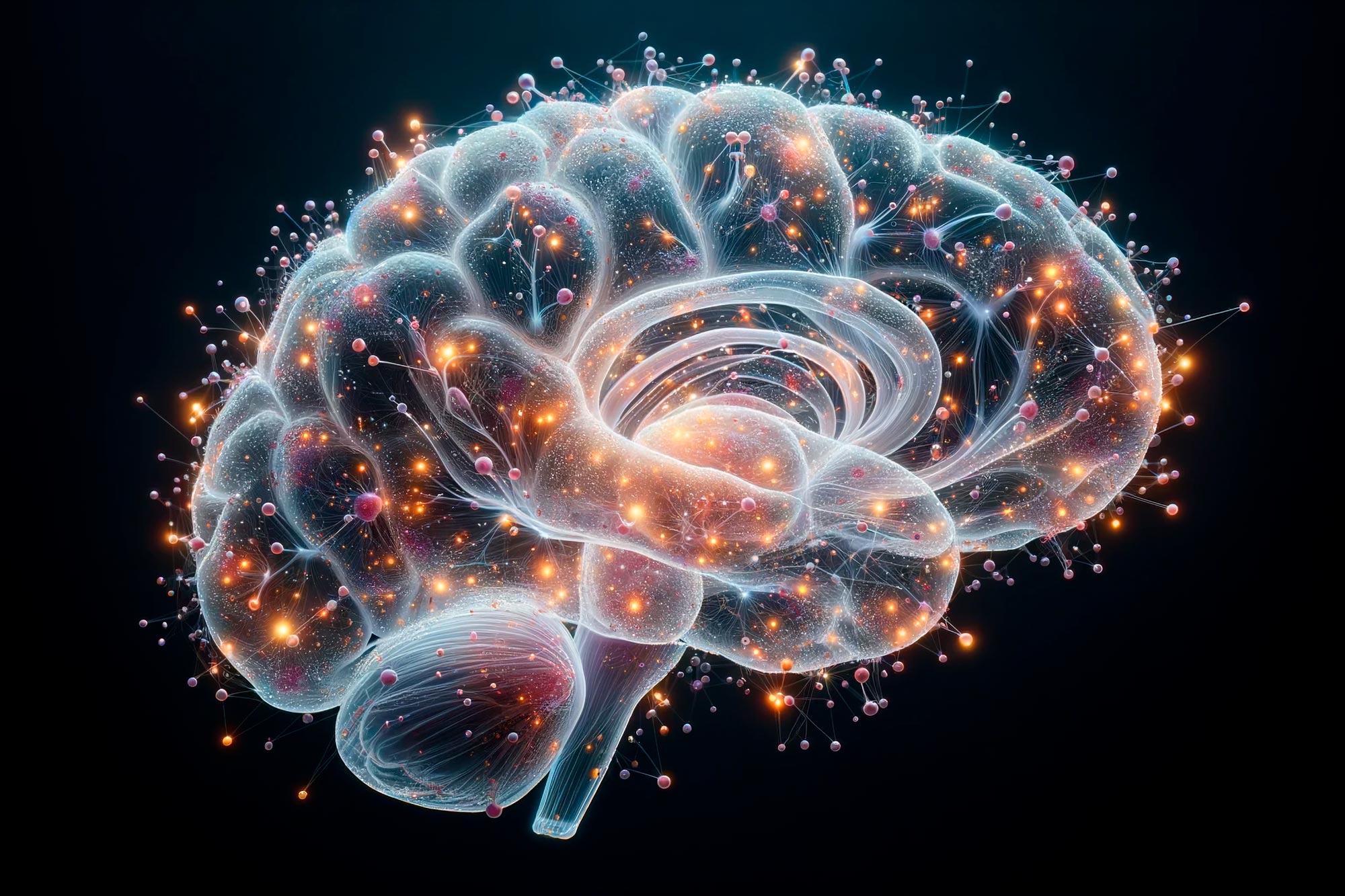
    A project mapping transcriptomes from 1.3 million brain cells to study Alzheimer’s uncovered insights into cognitive resilience and the role of astrocytes in brain function. The findings could guide future Alzheimer’s therapy development. Credit: SciTechDaily.com

    Researchers created an annotated library of gene readouts from 1.3 million brain cortex cells, focusing on individuals with and without Alzheimer’s disease.

    This comprehensive atlas, intended to enhance molecular understanding of cognitive resilience and vulnerability, reveals potential strategies for inducing cognitive resilience artificially.

    Less than a decade ago, when Dr. Hansruedi Mathys launched an ambitious project to create an annotated library of all the gene readouts stored within 100 individual brain cells, the task felt daunting.

    Now, with technological advances, Mathys successfully mapped out such ‘transcriptomes’ from not just 100, but from 1.3 million brain cortex cells from 48 individuals with and without Alzheimer’s disease.

    Hansruedi Mathys
    Hansruedi Mathys, Ph.D. Credit: Hansruedi Mathys

    Mathys, who pioneered single-cell transcriptomic analysis on post-mortem human brain tissue during his postdoctoral training and is now an assistant professor of neurobiology at the University of Pittsburgh School of Medicine, says that the resulting atlas of the aging human brain holds molecular insights into the brain’s vulnerability and resilience.

    Exploring Cognitive Resilience in Alzheimer’s Research

    “I am extremely interested in understanding the phenomenon of cognitive resilience where, despite the characteristic signs of Alzheimer’s tissue pathology, individuals display no cognitive impairment,” Dr. Mathys said. “Our recent findings have made me more hopeful than ever that it might be possible to artificially induce such resilience in people who otherwise are susceptible to memory loss.”

    In the study, published on July 24 in Nature, Mathys and his colleagues at the Massachusetts Institute of Technology analyzed transcriptomes of cells across six distinct brain regions that are often affected by Alzheimer’s pathology. The resulting atlas, which is now available online to researchers worldwide, could be used as a tool for gene and molecular discovery across pathways affecting brain health.

    Insights Into Cognitive Decline and Cellular Functions

    By tracking how transcriptomic changes are linked to cognitive decline and Alzheimer’s pathology, Mathys and his colleagues discovered that astrocytes – one of the cell types that make up the brain tissue scaffold alongside maintaining a host of other crucial functions – could be holding a key to cognitive resilience. Mathys’ ongoing research, which resulted from the transcriptome mapping, aims to explore the functional significance of altering astrocyte metabolic pathways to affect cognitive function.

    “There is still a lot to learn about Alzheimer’s disease and the human brain,” said Mathys. “This project is just the beginning.”

    Reference: “Single-cell multiregion dissection of Alzheimer’s disease” by Hansruedi Mathys, Carles A. Boix, Leyla Anne Akay, Ziting Xia, Jose Davila-Velderrain, Ayesha P. Ng, Xueqiao Jiang, Ghada Abdelhady, Kyriaki Galani, Julio Mantero, Neil Band, Benjamin T. James, Sudhagar Babu, Fabiola Galiana-Melendez, Kate Louderback, Dmitry Prokopenko, Rudolph E. Tanzi, David A. Bennett, Li-Huei Tsai and Manolis Kellis, 24 July 2024, Nature.
    DOI: 10.1038/s41586-024-07606-7

    Never miss a breakthrough: Join the SciTechDaily newsletter.
    Follow us on Google and Google News.

    Astrocytes Brain Dementia Neuroscience University of Pittsburgh
    Share. Facebook Twitter Pinterest LinkedIn Email Reddit

    Related Articles

    Cracking the Alzheimer’s Code: A Groundbreaking New Approach to Visualizing the True Culprit

    Higher Risk of Dementia Associated With Fine Particulate Air Pollution

    Bitter Brew: High Coffee Consumption Is Associated With Smaller Brain Volume

    COVID-19 Associated With Long-Term Cognitive Dysfunction, Acceleration of Alzheimer’s Symptoms

    Are We Wrong About Alzheimer’s? Researchers Question Prevailing Theory After New Discovery

    Statins Used to Lower Cholesterol Linked to Doubled Risk of Developing Dementia

    “Cognitive Clock” – Researchers Develop New Measure of Brain Health

    Brain Shrinkage: Your Neighborhood May Affect Your Brain Health

    Identifying “The Terrorist Inside My Husband’s Brain” – Living Brain Imaging Can Clearly Differentiate Between Types of Dementia

    Leave A Reply Cancel Reply

    • Facebook
    • Twitter
    • Pinterest
    • YouTube

    Don't Miss a Discovery

    Subscribe for the Latest in Science & Tech!

    Trending News

    This Copper Drug Clears Alzheimer’s Brain Toxins and Boosts Memory

    Adults Over 65 Lost Massive Amounts of Weight With Ozempic

    How Flocking Birds “Defy” One of Physics’ Most Fundamental Laws

    Physicists Create a New Kind of Schrödinger’s Cat State From Exotic Quantum Building Blocks

    Your Diet Could Be Missing the Key Ingredient for Heart Protection

    Researchers Warn Widely Prescribed Blood Pressure Drugs Could Be Harming Diabetic Kidneys

    James Webb Spots Something Strange Between Day and Night on an Alien Planet

    How Ancient People Moved a 6-Ton Stone 700 Kilometers to Stonehenge

    Follow SciTechDaily
    • Facebook
    • Twitter
    • YouTube
    • Pinterest
    • Newsletter
    • RSS
    SciTech News
    • Biology News
    • Chemistry News
    • Earth News
    • Health News
    • Physics News
    • Science News
    • Space News
    • Technology News
    Recent Posts
    • Scientists Uncover Cause of Inflammatory Bowel Disease Solving Decades-Old Mystery
    • The Surprising Reason Swimming Could Be Better for Your Heart Than Running
    • Could Vitamin C Be the Secret to Keeping Your Brain Younger?
    • The Surprising Fix for Robot Traffic Jams
    • Near Absolute Zero, This Transistor Starts Acting Like a Brain Cell
    Copyright © 1998 - 2026 SciTechDaily. All Rights Reserved.
    • Science News
    • About
    • Contact
    • Editorial Board
    • Privacy Policy
    • Terms of Use

    Type above and press Enter to search. Press Esc to cancel.