
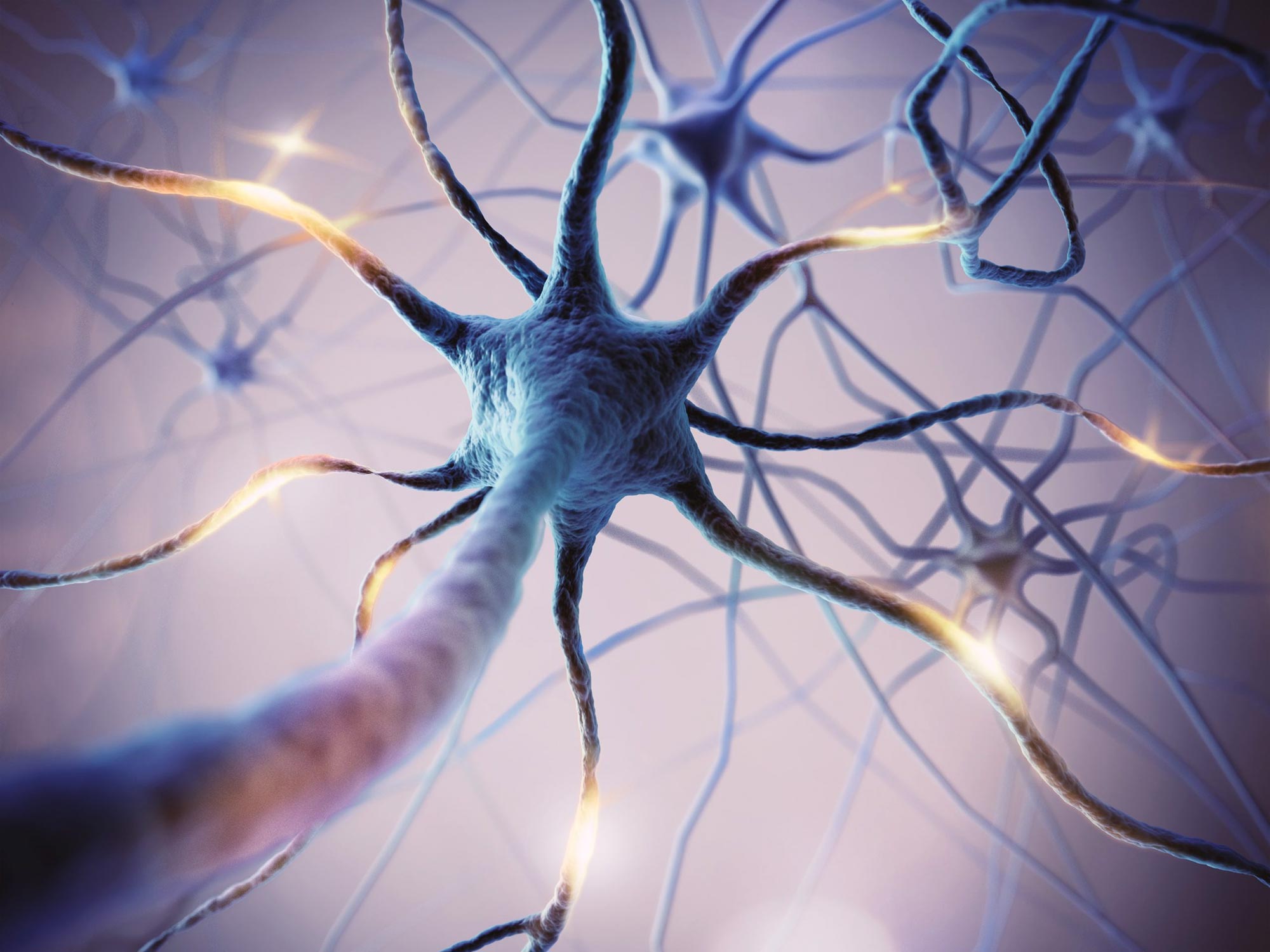
New insights enhance comprehension of a key aspect of cognitive functioning.
Researchers at the University of California, Irvine have identified the neurons responsible for “item memory,” enhancing our understanding of how the brain stores and recalls specific details of “what” happened. This discovery also presents a potential new target for Alzheimer’s disease treatment.
Memories include three types of details: spatial, temporal, and item, the “where, when, and what” of an event. Their creation is a complex process that involves storing information based on the meanings and outcomes of different experiences and forms the foundation of our ability to recall and recount them.
The study, published in the journal Nature, is the first to reveal the role of specific cells in how the brain classifies and remembers new information, particularly when linked to rewards or punishments.
“Understanding this process is crucial because it deepens our insight into the fundamental way our brains function, especially in learning and memory,” said corresponding author Kei Igarashi, Chancellor’s Fellow and associate professor of anatomy and neurobiology. “Our findings shed light on the intricate neural circuits that enable us to learn from our experiences and store these memories in a structured way.”
Methodology and Findings in Memory Study
Researchers studied mice brains, focusing on the deeper layers of the lateral entorhinal cortex, where they discovered specialized, item-outcome neurons essential for learning.
Odors are critical sensory cues for item memory in mice. Some neurons became active when exposed to the scent of banana, associated with a sucrose water reward. Other neurons responded to the smell of pine, associated with a bitter water negative outcome. A mental map divided into those two categories was formed in the LEC.
Anatomically, neurons in the deep-layer LEC are tightly connected with neurons in another brain region, the medial prefrontal cortex. Team members observed that neurons in the mPFC developed a similar mental map during the learning process.
Neural Connections and Memory Encoding
They also found that when the activity of the LEC neurons was inhibited, those in the mPFC failed to properly distinguish between positive and negative items, leading to impaired learning. Conversely, when the mPFC neurons were inhibited, the ability of the LEC to keep item memories separate was totally disrupted, impairing learning and item memory recall. This data indicated that the LEC and mPFC are co-dependent, working together to encode item memory.
“This study is a significant advancement in our understanding of how item memory is generated in the brain,” Igarashi said. “This knowledge now opens up new avenues for investigating memory disorders, such as Alzheimer’s disease. Our data suggests that item memory neurons in the LEC lose their activity in Alzheimer’s. If we can find a way to reactivate these neurons, it could lead to targeted therapeutic interventions.”
Reference: “Prefrontal and lateral entorhinal neurons co-dependently learn item–outcome rules” by Heechul Jun, Jason Y. Lee, Nicholas R. Bleza, Ayana Ichii, Jordan D. Donohue and Kei M. Igarashi, 21 August 2024, Nature.
DOI: 10.1038/s41586-024-07868-1
The two leading authors of this work were graduate students Heechul Jun of the Medical Scientist Training Program and Jason Y. Lee of the Interdepartmental Neuroscience Program. Other team members included research technicians Nicholas R. Bleza and Ayana Ichii, as well as postdoctoral researcher Jordan Donohue from the Kei Igarashi lab. Igarashi is a joint faculty member in the Department of Biomedical Engineering and a member of the Center for Neural Circuit Mapping, the Center for the Neurobiology of Learning and Memory, and the Institute for Memory Impairments and Neurological Disorders.
The study was supported by the National Institutes of Health under awards R01MH121736, R01AG063864, R01AG066806, R01AG086441, F31AG069500 and F31AG074650; BrightFocus Foundation research grant A2019380S; and UC Irvine Medical Scientist Training Program grant T32GM008620.
Never miss a breakthrough: Join the SciTechDaily newsletter.
Follow us on Google and Google News.
1 Comment
This study is done on mice and is invasive. No telling if it has any real-life significance to humans, or to mice who are not having their brains cut open and exposed to poisons. Clearly, this research is for student researchers learning how to get grant money to monkey with mouse brains. “The two leading authors of this work were graduate students…” Funded, in part, by “UC Irvine Medical Scientist Training Program grant T32GM008620.”
I left medicine due to animal research and cruel studies like this. See my article Animal Research: The Rot at the Core of Medicine. https://www.academia.edu/123055005/Animal_Research_The_Rot_at_the_Core_of_Medicine