
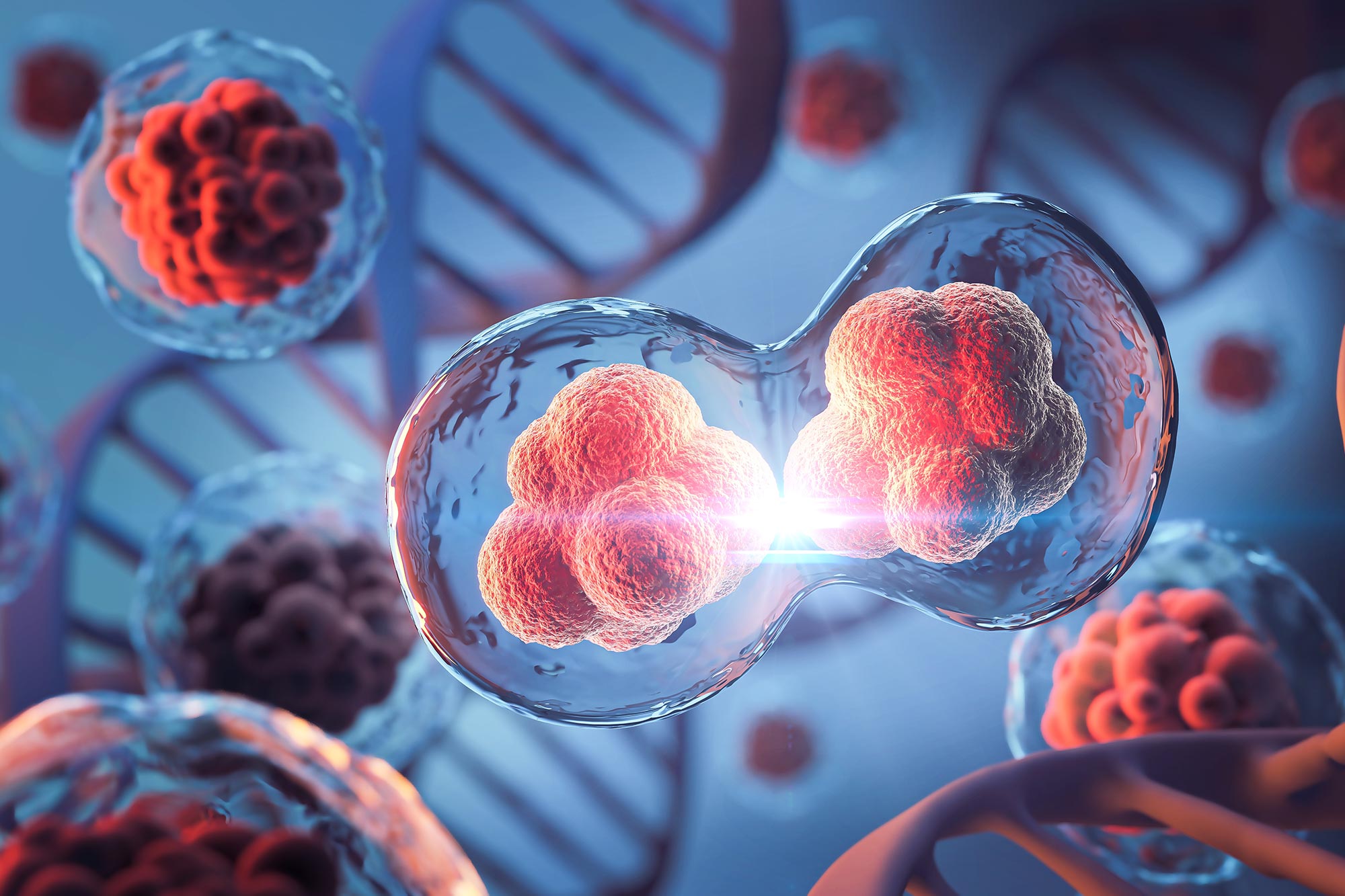
A surprising backup pathway allows cells to make a crucial amino acid when their primary machinery fails.
For decades, biologists believed cells had only one way to access a molecule they cannot live without. New research suggests they were wrong.
Scientists at Montana State University have uncovered a previously unknown cellular survival pathway that allows mammalian cells to keep producing the essential amino acid cysteine even when the systems long thought to be indispensable are disabled. The discovery challenges a fundamental assumption in cell biology and could eventually point researchers toward new strategies for making cancer treatments more effective.
The findings were published in Nature Chemical Biology.
“All cells need a constant supply of an amino acid called cysteine in order to stay alive,” said the paper’s lead author Ed Schmidt, a professor of genetics and development in the Department of Microbiology and Cell Biology in MSU’s College of Agriculture. “Yet cysteine is not available outside of the cells.”
That creates a major problem for cells. Cysteine is required to build proteins, maintain their structure, and protect cells from damage caused by highly reactive molecules. Without a reliable supply, cells quickly lose the ability to carry out basic functions needed for survival.
Because cells cannot obtain cysteine directly from their environment, they normally generate it from an oxidized compound called cystine. This process relies on a mechanism known as a disulfide reductase system.
“Scientists long believed this process was absolutely essential for all living cells,” Schmidt said. “However, we have discovered a previously unknown system in mammalian cells that can take over when the main systems fail.”
An Unexpected Discovery
The breakthrough emerged over nine years and involved several key stages. According to Schmidt, the first clue appeared in 2014 when a group of mice survived despite lacking any known way to convert cystine into cysteine.
“This was supposed to be impossible,” he said. “No living organism or cell had ever been found that could live without having a functioning disulfide reductase system.”
The result was not accidental. Schmidt had previously engineered mouse models that each lacked one of the liver’s two main disulfide reductases.
“Some of the physiological responses we were seeing in the livers of each of those mouse lines suggested to me that the belief that no cell could live without having at least one of these two reductases might not be correct,” he said. “I wanted to test this.”
Working with collaborator Peter Nagy of the Hungarian National Institute of Oncology in Budapest, Schmidt’s team spent seven years determining how the animals continued producing cysteine without a functioning disulfide reductase system.
The researchers found that cells can switch to an alternative pathway when the standard system is unavailable. Instead of breaking a disulfide bond, this backup mechanism cuts a nearby carbon-sulfur bond within cystine, releasing cysteine that the cell can use.
Schmidt said the newly identified pathway may have evolved as a defense against electrophilic toxins. These toxic compounds are produced by some organisms to kill predators or other threats.
“The ability of our cells to survive, at least for a time, without disulfide reductases, likely evolved in our earliest multicellular ancestors as a mechanism that allowed these organisms to resist being killed by electrophilic toxins made by the things they ate or the things found in their environment,” Schmidt said.
Implications for Cancer Research
The same survival mechanism may also help certain cancer cells withstand treatments such as chemotherapy, radiation therapy, and immunotherapy.
“This same pathway that protects our cells from oxidants or toxins also likely protects cancer cells from therapies,” Schmidt said. “Now that we know they have this defense mechanism, we might be able to precisely disable it in cancers, making them more susceptible to cancer therapies, as well.”
Several MSU students contributed to the study, including co-first authors Zoe Seaford and Sydney Austad, who conducted the work as undergraduate researchers in Schmidt’s laboratory. Martina Serrano Alvarez and Reed Noyd also participated as undergraduates, while Colin Miller contributed as a doctoral student. Scientists and trainees from multiple institutions collaborated on different aspects of the research.
“This scientific breakthrough underscores the power of research to redefine what we thought was possible and advance new approaches to cancer treatment,” said Sreekala Bajwa, dean of the College of Agriculture. “I congratulate Dr. Schmidt and his team for their exceptional achievement and for engaging students as true partners in research that delivers global impact.”
Schmidt joined Montana State University in 1999. His research focuses on gene regulation, cell and organismal physiology, mouse genetics, embryology, biochemistry, metabolism, and genetically modified laboratory mice that carry DNA from other organisms.
Reference: “Cystine C–S bond cleavage fuels cysteine production under disulfide reductase deficiency” by Edward E. Schmidt, Eszter Petra Jurányi, Colin G. Miller, Sydney A. Austad, Tamás Ditrói, Zoe M. Seaford, Sang Jun Yoon, Reed C. Noyd, Yun Pyo Kang, Justin R. Prigge, Vivien Csikós, Martina Serrano Alvarez, Katalin Erdélyi, Dóra Kővári, Gina M. DeNicola and Peter Nagy, 21 May 2026, Nature Chemical Biology.
DOI: 10.1038/s41589-026-02213-1
Never miss a breakthrough: Join the SciTechDaily newsletter.
Follow us on Google and Google News.