
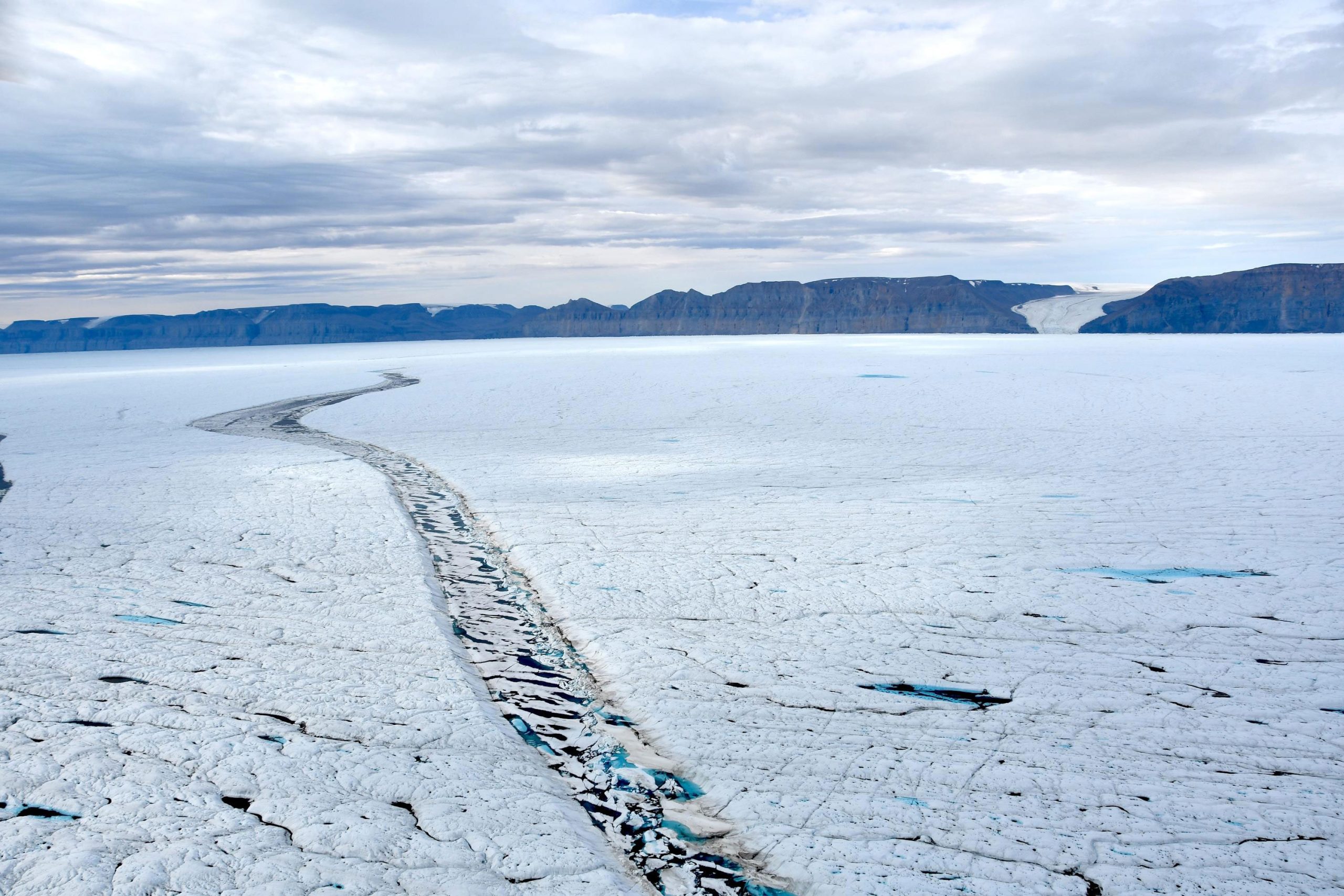
Researchers say two more major calving events are likely.
A massive slab of floating ice broke away from Petermann Glacier in northwest Greenland on August 4, 2026, creating a 76.4 km² ice island. An international research group led in part by the University of Ottawa says it was Petermann’s largest floating ice loss since 2012 and the biggest Arctic calving event since 2020.
The tabular iceberg separated from the glacier’s floating ice tongue and may be as much as 150 meters thick. Its surface area is roughly comparable to Manhattan Island, giving researchers an unusual chance to follow how a large Arctic ice mass forms, travels, and fragments over time.
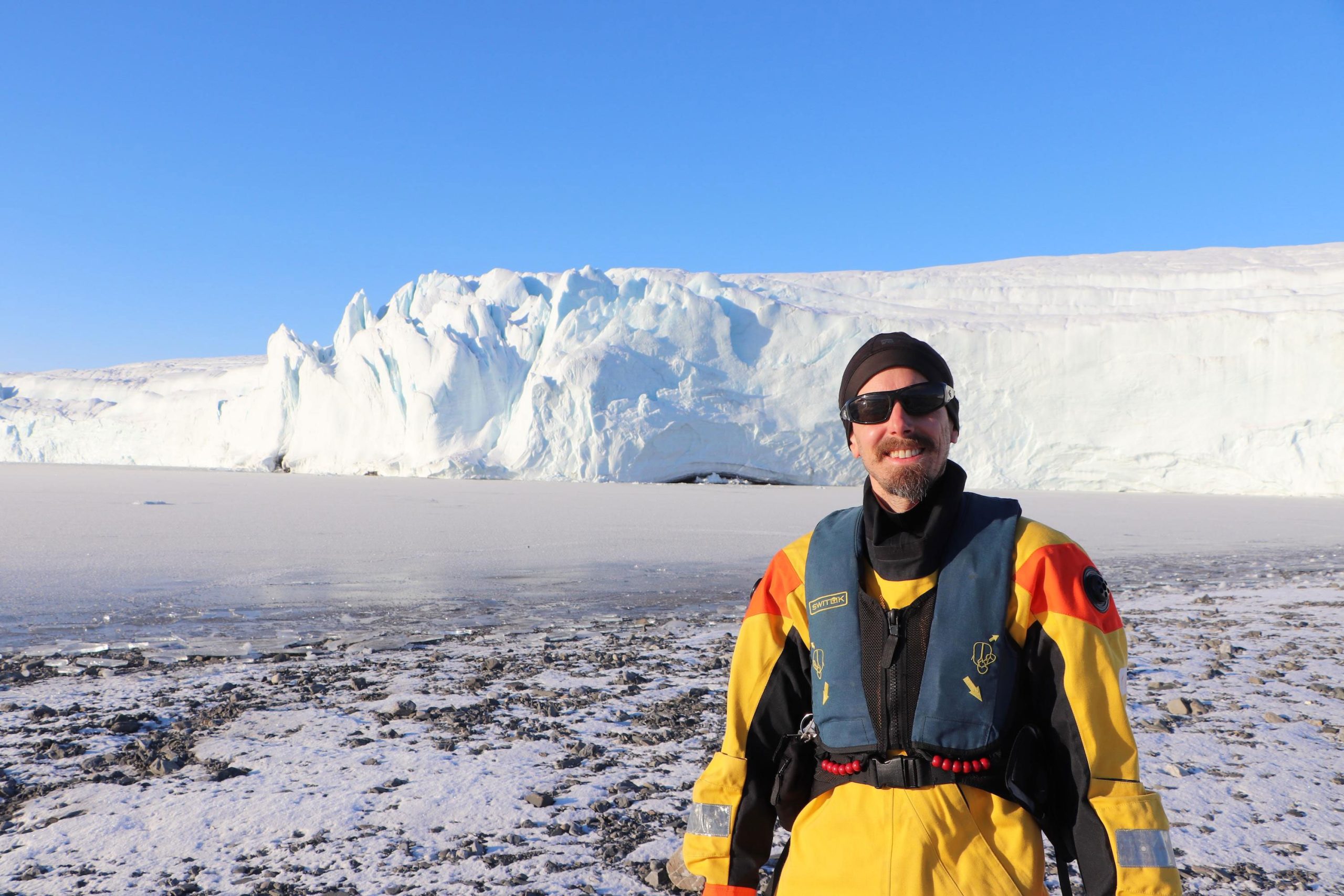
Adam Garbo, a PhD student in glaciology at uOttawa’s Department of Geography, Environment, and Geomatics, identified the event through an ongoing collaboration involving the University of Ottawa, the University of Stirling, Environment and Climate Change Canada, Lancaster University, and the University of Leeds.
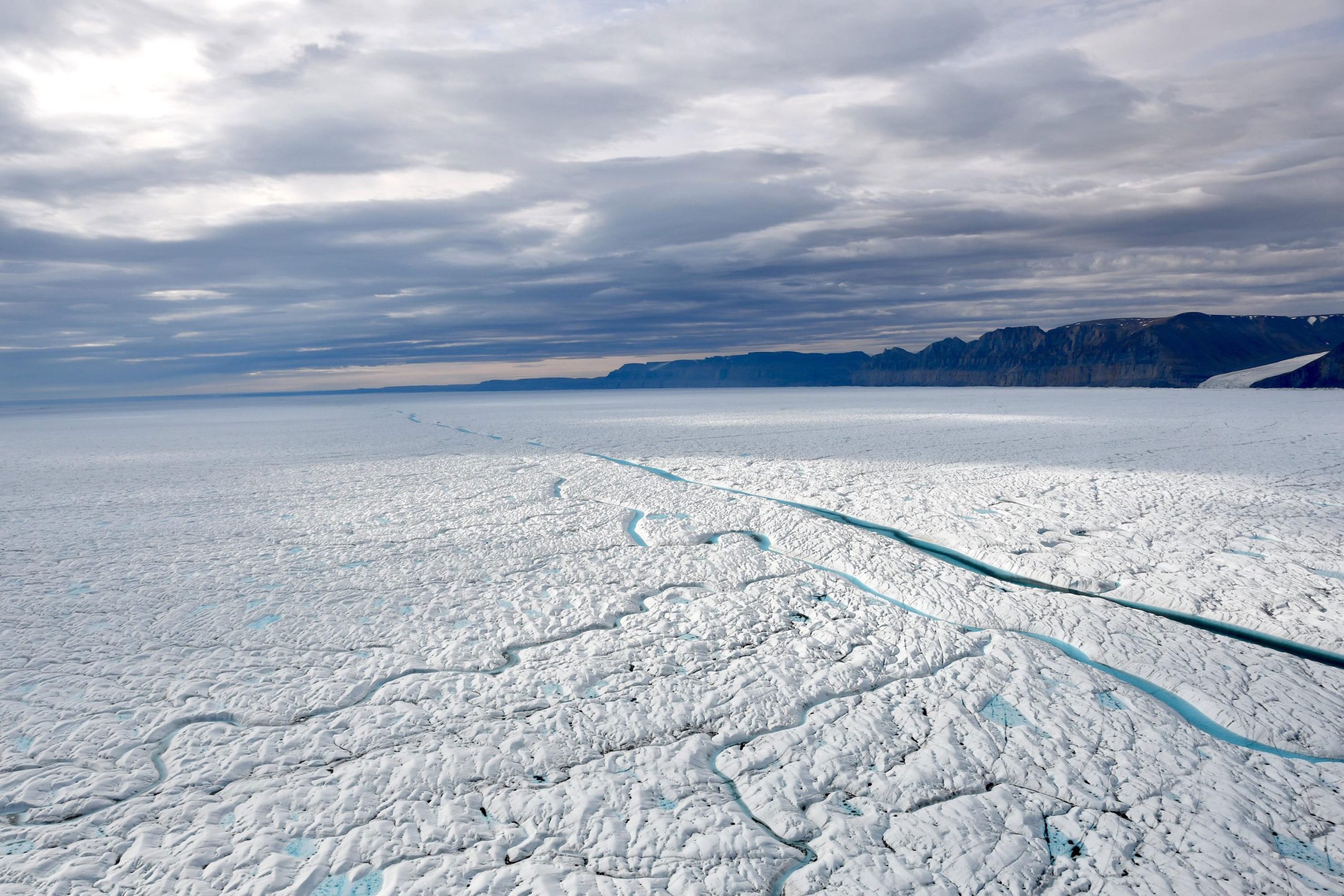
Researchers had been watching this part of Petermann Glacier for years. Long-term satellite observations dating back to 2019 documented changes in the floating ice tongue, including expanding fractures and other signs that the structure was becoming unstable.
“Petermann Glacier has long been one of Greenland’s largest remaining ice tongues,” says Garbo. “We’ve anticipated this break for years, and seeing it finally happen is remarkable.”
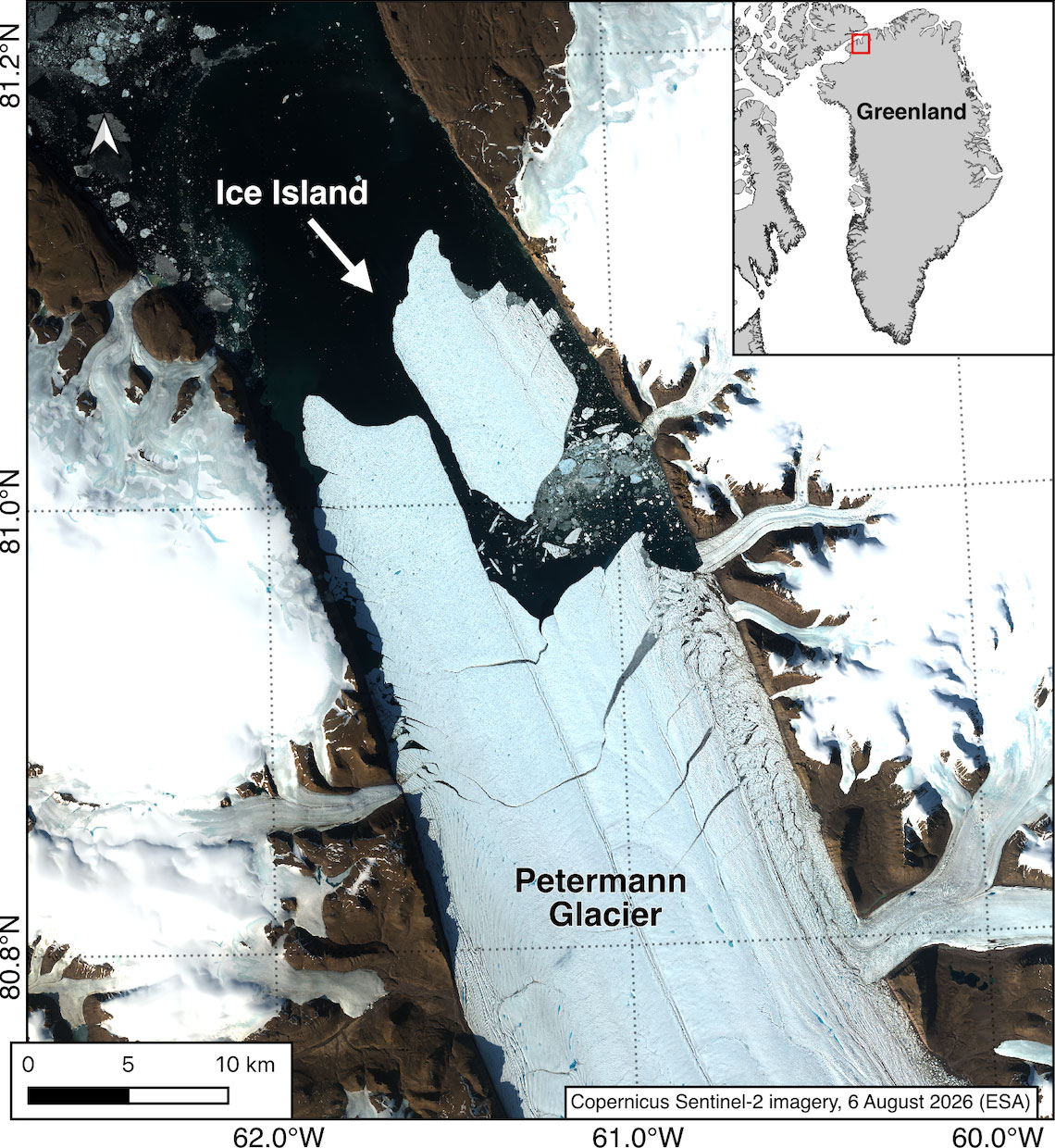
Satellite images captured the final break
Images from the European Space Agency’s Sentinel-1 mission showed obvious weakening along the centerline of the ice tongue on August 3. By 20:00 UTC the following day, the ice island had separated from the glacier’s eastern side.
Large tabular icebergs are common around Antarctica, but comparable Arctic ice islands are much rarer. Some can survive for years, allowing scientists to observe the forces that influence glacier retreat, ocean conditions, and ice-related hazards across polar environments.
“While large, tabular icebergs are relatively common in the Southern Ocean that surrounds the Antarctic Ice sheet, Arctic ice islands are far rarer,” explains Dr. Anna Crawford of the University of Stirling. “By studying Arctic ice islands, we will gain knowledge that can be transferred across Polar regions.”
Two more major calvings may follow
The August event may be only the first of several major losses. Researchers expect two more large ice islands to break away from Petermann Glacier in the near future as long as developing rifts continue extending across the floating ice tongue.
Those events are projected to create ice islands measuring about 94 km² and 84 km². Combined with the newly detached island, the losses would remove roughly 254 km² from the Petermann ice tongue, equivalent to about 22 percent.
Drifting ice could threaten navigation
The new ice island is also important for marine safety. As enormous blocks of floating ice move through Arctic waters and gradually break into smaller pieces, they can pose risks to ships and offshore operations.
Environment and Climate Change Canada is tracking the island’s movement, as it has done after earlier Arctic ice shelf calving events, while evaluating possible threats to navigation and offshore infrastructure. “These are thick blocks of ice that can drift for years,” specifies Dr. Abigail Dalton of the Canadian Ice Service, Environment and Climate Change Canada. “Over time, they fracture into smaller, harder-to-track pieces that pose hazards to vessels and resource operations.”
Garbo and his collaborators will continue following the aftermath with satellite imagery, aerial observations, and tracking data as they work to better understand the processes responsible for calving and retreat across Arctic ice shelves.
Never miss a breakthrough: Join the SciTechDaily newsletter.
Follow us on Google and Google News.
2 Comments
SAIL IT (HA HA)TO THE SOUTHWEST WHERE FRESH WATER IS NEEDED
“… and the biggest Arctic calving event since 2020.”
That isn’t a very long time for a geologic event.
Calving is what glaciers do. It demonstrates the the glacier is probably still moving down-slope from its zone of accumulation and out into the ocean past its grounding line. When it is passed its grounding line, it is floating freely and subject to flexing from the tides. The article doesn’t tell us enough to judge whether the floating ice broke off because it was moving faster than the upstream ice (because of inherited momentum), and therefore was a tension crack, or if it was just a fatigue crack from years of flexing. When a glacier becomes stagnant it stops its forward motion over low-gradient bedrock and starts to waste away, leaving remnant blocks of stranded ice. Even if warming in Greenland is occurring at that high latitude, it may lead to increased snowfall as melting pack ice exposes more water. Nobody seems to know just what will happen. This is hardly ‘ice-shattering’ news of ‘Titanic’ importance.