
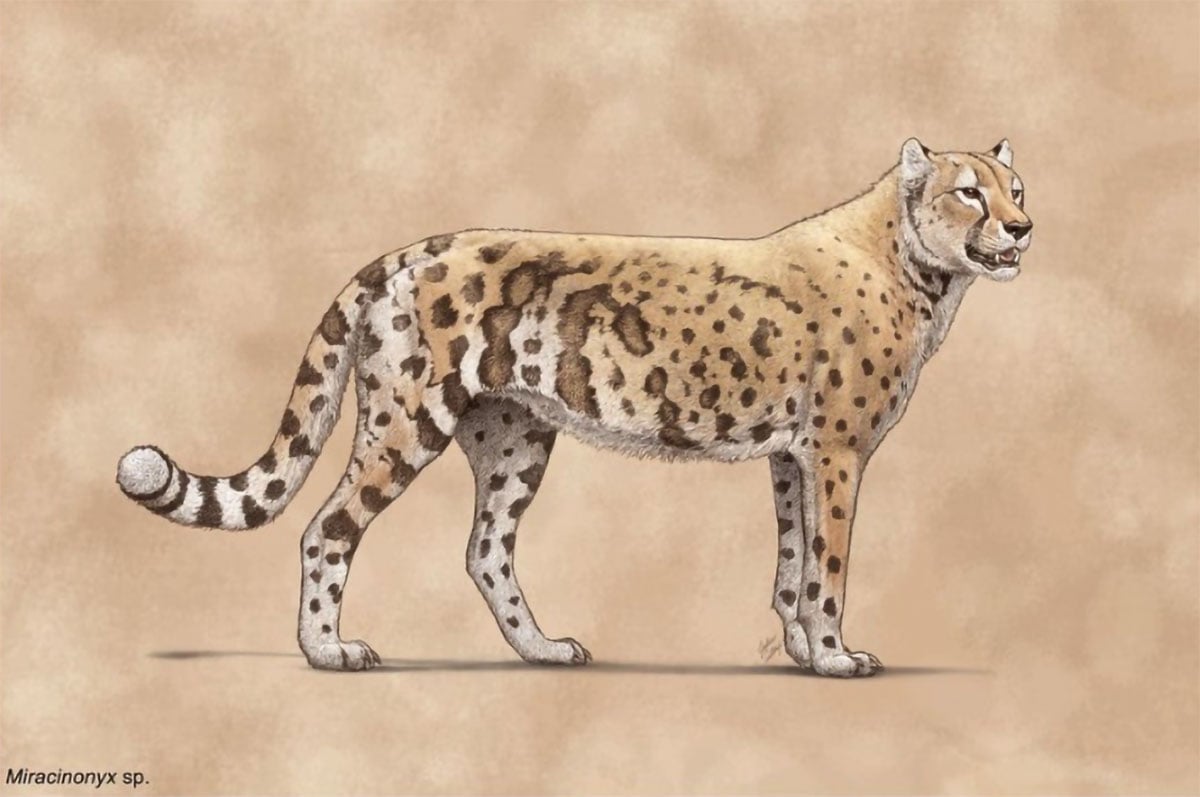
The “American cheetah” may have looked built for speed, but new evidence reveals a stranger story: it was closer to a puma, and some Arctic populations appear to have survived almost entirely on fish.
An extinct cat nicknamed the “American cheetah” turns out to have been much less cheetah-like than its name suggests. Ancient DNA shows that Miracinonyx trumani was more closely related to modern pumas, while chemical clues preserved in fossils reveal an even stranger surprise: some populations living near the Arctic appear to have eaten almost nothing but fish.
Together, the findings challenge the familiar picture of M. trumani as a North American version of the African cheetah, built mainly to chase fast prey across open grasslands. Instead, the animal appears to have been a highly adaptable predator capable of surviving in environments ranging from the subtropics to the Arctic.
“It’s very hard to imagine a prehistoric species we’ve never seen without comparing it to something we know,” says Molly Cassatt-Johnstone, the paper’s first author from the University of California, Santa Cruz. “But this approach can limit our understanding of ancient animals’ complexity, unique evolutionary histories, and behaviors.”
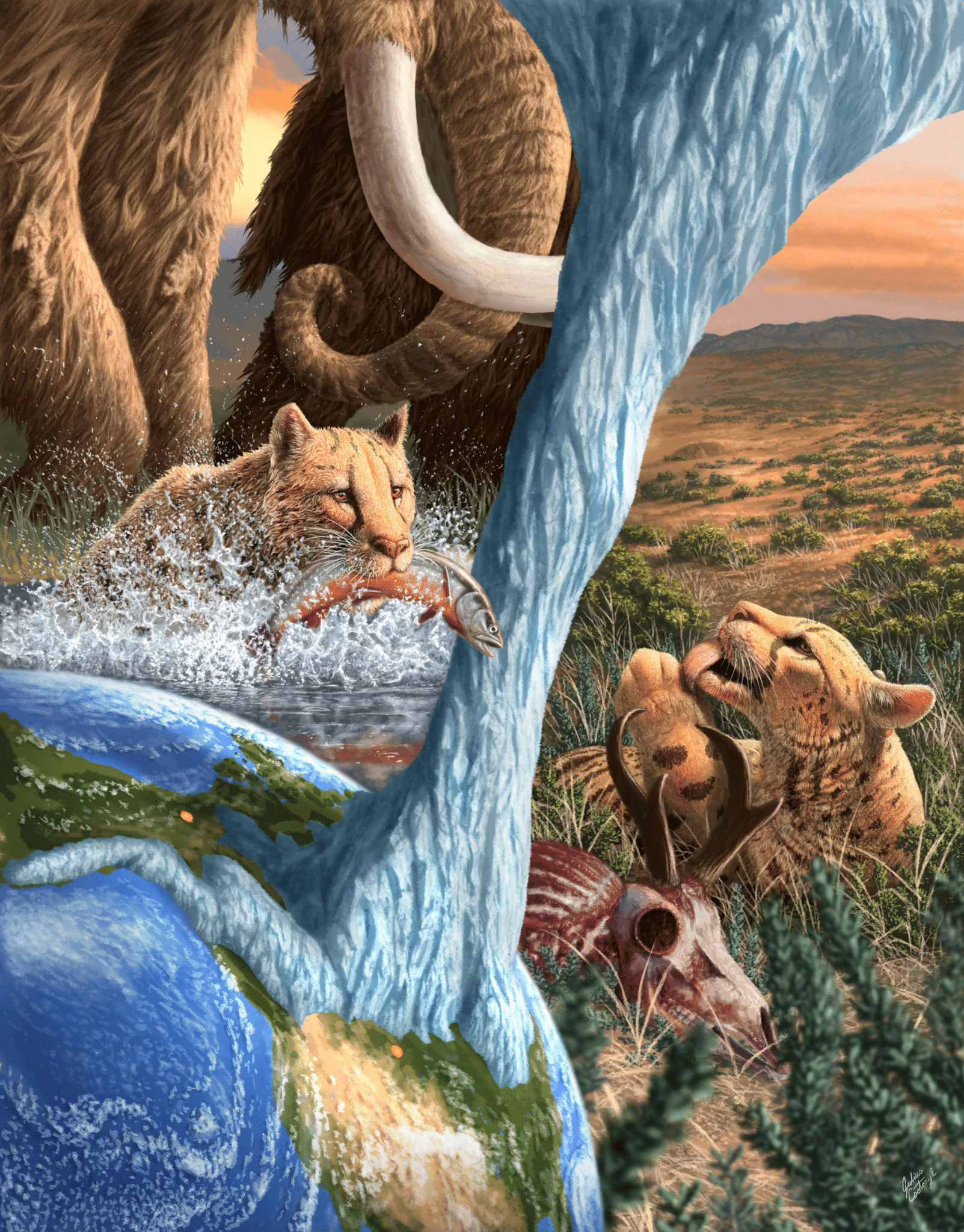
The study, published September 4 in Current Biology, combined ancient DNA with chemical evidence preserved in fossils to reconstruct both the cat’s evolutionary history and what different populations were eating.
A cheetah-like body misled scientists
M. trumani lived across North America during the Pleistocene, from about 2.5 million to 16,000 years ago. Fossils show that it had a slender body, long front legs, and large nasal cavities, features also seen in modern animals adapted for fast running, including cheetahs and horses.
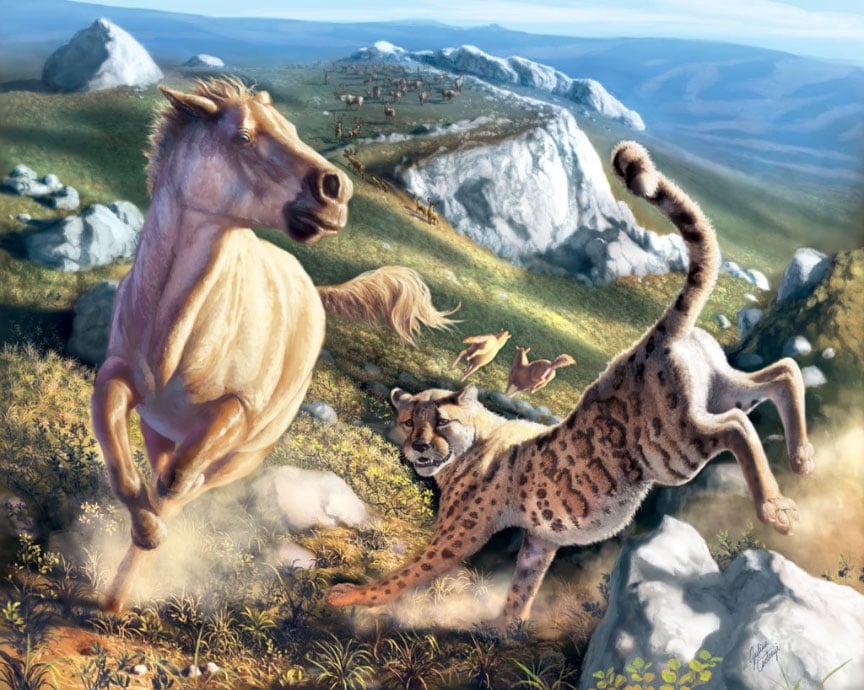
That resemblance helped inspire the “American cheetah” nickname. Paleontologists had also found some M. trumani remains alongside pronghorn fossils. Because pronghorns are exceptionally fast runners, researchers long suspected that the extinct cat chased them in much the same way African cheetahs pursue speedy prey today.
But growing evidence has suggested that appearance may have been misleading.
Ancient DNA points to pumas
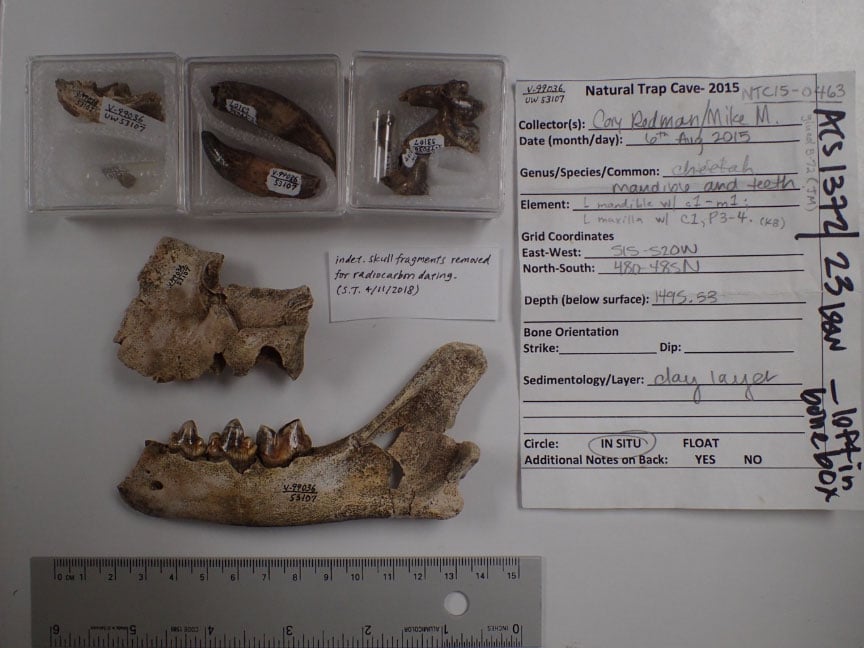
Cassatt-Johnstone and her colleagues sequenced the most complete set of ancient M. trumani DNA assembled to date using four specimens, one from Wyoming and three from Canada’s Yukon territory.
The Yukon fossils had previously been thought to belong to a different species. Genetic evidence instead showed that they were M. trumani, extending the cat’s known range more than 20 degrees of latitude farther north than previously recognized.
The researchers then compared the ancient DNA with genetic information from nine other cat species, from lions to domestic cats. They found that M. trumani and modern cheetahs shared a common ancestor about 4.7 million years ago. The extinct cat was more closely related to modern pumas, with the two lineages splitting from a common ancestor about 2.6 million years ago.
Arctic populations survived on fish
The northern fossils posed another question. Pronghorns are not found as far north as the Yukon, so what were these supposed “American cheetahs” eating there?
To investigate, the team analyzed nitrogen and carbon preserved in the Yukon fossils. These chemical signatures can provide clues about an animal’s diet and its position in the food chain.
The result was striking. Although the three Yukon cats came from different locations and lived hundreds of years apart, all showed chemical signatures indicating that they preyed almost exclusively on fish.
Their nitrogen profiles resembled those found in fish-specialist orcas and sea wolves along the coast of British Columbia, which eat mainly marine animals. The Wyoming M. trumani, however, showed a very different pattern. Its nitrogen signature resembled that of a land predator, such as a lion, that primarily eats herbivores.
The contrast suggests that M. trumani was not restricted to one type of prey or hunting strategy. Its ability to take advantage of very different food sources may have helped it survive across a wide range of environments.
Lost clock genes hint at Arctic life
The genetic evidence offered another clue about how the species may have adapted to life in the far north. Two genes involved in regulating circadian rhythms were nonfunctional in M. trumani. Circadian rhythms are the internal biological clocks that help animals use signals such as daylight to regulate when they sleep and wake.
The loss of those functional genes may reflect adaptation to high latitudes, where seasons bring extreme periods of daylight and darkness. Another possibility is that M. trumani was nocturnal. The evidence does not establish which explanation is correct.
“It’s really surprising and exciting to identify another predator present in Beringia,” Cassatt-Johnstone says, referring to the ancient land region connecting northeastern Asia and northwestern North America during the Pleistocene, where woolly mammoths and other large mammals roamed.
Like the woolly mammoth, M. trumani likely disappeared as the last ice age gave way to the warmer Holocene.
The findings leave behind a much more complex picture of the extinct predator. Its body may have resembled that of a cheetah, but its closest relatives were pumas, its range stretched far into the north, and at least some populations survived on an almost entirely fish-based diet.
“There are probably other extinct species that, unfortunately, have been reduced to fewer dimensions than they deserve,” Cassatt-Johnstone says. “The M. trumani fossils suggest that this ‘American cheetah’ was far more adaptable than its nickname implies.”
Reference: “Range and diet diversity in the Pleistocene American “cheetah,” Miracinonyx trumani” by Molly Cassatt-Johnstone, T. Brock Wooldridge, Sambit Ghosh, Elizabeth Hall, Susan Hewitson, Julie Meachen, Matthew J. Wooller, Grant Zazula and Beth Shapiro, 4 September 2026, Current Biology.
DOI: 10.1016/j.cub.2026.07.072
This work was supported by the National Science Foundation, the Howard Hughes Medical Institute, and the National Institute of General Medical Sciences.
Never miss a breakthrough: Join the SciTechDaily newsletter.
Follow us on Google and Google News.