
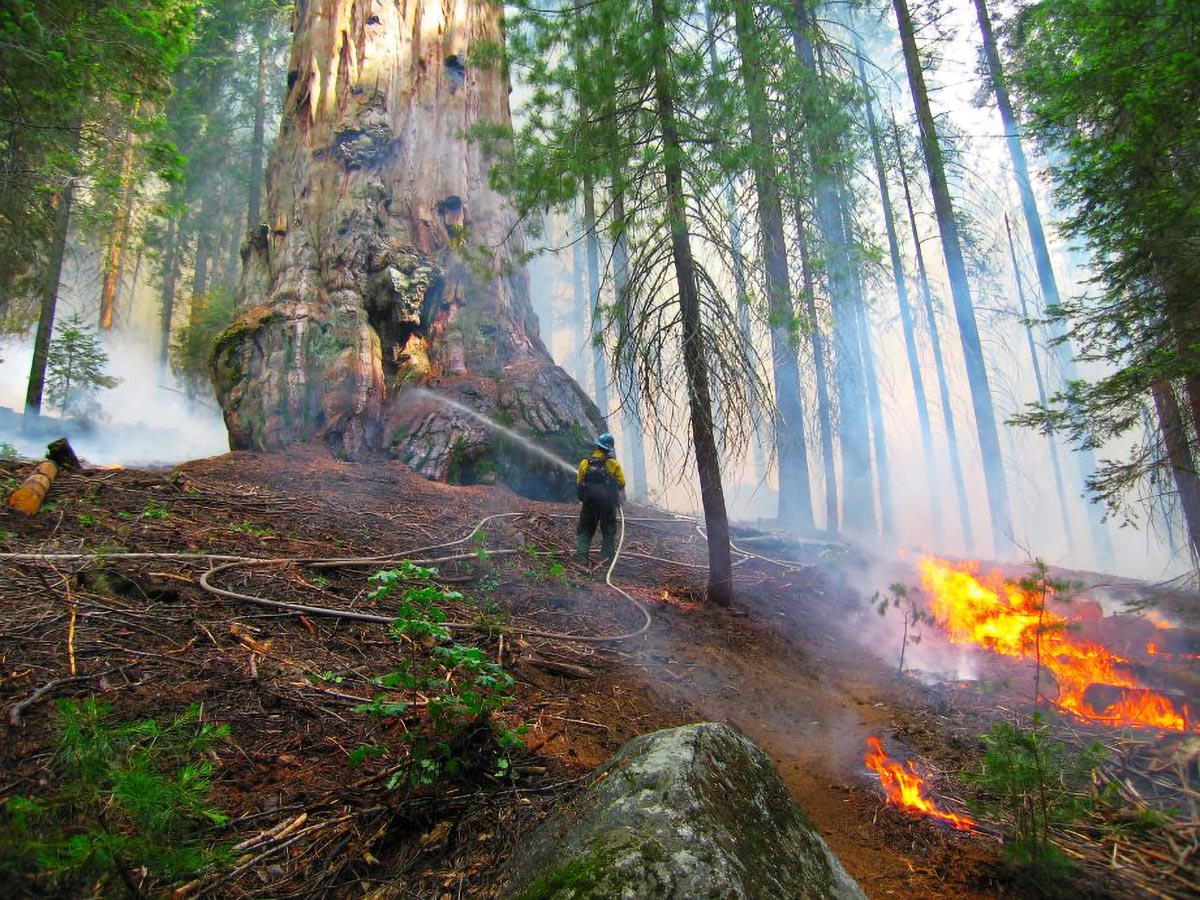
Iconic trees in areas with controlled burns are four times as likely to survive extreme wildfires.
Giant sequoias, the enormous trees native only to the western slopes of California’s Sierra Nevada, can live for more than 3,000 years. Yet thousands died when the Castle Fire in 2020 and the KNP Complex Fire in 2021 swept through their groves. A new study suggests that controlled burns helped spare many others.
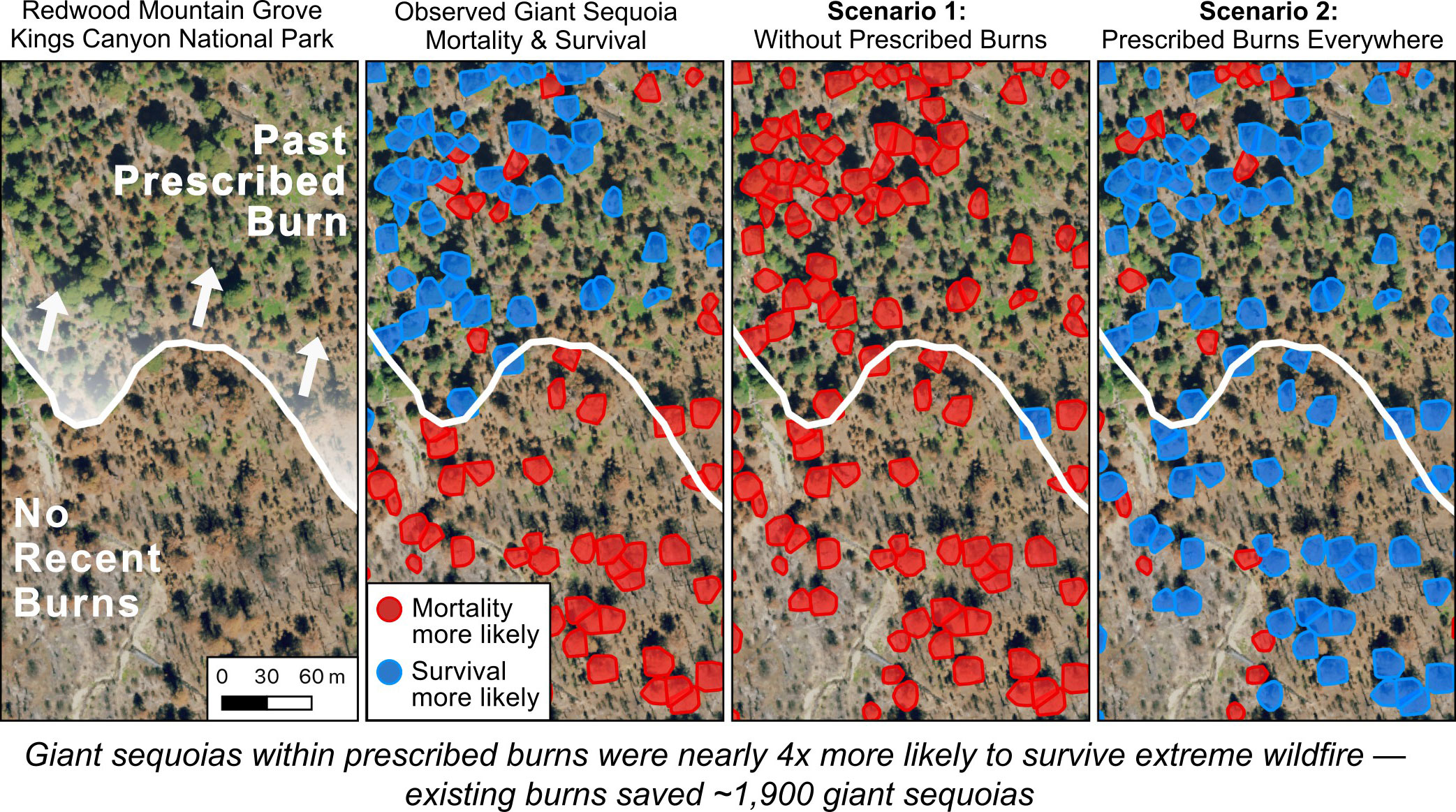
Researchers at the University of California, Davis, found that sequoias in areas treated with prescribed fire during the previous decade were nearly four times as likely to survive those wildfires as untreated trees in the same groves. Prescribed fires are deliberately set and managed burns that reduce the material available to fuel a later wildfire.
The study, published in Nature Communications, estimated that previous prescribed burns prevented about 1,900 sequoia deaths. Its simulations suggested that an additional 3,900 trees would likely have survived if every tree in the groves had received the treatment.
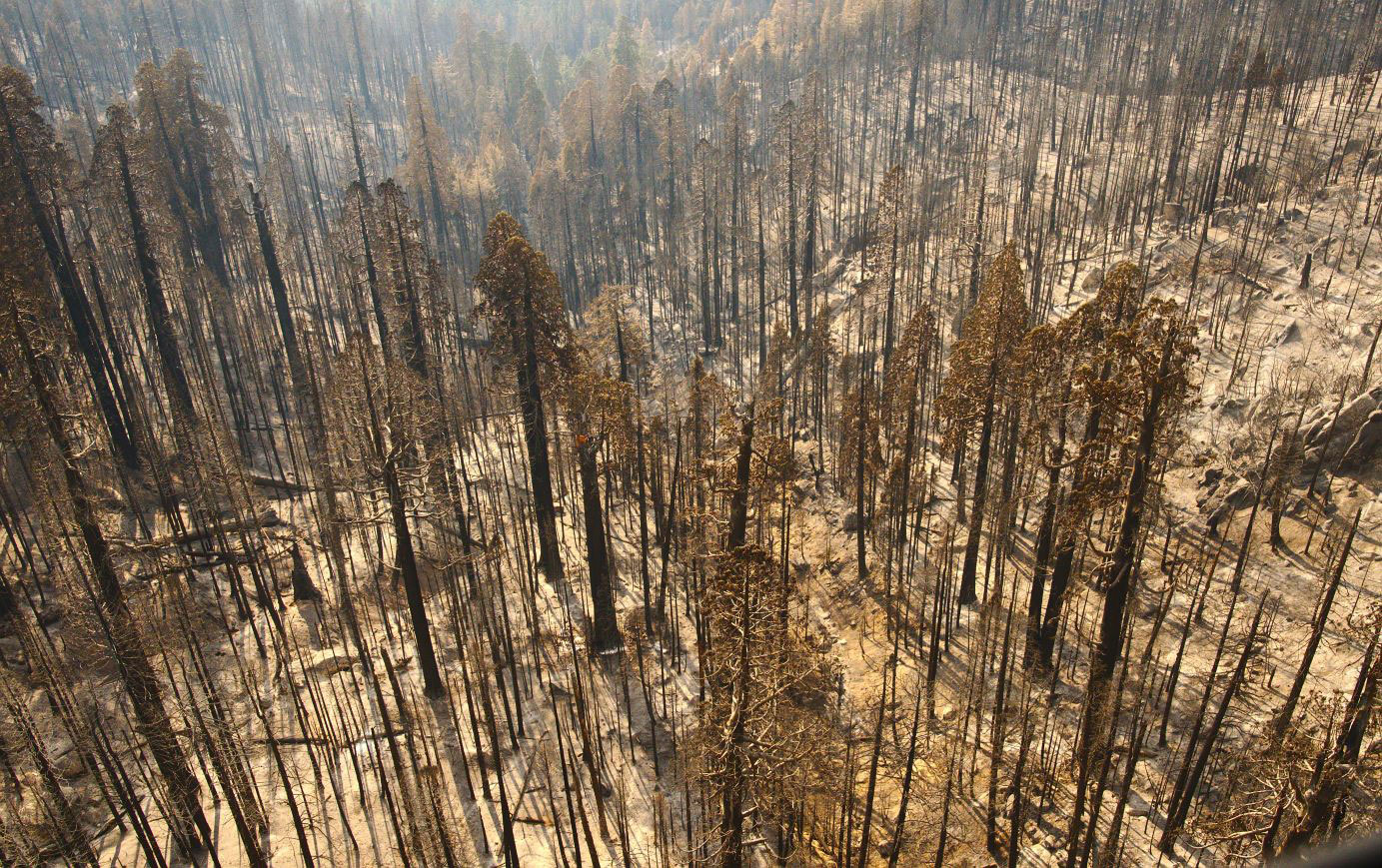
Past burns help explain sequoia survival
Decades of forest management made it possible to investigate that protection. Sequoia and Kings Canyon National Parks have used prescribed fire in sequoia groves since the 1960s, operating what the study describes as one of the country’s most extensive controlled burn programs. Those efforts left neighboring areas with very different fire histories. Some had experienced prescribed burns, while others had gone more than a century without fire.
The parks’ giant sequoias are also particularly well mapped. Working with researchers from the U.S. Geological Survey and the two national parks, the authors examined about 26,400 trees across 19 groves affected by the Castle and KNP Complex fires.
They combined airborne lidar, which uses laser pulses to measure three-dimensional structures, with high-resolution images from PlanetScope satellites. Together, those observations allowed the team to quantify the amount and arrangement of vegetation that could fuel a fire before the wildfires and estimate what happened to the trees afterward. Their analysis found that prescribed burns within the previous decade reduced the odds of a sequoia dying by about 77%.
“This is a timely study given the history of fire suppression in these forests and the state’s increasing pace and scale of fuel thinning in recent years,” said UC Davis Professor Yufang Jin. “By combining scalable, high-resolution remote sensing with a rigorous statistical framework, we were able to reveal insights on the effects of prescribed fires that go well beyond what traditional anecdotes or field surveys can tell us.”
Giant sequoias’ fire resistance has limits
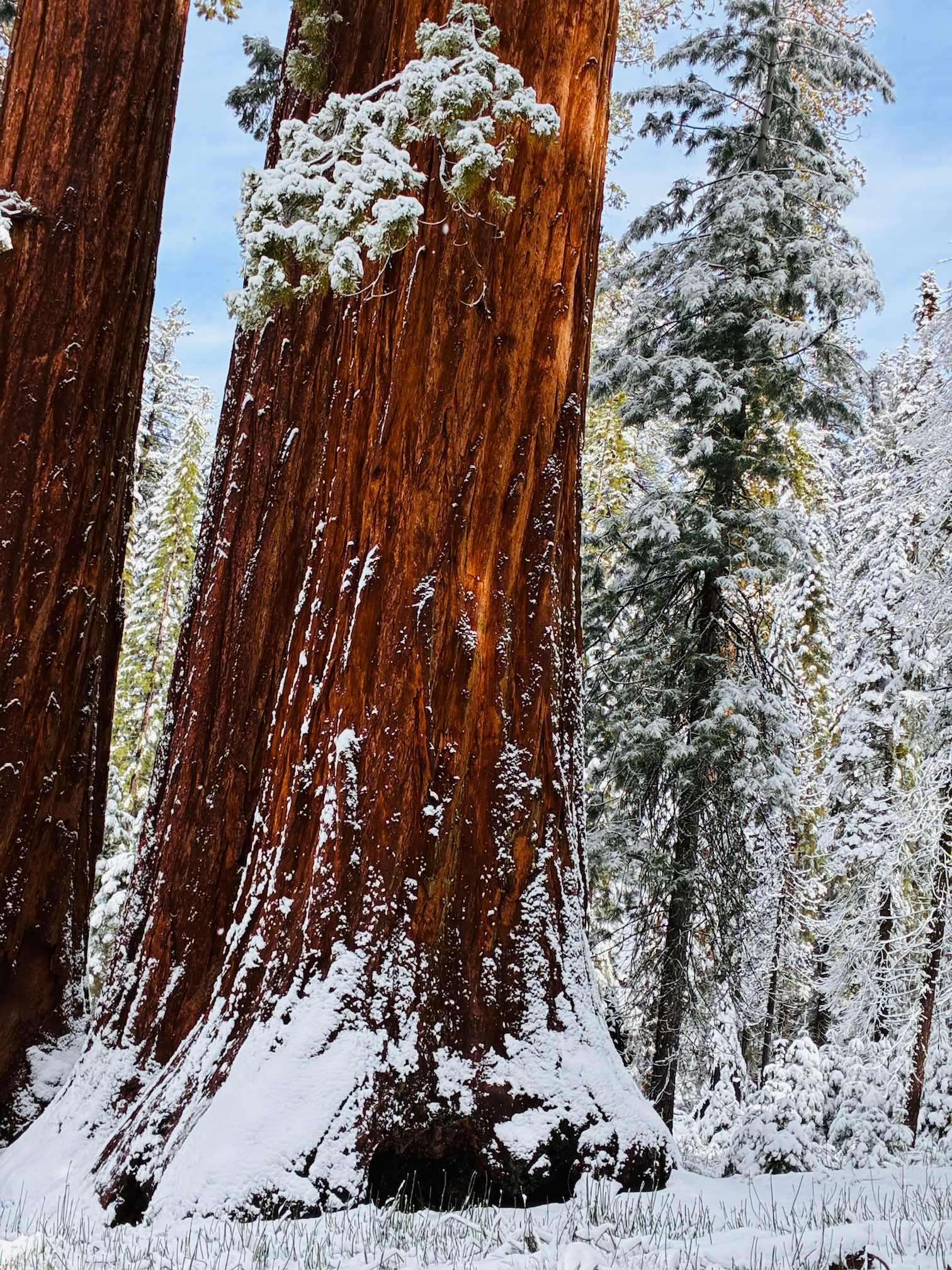
For giant sequoias, fire has long been part of survival. These trees, which can weigh as much as 15 blue whales, have thick bark and high canopies that help them withstand burning. Periodic low-intensity fires are a natural and essential part of the conditions in which they thrive.
Climate change is increasing the frequency and intensity of disturbances such as wildfire in old-growth forests, the study notes. Even the sequoias’ natural defenses are proving insufficient. Images of their blackened remains during the late summers of 2020 and 2021 challenged a widespread impression that the trees were practically fireproof.
“These trees live for so long and have experienced so much variability of climate, differences in wildfire, drought — they’ve seen it all,” said lead author Dan Dixon, who was a UC Davis postdoctoral researcher in Yufang Jin’s lab when the study was conducted. “Having so many die in just two years was unprecedented.”
“Prescribed burns are effective at reducing giant sequoia mortality, even for today’s extreme wildfires,” Dixon said. “If the goal is protecting giant sequoias, prescribed fire is an essential tool available to managers.”
Reference: “Previous prescribed burns saved thousands of ancient sequoias during historically unprecedented wildfires” by Dan J. Dixon, Adrian J. Das, Xiaoli Dong, Andrew M. Latimer, David N. Soderberg, Nathan L. Stephenson, Anthony C. Caprio and Yufang Jin, 11 July 2026, Nature Communications.
DOI: 10.1038/s41467-026-75418-6
Funded by the NASA Land Cover and Land Use Change Program, California Strategic Growth Council, and the USDA National Institute of Food and Agriculture.
Never miss a breakthrough: Join the SciTechDaily newsletter.
Follow us on Google and Google News.