
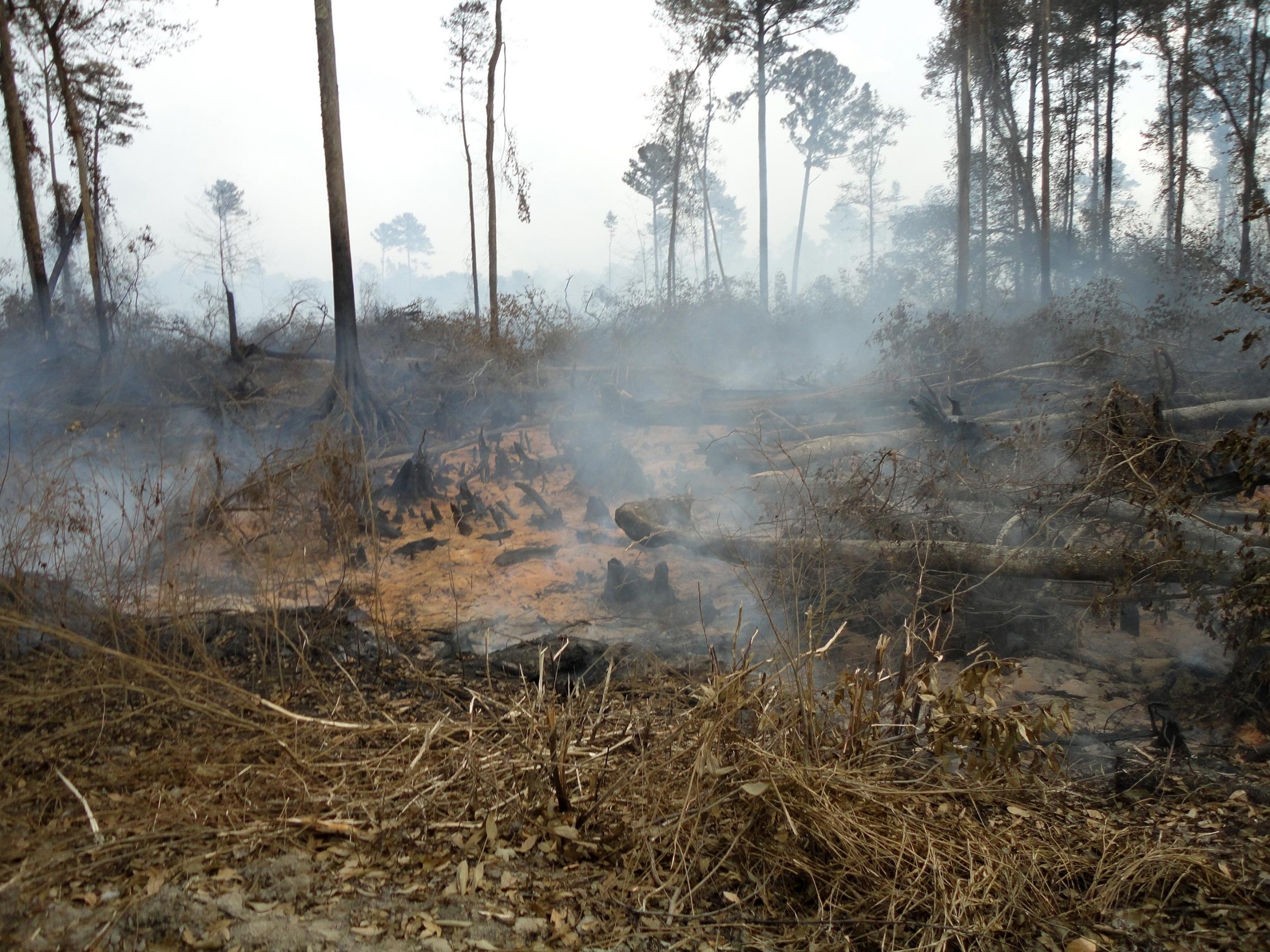
Imperial College London researchers have simulated for the first time how soil moisture content affects the ignition and spread of smoldering peat fires, which can release up to 100 times more carbon into the atmosphere than flaming fires. They also simulated how several smaller peat fires can merge into one large blaze, and tracked the interplay between smoldering and flaming fires.
The findings could help scientists, authorities, and landowners to manage the clearing of vegetation in peatlands in the safest way possible. The study is published today (October 30, 2020) in Proceedings of the Combustion Institute.
First author Dwi Purnomo of Imperial’s Department of Mechanical Engineering said: “Peat fires are a devastating yet chronically under-researched phenomenon that spurt millions of tonnes of carbon into the atmosphere every year. If we can use scientific evidence to help people manage them more effectively, we can perhaps dampen their impact on people and the environment.”
Peat fires, which occur in regions like Southeast Asia, North America, and Siberia, are driven by the burning of soils rich in organic content. When peat — which is a natural reservoir of carbon — burns, it releases up to 100 times more carbon per burn area into the atmosphere than non-peat fires. Worldwide, peat fires account for millions of tonnes of carbon released into the atmosphere each year.

Unlike smoke from flaming fires, which reaches high into the atmosphere, smoke from smoldering stays close to the ground, causing haze which damages human health and is associated with excess deaths in Southeast Asia.
Peat fires can start naturally by lightning strikes or by human activities, but often begin accidentally from controlled burns — flaming fires that are intentionally started to remove excess vegetation on the surface of forests or plantations.
However because they’re driven by smoldering, these fires are notoriously difficult to extinguish once they get out of control. Even when flames are extinguished the fire can continue by smoldering underground and reigniting flames much later on — hence the name ‘zombie fires.’
Senior author on the paper Professor Guillermo Rein, of Imperial’s Department of Mechanical Engineering, said: “Although people have been using controlled burns in agriculture for centuries, starting them on peat soils can be particularly dangerous. Peat draws the fire underground, which then hides there before coming back like zombies, making detection and extinction very challenging. The effects are felt in plantations, forests, homes, residents’ health, and the environment.” The new research demonstrates that burning vegetation on peaty soils with a high moisture content is less likely to sustain smoldering, lessening the likelihood of losing control of blazes. The findings are the first to study the interplay between smoldering peat and flaming vegetation.
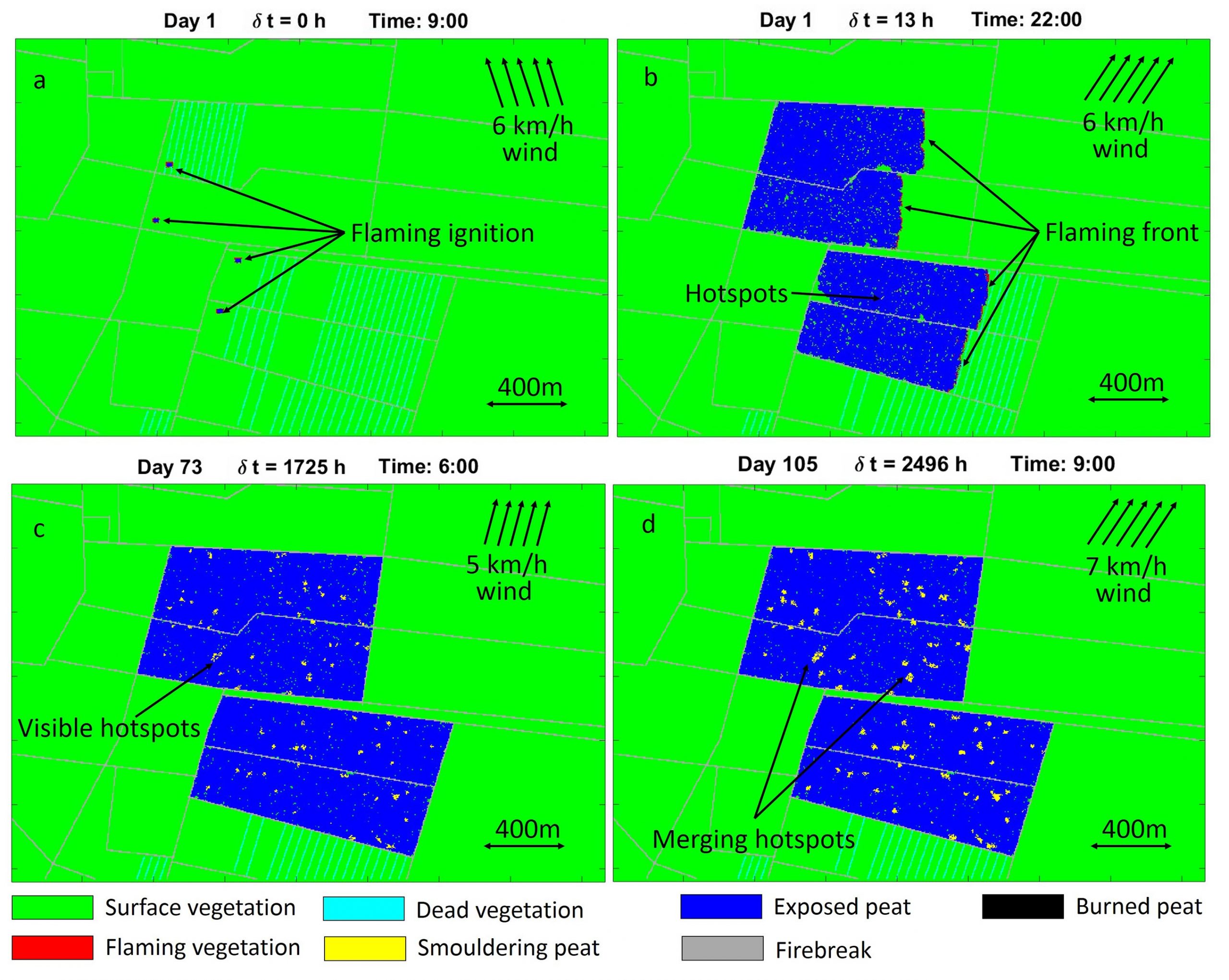
The computer model could help authorities and landowners to manage the clearing of vegetation in peatlands in the safest way possible, by for example finding the right soil moisture content to avoid the ignition or spread of smoldering.
Dwi said: “It might seem trivial that drier soils sustain faster and larger smoldering fires, but this work can predict the critical moisture values for ignition.”
The researchers used advanced computer simulations of smoldering and flaming fires in peatlands, and validated the simulations by comparing them to experiments. Then, they applied the model to a control burn in Southeast Asia (see video below).
Dwi was inspired to study peat fires because of their abundance in his home country of Indonesia. He said: “I’ve seen the devastation they can cause and want to help my country and others like it which are affected by peat fires.”
Next the researchers will build on their models to look for other factors that affect uncontrolled fires and in other affected regions like the Arctic.
Dwi added: “As well as soil moisture content we will look at the way rain, wind, and fire-fighting affect peat fires.”
Reference: “Using Cellular Automata to Simulate Field-Scale Flaming and Smouldering Wildfires in Tropical Peatlands” by Dwi M J Purnomo, Matthew Bonner, Samaneh Moafi and Guillermo Rein, 30 October 2020 in Proceedings of the Combustion Institute.
DOI: 10.1016/j.proci.2020.08.052
Never miss a breakthrough: Join the SciTechDaily newsletter.
Follow us on Google and Google News.