
A group of 59 international scientists, led by researchers at Canada’s McMaster University, has uncovered new information about the distinct effects of climate change on boreal forests and peatlands, which threaten to worsen wildfires and accelerate global warming.
Manuel Helbig and Mike Waddington from McMaster’s School of Geography and Earth Sciences gathered observational data from collaborators in countries across the boreal biome. Their study of how ecosystems lose water to the atmosphere appears was recently published in the journal Nature Climate Change.
The unprecedented detail of their work has highlighted dramatic differences in the ways forests and peatlands regulate water loss to the atmosphere in a warming climate, and how those differences could in turn accelerate the pace of warming.
Most current global climate models assume the biome is all forest, an omission that could seriously compromise their projections, Helbig says.
“We need to account for the specific behavior of peatlands if we want to understand the boreal climate, precipitation, water availability, and the whole carbon cycle,” he says.
“Peatlands are so important for storing carbon, and they are so vulnerable.”
Until now, Helbig says, it had not been possible to capture such a comprehensive view of these water-cycle dynamics, but with the support of the Global Water Futures Initiative and participation from so many research partners in Canada, Russia, the US, Germany, and Scandinavia, new understanding is emerging.
As the climate warms, the air gets drier and can take up more water. In response to the drying of the air, forest ecosystems – which make up most of the world’s natural boreal regions – retain more water. Their trees, shrubs and grasses are vascular plants that typically take up carbon dioxide and release water and oxygen through microscopic pores in their leaves. In warmer, dryer weather, though, those pores close, slowing the exchange to conserve water.
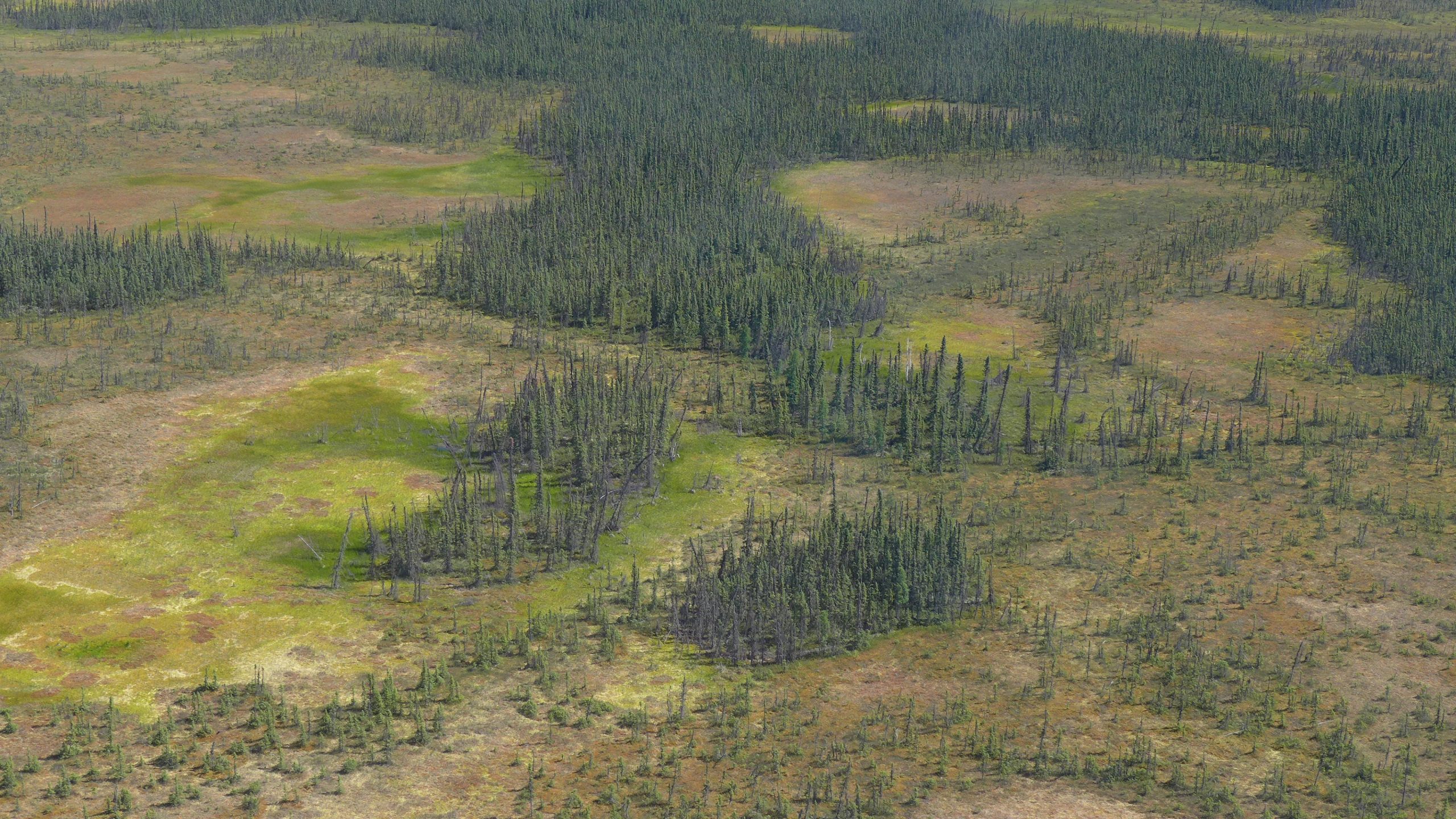
Together with lakes, the spongy bogs and fens called peatlands make up the remainder of the boreal landscape. Peatlands store vast amounts of water and carbon in layers of living and dead moss. They serve as natural firebreaks between sections of forest, as long as they remain wet.
Peatland mosses are not vascular plants, so as warming continues, they are more prone to drying out. Unlike forests, they have no active mechanism to protect themselves from losing water to the atmosphere. Dehydration exposes their dense carbon stores to accelerated decomposition, and turns them from firebreaks into fire propagators, as shown in previous research from Waddington’s ecohydrology lab.
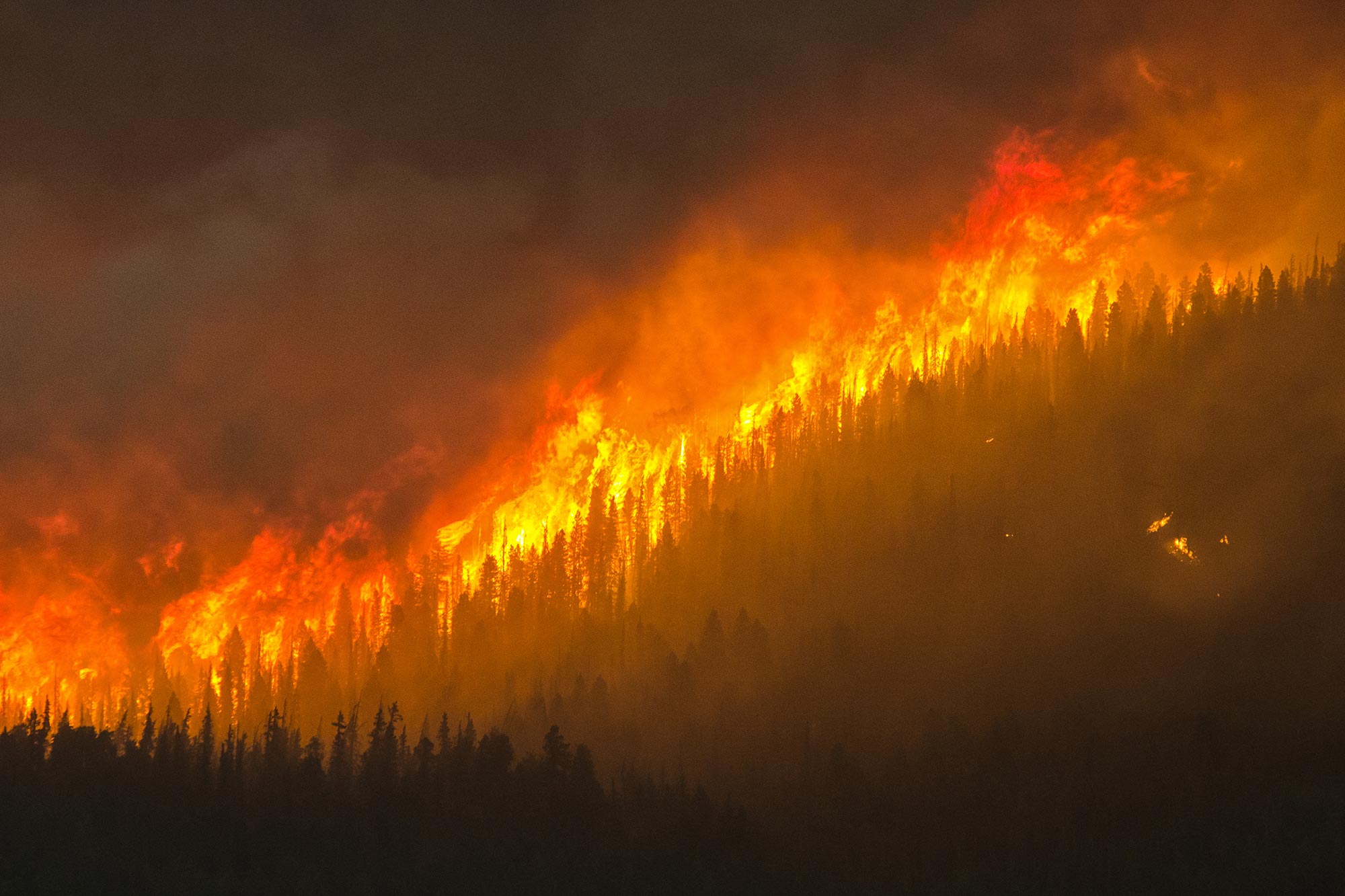
Drier peatlands mean bigger, more intense fires that can release vast amounts of carbon into the atmosphere, accelerating global warming, Helbig says.
“It’s crucial to consider the accelerated water loss of peatlands in a warming climate as we project what will happen to the boreal landscape in the next 100 to 200 years,” he says.
Reference: “Increasing contribution of peatlands to boreal evapotranspiration in a warming climate” by Manuel Helbig, James Michael Waddington, Pavel Alekseychik, Brian D. Amiro, Mika Aurela, Alan G. Barr, T. Andrew Black, Peter D. Blanken, Sean K. Carey, Jiquan Chen, Jinshu Chi, Ankur R. Desai, Allison Dunn, Eugenie S. Euskirchen, Lawrence B. Flanagan, Inke Forbrich, Thomas Friborg, Achim Grelle, Silvie Harder, Michal Heliasz, Elyn R. Humphreys, Hiroki Ikawa, Pierre-Erik Isabelle, Hiroki Iwata, Rachhpal Jassal, Mika Korkiakoski, Juliya Kurbatova, Lars Kutzbach, Anders Lindroth, Mikaell Ottosson Löfvenius, Annalea Lohila, Ivan Mammarella, Philip Marsh, Trofim Maximov, Joe R. Melton, Paul A. Moore, Daniel F. Nadeau, Erin M. Nicholls, Mats B. Nilsson, Takeshi Ohta, Matthias Peichl, Richard M. Petrone, Roman Petrov, Anatoly Prokushkin, William L. Quinton, David E. Reed, Nigel T. Roulet, Benjamin R. K. Runkle, Oliver Sonnentag, Ian B. Strachan, Pierre Taillardat, Eeva-Stiina Tuittila, Juha-Pekka Tuovinen, Jessica Turner, Masahito Ueyama, Andrej Varlagin, Martin Wilmking, Steven C. Wofsy and Vyacheslav Zyrianov, 11 May 2020, Nature Climate Change.
DOI: 10.1038/s41558-020-0763-7
Never miss a breakthrough: Join the SciTechDaily newsletter.
Follow us on Google and Google News.
11 Comments
Thanks for sharing، Keep writing.
I remember a time, seems so long ago now, when we didn’t attribute ever single change in local climates. It’s almost as if we used to know that climate was every changing and even though the seasons were relatively the same every year, each one brought unpredictable weather.
We come to this age. Where we expect climate not to change. And yet, we forget that the dryas impact was only about 10000 years ago and completely destroyed almost everything. Flooded the earth. Black skies. So on and so on.
Point is, the climate changes. I’m not saying that we don’t play our part. But where did we get this idea from that the climate should always remain stable just because we say so??
Spencer, well said.
It’s political and very dangerous to freedom.
Spencer,
No one expects the climate not to change, it’s just that inconvenient fact (I think everyone can agree this by now) that man’s activities have made the climate change much more rapidly than it would do naturally. In terms of our human species, not to mention all other species, the abrupt changes driven by man made global heating are causing and will continue to cause fundamental and unprecedented changes to our environment which the vast majority of the global population at a certain point in the short term will not be able to adapt to quickly enough to survive.
Climate change happens every day, but man has no ability to change global temperatures at all. Global Warming is Fakery from Climate Freakoids that want your money with Fake Carbon Taxes. Oh yes, nobodies going EXTINCT Greta, except for your lunatic comments. Get a life !
Ya so how about when there are wild fires, STOP TAKING WATER OUT IF OUR DAMN LAKES AND PONDS, START TAKING WATER FROM OUR RISING SEA LEVELS OF THE OCEAN! Dumb asses are putting us in a drought. Especially, when the wild fires are by the ocean. Nope don’t. Pull water from the ocean that’s rising, but let’s pull out water from the place where we need it most for our crops, our animals, and ourselves… Come on people!!!
Problem-reaction-solution
Climate change is a manufactured problem to bring about the solution which is global governance. CC is extremely well financed globally. The international financial super elites have worked tirelessly to form global goverment. This is why CC will not be dispensed of easily. I think we all can see the immense power behind this fraud.
UN Agenda 21 is the method and it is happening in plain sight everywhere.
Youtube search: Rosa Koire exposes UN Agenda 21 .
I promise you that you will see it happening in your area. It’s diabolical IMO
THE SKY IS NOT FALLING NOR ARE WE GOING TO DIE….
Signed
Chicken little
Lets see how you feel when extreme weather or wildfire disrupts your life. While Big Oil reaps billions in subsidies on top of profits from smog- All those scientists are not profiting from their findings, and certainly are not happy about the evidence. Are you really smarter than them all? Do you have proof that life on this toxified planet is not at risk? You are scared thus angry and therefore prefer raging denial to ackowledging a sad reality. Understandable but not wise. Willfull igonorance, cowardice and hate will not save you…
Oh, so you are saying that the sky is falling? Lol
Sure sure, chicken little.
What weak arguments. Wildfires are NOT elevated, or increasing. Droughts are NOT worse. Even in the US Drought Monitor (https://droughtmonitor.unl.edu), within the last year or so ago, showed we had the least amount of drought (posted on site with maps) in the history of tracking it. It’s up a little lately due to our crazy winter (super strong positive AO). Yes, many climate scientists ARE profiting–from great big grants. Grants do not mean truth is not attained, but don’t tell me they don’t get money (Sorry, but many of them are wrong). A check this morning of CDAS global temp anomaly showed, as a quick sampling, of the last 14 days, that we are only .324 degrees C above normal. WHY are we not NOW at 1.5 C as the models say? So, I’m NOT scared or ignorant, studying climate since 1973. For 2+ million yrs. (ice ages), climate has been radically changing. But, in our current ice age cycle, we are in an unprecedented steady period, as we see that new analyses of historical temperature measurements garnered from 73 different locations on Earth now reveals that the climate of the past 9,000 years has been far more stable than previously thought. Not enough space to go into the Hiawatha (Greenland) impactor event (100,000-12,800 yr. ago) and how it likely caused the Younger Dryas Event of cooling, and maybe our stability for a time. But, normal IS stark changeability. Physists tell us that, the higher it goes, CO2 loses its additional effect. There is so much more to say. I look at the big picture including aspects of astronomy and astrophysics, and over time. That said, I still believe we need to be smart. Renewable energy just NOW makes more U.S. energy than coal! That’s great. But, talk of a toxic earth ignores our great ecological advances, and how the U.S. has decreased its carbon output measureably already for some time. We are not going to burn up or melt in the next 10-20 years! I’m just saying that your reality is a little skewed, and the alarmism is probably not necessary. [I can give citations if really needed]