
Close Menu
    Facebook X (Twitter) Instagram
    SciTechDaily
    • Biology
    • Chemistry
    • Earth
    • Health
    • Physics
    • Science
    • Space
    • Technology
    Facebook X (Twitter) Pinterest YouTube RSS
    SciTechDaily
    Home»Space»NASA’s Curiosity Rover Unveils a Spectacular New View of Mars at Dawn
    Space

    NASA’s Curiosity Rover Unveils a Spectacular New View of Mars at Dawn

    By NASAOctober 19, 2026No Comments4 Mins Read
    Facebook Twitter Pinterest Telegram LinkedIn WhatsApp Email Reddit
    Share
    Facebook Twitter LinkedIn Pinterest Telegram Email Reddit
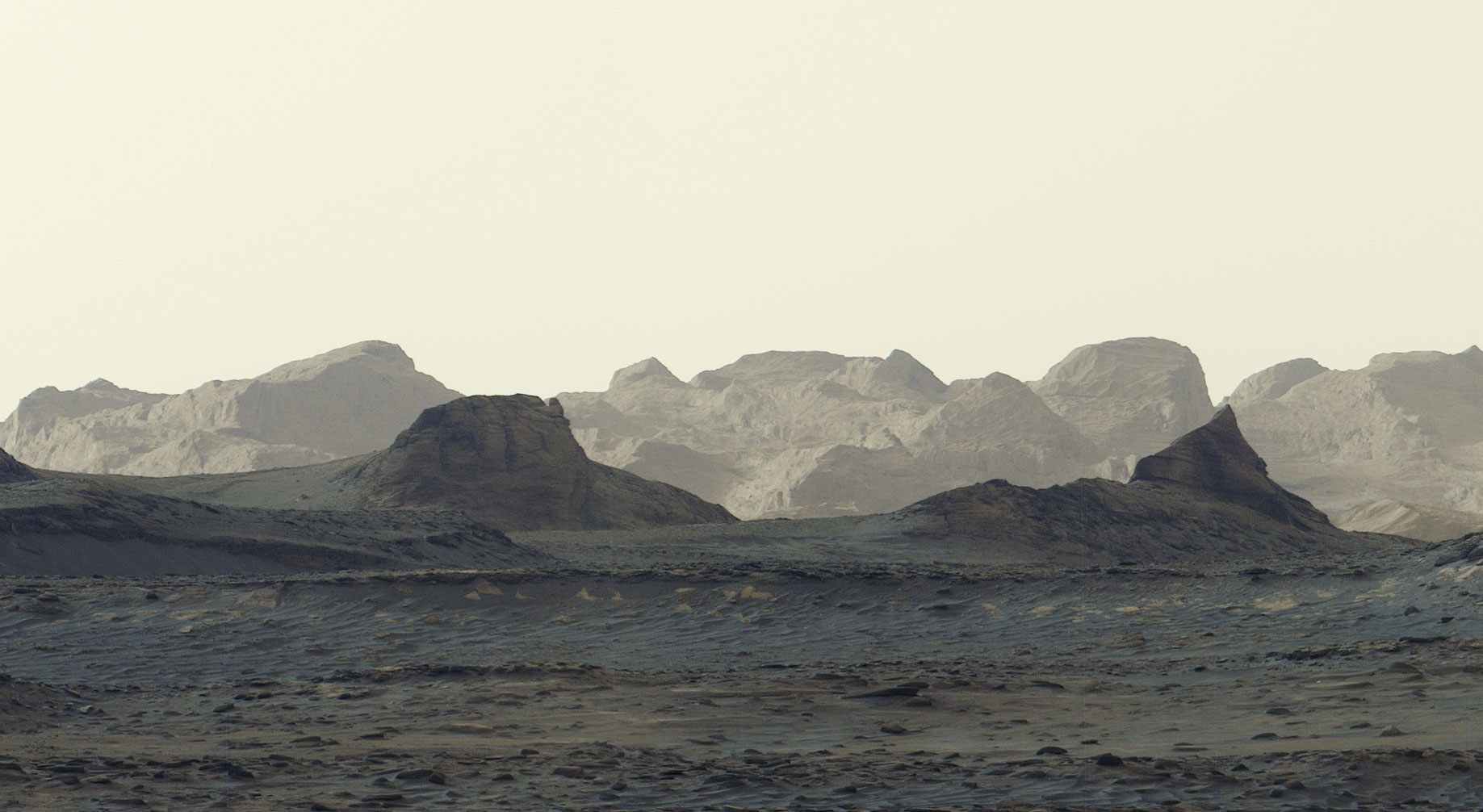
    Wind Carved Yardangs on Mars Captured by Curiosity
    The captivating shapes of wind-carved crags called yardangs are revealed in this zoomed-in crop of a broader panorama captured by NASA’s Curiosity Mars rover on Aug. 11, 2026. Scientists are eager to learn more about how the yardang layer formed. Credit: NASA/JPL-Caltech/MSSS

    Curiosity’s latest panorama sharpens the view of a Martian rock layer that looks out of place and may have formed from ancient volcanic ash.

    A band of wind-carved cliffs stretches roughly 10 miles (16 kilometers) across the northwestern reaches of Mount Sharp on Mars, and NASA’s Curiosity rover is climbing toward it. A newly released panorama offers the most detailed view yet of these formations, known as yardangs, which mission scientists have long wanted to examine up close.
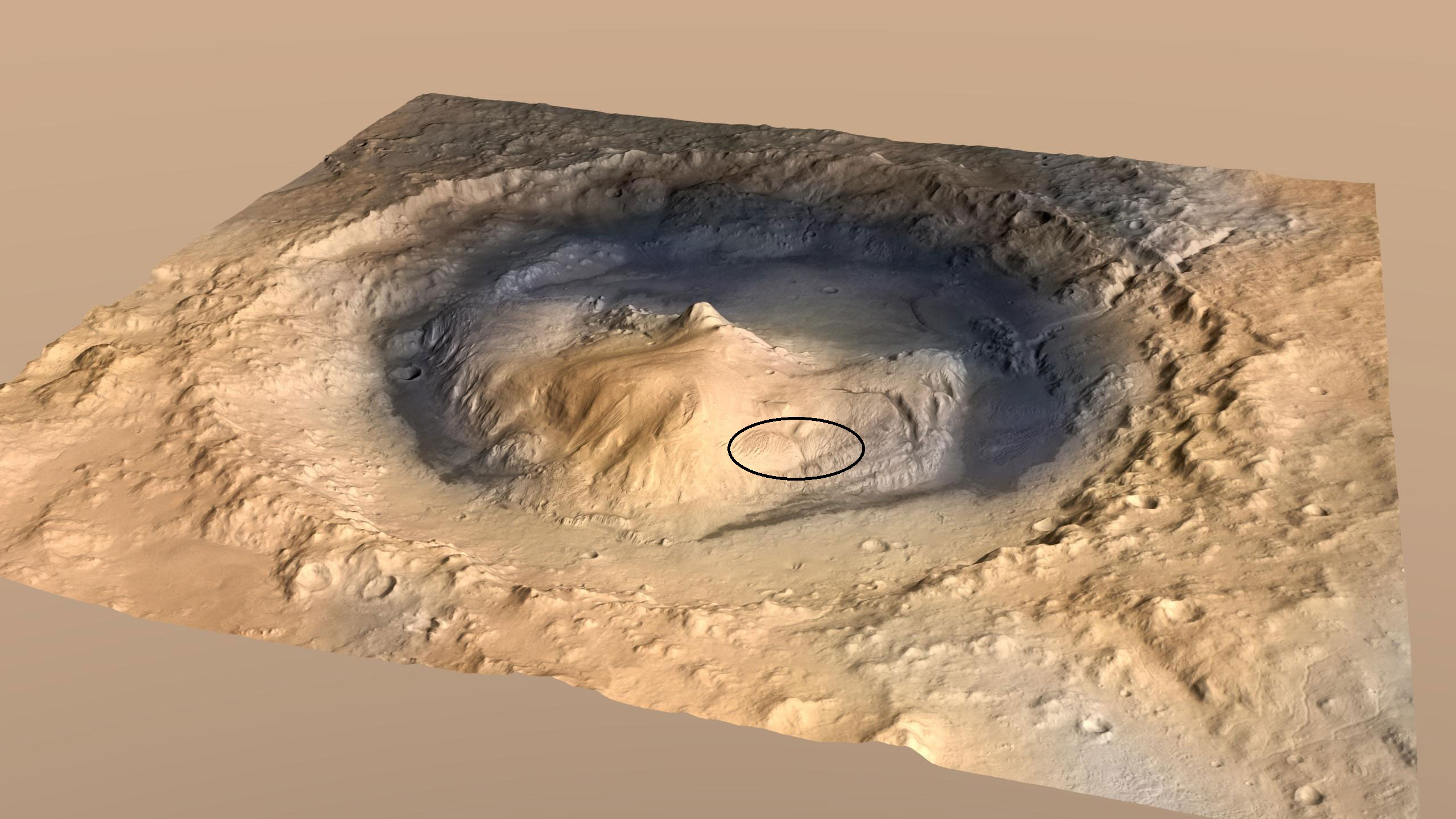
    Artist’s Concept Shows Mount Sharp
    This artist’s concept shows Mount Sharp, the 3-mile-tall (5-kilometer-tall) mountain that NASA’s Curiosity has been ascending since 2014. The location of the yardang layer, which the rover recently captured from a distance, is indicated by an ellipse annotation on the mountain’s northwestern shoulder. Credit: NASA/JPL-Caltech/ESA/DLR/FU Berlin/MSSS

    “The yardang layer looks out of place. It’s the wrong color, the layers tilt at an odd angle, and it almost appears plastered on,” said Ashwin Vasavada, Curiosity project scientist of NASA’s Jet Propulsion Laboratory in Southern California. “But that’s what makes it exciting to reach. No one is sure exactly what created this layer, but one idea is it may be ash deposited by ancient volcanic eruptions.”

    Curiosity has been ascending the 3-mile-tall (5-kilometer-tall) mountain since 2014. Each layer records a different period in Mars’ history, allowing scientists to reconstruct a time billions of years ago when lakes and streams covered this region. As the water dried up, it left salty minerals behind. Once new material stopped accumulating on the mountain, wind may have stripped some of it away to create the yardangs.

    Six Image Panorama of Martian Yardangs
    The six shots that make up this panorama, captured by NASA’s Curiosity on Aug. 11, were stitched together after being sent back to Earth. Unlike most images from the rover’s Mastcam, this one was processed without the usual white balancing — an artistic choice that preserves the early morning appearance. Credit: NASA/JPL-Caltech/MSSS

    Mars in its morning colors

    The panorama captures the distant cliffs in bright morning light, with blue hues across the foreground. Curiosity’s Mastcam took the six images that make up the scene at 8:30 a.m. local Mars time on Aug. 11, the mission’s 4,982nd Martian day, or sol.

    The images were transmitted to Earth and stitched together. Unlike most Mastcam imagery, the panorama was processed without the color adjustment known as white balancing, preserving its early morning appearance.
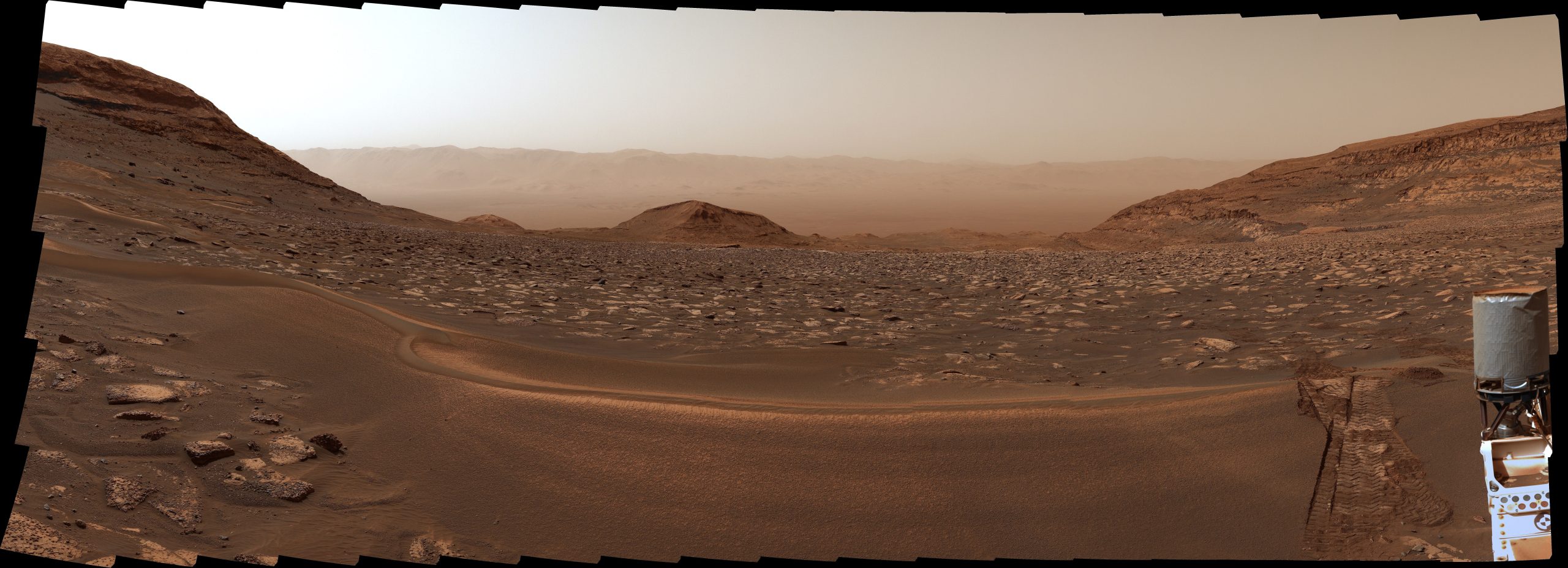
    Curiosity Rover’s View of Gale Crater
    NASA’s Curiosity Mars rover captured this view looking back at the floor of Gale Crater on Sept. 5, 2026. Just nine days prior, the rover had marked 1 kilometer of elevation gain above the crater floor since beginning its ascent of Mount Sharp in 2014. Credit: NASA/JPL-Caltech/MSSS

    A record climb toward the yardangs

    The rover recently reached another milestone in its ascent, gaining 0.6 miles (1 kilometer) in elevation, the most ever climbed on Mars. It is now in the second year of its fifth extended mission, which began with an exploration of spiderweb-like formations called boxwork ridges. For most of the next year or so, Curiosity will drive through layers enriched with sulfates and carbonates, both signs of ancient drying at the surface.

    Scientists expect increasingly detailed images as the rover approaches the cliffs. They hope to reach the base of the yardangs sometime in 2027, where Curiosity will be able to use its robotic arm to collect unique data about the formations and investigate how they came to be.

    Never miss a breakthrough: Join the SciTechDaily newsletter.
    Follow us on Google and Google News.

    Curiosity Rover Mars NASA Planetary Science Space Exploration
    Share. Facebook Twitter Pinterest LinkedIn Email Reddit

    Related Articles

    Mars Rock Is a Close Match in Chemical Composition to Rocks Found on Earth

    Curiosity Prepares to Take Its First Scoop of Soil for Analysis

    Curiosity Finds Ancient Streambed on Mars

    NASA’s Curiosity Prepares for Use of Its Arm and Tools

    Curiosity Sends Back Radioed Words and New Telephoto View of Mars

    NASA’s Curiosity Readies for First Drive on Mars

    Color HiRISE Image of Curiosity Rover on Mars

    First 360-Degree Color Panorama From NASA’s Curiosity Mars Rover

    First Full-Resolution Images From Curiosity’s Navigation Cameras

    Leave A Reply Cancel Reply

    • Facebook
    • Twitter
    • Pinterest
    • YouTube

    Don't Miss a Discovery

    Subscribe for the Latest in Science & Tech!

    Trending News

    Scientists Discover an Unexpected Problem With a Cancer Drug Already in Human Trials

    NASA Is About to Investigate What Lies Beneath a Giant Hole on the Moon

    NASA Captures a Strange Formation on Earth With a Surprising Lunar Connection

    Scientists Discover a Surprising Shortcut to Nuclear Fusion

    Scientists Discover a Surprising New Way To Fight High Blood Pressure – Through the Ear

    Scientists Say That a Honey Bee Colony May Actually Be a Single Living Organism

    Zimbabwe’s Ancient Dinosaurs Were Nothing Like Scientists Expected

    Scientists Discover Why Eating Fat Before Carbs Reduces Blood Sugar Spikes

    Follow SciTechDaily
    • Facebook
    • Twitter
    • YouTube
    • Pinterest
    • Newsletter
    • RSS
    SciTech News
    • Biology News
    • Chemistry News
    • Earth News
    • Health News
    • Physics News
    • Science News
    • Space News
    • Technology News
    Recent Posts
    • NASA’s Curiosity Rover Unveils a Spectacular New View of Mars at Dawn
    • Scientists Create “Super Ice” That’s 10 Times Stronger and Rivals Concrete in Strength
    • Scientists Turn Ordinary Plastic Into Billions of Tiny Diamonds Using Powerful Lasers
    • Scientists Turn a Cancer-Fueling Protein Into a Powerful New Weapon Against Tumors
    • New Triple-Action Drug Helps People With Diabetes Lose Up to 15% of Their Body Weight
    Copyright © 1998 - 2026 SciTechDaily. All Rights Reserved.
    • Science News
    • About
    • Contact
    • Editorial Board
    • Privacy Policy
    • Terms of Use

    Type above and press Enter to search. Press Esc to cancel.