
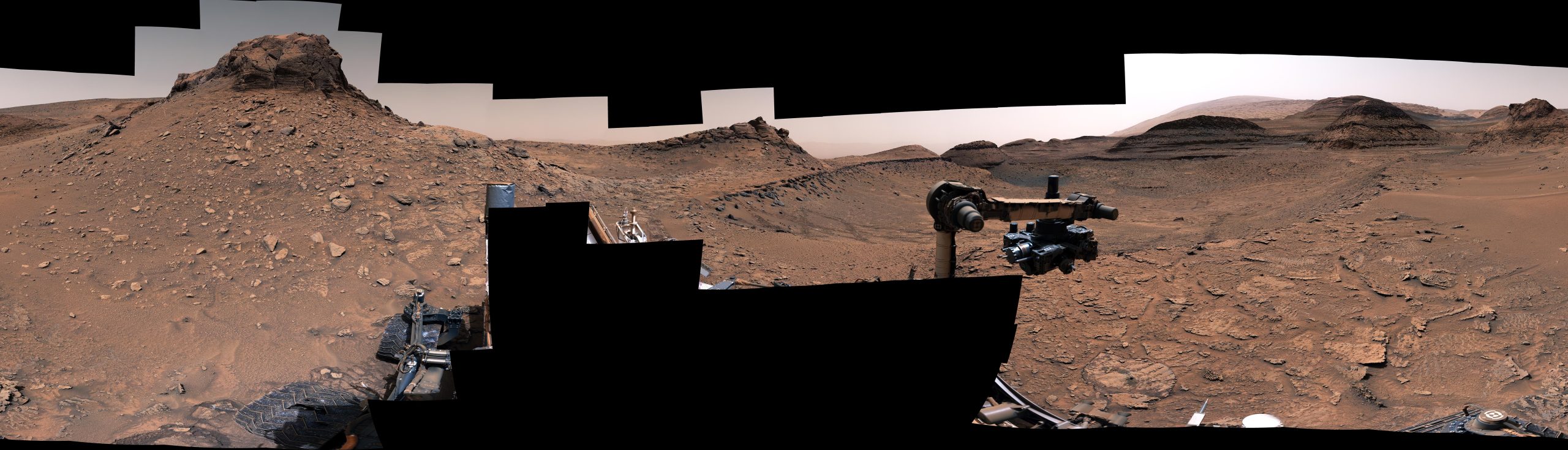
Among other discoveries made by the rover, rippled rock textures suggest lakes existed in a region of ancient Mars that scientists expected to be drier.
When NASA’s Curiosity rover arrived at the “sulfate-bearing unit” last fall, scientists thought they’d seen the last evidence that lakes once covered this region of Mars. That’s because the rock layers here formed in drier settings than regions explored earlier in the mission. The area’s sulfates – salty minerals – are thought to have been left behind when water was drying to a trickle.
So Curiosity’s team was surprised to discover the mission’s clearest evidence yet of ancient water ripples that formed within lakes. Billions of years ago, waves on the surface of a shallow lake stirred up sediment at the lake bottom, over time creating rippled textures left in rock.

“This is the best evidence of water and waves that we’ve seen in the entire mission,” said Ashwin Vasavada, Curiosity’s project scientist at NASA’s Jet Propulsion Laboratory in Southern California. “We climbed through thousands of feet of lake deposits and never saw evidence like this – and now we found it in a place we expected to be dry.”
Layers of History
Since 2014, the rover has been ascending the foothills of Mount Sharp, a 3-mile-tall (5-kilometer-tall) mountain that was once laced with lakes and streams that would have provided a rich environment for microbial life, if any ever formed on the Red Planet.
Mount Sharp is made up of layers, with the oldest at the bottom of the mountain and the youngest at the top. As the rover ascends, it progresses along a Martian timeline, allowing scientists to study how Mars evolved from a planet that was more Earth-like in its ancient past, with a warmer climate and plentiful water, to the freezing desert it is today.
Curiosity Rover Finds New Clues to Mars’ Watery Past: NASA’s Curiosity rover recently found surprising clues to Mars’ watery past, including while exploring a region called the “Marker Band.” Credits: NASA/JPL-Caltech/MSSS/University of Arizona
Having climbed nearly a half-mile above the mountain’s base, Curiosity has found these rippled rock textures preserved in what’s nicknamed the “Marker Band” – a thin layer of dark rock that stands out from the rest of Mount Sharp. This rock layer is so hard that Curiosity hasn’t been able to drill a sample from it despite several attempts. It’s not the first time Mars has been unwilling to share a sample: Lower down the mountain, on “Vera Rubin Ridge,” Curiosity had to try three times before finding a spot soft enough to drill.
Scientists will be looking for softer rock in the week ahead. But even if they never get a sample from this unusual strip of rock, there are other sites they’re eager to explore.
Martian Clues
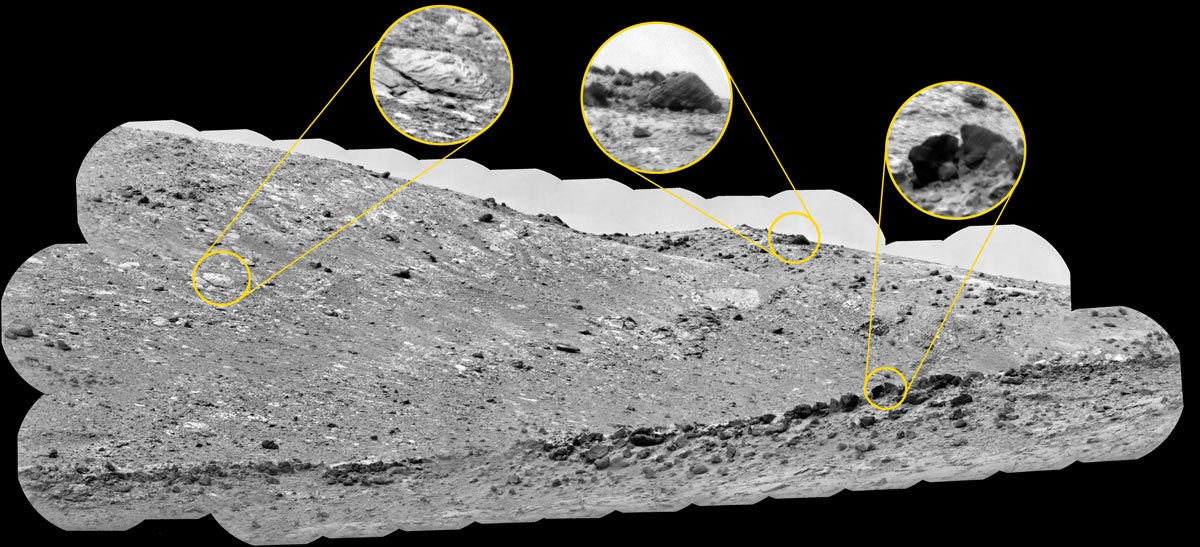
Far ahead of the Marker Band, scientists can see another clue to the history of Mars’ ancient water in a valley named Gediz Vallis. Wind carved the valley, but a channel running through it that starts higher up on Mount Sharp is thought to have been eroded by a small river. Scientists suspect wet landslides also occurred here, sending car-size boulders and debris to the bottom of the valley.
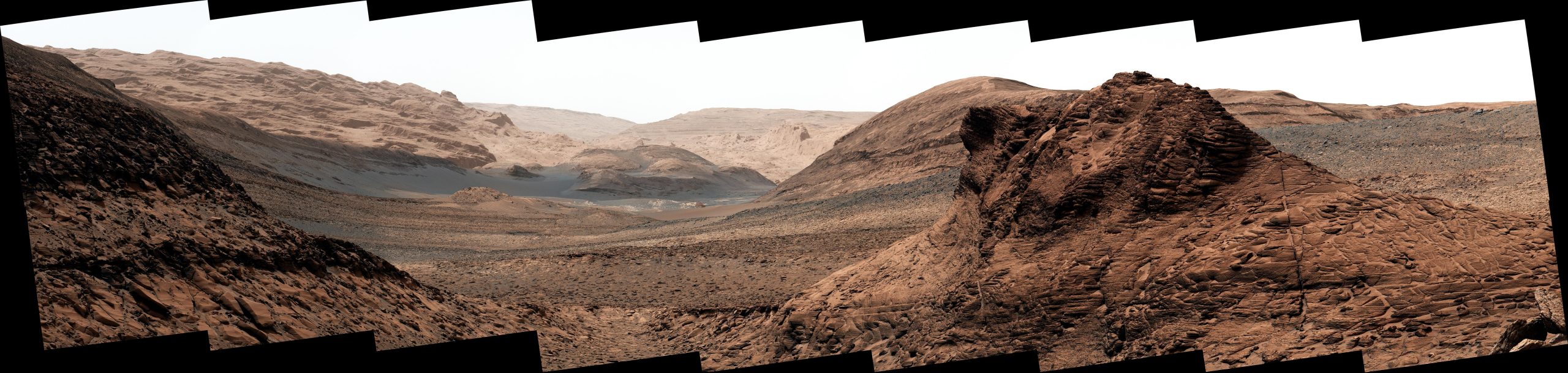
Because the resulting debris pile sits on top of all the other layers in the valley, it’s clearly one of the youngest features on Mount Sharp. Curiosity got a glimpse of this debris at Gediz Vallis Ridge twice last year but could only survey it from a distance. The rover team hopes to have another chance to view it later this year.
One more clue within the Marker Band that has fascinated the team is an unusual rock texture likely caused by some sort of regular cycle in the weather or climate, such as dust storms. Not far from the rippled textures are rocks made of layers that are regular in their spacing and thickness. This kind of rhythmic pattern in rock layers on Earth often stems from atmospheric events happening at periodic intervals. It’s possible the rhythmic patterns in these Martian rocks resulted from similar events, hinting at changes in the Red Planet’s ancient climate.
“The wave ripples, debris flows, and rhythmic layers all tell us that the story of wet-to-dry on Mars wasn’t simple,” Vasavada said. “Mars’ ancient climate had a wonderful complexity to it, much like Earth’s.”
More About the Mission
The Curiosity mission is led by NASA’s Jet Propulsion Laboratory, which is managed by Caltech in Pasadena, California. JPL leads the mission on behalf of NASA’s Science Mission Directorate in Washington. Mastcam was built and is operated by Malin Space Science Systems in San Diego.
Never miss a breakthrough: Join the SciTechDaily newsletter.
Follow us on Google and Google News.
3 Comments
“The area’s sulfates – salty minerals – are thought to have been left behind when water was drying to a trickle.”
The most important salty mineral to life is halite…sodium chloride. These should be expected as the lake evaporites formed. Unless the lakes were fresh water. Same should be true for the Martian oceans.
Can we even believe that this is real? Despite what our propaganda tells us that the military has high resolution pictures of the Chinese balloon. Yet all we ever see are blurry pictures reminiscent of those black and white photographs of bigfoot and the Lochness monster. The military and government said it had huge antenna arrays and a bunch of equipment equalling the size of “three school buses”. How many people even know about our genocidal atrocities committed in Iraq? “We have irrefutable evidence of weapons of mass destruction”…We have 6 large military bases in Saudi Arabia despite 9 of the 15 hijackers were Saudis. Knowing that why did we not invade them instead of illegally invading Afghanistan? Yet another country illegally destroyed and killing countless innocent civilians. Call it what you want the facts are easily accessible to those who are even semi competent.
Maybe try switching to decaf?