
Close Menu
    Facebook X (Twitter) Instagram
    SciTechDaily
    • Biology
    • Chemistry
    • Earth
    • Health
    • Physics
    • Science
    • Space
    • Technology
    Facebook X (Twitter) Pinterest YouTube RSS
    SciTechDaily
    Home»Space»NASA’s Curiosity Rover Views Rhythmic Rock Layers on Mars
    Space

    NASA’s Curiosity Rover Views Rhythmic Rock Layers on Mars

    By Jet Propulsion LaboratoryFebruary 11, 20231 Comment2 Mins Read
    Facebook Twitter Pinterest Telegram LinkedIn WhatsApp Email Reddit
    Share
    Facebook Twitter LinkedIn Pinterest Telegram Email Reddit
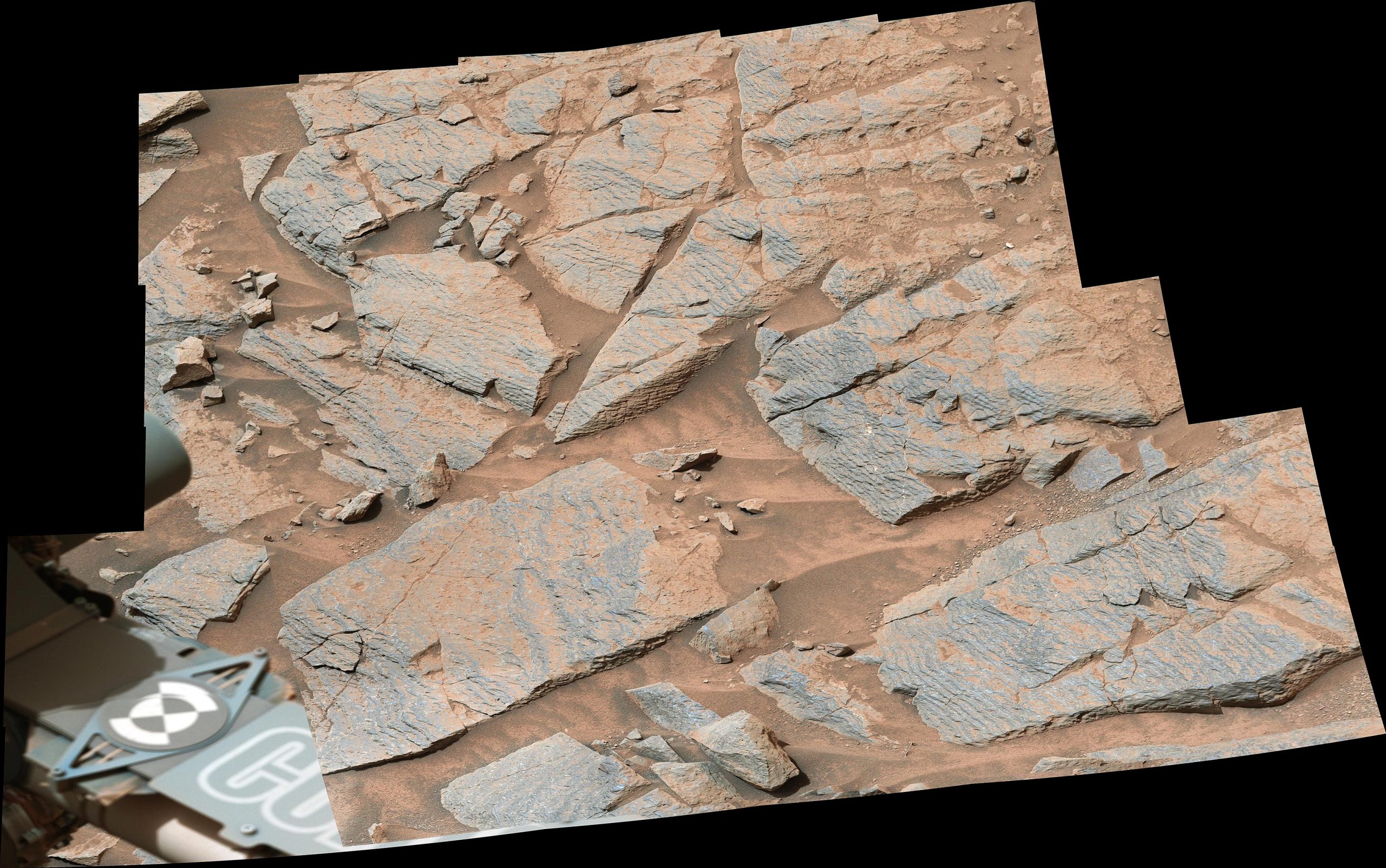
    Curiosity Views Rhythmic Rock Layers
    NASA’s Curiosity Mars rover captured this image of rhythmic rock layers with a repeating pattern of spacing and thickness. The pattern might have been caused by weather or climate cycles occurring while the sediment layers were being deposited, such as dust storms happening at regular intervals in the ancient past. Credit: NASA/JPL-Caltech/MSSS

    NASA’s Curiosity Mars rover captured this stunning image of rhythmic rock layers with a repetitive pattern in their spacing and thickness. This rhythmic pattern could be the result of ancient weather or climate cycles during the deposition of these sediment layers. For example, dust storms occurring at regular intervals in the ancient past may have played a role in shaping this pattern.

    This mosaic is made up of 17 individual images captured in the “Marker Band” area by Curiosity’s Mastcam on November 7, 2022, the 3,646th Martian day, or sol, of the mission. The mosaic was captured by Mastcam’s 34-millimeter-focal-length camera.
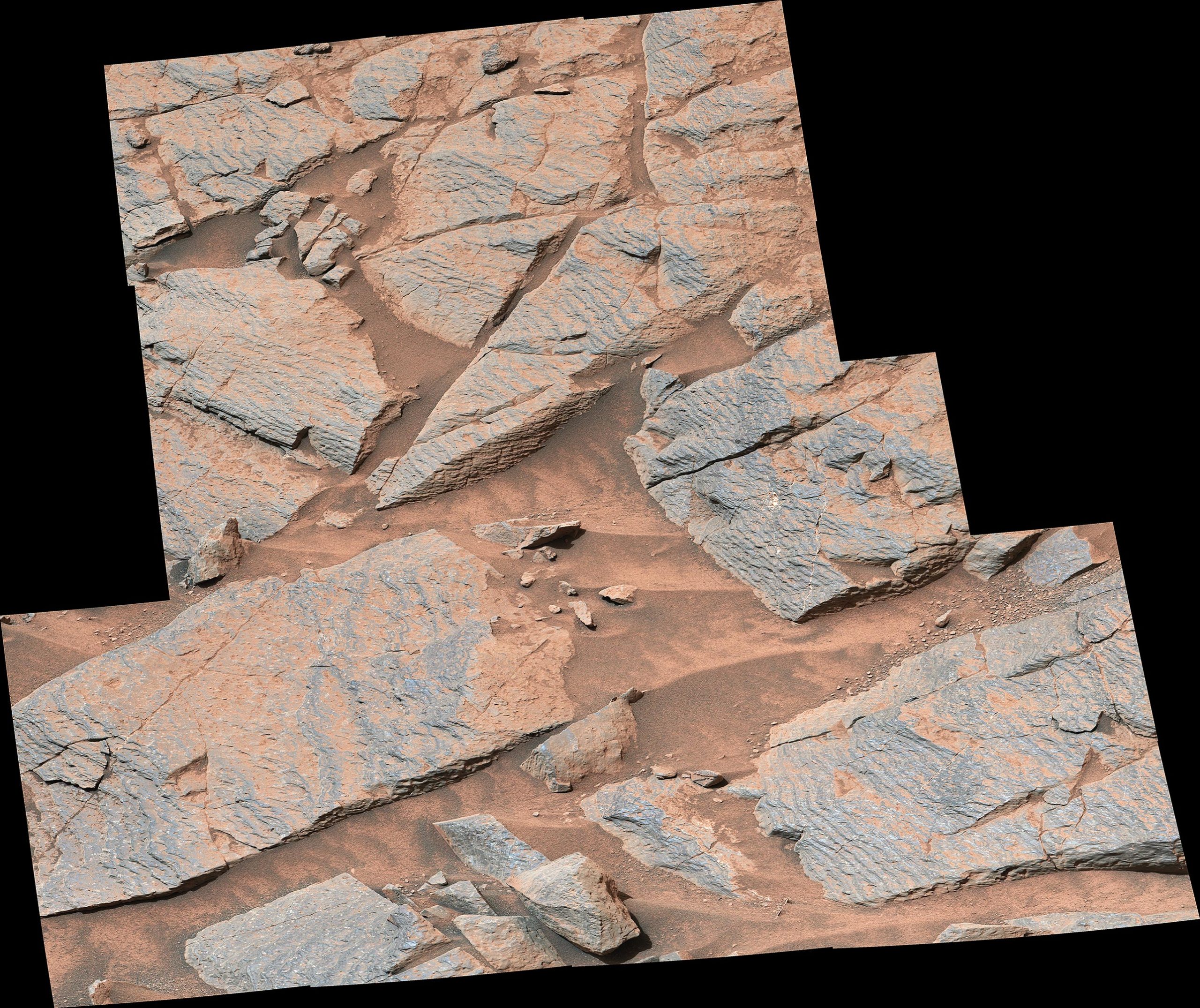
    Curiosity Rhythmic Rock Layers
    This image, which has a higher resolution, shows the same rock layers in 17 images taken by Mastcam’s 100-millimeter-focal-length camera. Credit: NASA/JPL-Caltech/MSSS

    Curiosity is a rover that was sent to Mars as part of NASA’s Mars Science Laboratory mission. The rover was launched on November 26, 2011, and landed on Mars on August 6, 2012. The main objective of the Curiosity mission is to explore the Gale Crater on Mars and study its geology and climate, in order to determine whether the planet has ever had conditions suitable for supporting microbial life. The rover is equipped with a variety of scientific instruments and tools, including a rock-vaporizing laser, a drill for collecting soil and rock samples, and a suite of cameras for capturing images and data.

    The Curiosity rover was built by NASA’s Jet Propulsion Laboratory, which is managed by Caltech in Pasadena, California. JPL leads the mission on behalf of NASA’s Science Mission Directorate in Washington. Mastcam was built and operated by Malin Space Science Systems in San Diego.

    Never miss a breakthrough: Join the SciTechDaily newsletter.
    Follow us on Google and Google News.

    Curiosity Rover JPL Mars NASA Planets
    Share. Facebook Twitter Pinterest LinkedIn Email Reddit

    Related Articles

    NASA’s Curiosity Mars Rover Just Got a Big Brain Upgrade

    Martian “Spiderwebs” Revealed: Curiosity Captures Stunning 360° Panorama

    Mars Mystery Deepens: Curiosity Uncovers a Secret Lattice of Bizarre Ridges in Gale Crater

    This Martian “Stone Web” Could Rewrite Mars’ Geological History

    What Left This Long, Winding Trail Across Mars? NASA’s Orbiter Has the Answer

    Mars Kept a Secret for 3.5 Billion Years – NASA’s Curiosity Rover Finally Dug It Up

    NASA’s Curiosity Rover Uncovers Mars’ Mysterious Spiderweb Rocks and Hidden Crystals

    “Strange and Unexpected” – NASA’s Curiosity Rover Stumbles Upon Yellow Crystals on Mars

    Shadow Play: NASA’s Curiosity Mars Rover Captures a Martian Day, From Dawn to Dusk

    1 Comment

    1. jebgeo on November 24, 2024 10:49 am

      Nothing weird about these rocks, boxwork textures are very common here resulting from fluid dissolution of less resistant mineralogy. These textures, coupled with obvious sedimentary layering and rounded pebbles (conglomerate) are clear evidence of water action, boxwork being from acid leaching waters or steam.

      JEB, professional geologist

      Reply
    Leave A Reply Cancel Reply

    • Facebook
    • Twitter
    • Pinterest
    • YouTube

    Don't Miss a Discovery

    Subscribe for the Latest in Science & Tech!

    Trending News

    The Universe Is Expanding Too Fast and Scientists Can’t Explain Why

    “Like Liquid Metal”: Scientists Create Strange Shape-Shifting Material

    Early Warning Signals of Esophageal Cancer May Be Hiding in Plain Sight

    Common Blood Pressure Drug Shows Surprising Power Against Deadly Antibiotic-Resistant Superbug

    Scientists Uncover Dangerous Connection Between Serotonin and Heart Valve Disease

    Scientists Discover a “Protector” Protein That Could Help Reverse Hair Loss

    Bone-Strengthening Discovery Could Reverse Osteoporosis

    Scientists Uncover Hidden Trigger Behind Stem Cell Aging

    Follow SciTechDaily
    • Facebook
    • Twitter
    • YouTube
    • Pinterest
    • Newsletter
    • RSS
    SciTech News
    • Biology News
    • Chemistry News
    • Earth News
    • Health News
    • Physics News
    • Science News
    • Space News
    • Technology News
    Recent Posts
    • A Common Diabetes Drug May Hold the Key to Stopping HIV From Coming Back
    • Ancient “Syphilis-Like” Disease in Vietnam Challenges Key Scientific Assumptions
    • Drinking Alcohol To Cope in Your 20s Could Damage Your Brain for Life
    • Scientists Crack Alfalfa’s Chromosome Mystery After Decades of Debate
    • Ancient Ant-Plant Alliance Collapses As Predatory Wasps Move In
    Copyright © 1998 - 2026 SciTechDaily. All Rights Reserved.
    • Science News
    • About
    • Contact
    • Editorial Board
    • Privacy Policy
    • Terms of Use

    Type above and press Enter to search. Press Esc to cancel.