
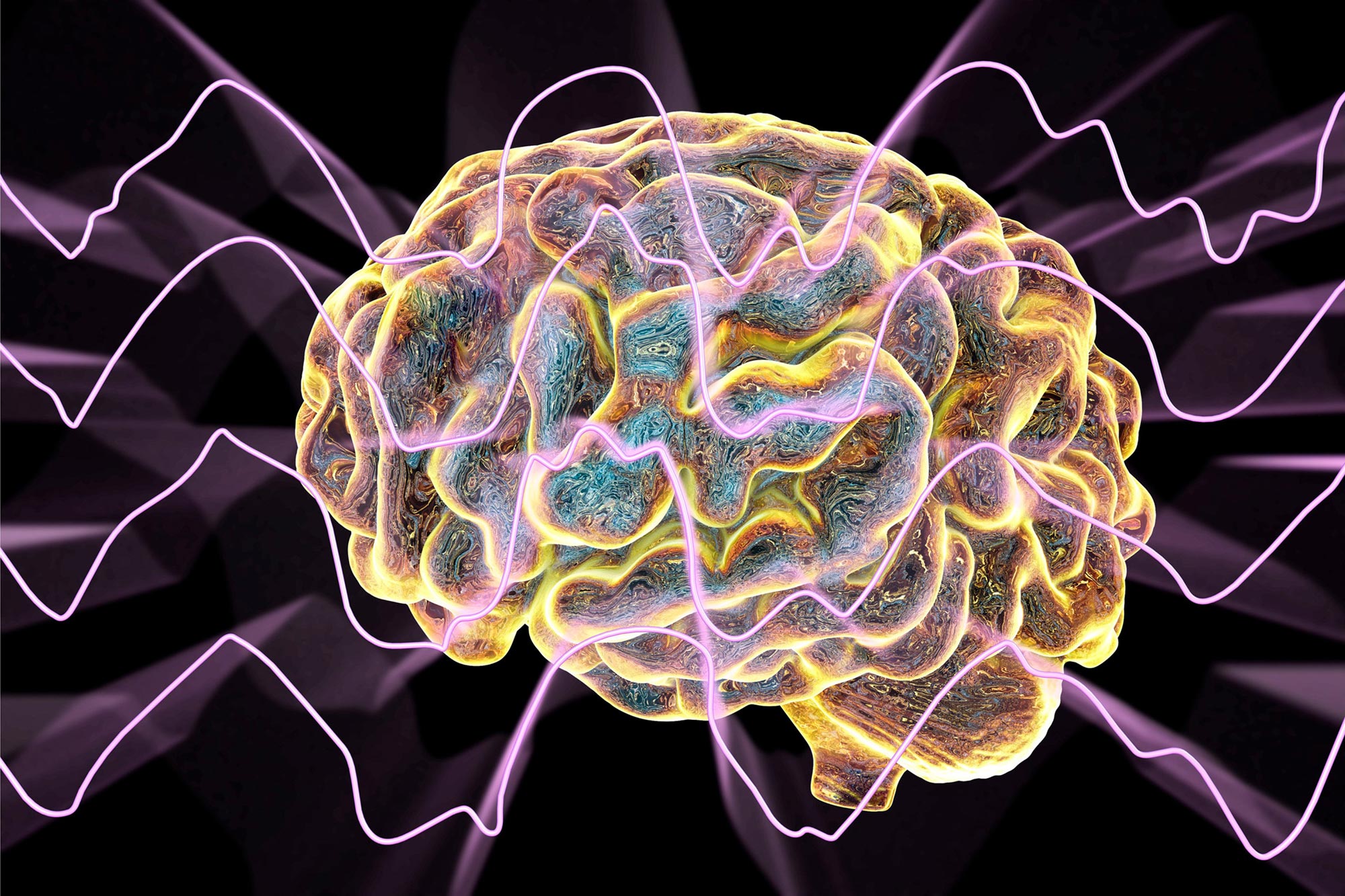
As tau builds up in the brain, the brain waves that help form memories during non-REM sleep become irregular.
You’ve finished grocery shopping and are ready to get home and start dinner. Then you reach the parking lot and realize you cannot remember where you left the car. You parked it only a short time ago, so why is that moment so hard to recall?
Remembering where you parked draws on episodic memory, the ability to recall specific experiences from your life. Those memories tend to become harder to retrieve as we age. New research from UC Berkeley suggests that part of the explanation may lie in what happens in the brain while we sleep.
The researchers linked tau, a protein that accumulates in many aging brains and is a marker of Alzheimer’s disease, to disruptions in the slow brain waves that help preserve memories during deep sleep. Older adults whose waves traveled shorter distances and were less coordinated remembered less material the following morning, even though they did not have Alzheimer’s.
The study was conducted by UC Berkeley neuroscientist Omer Sharon and colleagues, under the direction of former Berkeley sleep researcher Matthew Walker. Their findings appeared in Nature Neuroscience.
“Lonely waves” accompany poorer memory
To measure how well participants preserved new memories during sleep, the team gave them word associations to learn at night and tested their recall the following day. This process of strengthening and preserving memories is called memory consolidation.
Alongside the memory tests, the researchers used electroencephalograms, or EEGs, to record brain waves during sleep. They compared cognitively healthy young adults in their early 20s with older adults in their mid-60s to mid-70s. In the younger group, clusters of slow waves traveled roughly a handspan across the scalp. In the older group, the waves covered less distance and more often occurred alone. Participants with more of these isolated, shorter-reaching signals, which the researchers called “lonely waves,” remembered less of what they had learned the night before.
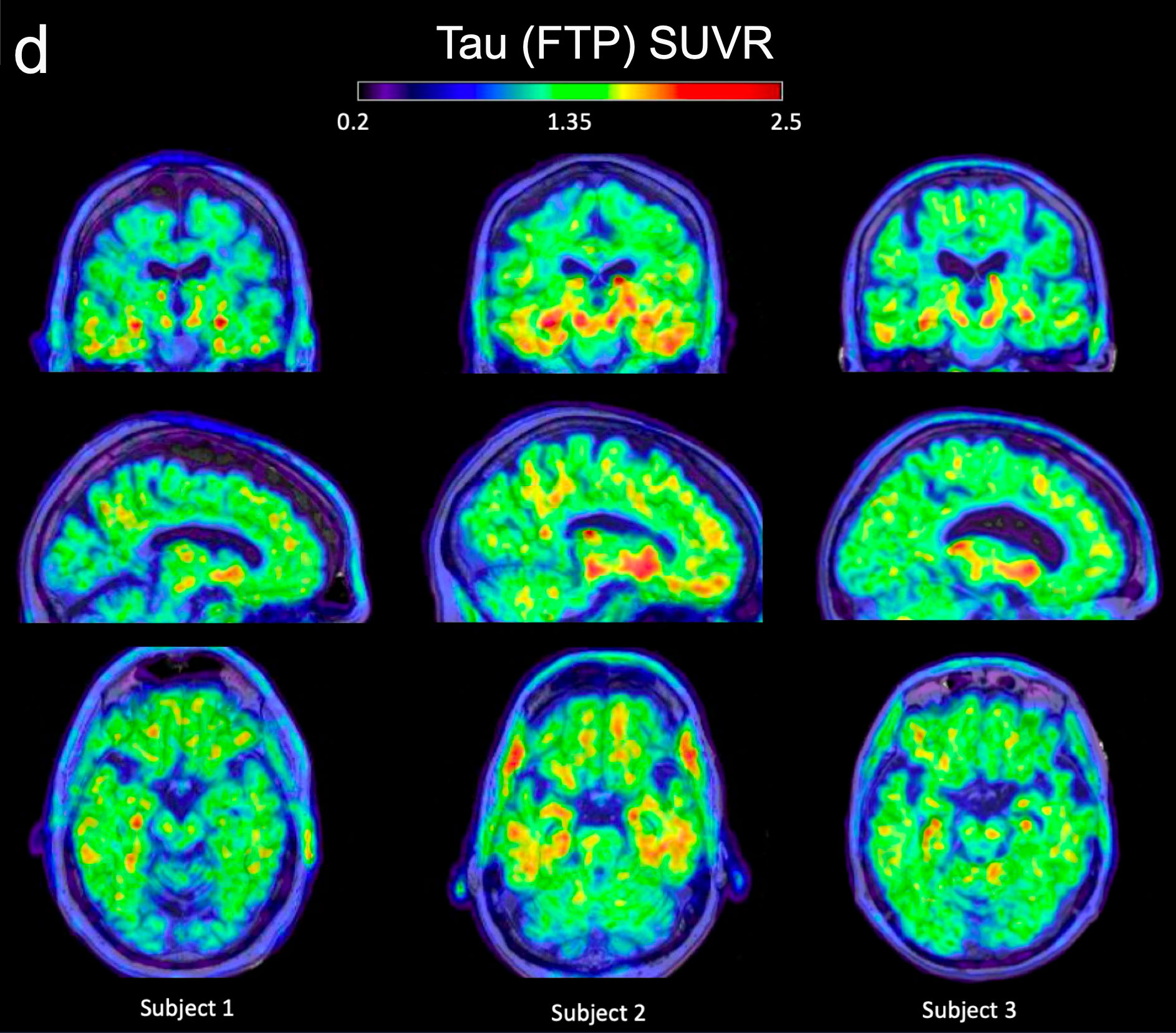
“These people did not have Alzheimer’s,” said Sharon, a postdoctoral researcher at UC Berkeley’s Center for Human Sleep Science, referring to the older participants. “They had tau in their brains, but with subclinical impacts. Their memory decline was within the normal range for their age.”
Scientists still do not fully understand why aging makes the sensory details of past experiences harder to retrieve. For people developing Alzheimer’s disease, memory loss can become devastating.
Tau buildup where sleep waves begin
The waves involved occur during non-REM sleep. REM, short for rapid eye movement, is the phase when the eyes move beneath closed lids, and most dreaming happens. During deep non-REM sleep, when there is little or no dreaming, large groups of neurons switch off and back on together. These slow waves begin in the frontal cortex, at the front of the brain, and spread across other regions.
“Each slow wave reflects an enormous population of neurons switching off and back on together,” Sharon said. “Our study shows that for memory, it’s critical that these events cascade in sequence across large parts of the brain. This coordinated shutdown has been observed only during deep sleep, and may be one reason why we sleep.”
To connect the sleep recordings with tau, the team worked with Dr. William Jagust, a Berkeley professor emeritus in public health and neuroscience, to conduct positron emission tomography, or PET, scans. These scans track radioactive markers injected into the bloodstream. The results showed that greater tau buildup in the older participants’ frontal cortex was associated with a breakdown in the waves’ ability to travel across the brain.
“This is the first time we’ve shown this relationship between tau and how it messes with memory consolidation by attenuating traveling slow waves that originate in the frontal cortex,” Sharon said.
The location of the protein buildup may help explain why people of similar ages differ in memory performance. Sharon described early Alzheimer’s symptoms as occurring along a spectrum, with the amount of tau in the brain correlating with cognitive performance.
“It’s not just about age,” Sharon said. “It’s how much pathology you have in frontal areas where global waves originate.”
Sleep quality also appears to matter. Although it can be difficult to define, the coordination and reach of slow waves may provide an indication of it. Disruption of these patterns has been linked to poorer memory consolidation, cognitive decline, and the development of Alzheimer’s disease.
Higher tau ratios accompany lonely waves
The team also examined whether evidence from a different group and a different measurement method would support the connection. PET scans are expensive, require specialized equipment, and can be difficult to arrange. Working with neurologist Yo-El Ju at Washington University in St. Louis, the researchers instead measured tau in the spinal fluid of another group of older adults.
Spinal fluid testing could not identify tau buildup specifically in the frontal cortex. Nevertheless, participants with more solitary slow waves had higher ratios of tau to amyloid, another protein linked to Alzheimer’s disease.
“It’s collected in a totally different place and in a different cohort, so I think that adds to the strength of the evidence,” Sharon said.
Tau and lonely waves rise together
Following participants over time provided another way to examine the relationship. When a subset of the original participants returned for testing several years later, those whose frontal tau levels had risen also showed poorer slow-wave coordination and reduced overnight memory retention.
“This longitudinal correlation suggests that Alzheimer’s disease pathology is associated with a disruption of this main sleep feature,” Sharon said.
The results do not establish that tau buildup in the frontal cortex causes memory loss. They connect the protein with changes in sleep waves and episodic memory, while leaving the direction of that relationship unresolved.
“We can see tau and lonely waves rising together over time,” Sharon said. “What we cannot yet say is which leads — and that question will shape how we design interventions.”
Reference: “Human tau pathology is associated with lonely, nontraveling slow waves linked to memory impairment” by Omer Sharon, Xi Chen, Jason Dude, James Westphal, Chelsea Brown, Vyoma D. Shah, Yo-El S. Ju, William J. Jagust and Matthew P. Walker, 11 September 2026, Nature Neuroscience.
DOI: 10.1038/s41593-026-02415-9
This research was supported by grants from the National Institute on Aging at the National Institutes of Health. Sharon was supported by a Glenn Foundation for Medical Research Postdoctoral Fellowship and a Weill Neurohub Fellowship.
Never miss a breakthrough: Join the SciTechDaily newsletter.
Follow us on Google and Google News.