
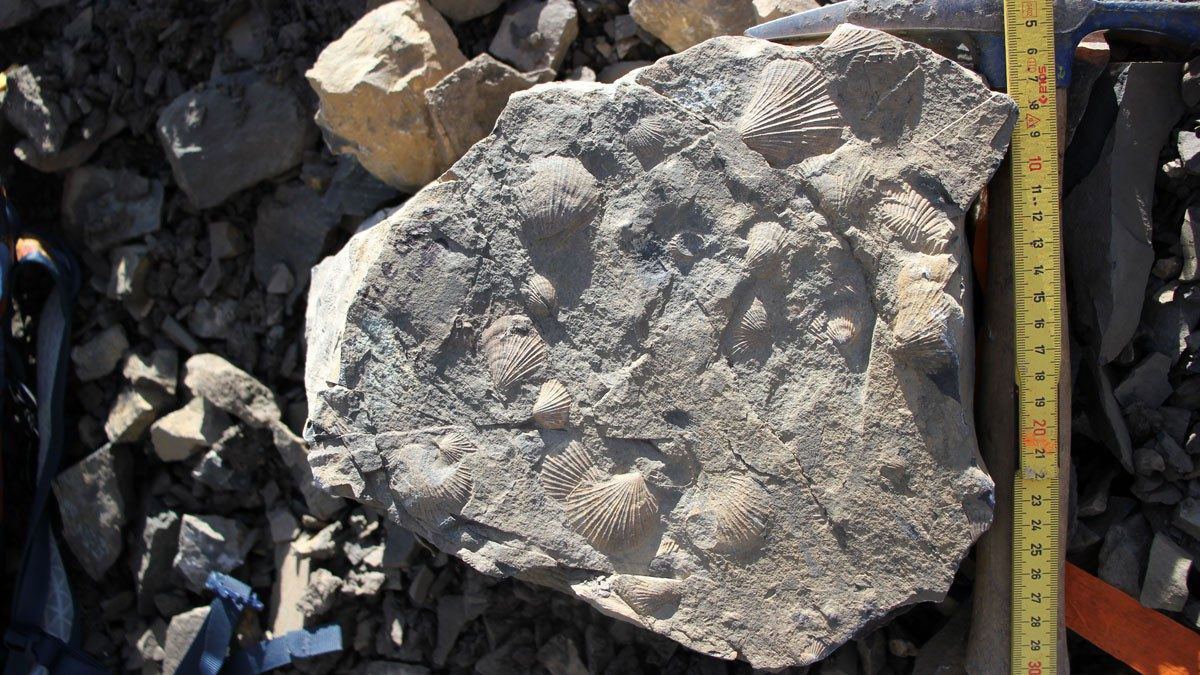
As today’s oceans lose oxygen, Alaskan rocks trace a similar decline that began millions of years before the end-Triassic mass extinction.
Dinosaurs survived the end-Triassic mass extinction 201 million years ago, but roughly 60 percent of Earth’s species did not. New evidence from Virginia Tech geologists suggests that the crisis in the oceans began about 8 million years earlier, when oxygen levels in shallow waters started to decline.
Scientists have long linked the extinction to enormous volcanic eruptions that tore apart landmasses, warmed the planet, and triggered widespread environmental changes. As temperatures rise, rocks break down faster, releasing nutrients that contribute to increasing ocean acidity. Warmer seawater also holds less dissolved oxygen, creating conditions that can lead to oxygen-depleted dead zones where marine organisms struggle to survive.
The combination of rising acidity and falling oxygen is “kind of like a one-two punch,” said geochemist Ben Gill. “It wouldn’t have been a very happy place to be.”
Although scientists had previously found evidence of widespread marine oxygen loss around the end-Triassic extinction, much of it came from a limited geographic area. Researchers still lacked a clear understanding of when the decline began and how extensively it affected the oceans. Recent studies had also raised the possibility that environmental conditions started deteriorating far earlier than previously believed.
“It’s a 200-million-year-old cold case,” said Kayla McCabe, a former Virginia Tech geosciences graduate student and first author of the study, published in Communications Earth & Environment.
Alaska’s rocks reveal a prolonged oxygen crisis
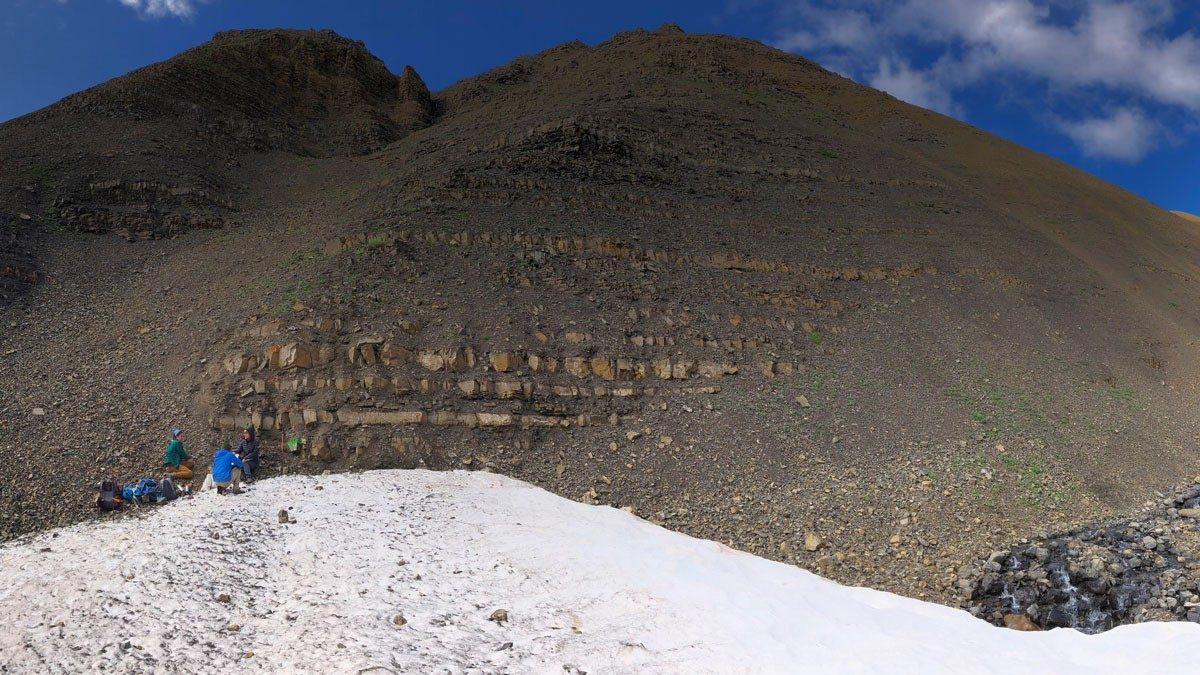
To investigate, McCabe and her colleagues turned to sedimentary rocks at Grotto Creek in Alaska’s Wrangell–St. Elias National Park. The remote location is accessible only by small aircraft, and the team traveled there in 2017, 2019, and 2022 to collect evidence of ancient ocean conditions.
Sedimentary rocks form as layers of material accumulate over time, preserving chemical traces of the environments in which they were deposited. By comparing layers formed before, during, and after the extinction, the researchers could reconstruct how oxygen conditions changed across millions of years.
The geochemical analyses revealed a prolonged deterioration rather than a sudden collapse. The earlier decline likely placed marine ecosystems under stress long before the main extinction event. Conditions then worsened considerably during the extinction itself, with the rock record showing a much more severe loss of oxygen. The findings indicate that oxygen starvation became a major contributor to the disappearance of marine species.
The earliest oxygen loss remains unexplained
What triggered the initial decline remains uncertain. The massive volcanic eruptions associated with the end-Triassic extinction have long been considered a major cause of the environmental catastrophe, but the newly identified timeline raises questions about what was happening millions of years beforehand.
“There’s evidence of another volcanic province that roughly lines up with this time interval,” Gill said. “But we’re in the very beginning of trying to understand what happened.”
Ancient oxygen losses echo in modern oceans
The ancient rock record also offers a way to examine the potential consequences of environmental changes unfolding today. Modern oceans are experiencing rising temperatures, acidification, and declining oxygen levels. Ocean deoxygenation is an ongoing concern, including in coastal environments such as the Chesapeake Bay.
Although the ancient and modern circumstances are different, understanding how warming and oxygen depletion affected marine life in the past could help scientists anticipate the combined pressures facing ocean ecosystems today.
“Earth has run this experiment in the past. We have evidence that the climate gets warmer, and then all these other knock-on effects come afterwards,” Gill said. “It gives us some sense of what we can expect to happen.”
Reference: “Deoxygenation in the equatorial Panthalassan Ocean predated the end-Triassic mass extinction” by Kayla E. McCabe, Selva M. Marroquín, Andrew H. Caruthers, Jeremy D. Owens, Martyn L. Golding, Rachel E. B. Reid, Theodore R. Them II, João P. Trabucho-Alexandre, Yorick P. Veenma and Benjamin C. Gill, April 01 2026, Communications Earth & Environment.
DOI: 10.1038/s43247-026-03362-w
This research was supported with funding from the National Science Foundation, National Geographic Society, Alaska Geological Society, Virginia Tech Department of Geosciences, and the Virginia Tech College of Science Dean’s Discovery Fund.
Never miss a breakthrough: Join the SciTechDaily newsletter.
Follow us on Google and Google News.
1 Comment
“As temperatures rise, rocks break down faster, releasing nutrients that contribute to increasing ocean acidity.”
The oceans are NOT acidic, probably never have been except locally such as in stagnant pools enriched in hydrogen sulfide, and probably never will be, according to Stanford Professor Konrad Krauskopf who is considered by some to be the father of geochemistry.
It isn’t just the decomposition of carbonate rocks (e.g. limestone) by carbonic acid that results in the accelerated release of carbon dioxide. All chemical reactions are accelerated by warmth, including the silicate weathering that buffers pH declines in sea water.
My main complaint about research such as this is that I can’t be certain whether it is the result of a disingenuous attempt to convince the lay public that the oceans are acidic and becoming more so because of anthropogenic emissions, or that it reflects a defective educational system.