
Close Menu
    Facebook X (Twitter) Instagram
    SciTechDaily
    • Biology
    • Chemistry
    • Earth
    • Health
    • Physics
    • Science
    • Space
    • Technology
    Facebook X (Twitter) Pinterest YouTube RSS
    SciTechDaily
    Home»Space»Spectacular Hubble Image of Planetary Nebula NGC 3918
    Space

    Spectacular Hubble Image of Planetary Nebula NGC 3918

    By Karl Hille, European Space AgencyAugust 26, 2018No Comments2 Mins Read
    Facebook Twitter Pinterest Telegram LinkedIn WhatsApp Email Reddit
    Share
    Facebook Twitter LinkedIn Pinterest Telegram Email Reddit
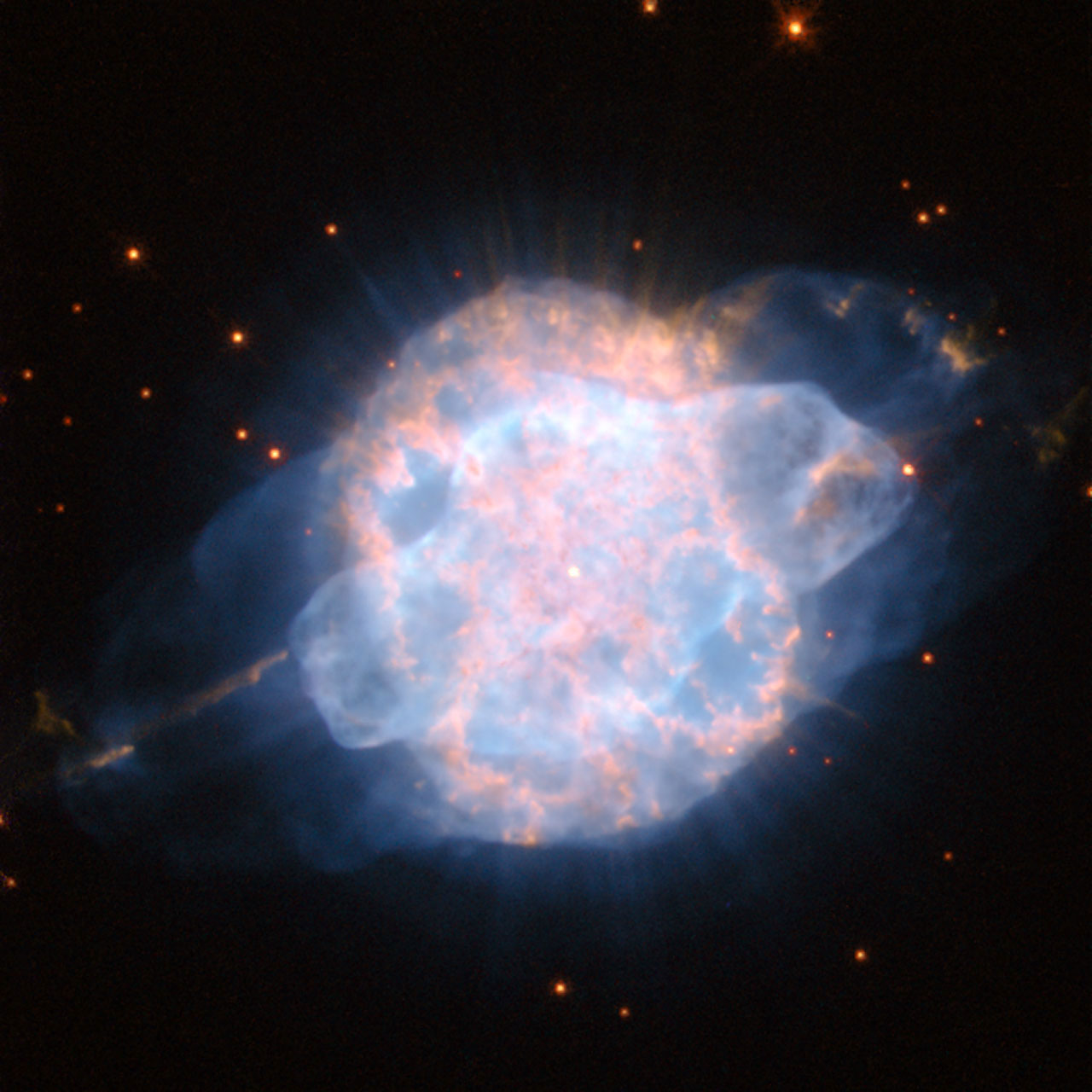
    Hubble Views Planetary Nebula NGC 3918
    Hubble Space Telescope image of planetary nebula NGC 3918. Credit: ESA/Hubble and NASA

    This dramatic image from the NASA/ESA Hubble Space Telescope shows the planetary nebula NGC 3918, a brilliant cloud of colorful gas in the constellation of Centaurus, around 4,900 light-years from Earth.

    In the center of the cloud of gas, and completely dwarfed by the nebula, are the dying remnants of a red giant. During the final convulsive phase in the evolution of these stars, huge clouds of gas are ejected from the surface of the star before it emerges from its cocoon as a white dwarf. The intense ultraviolet radiation from the tiny remnant star then causes the surrounding gas to glow like a fluorescent sign. These extraordinary and colorful planetary nebulas are among the most dramatic sights in the night sky, and often have strange and irregular shapes, which are not yet fully explained.

    NGC 3918’s distinctive eye-like shape, with a bright inner shell of gas and a more diffuse outer shell that extends far from the nebula, looks as if it could be the result of two separate ejections of gas. But this is in fact not the case: studies of the object suggest that they were formed at the same time, but are being blown from the star at different speeds. The powerful jets of gas emerging from the ends of the large structure are estimated to be shooting away from the star at speeds of up to 217,500 miles (350,000 kilometers) per hour.

    By the standards of astronomical phenomena, planetary nebulas like NGC 3918 are very short-lived, with a lifespan of just a few tens of thousands of years.

    The image is a composite of visible and near-infrared snapshots taken with Hubble’s Wide Field and Planetary Camera 2.

    Never miss a breakthrough: Join the SciTechDaily newsletter.
    Follow us on Google and Google News.

    Astronomy Hubble Space Telescope
    Share. Facebook Twitter Pinterest LinkedIn Email Reddit

    Related Articles

    A Morphing Spiral Galaxy Amongst Friends

    Hubble Views Magnificent Lopsided Galaxy NGC 2276

    Hubble Captures Fantastic Detail of Eponymous Spiral Galaxy NGC 691

    Spectacular Image Captured by Hubble Shows a Strangely Contorted Spiral Galaxy

    A Distant Spiral in Virgo: Extraordinary Detail Seen in a Galaxy 150 Million Light-Years Away From Earth

    Magnetic Monsters: Hubble Tracks Down Location of Mysterious Radio Signals From Intergalactic Space

    A Menagerie of Galaxies: Hubble Captures a Cluster With Galaxies of All Shapes and Sizes

    How Habitable Are Planets That Orbit Red Dwarfs – The Most Common Type of Stars in the Galaxy?

    Cosmic Silver Lining: Hubble Spots V565 Surrounded by Four Prominent Diffraction Spikes

    Leave A Reply Cancel Reply

    • Facebook
    • Twitter
    • Pinterest
    • YouTube

    Don't Miss a Discovery

    Subscribe for the Latest in Science & Tech!

    Trending News

    NASA Satellites Spot Rare Underwater Volcano Eruption That Could Create Earth’s Newest Island

    520-Million-Year-Old Fossils Solve One of Evolution’s Biggest Mysteries

    This Popular Workout Supplement May Give Cancer Immunotherapy a Big Boost

    Scientists Discover Quantum Entanglement in a Crystal You Can Hold

    New Nonsurgical Knee Treatment Delivers Lasting Pain Relief

    New Water-Harvesting Jacket Pulls up to 30 Ounces of Drinking Water From the Air Daily

    17-Million-Year-Old Ape Fossil in Egypt Could Change What We Know About Human Origins

    Mysterious Signals Keep Coming From Space. Scientists May Finally Know Why

    Follow SciTechDaily
    • Facebook
    • Twitter
    • YouTube
    • Pinterest
    • Newsletter
    • RSS
    SciTech News
    • Biology News
    • Chemistry News
    • Earth News
    • Health News
    • Physics News
    • Science News
    • Space News
    • Technology News
    Recent Posts
    • NASA’s Hubble Reveals a Star-Spangled Stellar Masterpiece of 500,000 Ancient Stars
    • NASA’s Hubble Captures a Stunning Red, White, and Blue Stellar Nursery
    • NASA Celebrates July 4th With a Stunning Hubble Cosmic Sparkler From the Dawn of Time
    • This Strange Martian Rock Contains a Mineral Scientists Never Expected To Find
    • James Webb Uncovers the Atmosphere of a Hellish Lava World 41 Light-Years Away
    Copyright © 1998 - 2026 SciTechDaily. All Rights Reserved.
    • Science News
    • About
    • Contact
    • Editorial Board
    • Privacy Policy
    • Terms of Use

    Type above and press Enter to search. Press Esc to cancel.