
Close Menu
    Facebook X (Twitter) Instagram
    SciTechDaily
    • Biology
    • Chemistry
    • Earth
    • Health
    • Physics
    • Science
    • Space
    • Technology
    Facebook X (Twitter) Pinterest YouTube RSS
    SciTechDaily
    Home»Space»Hubble Views Magnificent Lopsided Galaxy NGC 2276
    Space

    Hubble Views Magnificent Lopsided Galaxy NGC 2276

    By NASA's Goddard Space Flight CenterJune 2, 20212 Comments2 Mins Read
    Facebook Twitter Pinterest Telegram LinkedIn WhatsApp Email Reddit
    Share
    Facebook Twitter LinkedIn Pinterest Telegram Email Reddit
    Hubble Captures NGC 2276
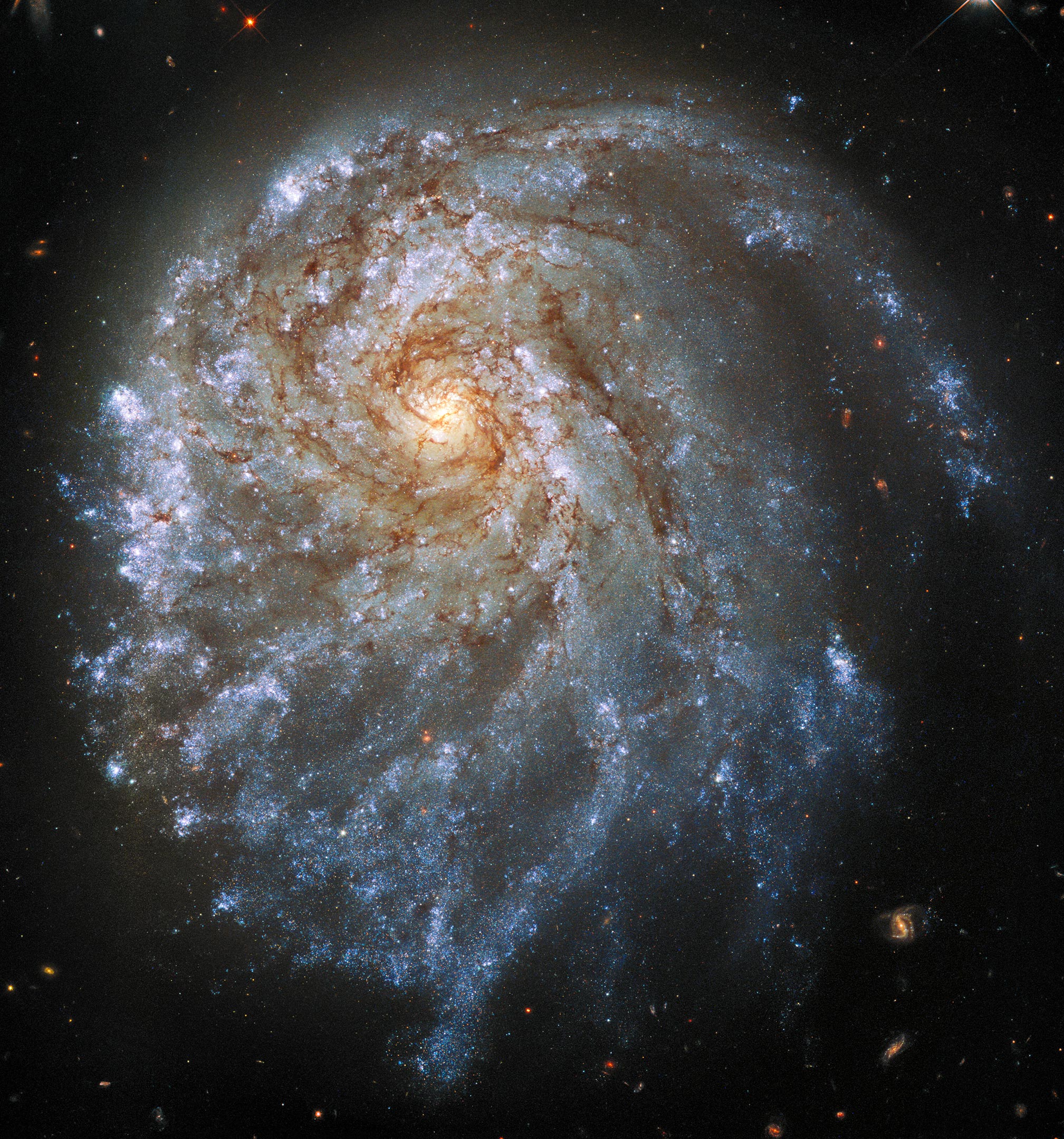
    This spectacular image from the NASA/ESA Hubble Space Telescope shows the trailing arms of NGC 2276, a spiral galaxy 120 million light-years away in the constellation of Cepheus. At first glance, the delicate tracery of bright spiral arms and dark dust lanes resembles countless other spiral galaxies. A closer look reveals a strangely lopsided galaxy shaped by gravitational interaction and intense star formation. Credit: ESA/Hubble & NASA, Paul Sell (University of Florida), Acknowledgement: L. Shatz

    The magnificent spiral galaxy NGC 2276 looks a bit lopsided in this Hubble Space Telescope snapshot. A bright hub of older yellowish stars normally lies directly in the center of most spiral galaxies. But the bulge in NGC 2276 looks offset to the upper left. 

    What’s Going On?

    In reality, a neighboring galaxy to the right of NGC 2276 (NGC 2300, not seen here) is gravitationally tugging on its disk of blue stars, pulling the stars on one side of the galaxy outward to distort the galaxy’s normal fried-egg appearance.

    This sort of “tug-of-war” between galaxies that pass close enough to feel each other’s gravitational pull is not uncommon in the universe. But, like snowflakes, no two close encounters look exactly alike.

    In addition, newborn and short-lived massive stars form a bright, blue arm along the upper left edge of NGC 2276. They trace out a lane of intense star formation. This may have been triggered by a prior collision with a dwarf galaxy. It could also be due to NGC 2276 plowing into the superheated gas that lies among galaxies in galaxy clusters. This would compress the gas to precipitate into stars, and trigger a firestorm of starbirth.

    The spiral galaxy lies 120 million light-years away, in the northern constellation Cepheus.

    Never miss a breakthrough: Join the SciTechDaily newsletter.
    Follow us on Google and Google News.

    Astronomy Hubble Space Telescope NASA Popular Space Telescope Science Institute
    Share. Facebook Twitter Pinterest LinkedIn Email Reddit

    Related Articles

    The Big Bang’s Dark Legacy Revealed by Hubble: Unexpected Black Holes

    Historic Discovery: Twin Titans Clash As NASA Unveils Closest Supermassive Black Hole Duo

    The Great Escape: NASA’s Hubble and MAVEN Help Solve Mystery of Mars’ Vanishing Water

    Webb and Hubble Unite: A Breathtaking 3D Journey Through the Pillars of Creation

    Stellar Sleuths: Citizen Scientists and AI Uncover Hidden Asteroids With Hubble

    Hubble Celebrates 34th Anniversary With a Spectacular View of the Little Dumbbell Nebula

    Jupiter Unveiled: Hubble Captures the Giant’s Roaring Storms and Volcanic Moon Io

    Galaxies Collide, Stars Awaken: Hubble’s Stunning Revelation

    Hubble Spots Water Vapor in Small Exoplanet’s Atmosphere

    2 Comments

    1. JY on June 3, 2021 6:47 am

      CGI

      Reply
    2. BOBbobbing on June 10, 2021 1:47 am

      Yeh CGI, space is fake, I shoot people over vaccines. Everyone a lizard. Grow up.

      Reply
    Leave A Reply Cancel Reply

    • Facebook
    • Twitter
    • Pinterest
    • YouTube

    Don't Miss a Discovery

    Subscribe for the Latest in Science & Tech!

    Trending News

    Scientists Say Love Follows Mathematical Patterns

    “Zombie Cells” Reveal a Hidden Weakness That Could Help Fight Aging

    Alien Signals May Be Hiding in a Radio Band SETI Has Barely Explored

    Earth’s Hidden Thermostat Has Regulated Climate for 60 Million Years

    This 518-Million-Year-Old Creature Reveals How Spiders Got Their Bite

    Scientists Built a Programmable Chip That Can Slow Light on Command

    The Backyard “Silly Sprinkler” That Cracked One of Physics’ Biggest Puzzles

    This Common Sleep Habit Could Be Making You Gain Weight

    Follow SciTechDaily
    • Facebook
    • Twitter
    • YouTube
    • Pinterest
    • Newsletter
    • RSS
    SciTech News
    • Biology News
    • Chemistry News
    • Earth News
    • Health News
    • Physics News
    • Science News
    • Space News
    • Technology News
    Recent Posts
    • Screen Time at Ages 1 and 6 Linked to Lasting Learning and Memory Effects
    • Brain Scans Reveal Which Disorders May Accelerate Brain Aging
    • Viagra May Block a Hidden Pathway Cancer Cells Need To Spread
    • Underwater Drones Find “Dead” Coral Reefs Teeming With Life
    • How Brown Tree Snakes Became an Unstoppable Invasive Species
    Copyright © 1998 - 2026 SciTechDaily. All Rights Reserved.
    • Science News
    • About
    • Contact
    • Editorial Board
    • Privacy Policy
    • Terms of Use

    Type above and press Enter to search. Press Esc to cancel.