
Close Menu
    Facebook X (Twitter) Instagram
    SciTechDaily
    • Biology
    • Chemistry
    • Earth
    • Health
    • Physics
    • Science
    • Space
    • Technology
    Facebook X (Twitter) Pinterest YouTube RSS
    SciTechDaily
    Home»Biology»Seagulls Favor Food They’ve Seen People Holding
    Biology

    Seagulls Favor Food They’ve Seen People Holding

    By University of ExeterFebruary 26, 2020No Comments3 Mins Read
    Facebook Twitter Pinterest Telegram LinkedIn WhatsApp Email Reddit
    Share
    Facebook Twitter LinkedIn Pinterest Telegram Email Reddit
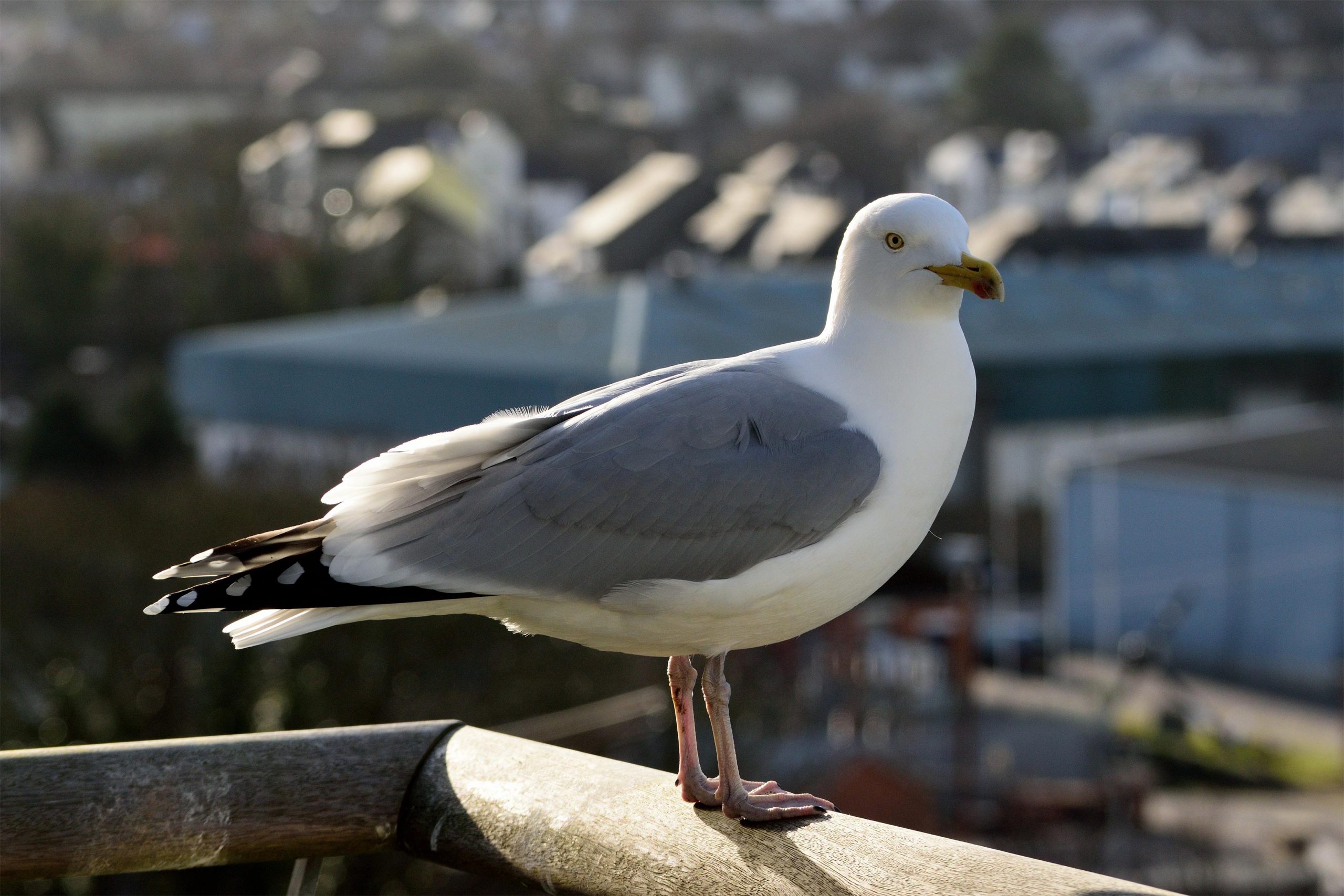
    Herring Gull
    Herring gull. Credit: Madeleine Goumas

    Seagulls favor food that has been handled by humans, new research shows.

    Herring gulls were presented with two identical food items — one of which they had seen a human holding. The gulls pecked more often at the handled food, suggesting they use human actions when deciding what to eat.

    The University of Exeter study follows previous research which found that staring at seagulls makes them less likely to steal food.

    “UK herring gull numbers are declining, but urban populations have increased,” said lead author Madeleine Goumas, of the Centre for Ecology and Conservation at Exeter’s Penryn Campus in Cornwall.

    “Despite the fact they’re a common sight in many towns, little is known about urban gull behavior. We wanted to find out if gulls are simply attracted by the sight of food, or if people’s actions can draw gulls’ attention towards an item.

    “Our study shows that cues from humans may play an important part in the way gulls find food, and could partly explain why gulls have been successful in colonizing urban areas.”

    In the study, carried out in Cornish towns including Falmouth and Penzance, a researcher approached individual gulls and placed two buckets on the ground in front of them, each covering a wrapped flapjack.

    The buckets were then removed, and the researcher picked up one of the flapjacks, handled it for 20 seconds, and then put it back down on the ground.

    In total, 38 gulls were tested, 24 pecked at one of the flapjacks and 19 of these (79%) chose the one that had been handled.

    To see if gulls were responding to human handling alone, the experiment was repeated with two non-food items — sponges that were cut into the same size and shape as the flapjacks.

    In this case, gulls’ preference for the handled sponge did not exceed “chance levels” — suggesting that handling draws their attention to food in particular.

    Senior author Dr. Laura Kelley said: “Our findings suggest that gulls are more likely to approach food that they have seen people drop or put down, so they may associate areas where people are eating with an easy meal.

    “This highlights the importance of disposing of food waste properly, as inadvertently feeding gulls reinforces these associations. Herring gulls have a generalist diet that typically includes fish and invertebrates, but they will also consume food found in landfill sites and household waste.

    “The effect of this shift in food quality and quantity away from more ‘natural’ sources is not yet clear.

    “Herring gulls are quite adaptable and are likely to be moving into urban areas because of the resources available. For example, there are lots of suitable nesting sites, and a ready supply of food.

    “Urban environments may also be able to support larger gull populations, meaning that competition among individuals for resources is lower than in rural coastal colonies.”

    The paper, published in the journal Royal Society Open Science, is entitled: “Urban herring gulls use human behavioural cues to locate food.”

    Reference: “Urban herring gulls use human behavioural cues to locate food” by Madeleine Goumas, Neeltje J. Boogert and Laura A. Kelley, 26 February 2020, Royal Society Open Science.
    DOI: 10.1098/rsos.191959

    Never miss a breakthrough: Join the SciTechDaily newsletter.
    Follow us on Google and Google News.

    Birds Environment University of Exeter
    Share. Facebook Twitter Pinterest LinkedIn Email Reddit

    Related Articles

    Nature Triumphs Over Nurture: Urban Seagulls Defy Expectations by Preferring Seafood

    Seabird Eggs Contaminated With Chemical Cocktail of Plastic Additives

    Creating a Phantom River: Experimental Broadcast of Whitewater River Noise Drives Bats and Birds Away

    Climate Change Drives Babbler Birds Into “Ecological Trap”

    Birds Play by Different Evolutionary Rules in the Amazon’s “Sand Forests”

    Why Bird Nests Attract Flying Insects and Parasites

    Revealed: How Bird Wings Adapted to Their Environment and Behavior

    “Area X” of Zebra Finch May Provide Insights to Human Speech Disorders

    After 20 Years, Russian Drill Nears 14-Million-Year-Old Lake Vostok

    Leave A Reply Cancel Reply

    • Facebook
    • Twitter
    • Pinterest
    • YouTube

    Don't Miss a Discovery

    Subscribe for the Latest in Science & Tech!

    Trending News

    Don’t Miss: A Brilliant Venus and Glowing Harvest Moon Light Up the Sky

    New Twist on the Einstein Problem Reveals Unexpected Physics

    JWST Captures Stunning Evidence of How Supermassive Black Holes Feed

    Early Exercise May Permanently Change How Much Energy the Body Uses To Move

    New Molecule Wipes Out Aggressive Lymphoma Tumors in Mice in Just 11 Days

    The Human Family Tree May Need a Major Rewrite

    Scientists Find a Surprising Cancer-Fighting Effect in Dark Sweet Cherries

    New AI Detects Hidden Warning Signs of Solar Eruptions Hours Before They Emerge

    Follow SciTechDaily
    • Facebook
    • Twitter
    • YouTube
    • Pinterest
    • Newsletter
    • RSS
    SciTech News
    • Biology News
    • Chemistry News
    • Earth News
    • Health News
    • Physics News
    • Science News
    • Space News
    • Technology News
    Recent Posts
    • Scientists Develop a Fruit Wash That Removes Pesticide Residues and Keeps Produce Fresh Longer
    • Scientists May Have Finally Explained Why Astronauts Get Constipated in Space
    • Pomegranates Could Unlock a New Treatment for Heart Failure
    • Africa’s Giant Herbivores Were Disappearing Millions of Years Before Humans Could Hunt Them
    • This Utah Mountain Is Hiding Enough Ice To Fill 600 Olympic Pools
    Copyright © 1998 - 2026 SciTechDaily. All Rights Reserved.
    • Science News
    • About
    • Contact
    • Editorial Board
    • Privacy Policy
    • Terms of Use

    Type above and press Enter to search. Press Esc to cancel.