
Close Menu
    Facebook X (Twitter) Instagram
    SciTechDaily
    • Biology
    • Chemistry
    • Earth
    • Health
    • Physics
    • Science
    • Space
    • Technology
    Facebook X (Twitter) Pinterest YouTube RSS
    SciTechDaily
    Home»Earth»Halogen Levels in Earth-Forming Meteorites Lower Than Previously Thought
    Earth

    Halogen Levels in Earth-Forming Meteorites Lower Than Previously Thought

    By University of ManchesterDecember 5, 2017No Comments3 Mins Read
    Facebook Twitter Pinterest Telegram LinkedIn WhatsApp Email Reddit
    Share
    Facebook Twitter LinkedIn Pinterest Telegram Email Reddit

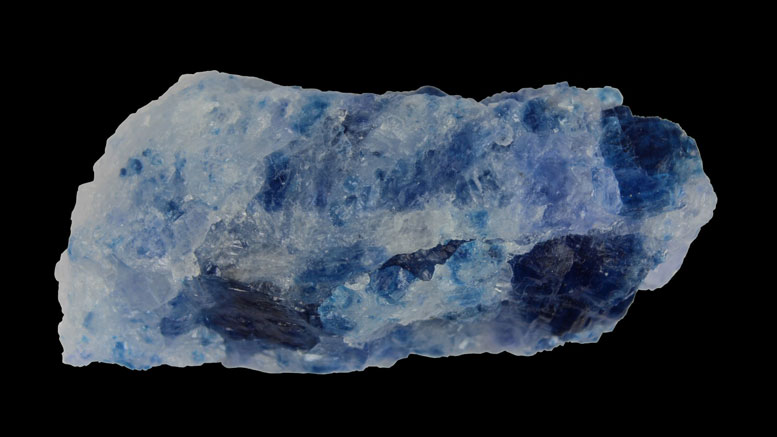
    Halogen Levels in Earth-Forming Meteorites Lower Than Previously Believed

    Researchers have found the halogen levels in the meteorites that formed the Earth billions of years ago are much lower than previously thought.

    The research was carried out by an international team of researchers, led by the Universities of Manchester and Oxford, and has been published in Nature.

    Halogens such as Chlorine, Bromine, and Iodine, form naturally occurring salts which are essential for most life forms – but too much can prohibit life. When previously comparing halogen levels in meteorites that formed the planet, the Earth should have unhealthy levels of salt.

    Many theories have been put forward to explain the mystery of why, instead, Earth salt concentrations are ‘just right’. The answer turns out to be quite simple – previous estimates of meteorites were just too high.

    Using a new analytical technique, the team looked at different kinds of chondrite meteorites, a type of primitive meteorite approximately 4.6 billion years old.

    Dr. Patricia Clay, lead author of the study from the University of Manchester’s School of Earth and Environmental Sciences (SEES), said: “These kinds of meteorites are remnants of the solar nebula, a molecular cloud made up of interstellar dust and hydrogen gas that predates our Solar System. Studying them provides important clues for our understanding of the origin and age of the Solar System.”

    How the Earth acquired its volatile elements has long interested scientists. To answer the question the team re-examined one of the largest collections of meteorites assembled for this type of study.
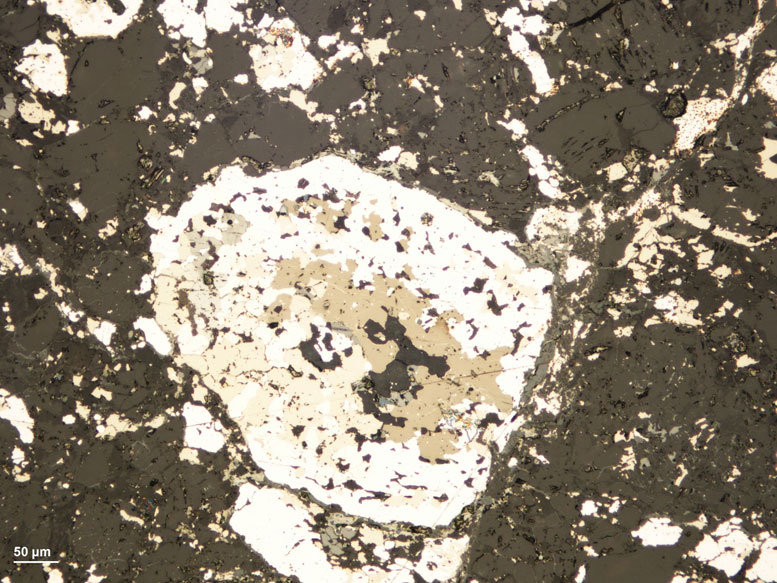
    Halogen Levels in Earth-Forming Meteorites Lower Than Previously Believed
    “No single model of Earth formation using the old meteorite measurements could easily account for the halogens we see today. Some of these models needed catastrophic planetary-wide removal of halogens without affecting related elements – which just didn’t make sense.” Dr. Patricia Clay, School of Earth and Environmental Sciences

    They found that previous estimates of halogen levels in meteorites were too high, but the technique used by the team helped them avoid contaminated sources.

    Dr. Clay explains: “No single model of Earth formation using the old meteorite measurements could easily account for the halogens we see today. Some of these models needed catastrophic planetary-wide removal of halogens without affecting related elements – which just didn’t make sense.”

    Professor Ray Burgess, co-author and also from The University of Manchester, added: “The new simplified model we have developed is a big step forward in understanding how key ingredients essential for life were brought to our planet, including water that probably helped distribute the halogens between the planetary interior and surface.”

    The results were a huge surprise, and time after time each meteorite measured was found to have halogen levels far lower than previously thought, and remarkably consistent between different types of meteorites.

    Professor Chris Ballentine, co-author from the University of Oxford and who designed the study, added: “Another big surprise of the study was just how uniform the halogen content of very different meteorites actually is – this is an incredibly important picture into the processes that formed the meteorites themselves – but also means that whatever meteorites formed the earth the halogen ingredients for Earth’s recipe remains the same.”

    Reference: “Halogens in chondritic meteorites and terrestrial accretion” by Patricia L. Clay, Ray Burgess, Henner Busemann, Lorraine Ruzié-Hamilton, Bastian Joachim, James M. D. Day and Christopher J. Ballentine,  30 November 2017, Nature.
    DOI: 10.1038/nature24625

    Never miss a breakthrough: Join the SciTechDaily newsletter.
    Follow us on Google and Google News.

    Earth Science Meteorites University of Manchester
    Share. Facebook Twitter Pinterest LinkedIn Email Reddit

    Related Articles

    NASA Discovers a Massive Crater Under Greenland Ice

    Scientists Discover Bits of the Solar System in an Antarctic Glacier

    Unusual Indian Ocean Earthquakes May Signal Tectonic Breakup

    Impact of Plants on Cloud Formation and the Atmosphere

    Nitrogen Pollution Is Altering Sensitive Ecosystems

    Tropical Oceans Role in Climate Change

    Defects in Mantle Rocks Slow Down the Passage of Seismic Waves

    Criegee Intermediate Reactions Detected and Measured by Sandia Researchers

    Criegee Biradicals May Cool Planet and Offset Global Warming

    Leave A Reply Cancel Reply

    • Facebook
    • Twitter
    • Pinterest
    • YouTube

    Don't Miss a Discovery

    Subscribe for the Latest in Science & Tech!

    Trending News

    Your Blood Pressure Reading Could Be Wrong Because of One Simple Mistake

    Astronomers Stunned by Ancient Galaxy With No Spin

    Physicists May Be on the Verge of Discovering “New Physics” at CERN

    Scientists Solve 320-Million-Year Mystery of Reptile Skin Armor

    Scientists Say This Daily Walking Habit May Be the Secret to Keeping Weight Off After Dieting

    New Therapy Rewires the Brain To Restore Joy in Depression Patients

    Giant Squid Detected off Western Australia in Stunning Deep-Sea Discovery

    Popular Sugar-Free Sweetener Linked to Liver Disease, Study Warns

    Follow SciTechDaily
    • Facebook
    • Twitter
    • YouTube
    • Pinterest
    • Newsletter
    • RSS
    SciTech News
    • Biology News
    • Chemistry News
    • Earth News
    • Health News
    • Physics News
    • Science News
    • Space News
    • Technology News
    Recent Posts
    • This Weird Sea Creature May Have Rewritten Life’s Genetic Rulebook
    • The Hidden Types of Dementia Most People Have Never Heard Of
    • Scientists Discover Why Alcohol Prevents the Liver From Healing, Even After You Quit
    • Scientists Solve a 60-Year-Old Fat Cell Mystery — and It Changes What We Know About Obesity
    • A Crucial Atlantic Current Is Weakening and Weather Could Change Worldwide
    Copyright © 1998 - 2026 SciTechDaily. All Rights Reserved.
    • Science News
    • About
    • Contact
    • Editorial Board
    • Privacy Policy
    • Terms of Use

    Type above and press Enter to search. Press Esc to cancel.