
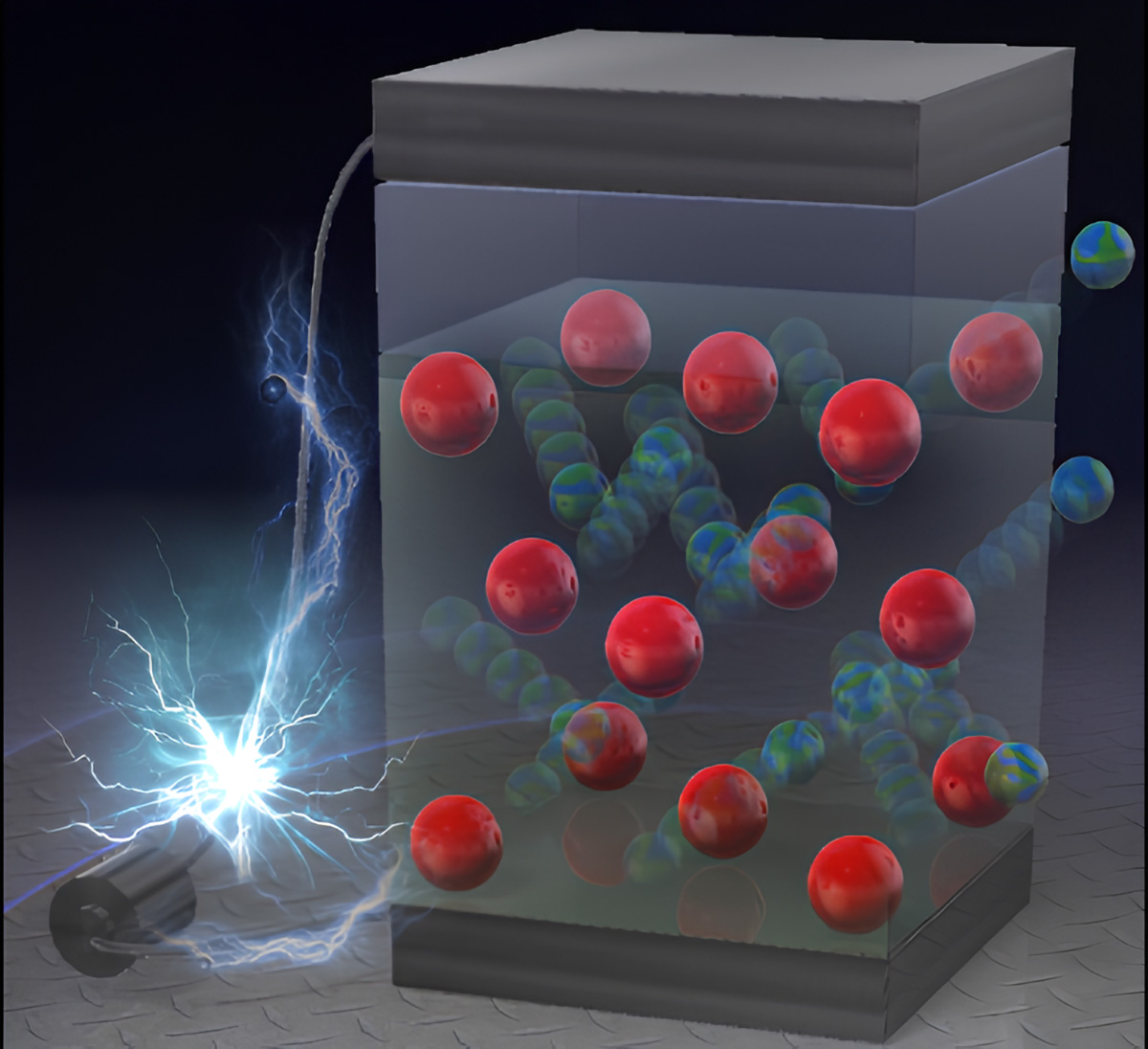
Researchers have significantly improved the performance of lithium-iron-oxide cathodes used in lithium-ion batteries by doping them with abundant elements like aluminum and silicon.
Charge-recharge cycling of lithium-superrich iron oxide, a cost-effective and high-capacity cathode for new-generation lithium-ion batteries, can be greatly improved by doping with readily available mineral elements.
The energy capacity and charge-recharge cycling (cyclability) of lithium-iron-oxide, a cost-effective cathode material for rechargeable lithium-ion batteries, is improved by adding small amounts of abundant elements. The development, achieved by researchers at Hokkaido University, Tohoku University, and Nagoya Institute of Technology, is reported in the journal ACS Materials Letters.
Lithium-ion batteries have become indispensable in modern life, used in a multitude of applications including mobile phones, electric vehicles, and large power storage systems. A constant research effort is underway to increase their capacity, efficiency, and sustainability. A major challenge is to reduce the reliance on rare and expensive resources. One approach is to use more efficient and sustainable materials for the battery cathodes, where key electron exchange processes occur.
Research Developments and Challenges
The researchers worked to improve the performance of cathodes based on a particular lithium-iron-oxide compound. In 2023, they reported a promising cathode material, Li5FeO4, that exhibits a high capacity using iron and oxygen redox reactions. However, its development encountered problems associated with the production of oxygen during charging-recharging cycling.
“We have now found that the cyclability could be significantly enhanced by doping small amounts of abundantly available elements such as aluminum, silicon, phosphorus, and sulfur into the cathode’s crystal structure,” says Associate Professor Hiroaki Kobayashi at the Department of Chemistry, Faculty of Science, Hokkaido University.
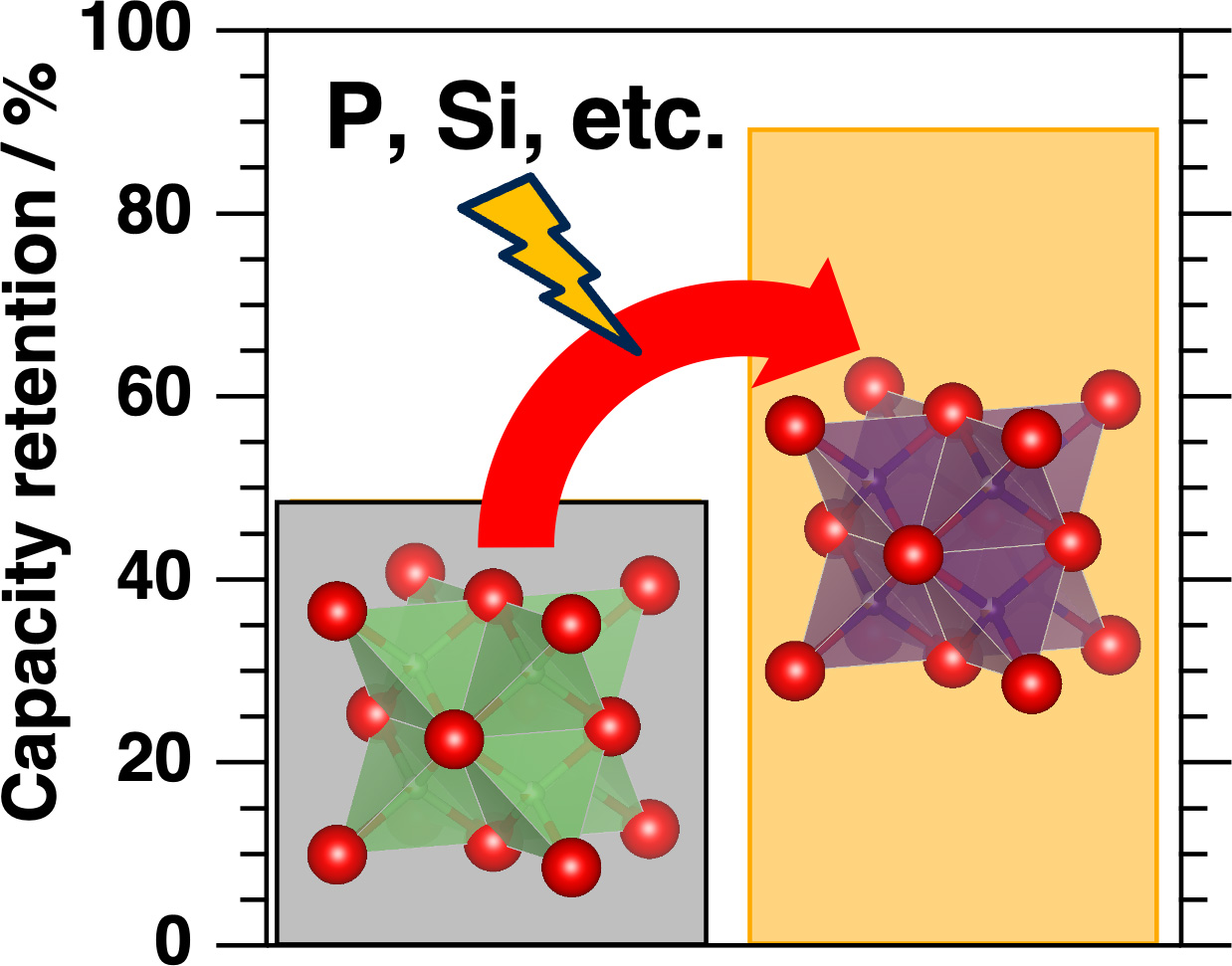
A crucial chemical aspect of the enhancement proved to be the formation of strong ‘covalent’ bonds between the dopant and oxygen atoms within the structure. These bonds hold atoms together when electrons are shared between the atoms, rather than the ‘ionic’ interaction between positive and negatively charged ions.
“The covalent bonding between the dopant and oxygen atoms makes the problematic release of oxygen less energetically favorable, and therefore less likely to occur,” says Kobayashi.
The researchers used X-ray absorption analysis and theoretical calculations to explore the fine details of changes in the structure of the cathode material caused by introducing different dopant elements. This allowed them to propose theoretical explanations for the improvements they observed. They also used electrochemical analysis to quantify the improvements in the cathode’s energy capacity, stability, and the cycling between charging and discharging phases, showing an increase in capacity retention from 50% to 90%.
“We will continue to develop these new insights, hoping to make a significant contribution to the advances in battery technology that will be crucial if electric power is to widely replace fossil fuel use, as required by global efforts to combat climate change,” Kobayashi concludes.
The next phase of the research will include exploring the challenges and possibilities in scaling up the methods into technology ready for commercialization.
Reference: “Toward Cost-Effective High-Energy Lithium-Ion Battery Cathodes: Covalent Bond Formation Empowers Solid-State Oxygen Redox in Antifluorite-Type Lithium-Rich Iron Oxide” by Hiroaki Kobayashi, Yuki Nakamura, Yumika Yokoyama, Itaru Honma and Masanobu Nakayama, 22 April 2024, ACS Materials Letters.
DOI: 10.1021/acsmaterialslett.4c00268
Never miss a breakthrough: Join the SciTechDaily newsletter.
Follow us on Google and Google News.