
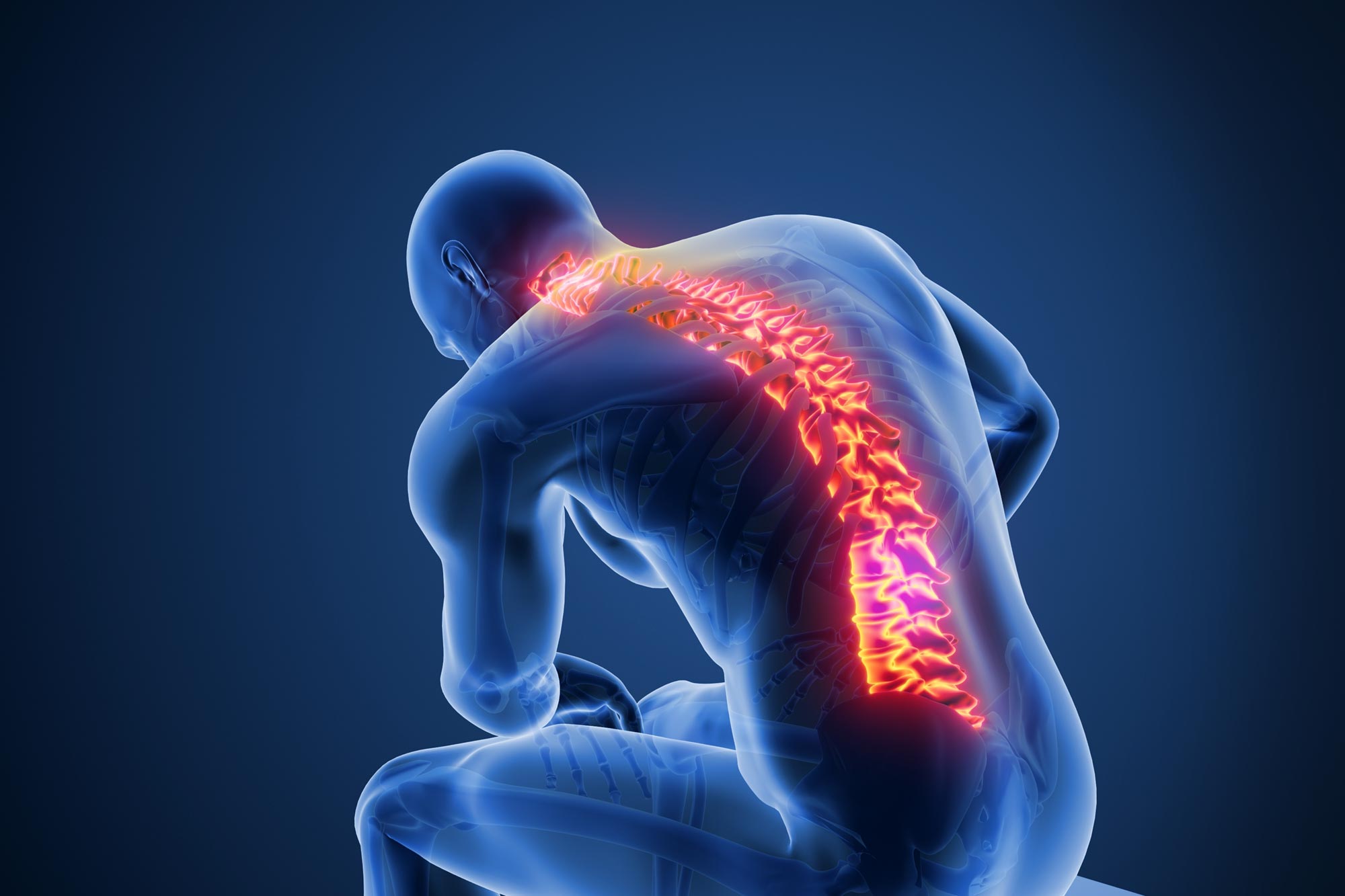
A chronic back pain flare may switch on a brain network tied to identity, linking physical pain with how you see yourself.
Researchers at UC San Diego School of Medicine found that movement-triggered flares in people with chronic low back pain activated a brain network associated with identity and inward reflection. Painful heat produced the opposite response, suggesting that a familiar back pain flare engages the brain differently from a new external threat.
Low back pain is the leading cause of disability worldwide, according to the World Health Organization. For people with chronic low back pain (cLBP), which lasts longer than 12 weeks, everyday movements can bring sudden spikes in pain, adding fear and uncertainty to ordinary activities.
The findings, published October 5, 2026, in the British Journal of Anaesthesia, offer a possible explanation for why treatments focused on pain symptoms often fall short. They also raise the possibility of treating the relationship between pain and identity.
Two Painful Experiences, Different Brain Responses
The study involved 114 people with cLBP who performed a “leg raise test,” a standard procedure used to provoke back pain. Researchers measured brain blood flow using arterial spin labeling, a specialized functional MRI technique. Participants also received a painful but harmless heat stimulus on the calf, providing a comparison with acute pain from an external source.

During movement-triggered flares, the Default Mode Network (DMN) became more active. This collection of connected regions across the frontal, parietal, and temporal lobes helps support thoughts about personal identity, memories, and internal feelings. Its involvement in inward reflection has earned it the nickname “self-network.”
Painful heat, by contrast, reduced DMN activity. According to corresponding author Fadel Zeidan, this response allows attention to shift toward an outside threat, such as something hot touching the skin.
“In every pain study, when you’re experiencing pain, the DMN deactivates,” said Zeidan. “What we show for the first time ever is that when you have a pain flare, it turns on instead. You start to identify the experience with who you are.”
When Pain Becomes Personal
The brain scans also revealed differences related to pain severity. Participants with worse chronic back pain had stronger connections between the DMN and the primary somatosensory cortex, which processes bodily sensations, including those from the back. More intense pain during the leg raise test corresponded to greater activity in sensory and motor regions, while heart rate increases reliably tracked the intensity of the flare.
Together, these findings suggest that a flare may draw on more than the immediate physical experience. Memories of earlier episodes, expectations about what movement will feel like, and worries about its consequences may all become part of the experience.
“The moment-to-moment experience is contaminated not only by the feeling of pain, but by the anticipation of it and recovery from it. It’s contaminated by past experiences like embarrassment about not being able to participate in normal activities and fear of movement when trying to avoid the pain.”
Why Symptom Relief May Fall Short
The team suspects that these different patterns of brain activity help explain why conventional pain treatments, including opiates, often provide insufficient relief for movement-triggered chronic pain.
“Current pain medicine is fixated on ridding patients of their pain symptoms, but that’s not the source of chronic pain. These data suggest that a chronic pain flare also encompasses one’s identity.”
Zeidan’s team has separately investigated mindfulness meditation and the psychedelic compound psilocybin as approaches that may help people separate pain from their sense of self. Early studies have reported reductions in pain intensity, although larger studies are needed to confirm the benefits and clarify how they occur.
Changing the Relationship with Pain
“These types of mind-body and psychedelic medicine approaches target the whole person,” Zeidan said. “Mindfulness is a meditation technique that’s about cultivating non-judgmental awareness of the present moment that dramatically reduces pain in a very unique way. Psilocybin seemingly resets the pain system that integrates trauma, past experiences, and future worries to facilitate a restart, if you will. They’re not a silver bullet—you’re not necessarily getting rid of the pain, but you’re changing the relationship you have with that pain so it doesn’t contaminate your everyday life.”
Zeidan’s laboratory is now conducting several clinical trials using brain imaging to examine how mindfulness and psychedelics affect processes involved in thinking about the self. The goal is to understand whether changing those processes can alter how chronic pain is experienced and how much it intrudes on daily life.
Reference: “Brain mechanisms supporting movement-evoked chronic low back pain: an observational brain imaging study” by Morgan Gianola, Jon Dean, Conan Chen, Daniel Barrows, Gabriel Riegner, Thomas Liu and Fadel Zeidan, 5 October 2026, British Journal of Anaesthesia.
DOI: 10.1016/j.bja.2026.08.010
The study was funded, in part, by the National Institutes of Health’s National Center for Complementary and Integrative Health (Grant #R01AT009693) and the UC San Diego Sanford Institute for Empathy and Compassion. The authors declare that they have no conflicts of interest.
Never miss a breakthrough: Join the SciTechDaily newsletter.
Follow us on Google and Google News.