
Close Menu
    Facebook X (Twitter) Instagram
    SciTechDaily
    • Biology
    • Chemistry
    • Earth
    • Health
    • Physics
    • Science
    • Space
    • Technology
    Facebook X (Twitter) Pinterest YouTube RSS
    SciTechDaily
    Home»Earth»There’s Lots of Water in the Most Explosive Volcano in the World
    Earth

    There’s Lots of Water in the Most Explosive Volcano in the World

    By Washington University in St. LouisJanuary 26, 2021No Comments3 Mins Read
    Facebook Twitter Pinterest Telegram LinkedIn WhatsApp Email Reddit
    Share
    Facebook Twitter LinkedIn Pinterest Telegram Email Reddit
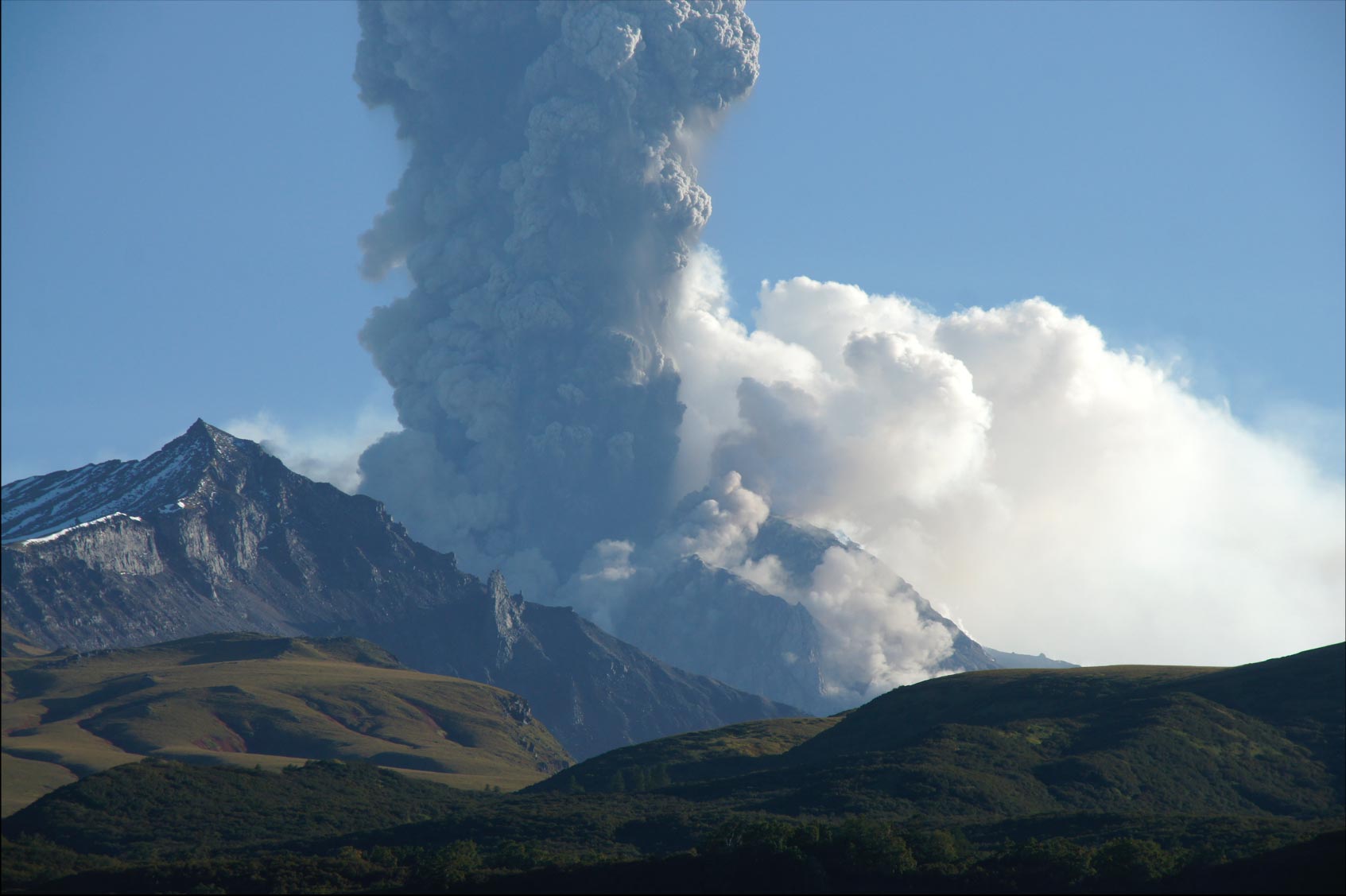
    Shiveluch Volcano
    Shiveluch volcano has had more than 40 violent eruptions over the last 10,000 years. The last gigantic blast occurred in 1964, creating a new crater and covering an area of nearly 100 square kilometers with pyroclastic flows. But Shiveluch is actually currently erupting, as it has been for over 20 years. Credit: Michael Krawczynski, Washington University in St. Louis

    Shiveluch’s magmas are extraordinarily water-rich, revealing clues about volcanic activity, subduction zones, and deep-Earth water processes.

    Shiveluch, an active volcano located on the Kamchatka Peninsula in northeastern Russia, has had more major eruptions than any other volcano in our current period of geologic time – by a lot. In addition to having 5 times the number of explosive eruptions as Mount St. Helens, Shiveluch also boasts incredibly water-rich magmas that might help geoscientists gain insight into the global water cycle.


    Time-lapse video of a Shiveluch volcano eruption (Video: Michael Krawczynski)

    There isn’t much in Kamchatka, a remote peninsula in northeastern Russia just across the Bering Sea from Alaska, besides an impressive population of brown bears and the most explosive volcano in the world.

    Kamchatka’s Shiveluch volcano has had more than 40 violent eruptions over the last 10,000 years. The last gigantic blast occurred in 1964, creating a new crater and covering an area of nearly 100 square kilometers with pyroclastic flows. But Shiveluch is actually currently erupting, as it has been for over 20 years. So why would anyone risk venturing too close?

    Researchers from Washington University in St. Louis, including Michael Krawczynski, assistant professor of earth and planetary sciences in Arts & Sciences and graduate student Andrea Goltz, brave the harsh conditions on Kamchatka because understanding what makes Shiveluch tick could help scientists understand the global water cycle and gain insights into the plumbing systems of other volcanoes.

    In a recent study published in the journal Contributions to Mineralogy and Petrology, researchers from the Krawczynski lab looked at small nodules of primitive magma that were erupted and preserved amid other materials.

    “The minerals in these nodules retain the signatures of what was happening early in the magma’s evolution, deep in Earth’s crust,” said Goltz, the lead author of the paper.

    Water-Rich Magmas: A Geological Rarity

    The researchers found that the conditions inside Shiveluch include roughly 10%-14% water by weight (wt%). Most volcanoes have less than 1% water. For subduction zone volcanoes, the average is usually 4%, rarely exceeding 8 wt%, which is considered superhydrous.

    Of particular interest is a mineral called amphibole, which acts as a proxy or fingerprint for high water content at known temperature and pressure. The unique chemistry of the mineral tells researchers how much water is present deep underneath Shiveluch.

    “When you convert the chemistry of these two minerals, amphibole and olivine, into temperatures and water contents as we do in this paper, the results are remarkable both in terms of how much water and how low a temperature we’re recording,” Krawczynski said.

    “The only way to get primitive, pristine materials at low temperatures is to add lots and lots of water,” he said. “Adding water to rock has the same effect as adding salt to ice; you’re lowering the melting point. In this case, there is so much water that the temperature is reduced to a point where amphiboles can crystallize.”

    Reference: “Evidence for superhydrous primitive arc magmas from mafic enclaves at Shiveluch volcano, Kamchatka” by Andrea E. Goltz, Michael J. Krawczynski, Maxim Gavrilenko, Natalia V. Gorbach and Philipp Ruprecht, 18 November 2020, Contributions to Mineralogy and Petrology.
    DOI: 10.1007/s00410-020-01746-5

    Never miss a breakthrough: Join the SciTechDaily newsletter.
    Follow us on Google and Google News.

    Geology Geoscience Popular Tectonic Plates Volcano Washington University in St. Louis
    Share. Facebook Twitter Pinterest LinkedIn Email Reddit

    Related Articles

    Groundbreaking Discovery of Hidden Molten Rock Layer Under Earth’s Tectonic Plates

    Explosive New Tectonic Discovery May Help Explain Location of Silver and Gold Ore Deposits

    What Lies Beneath: Volcanic Secrets Revealed – “We’ve Been Misled, Geologically Deceived”

    Volcanoes Act as a Safety Valve for Earth’s Long-Term Climate – Stabilizing Surface Temperatures

    “Great Unconformity” Puzzle: Geologists Dig Into Grand Canyon’s Mysterious Gap in Time

    New Hazards of Earth’s Largest Volcano Uncovered

    NASA Satellites Detect Signs of Unrest Years Before Volcanic Eruptions

    New Type of Rock Created During Exceptionally Hot Volcanic Eruptions Discovered Beneath the Pacific Ocean

    World’s Longest Erupting Supervolcanoes Fueled by Magma “Conveyor Belt”

    Leave A Reply Cancel Reply

    • Facebook
    • Twitter
    • Pinterest
    • YouTube

    Don't Miss a Discovery

    Subscribe for the Latest in Science & Tech!

    Trending News

    Mushroom Mystery: The Fungus That Makes People See Tiny Humans

    Popular Erectile Dysfunction Drug Linked to Vision-Threatening Eye Disease

    Scientists Find a Smarter Way To Turn Used Coffee Grounds Into Clean Fuel

    Did Cellular Life Begin Twice? New Study Points to Two Independent Origins

    Sitting Up Straight Could Actually Help You Make Better Decisions

    Never-Before-Seen Vortices Are Swirling Across the Sun

    This Common Amino Acid May Help the Body Fight Cancer and Viruses

    Low-Protein “Longevity Diet” Linked to Fat Loss, Muscle Preservation, and Healthy Aging

    Follow SciTechDaily
    • Facebook
    • Twitter
    • YouTube
    • Pinterest
    • Newsletter
    • RSS
    SciTech News
    • Biology News
    • Chemistry News
    • Earth News
    • Health News
    • Physics News
    • Science News
    • Space News
    • Technology News
    Recent Posts
    • 520-Million-Year-Old Fossil Reveals How Cephalopods Learned To Float
    • “Find of the Year” – Archaeologists Discover the Smallest Ice Age Figurines Ever Found
    • Nearly Complete Fossil Reveals Scientists Were Wrong About This Ancient Mammal
    • New Research Challenges Common Exercise Advice for Bone Health
    • Cancer Cells Use a Sugar Shield To Hide From the Immune System
    Copyright © 1998 - 2026 SciTechDaily. All Rights Reserved.
    • Science News
    • About
    • Contact
    • Editorial Board
    • Privacy Policy
    • Terms of Use

    Type above and press Enter to search. Press Esc to cancel.