
New Study Shows Sick Gorillas Transmit Illnesses to Others Nearby
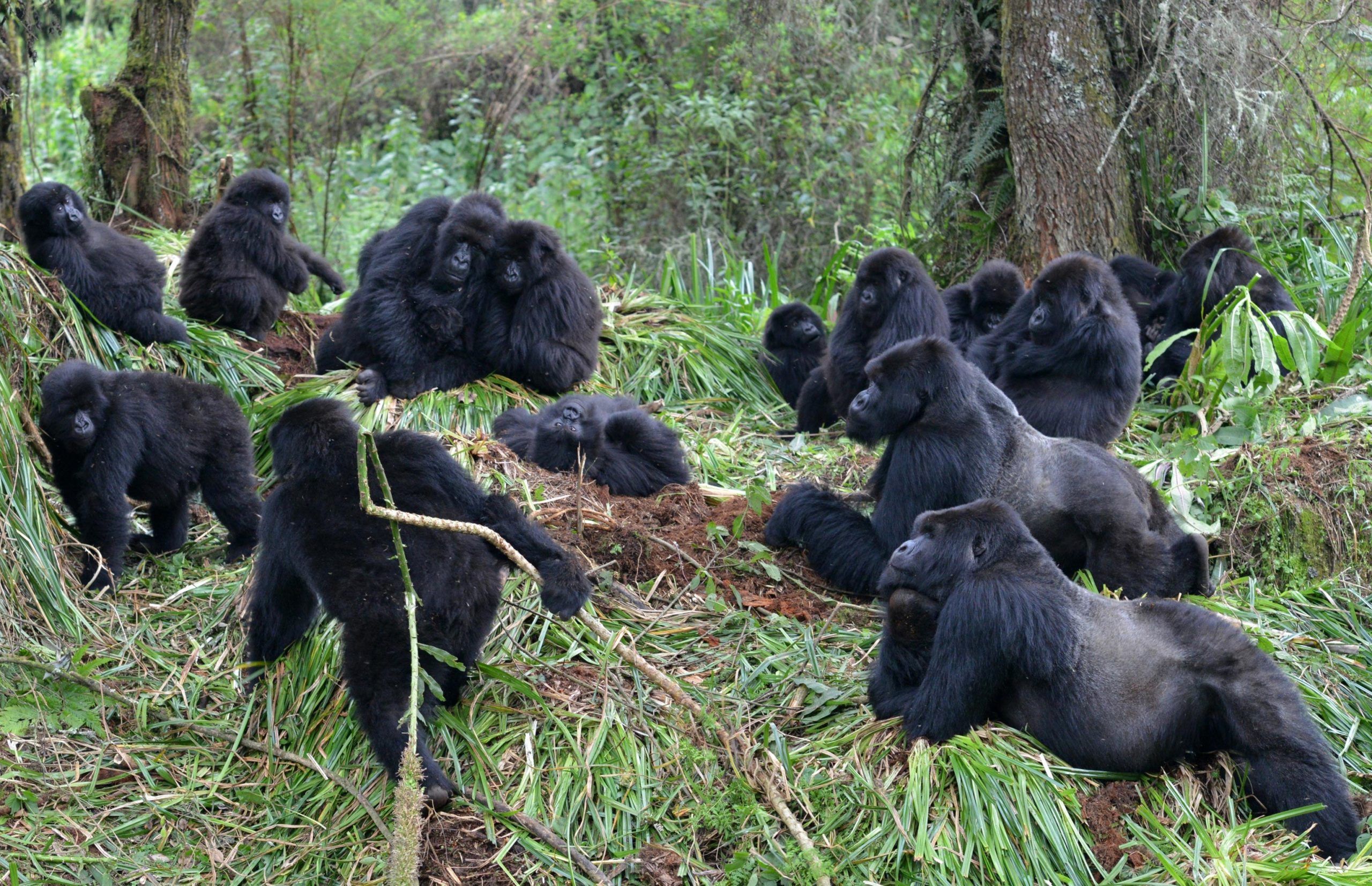
Coughs and colds spread quickly within wild mountain gorilla groups but appear less likely to spread between neighboring groups, a new study published in Scientific Reports shows.
Disease, in particular respiratory infection, is one of the biggest threats to ape conservation. Because humans and apes are so closely related, our ape cousins can catch many of the same diseases as us. However, respiratory infections that are relatively mild in humans can have major consequences in apes like gorillas and chimpanzees, where a case of the common cold or flu can be lethal.
Scientists from the Dian Fossey Gorilla Fund studied 15 respiratory outbreaks across the last 17 years to understand how diseases transmitted through a population of mountain gorillas in the Volcanoes National Park, Rwanda. These findings will help shape future conservation strategies.
“If we can better understand how diseases have spread in the past, we can better prepare for and respond to outbreaks in the future,” said Dr. Robin Morrison, lead author on the study.
Close Contact Fuels Fast Transmission
Study authors found that the close contact and strong social relationships within gorilla groups enabled respiratory diseases to spread rapidly between group members. Furthermore, the patterns of transmission couldn’t be predicted by a group’s social network. In one outbreak, it took only three days for 45 out of 46 group members to begin coughing.
These results differed from findings in an earlier study of chimpanzees, in which the more diffuse social organization of chimpanzee society resulted in slower transmission overall, and researchers were able to predict disease spread based on the chimpanzees’ social network.
There was some good news for this endangered gorilla population. The researchers found that opportunities for infections to spread between neighboring groups were limited.
“The outbreaks we investigated all appeared to stay within a single group rather than spreading through the wider population,” said Yvonne Mushimiyimana, a co-author on the project. “Gorilla groups interact fairly infrequently, and when they do, they tend to keep their distance, rarely approaching to within that crucial 1-2 meter (3.3-6.6 foot) distance.”
This aloofness toward neighboring groups may actually help protect the wider population by limiting broader transmission of these infections.
Human-Origin Pathogens Identified
But if gorilla groups weren’t infecting each other, where did these outbreaks come from? Other studies in wild apes have shown that respiratory outbreaks are almost exclusively caused by pathogens of human origin. In Uganda, two adjacent chimpanzee communities began showing signs of respiratory infection simultaneously, but genetic analyses found that these infections were caused by two entirely different human pathogens. These findings surprised scientists, who expected the infection had spread between the two chimpanzee communities. Instead, the analyses showed that both infections had been independently transmitted from humans.
“Our best guess is that these infections in mountain gorillas are coming from humans,” said Morrison. “It really highlights the importance of ongoing efforts to minimize wild great ape exposure to human diseases during activities like research, tourism, and protection. Vaccination, mask wearing, and maintaining adequate distance are all more important than ever in the midst of a global pandemic.”
Identifying strategies to limit disease transmission is a conservation priority. Different diseases can have very different transmission pathways, but this study helps us understand how future outbreaks with similar transmission dynamics might spread in gorilla populations.
Prevention Strategies Are Key
“The findings from this study suggest that since respiratory diseases transmit quickly within gorilla groups and transmission between groups is much less common, strategies that prevent initial transmission into a group may be most effective,” said Dr. Tara Stoinski, president and chief scientific officer of the Fossey Fund. “For COVID-19 and other human respiratory pathogens, that means preventing that first introduction of a disease from a human to a gorilla.”
“Although the research was completed well before the appearance of COVID-19, the current pandemic highlights the fact that it is more vital than ever to minimize pathways of human-ape disease transmission, which pose a risk to wild great apes and humans alike,” said Stoinski.
Reference: “Rapid transmission of respiratory infections within but not between mountain gorilla groups” by Robin E. Morrison, Yvonne Mushimiyimana, Tara S. Stoinski and Winnie Eckardt, 7 October 2021, Scientific Reports.
DOI: 10.1038/s41598-021-98969-8
Never miss a breakthrough: Join the SciTechDaily newsletter.
Follow us on Google and Google News.
1 Comment
Sᴛᴀʀᴛ ᴡᴏʀᴋɪɴɢ ғʀᴏᴍ ʜᴏᴍᴇ! Gʀᴇᴀᴛ ᴊᴏʙ ғᴏʀ Ever, sᴛᴀʏ-ᴀᴛ-ʜᴏᴍᴇ ᴍᴏᴍs ᴏʀ ᴀɴʏᴏɴᴇ ɴᴇᴇᴅɪɴɢ ᴀɴ ᴇxᴛʀᴀ ɪɴᴄᴏᴍᴇ… Yᴏᴜ ᴏɴʟʏ ɴᴇᴇᴅ ᴀ ᴄᴏᴍᴘᴜᴛᴇʀ ᴀɴᴅ ᴀ ʀᴇʟɪᴀʙʟᴇ ɪɴᴛᴇʀɴᴇᴛ ᴄᴏɴɴᴇᴄᴛɪᴏɴ… Mᴀᴋᴇ $100 ʜᴏᴜʀʟʏ ᴀɴᴅ ᴜᴘ ᴛᴏ $13000 ᴀ ᴍᴏɴᴛʜ ʙʏ ғᴏʟʟᴏᴡɪɴɢ connection ᴀᴛ ᴛʜᴇ ʙᴏᴛᴛᴏᴍ .Yᴏᴜ ᴄᴀɴ ʜᴀᴠᴇ ʏᴏᴜʀ ғɪʀsᴛ ᴄʜᴇᴄᴋ ʙʏ ᴛʜᴇ ᴇɴᴅ ᴏғ ᴛʜɪs ᴡᴇᴇᴋ…► 𝐖𝐰𝐰.𝐄𝐱𝐭𝐫𝐚𝐑𝐢𝐜𝐡𝟏.𝐜𝐨𝐦