
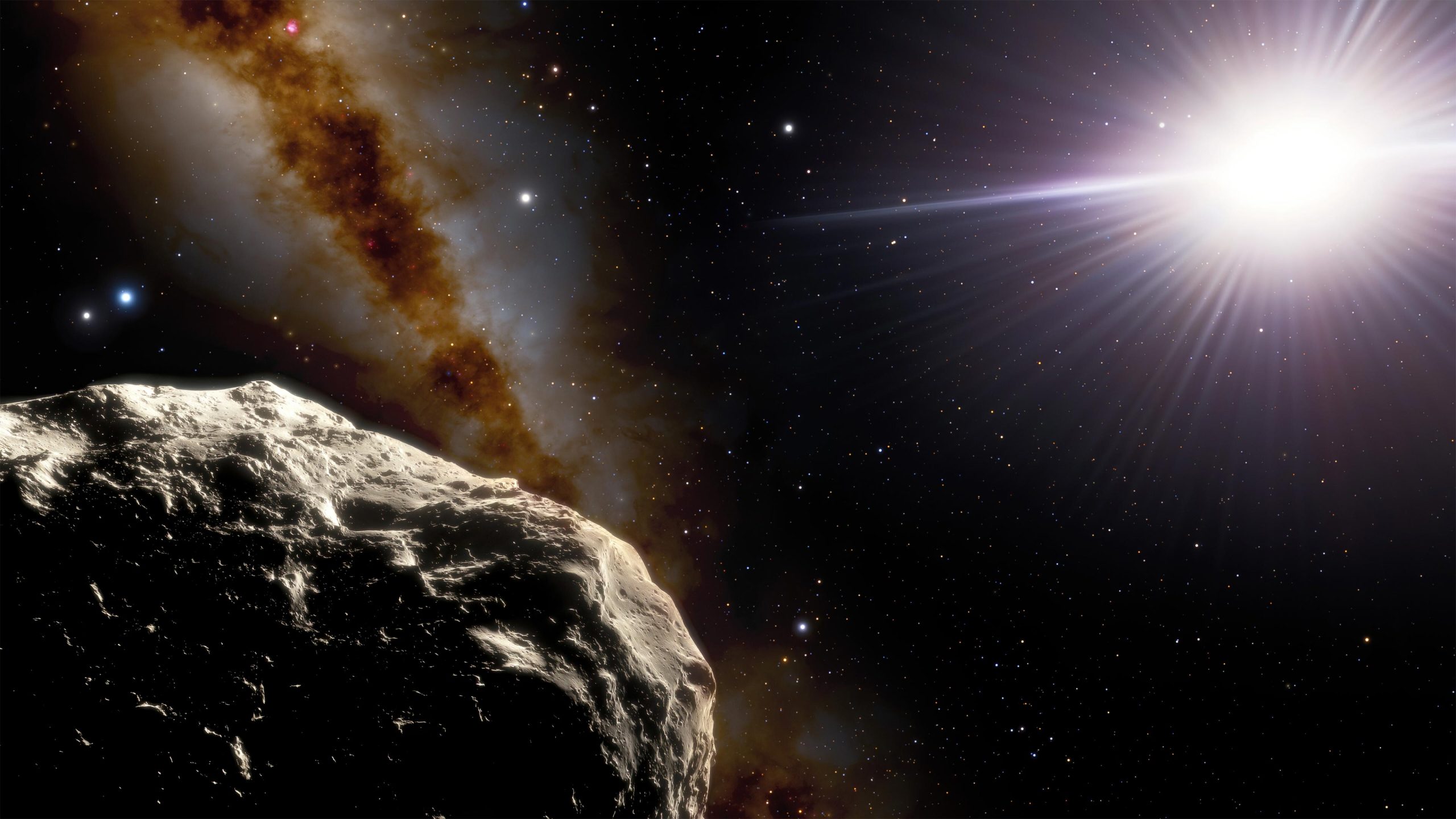
The discovery of 2020 XL5, Earth’s second known Trojan asteroid, at the L4 point reveals the challenges in finding Earth Trojans.
Earth has a new companion. Asteroid 2020 XL5, a newly discovered kilometer-wide carbonaceous space rock, has been discovered at Earth’s L4 Lagrange point – a place where the gravitational forces of Earth and the Sun balance out, creating a stable point in which objects can become trapped. A new paper published in Nature Communications confirms that 2020 XL5 will be stuck at L4 for at least another 4000 years, shepherded silently through the Solar System by the gravitational tug of our home planet.
This is only the second Earth Trojan ever discovered – the first was found in 2010 – but other planets have plenty of them. Jupiter, which has been throwing its weight around in the Solar System for eons, has thousands of trojans, so many that the asteroid swarms at Jupiter’s L4 and L5 points rival the number of objects in the main asteroid belt itself. A mission to study Jupiter’s Trojans, named Lucy, launched in October and will arrive at Jupiter’s L4 point in 2027. Understanding what these captured asteroids are made of will help researchers build a clearer picture of the early Solar System.
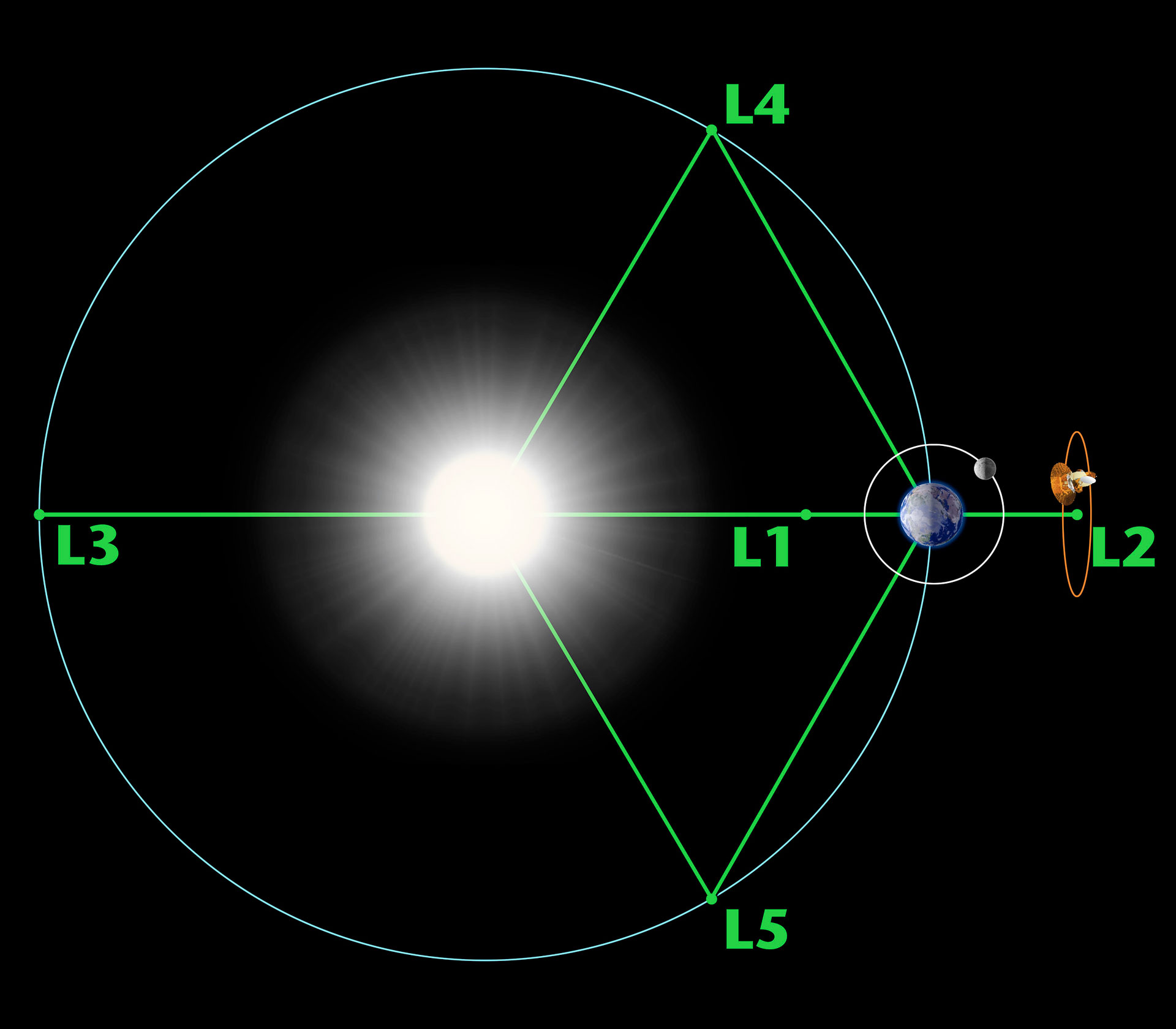
While its hoard is impressive, Jupiter does not have a monopoly on trojan asteroids. Neptune has 29 known trojans, and even Mars, at three-fifths of Earth’s size, has over a dozen of them in its Lagrange points.
Why Are Earth Trojans Hard to Find?
So why does Earth have so few? Well, first of all, there are probably more out there, we just haven’t found them yet. Earth Trojans are notoriously hard to see because, from our perspective, we have to stare nearly directly towards the Sun to find them, making them near impossible to pick out in the glare. It doesn’t help that c-type asteroids like 2020 XL5 tend to have low albedo’s, reflecting very little light. This combination makes spotting Earth Trojans a difficult challenge.
So how was 2020 XL5 discovered? The trick is to time the observations carefully. There is a short period just before sunrise and just after sunset when the Sun is blocked by the horizon, but the Lagranges points are still visible in the sky. This isn’t an ideal observing situation, and the window of opportunity doesn’t last long, but it’s enough to take a quick look.
Using this method, astronomers used the Pan-STARRS1 survey, based in Hawaii, to find the object back in December of 2020. At the time, it was clear that 202 XL5 might possibly be an Earth Trojan, but it took until this recent study to confirm it. The data shows that this is a ‘transient trojan,’ meaning it did not begin in Earth’s L4 point, but was rather captured, and it won’t remain there forever either, eventually being bumped out to roam free once again. This isn’t likely to happen for a while, though, and it will remain in the L4 neighborhood for at least the next four millennia.
The attempt to find Earth Trojans doesn’t only rely on Earth-based telescopes. Space probes have visited Earth’s L4 and L5 points in search of previously unseen objects in situ. For example, NASA’s OSIRIS-REx spacecraft carried out a survey in the L4 region, while the Hayabusa2 spacecraft visited L5 on its way to asteroid Ryugu. Neither mission detected new Earth Trojans, but they helped create population constraints regarding the number and size of the asteroids that might be there.
The Scientific Significance of Earth Trojans
The search for more Earth Trojans continues. As the paper’s lead author Toni Santana-Ros explains, “asteroids are time capsules from the earliest days of our Solar System and can teach us lots about the era of planetary formation. Earth Trojans are particularly interesting, as they could be leftover material from the formation of Earth. Even if they come from far away instead, their relatively stable orbits at Earth’s Lagrange points could still make them ideal destinations for a spacecraft mission.”
When asked what’s next for the team, Santana-Ros replied, “This discovery strongly encourages us to keep searching for new Earth Trojans. Finding an Earth Trojan made of material leftover from Earth’s formation would be incredibly helpful for unraveling many secrets of the early Solar System.”
Adapted from an article originally published on Universe Today.
For more on this discovery:
- Existence of Earth Trojan Asteroid Confirmed
- Trojan Asteroid That Will Follow Earth in Orbit for 4,000 Years Discovered After a Decade of Searching
Never miss a breakthrough: Join the SciTechDaily newsletter.
Follow us on Google and Google News.
1 Comment
2020 XL5 – so that’s what happened to “Fireball XL5”!