
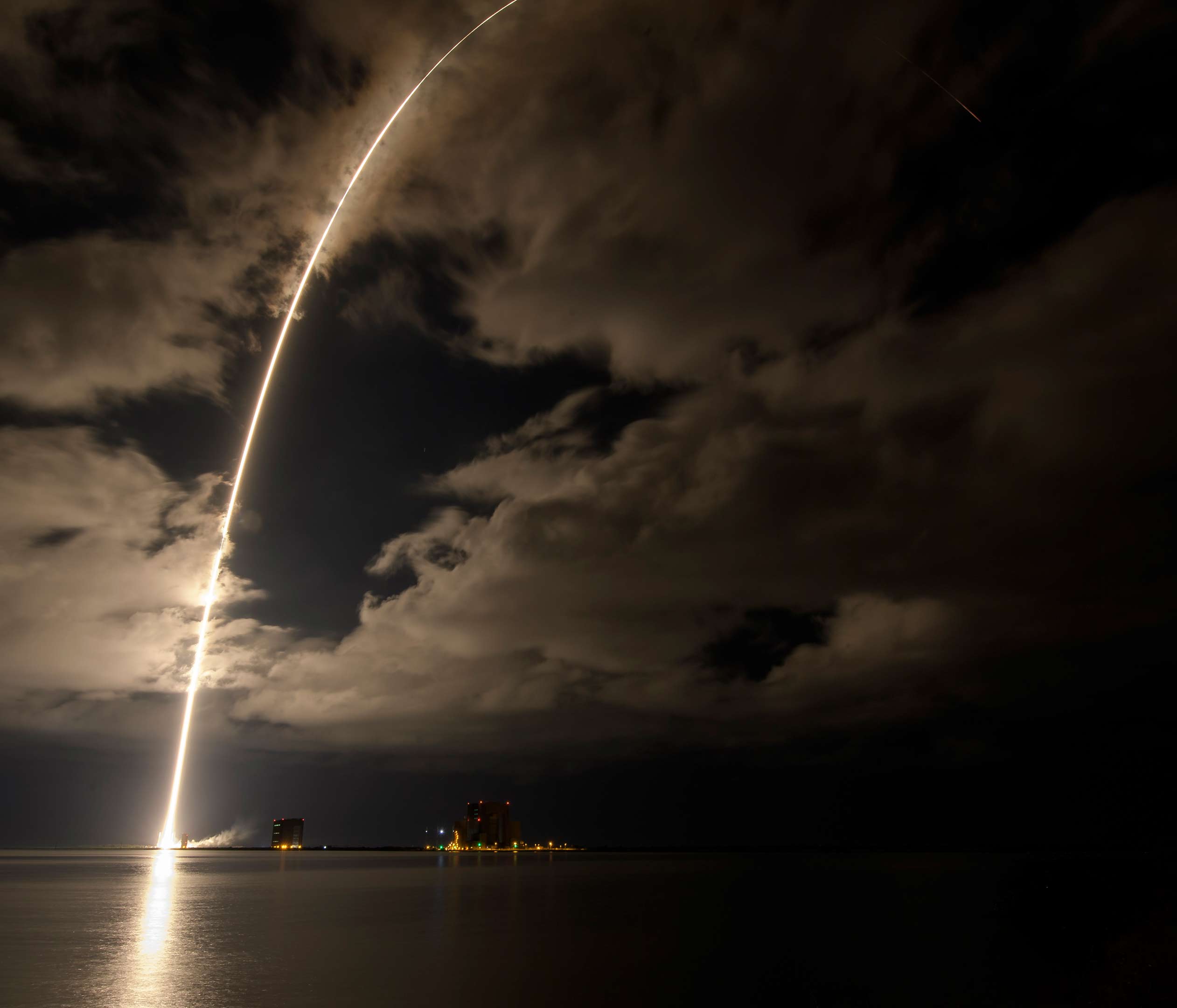
NASA’s Lucy mission, the agency’s first to Jupiter’s Trojan asteroids, launched at 5:34 a.m. EDT Saturday on a United Launch Alliance (ULA) Atlas V rocket from Space Launch Complex 41 at Cape Canaveral Space Force Station in Florida.
Over the next 12 years, Lucy will fly by one main-belt asteroid and seven Trojan asteroids, making it the agency’s first single spacecraft mission in history to explore so many different asteroids. Lucy will investigate these “fossils” of planetary formation up close during its journey.
“Lucy embodies NASA’s enduring quest to push out into the cosmos for the sake of exploration and science, to better understand the universe and our place within it,” said NASA Administrator Bill Nelson. “I can’t wait to see what mysteries the mission uncovers!”
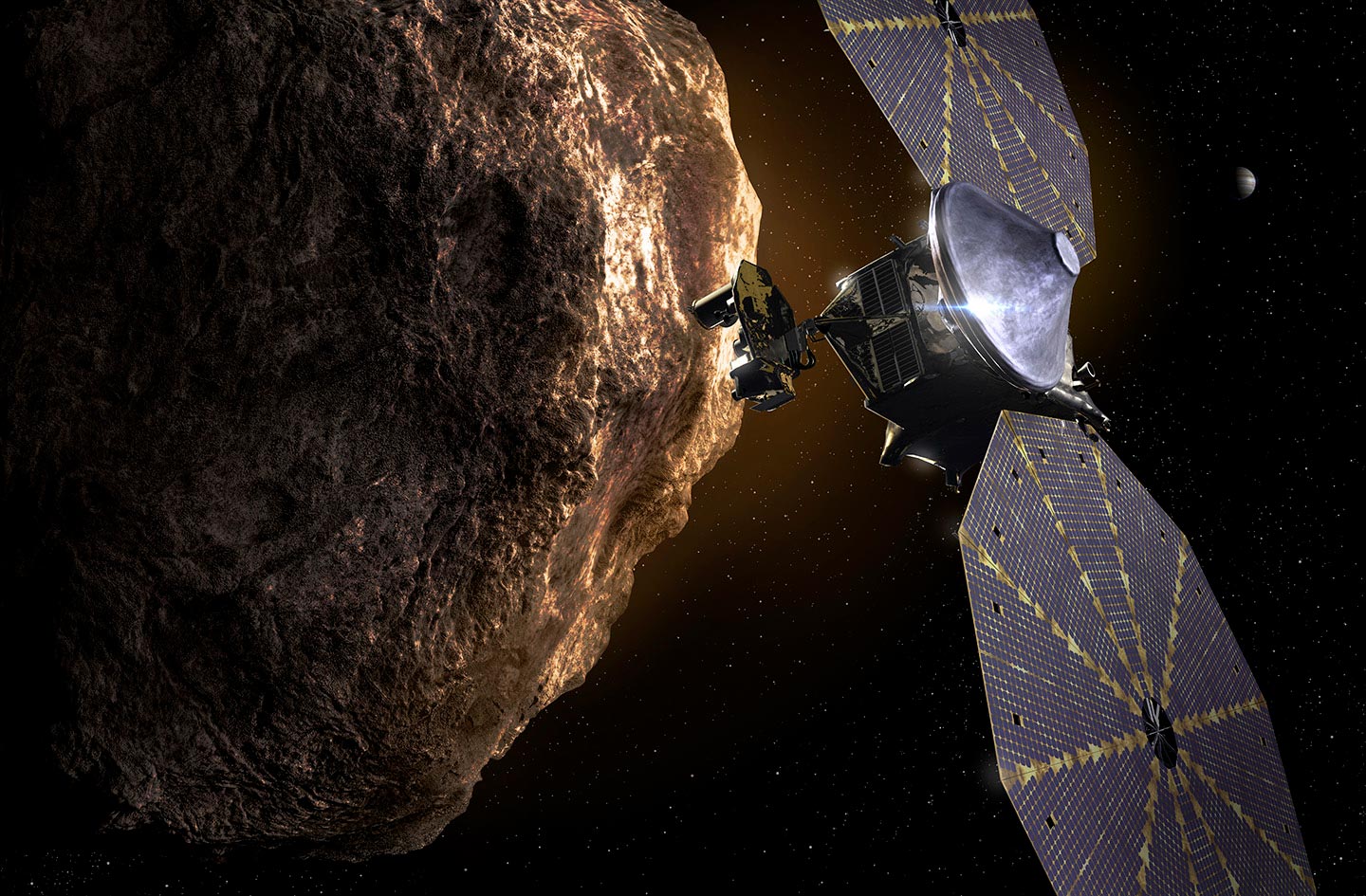
About an hour after launch, Lucy separated from the second stage of the ULA Atlas V 401 rocket. Its two massive solar arrays, each nearly 24 feet (7.3 meters) wide, successfully unfurled about 30 minutes later and began charging the spacecraft’s batteries to power its subsystems.
“Today’s launch marks a genuine full-circle moment for me as Lucy was the first mission I approved in 2017, just a few months after joining NASA,” said Thomas Zurbuchen, associate administrator for the Science Mission Directorate at the agency’s Headquarters in Washington. “A true mission of discovery, Lucy is rich with opportunity to learn more about these mysterious Trojan asteroids and better understand the formation and evolution of the early solar system.”
Lucy sent its first signal to Earth from its own antenna to NASA’s Deep Space Network at 6:40 a.m. The spacecraft is now traveling at roughly 67,000 mph (108,000 kph) on a trajectory that will orbit the Sun and bring it back toward Earth in October 2022 for a gravity assist.
Named for the fossilized skeleton of one of our earliest known hominin ancestors, the Lucy mission will allow scientists to explore two swarms of Trojan asteroids that share an orbit around the Sun with Jupiter. Scientific evidence indicates that Trojan asteroids are remnants of the material that formed giant planets. Studying them can reveal previously unknown information about their formation and our solar system’s evolution in the same way the fossilized skeleton of Lucy revolutionized our understanding of human evolution.
“We started working on the Lucy mission concept early in 2014, so this launch has been long in the making,” said Hal Levison, Lucy principal investigator, based out of the Boulder, Colorado, branch of Southwest Research Institute (SwRI), which is headquartered in San Antonio. “It will still be several years before we get to the first Trojan asteroid, but these objects are worth the wait and all the effort because of their immense scientific value. They are like diamonds in the sky.”
Lucy’s Trojan destinations are trapped near Jupiter’s Lagrange points – gravitationally stable locations in space associated with a planet’s orbit where smaller masses can be trapped. One swarm of Trojans is ahead of the gas giant planet, and another is behind it. The asteroids in Jupiter’s Trojan swarms are as far away from Jupiter as they are from the Sun.
The spacecraft’s first Earth gravity assist in 2022 will accelerate and direct Lucy’s trajectory beyond the orbit of Mars. The spacecraft will then swing back toward Earth for another gravity assist in 2024, which will propel Lucy toward the Donaldjohanson asteroid – located within the solar system’s main asteroid belt – in 2025.
Lucy will then journey toward its first Trojan asteroid encounter in the swarm ahead of Jupiter for a 2027 arrival. After completing its first four targeted flybys, the spacecraft will travel back to Earth for a third gravity boost in 2031, which will catapult it to the trailing swarm of Trojans for a 2033 encounter.
“Today we celebrate this incredible milestone and look forward to the new discoveries that Lucy will uncover,” said Donya Douglas-Bradshaw, Lucy project manager at NASA’s Goddard Space Flight Center in Greenbelt, Maryland.
NASA Goddard provides overall mission management, systems engineering, plus safety and mission assurance. Lockheed Martin Space in Littleton, Colorado, built the spacecraft. Lucy is the 13th mission in NASA’s Discovery Program. NASA’s Marshall Space Flight Center in Huntsville, Alabama, manages the Discovery Program for the agency.
Never miss a breakthrough: Join the SciTechDaily newsletter.
Follow us on Google and Google News.