
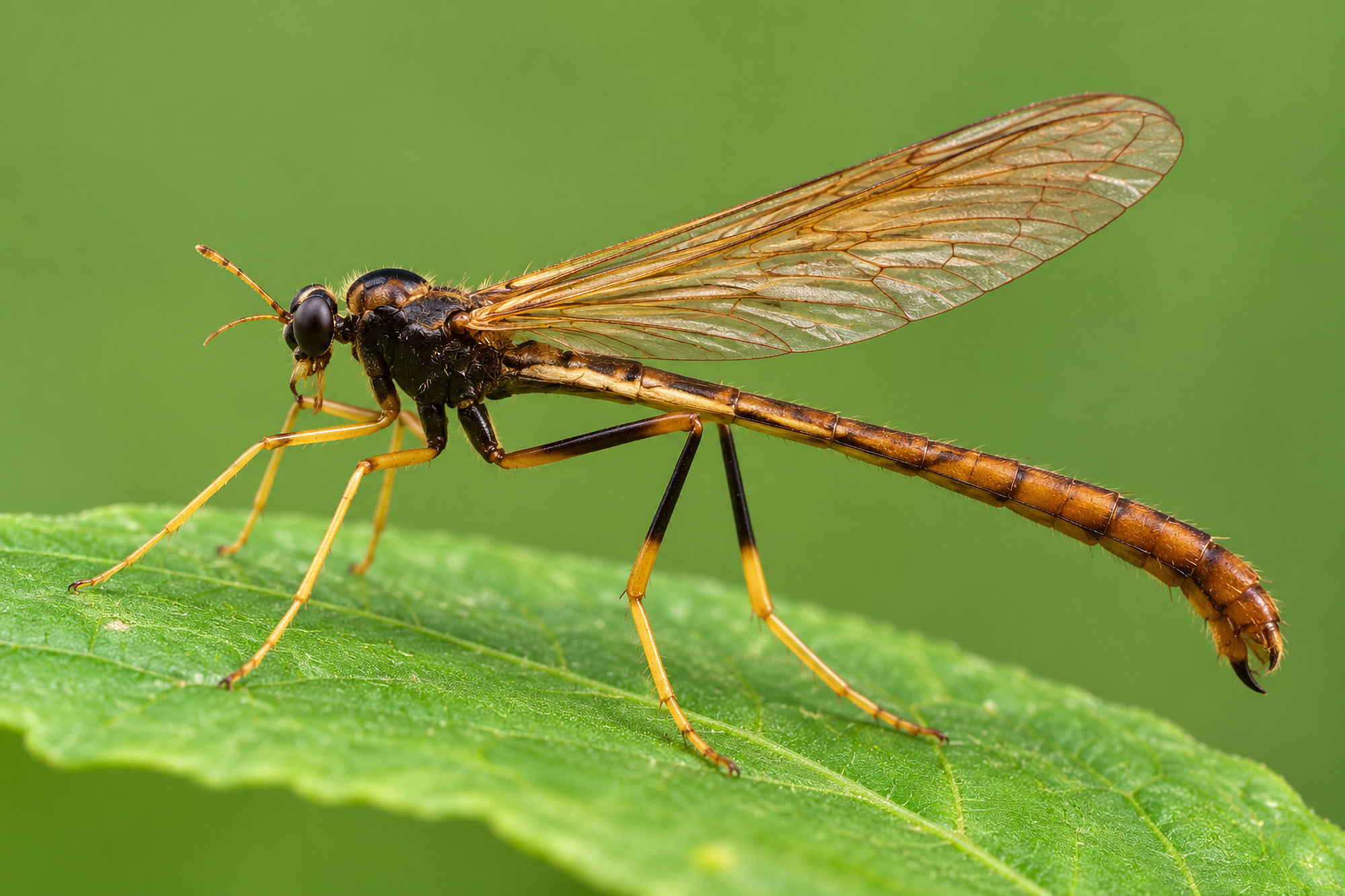
A newly identified Himalayan wormlion challenges the idea that its genus lives only in the tropics, raising the possibility of undiscovered relatives on nearby mountain slopes.
In rain-sheltered patches of sand and soil on the southern slopes of the Himalayas, wormlion larvae build funnel-shaped pits to catch prey. Larvae belonging to this group were first collected in southern Xizang in 1978, but without adult flies to examine, scientists could not confirm their identity.
Adult specimens collected during a 2025 expedition to Yadong County have now helped resolve that 48-year mystery. A team led by researchers at Dali University in China has described the new species, Vermitigris tsangyanggyatso, in a recent paper published in the open-access journal ZooKeys.
Wormlions belong to Vermileonidae, a family of brachyceran, or short-horned, flies. They are the only known family of flies whose larvae capture prey by constructing these pits. Their hunting strategy evolved independently of the similar traps built by antlions, an example of evolutionary convergence.
Nine years to identify a wormlion
The researchers’ search for adult wormlions had already taken years of patient work with another species. Asked what first drew them to the family, the team recalled:
“Well, it was probably an accidental discovery that first motivated us. In 2015, while searching for pit-building antlions on Cangshan Mountain in Dali, China, we discovered an unfamiliar larva that we found particularly interesting. However, because the adults have an extremely short lifespan, we failed for many years to determine its identity.
It was not until 2024 that we finally obtained adults through artificial rearing in the laboratory. It turned out to be a new species, which we named Vermiophis cangshanensis. This first discovery therefore took nine years. Since then, we have paid close attention to wormlions wherever we encounter them.”
Unusual anatomy and versatile pit building
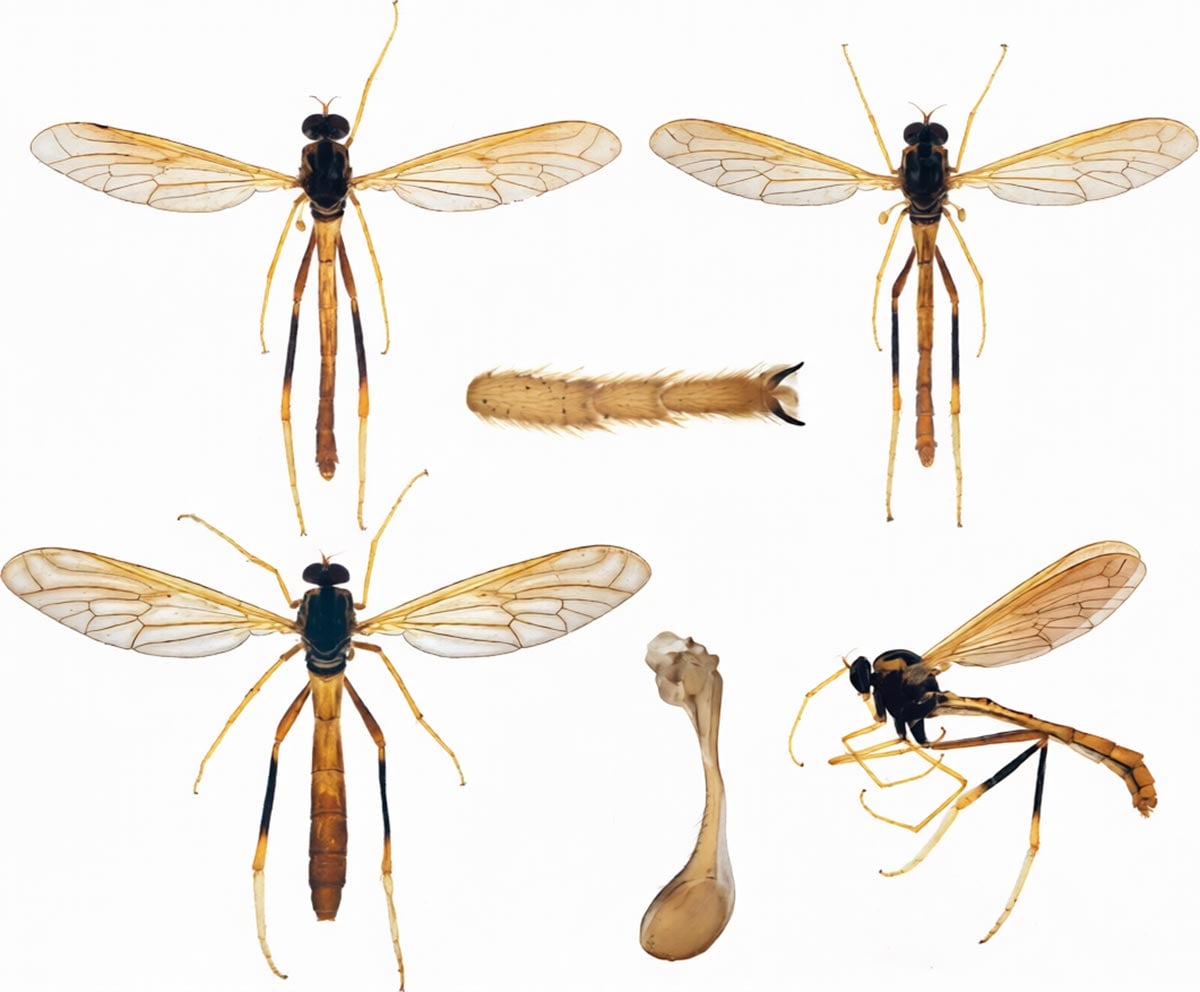
The adults collected in Yadong revealed a species that is unusually large for its group. Their bodies measure up to 19.5 millimeters, about three-quarters of an inch, with wings nearly 16 millimeters, or 0.63 inches, long. A uniformly yellowish-brown to reddish-brown abdomen distinguishes Vermitigris tsangyanggyatso from its closest relatives, which have light and dark rings or longitudinal stripes.
Its mouthparts also offer a clue to how it lives as an adult. Some related lineages diversified during the Late Mesozoic while developing elongated mouthparts for feeding on nectar. The new species instead has a markedly shortened rostrum, or snout, suggesting that it may not feed at all during its final life stage.
Fully grown larvae are larger than the adults, reaching 20 to 28 millimeters, or about 0.8 to 1.1 inches, in length. They have a single semicircular proleg, a fleshy, leglike appendage, bearing a distinct row of five to seven spines. Yet their anatomy has not fully explained how they construct traps in the different materials available to them.
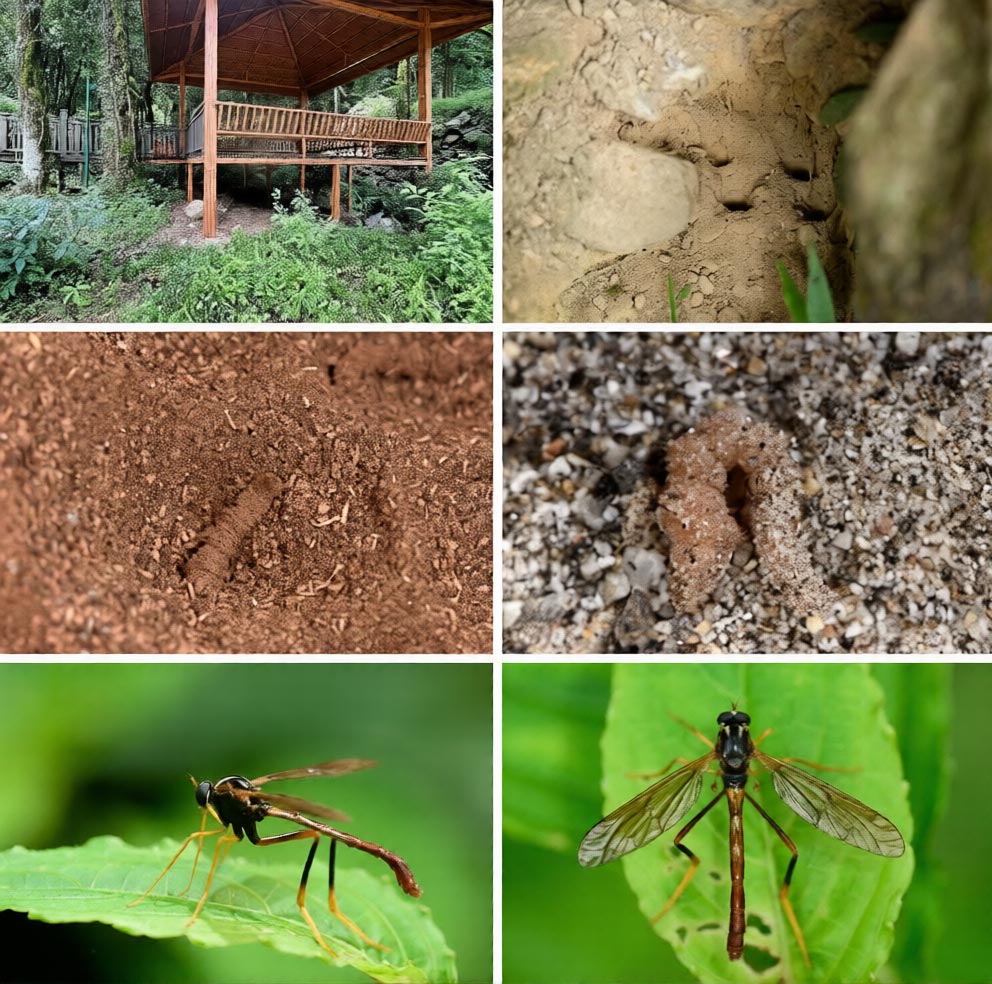
The team found larvae in three types of rain-protected shelter: fine-grained soil beneath giant rocks, wood debris under a pavilion, and fine-grained river sand accumulated beside a river. Field observations indicated a strong preference for the river sand. These sheltered sites provide the stable conditions the larvae need to maintain their pitfall traps, although the physical features that allow them to work across such different textures remain uncertain.
“We honestly do not know yet. Perhaps future behavioral experiments will help answer this question,” the team said when asked which features make that possible.
Dry refuges in wet Himalayan forests
Wet forests have traditionally been shown to act as barriers to wormlion dispersal. Finding this species in protected pockets within such an environment shows how members of Vermitigris can live there despite the surrounding wet conditions.
The adult observations offered another piece of the dispersal picture. On sunny days, most flies rested quietly on leaves near the places where their larvae lived. One specimen, however, was found farther away around agricultural fields, which the researchers interpreted as evidence of strong flight and dispersal abilities.

The Himalayan location also broadens the climates in which researchers might expect to find the genus. As the team explained:
“The previously known species were first discovered in tropical Southeast Asia, and these insects were therefore thought to be restricted to tropical regions. The discovery of this species suggests that they may also be capable of adapting to subtropical climates. We hope that more unknown species will eventually be discovered in mainland Southeast Asia, such as Thailand, as well as in southwestern China, including Yunnan, Guizhou, and Sichuan Provinces.”
The species name honors Tsangyang Gyatso, the sixth Dalai Lama, a celebrated 17th-century Tibetan poet-monk from Xizang known for his romantic verse and unconventional life. Its description raises the number of Vermitigris species recorded in China from one to two and the genus’s worldwide total from four to five. There are now 67 known living species of wormlion flies.
Many neighboring areas along the southern Himalayan slopes remain unsampled, leaving room for further fieldwork to uncover additional members of this poorly documented group. For co-author Ji-Shen Wang, the work also reflects a curiosity that extends beyond his original research specialty:
“From the perspective of science communication, I would say that although my primary research interest is the insect order Mecoptera (scorpionflies), I have gradually expanded my interests into Diptera (flies) as well.
As a naturalist, I find the diversity of life on Earth endlessly fascinating, and this curiosity about nature continually motivates me to explore and wonder. I would like to quote Herman Melville from Moby-Dick: ‘As for me, I am tormented with an everlasting itch for things remote. I love to sail forbidden seas, and land on barbarous coasts.”
Reference: “After forty-eight years: An enigmatic new wormlion fly from Xizang, China (Diptera, Vermileonidae)” by Li-Xia Shan and Ji-Shen Wang, 7 April 2026, ZooKeys.
DOI: 10.3897/zookeys.1276.184675
This research was financially supported by the Starting Foundation for the High-level Talents, Dali University (KY2096124040), the project of the Cangshan Forest Ecosystem Observation and Research Station of Yunnan Province, Yunnan Provincial Department of Science and Technology (202305AM070003), the project Exploration and Practice of the “One Innovation, Two Integrations, and Three Breakthroughs” Talent Training Model in the Biological Sciences Major at Dali University (JGSX2024201), and the First Cohort of Core Curriculum Cluster Teaching Teams at Dali University: Macrobiology Teaching Team (KCTD04).
Never miss a breakthrough: Join the SciTechDaily newsletter.
Follow us on Google and Google News.