
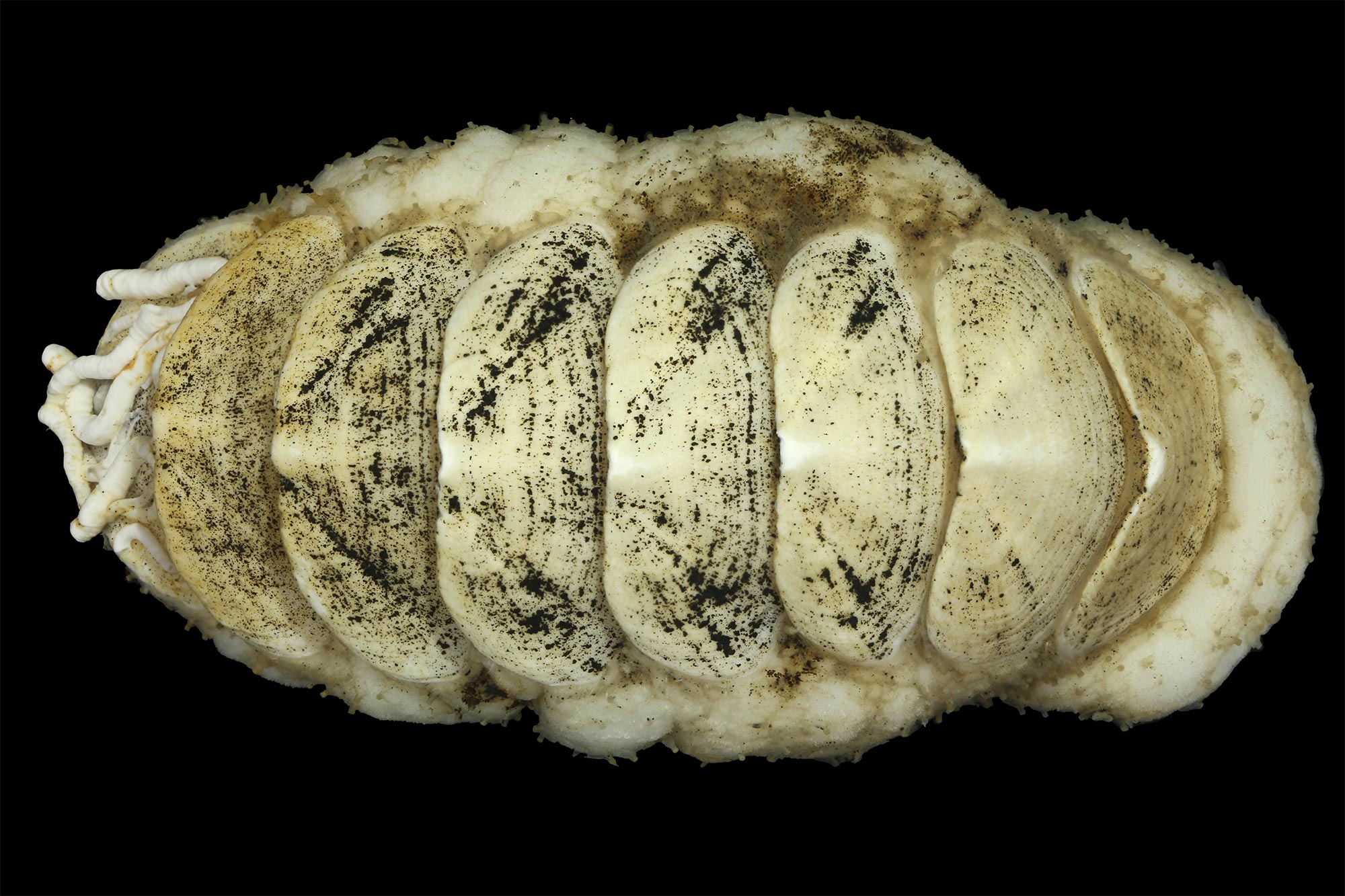
A bizarre deep-sea mollusk went viral on YouTube—and now officially bears a name chosen by the people.
The Senckenberg Ocean Species Alliance (SOSA), working with scientific publisher Pensoft Publishers and popular science YouTuber Ze Frank, invited the public to help name a newly identified deep-sea chiton (a type of marine mollusk). The official scientific description of the species was published today (February 6) in the open-access Biodiversity Data Journal.
After reviewing more than 8,000 name ideas submitted through social media, the research team chose the name Ferreiraella populi. The species name populi comes from Latin and means “of the people.” Notably, 11 different participants independently suggested the same name during the online naming effort.
From YouTube Spotlight to Scientific Record
Interest in the species surged after Ze Frank featured the unusual deep-sea chiton from the genus Ferreiraella in an episode of his “True Facts” YouTube series.
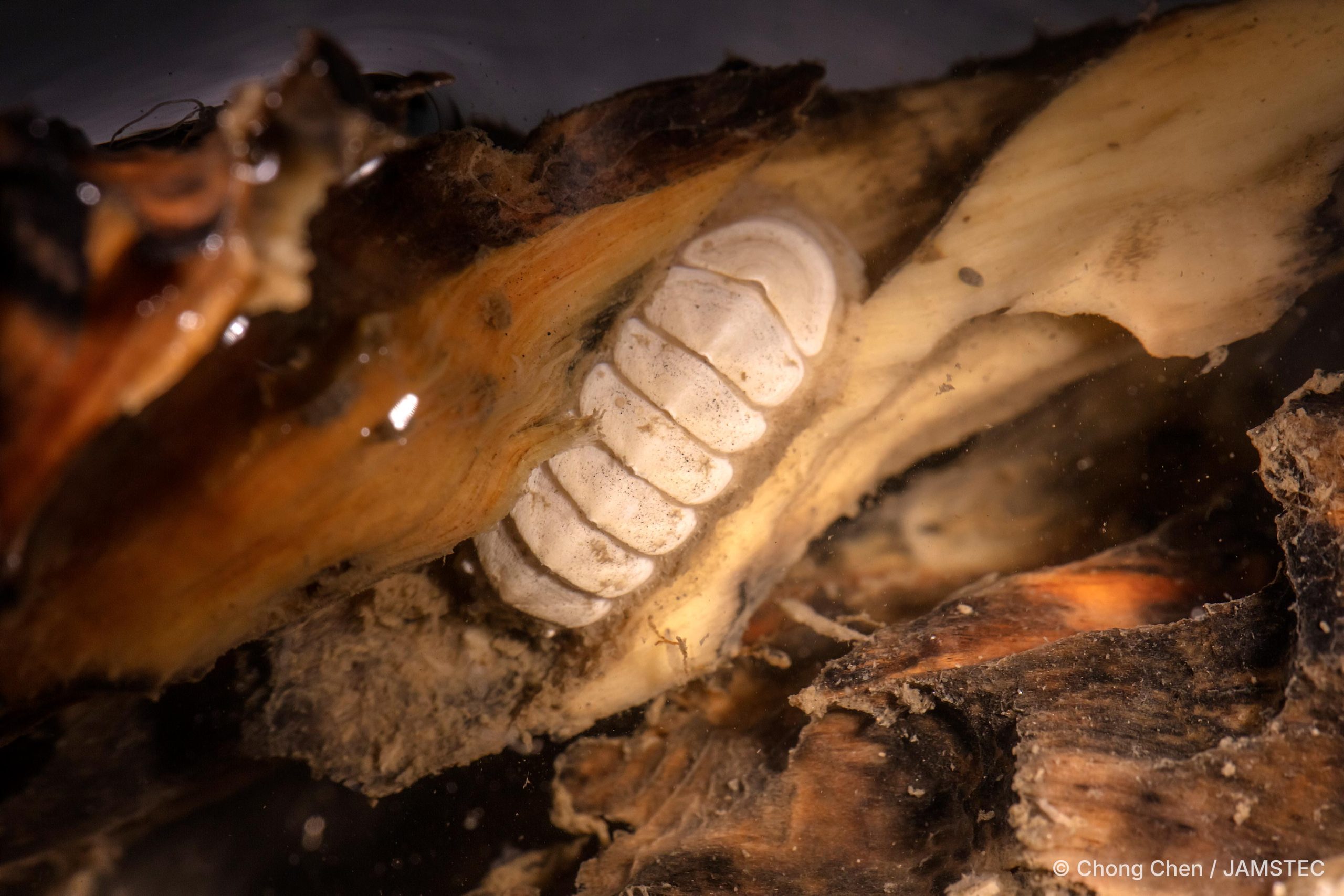
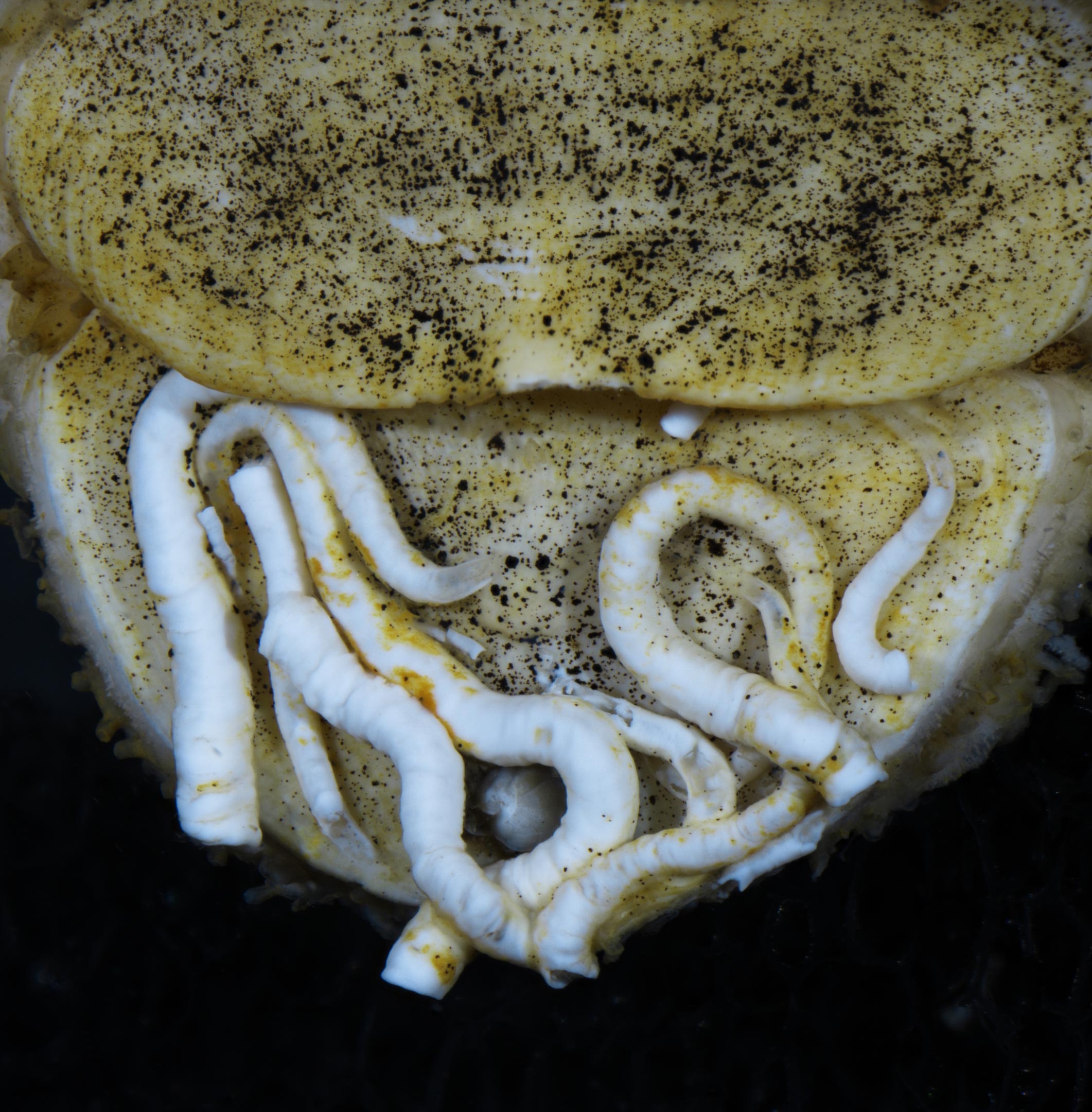
The animal is protected by eight overlapping shell plates and uses an iron-clad radula (a rasping tongue) to feed. It also supports a small group of worms near its tail that survive by consuming its waste. Viewers were encouraged to submit a proposed scientific name along with a short explanation. In just one week, the response exceeded 8,000 submissions.
“We were overwhelmed by the response and the massive number of creative name suggestions!” says Prof. Dr. Julia Sigwart, co-chair of SOSA at the Senckenberg Research Institute and Natural History Museum Frankfurt. “The name we chose, Ferreiraella populi, translates to ‘of the people’.”
Other suggested names caught the researchers’ attention as well. Ferreiraella stellacadens meaning “Shooting star chiton” referred both to the animal’s distinctive aesthete pattern and its sudden rise in popularity. Another option, Fereiraella ohmu, drew inspiration from a chiton-like creature in a Studio Ghibli film and referenced Japan, where the species was found.
A Rare Deep-Sea Specialist
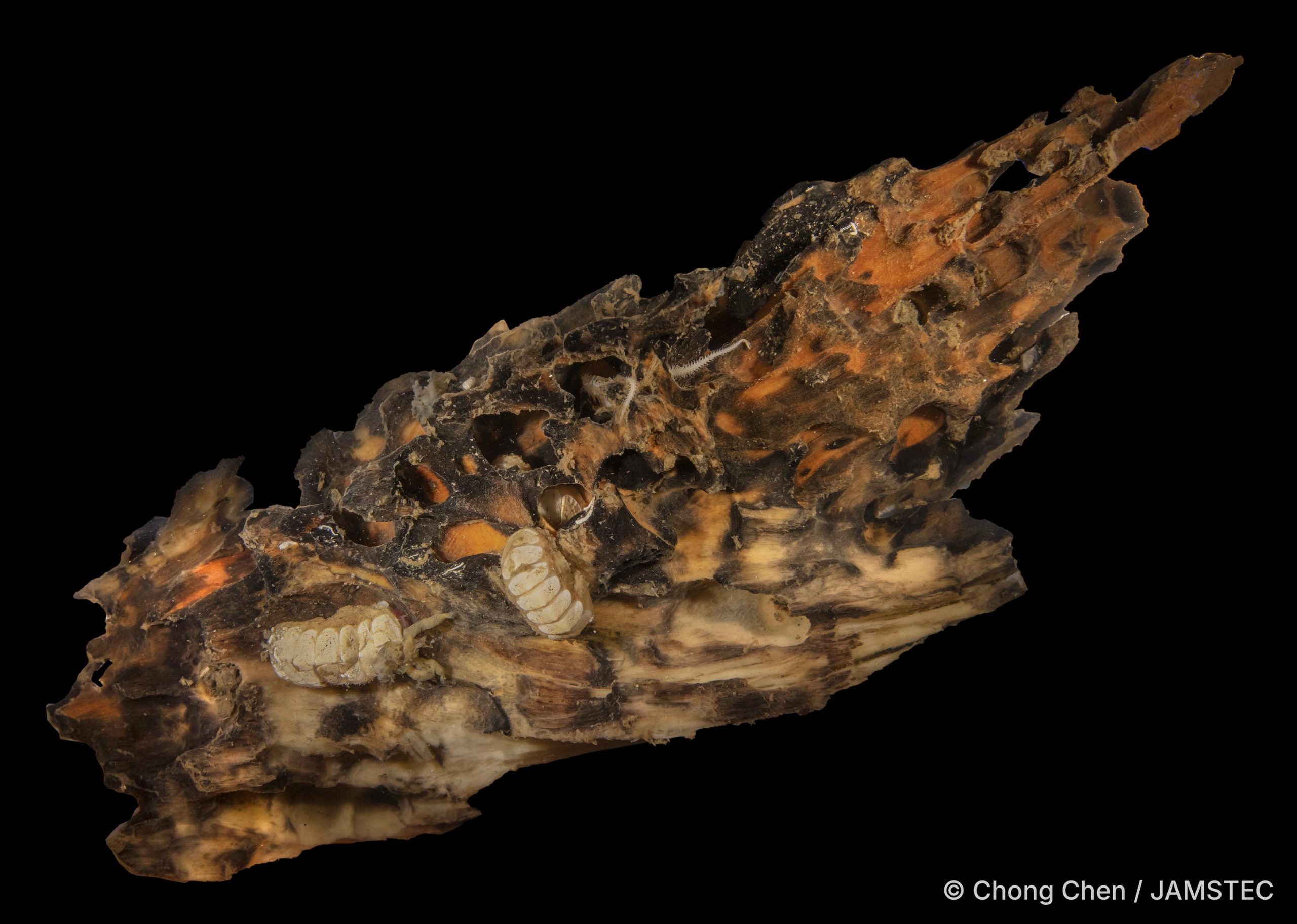
The chiton was first discovered in 2024 in the Izu-Ogasawara Trench at a depth of 5,500 meters. Ferreiraella populi belongs to the genus Ferreiraella, a little-studied group of mollusks that live only on sunken wood in the deep sea.
According to Sigwart, the species adds valuable insight into a poorly understood lineage and strengthens evidence that deep-sea wood-fall ecosystems support highly specialized communities that remain largely unknown.
Chitons are often described as resembling a mix between a snail and a beetle. Unlike most mollusks, which have a single shell, chitons have eight separate shell plates (valves). This structure allows them to curl into a tight ball for protection or grip uneven surfaces such as deep-sea wood-falls. Chitons live in a wide range of environments, from shallow coastal waters and coral reefs to extreme deep-sea habitats reaching depths of up to 7,000 meters in complete darkness.
How Scientific Names Are Created
Every newly identified species receives a formal scientific name as part of its original taxonomic description. This naming system follows Carl Linnaeus’s binomial nomenclature and includes two parts: the genus name (the first part, capitalized and italicized) and the specific epithet (the second part, lowercase and italicized).
Names are assigned by the authors who first describe the species in a scientific publication and must follow international rules such as the ICZN (zoology) or the ICN (botany). Each name must be unique, latinized, and previously unused. Specific epithets are often based on physical traits, locations, mythology, or people honored for their contributions.
Why Speed Matters for Ocean Biodiversity
“Ferreiraella populi exemplifies the overwhelming biodiversity of the oceans, the vast majority of which remains unexplored. Many species go extinct before we even know they exist — this is especially true for marine invertebrates,” says Sigwart.
“It can often take ten, if not twenty years, for a new species to be studied, scientifically described, named, and published. At SOSA, we have therefore made it our mission to streamline these processes while simultaneously engaging the public with these fascinating creatures. Finding a name for the chiton together on social media is a wonderful opportunity to do just that! Ferreiraella populi has now been described and given a scientific name only two years after its discovery. This is crucial for the conservation of marine diversity, especially in light of the threats it faces such as deep-sea mining!”
Reference: “Ocean Species Discoveries 28–30 — new species of chitons (Mollusca, Polyplacophora) and a public naming competition” by Senckenberg Ocean Species Alliance (SOSA), Chong Chen, Hosea Frank, Laura Kraniotis, Yumi Nakadera, Enrico Schwabe, Julia D. Sigwart, Bianca Trautwein and Katarzyna Vončina, 6 February 2026, Biodiversity Data Journal.
DOI: 10.3897/BDJ.14.e180491
Never miss a breakthrough: Join the SciTechDaily newsletter.
Follow us on Google and Google News.
1 Comment
So the worms are ‘the people’? – cause it doesn’t live among The People –
But maybe they’re smart – I had a bunnie -who- was definitely to the level of personhood, exceedingly so.