
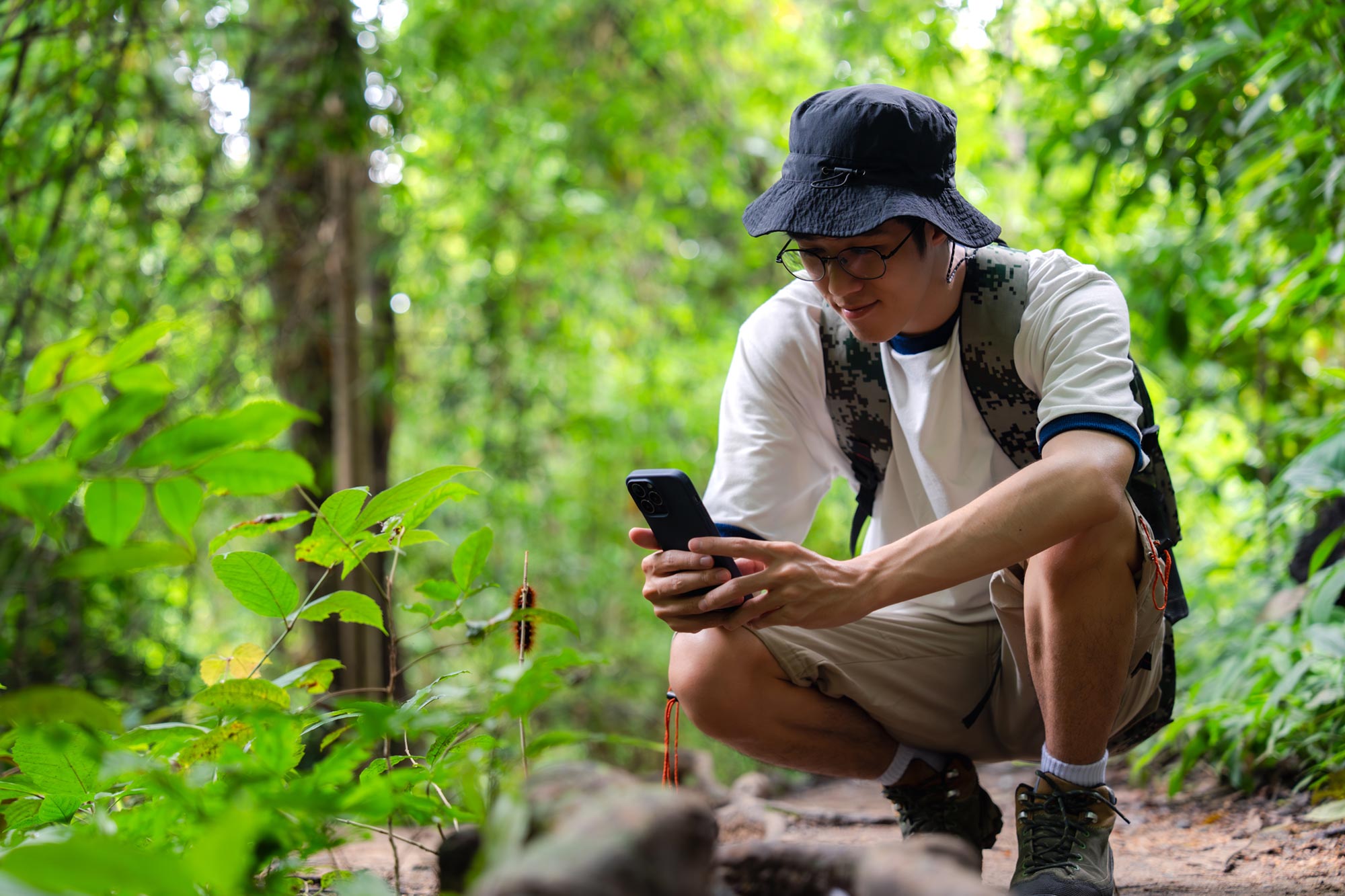
Citizen science platforms, including iNaturalist, are driving major discoveries and becoming essential tools for researchers. How can we improve them further?
A plant missing for nearly 60 years has been found again in one of Australia’s most remote landscapes, and the rediscovery started with a sharp-eyed bird bander, a phone camera, and a citizen science app.
Aaron Bean was working on a vast outback property in northern Queensland, banding birds, when he noticed a plant that seemed unusual. Bean, a professional horticulturalist, photographed it and later uploaded the images to iNaturalist once he was back in phone range.
That simple upload set off an extraordinary chain of events.
iNaturalist, one of the world’s biggest citizen science platforms, now includes nearly 300 million observations from around four million users covering more than five hundred thousand species. Among the people who saw Bean’s photos was Anthony Bean, a botanist at the Queensland Herbarium.
He immediately recognized the plant as Ptilotus senarius, a species believed extinct and not recorded since the 1960s. He had even described the species himself a decade earlier.
“It was very serendipitous,” says Thomas Mesaglio from the UNSW School of Biological, Earth and Environmental Sciences, who has written about the rediscovery for the Australian Journal of Botany.
“Aaron Bean is an avid iNaturalist user who opportunistically took some photos of a few plants that were interesting on the property.”
A chance find
Ptilotus senarius is a delicate shrub with slender stems and striking purple pink flowers that resemble a feathery firework.
The plant occurs only in a narrow stretch of rugged terrain near the Gulf of Carpentaria and had not been collected since 1967. It had been assumed to be among the roughly 900 plant species worldwide considered extinct in the wild since the mid-eighteenth century.
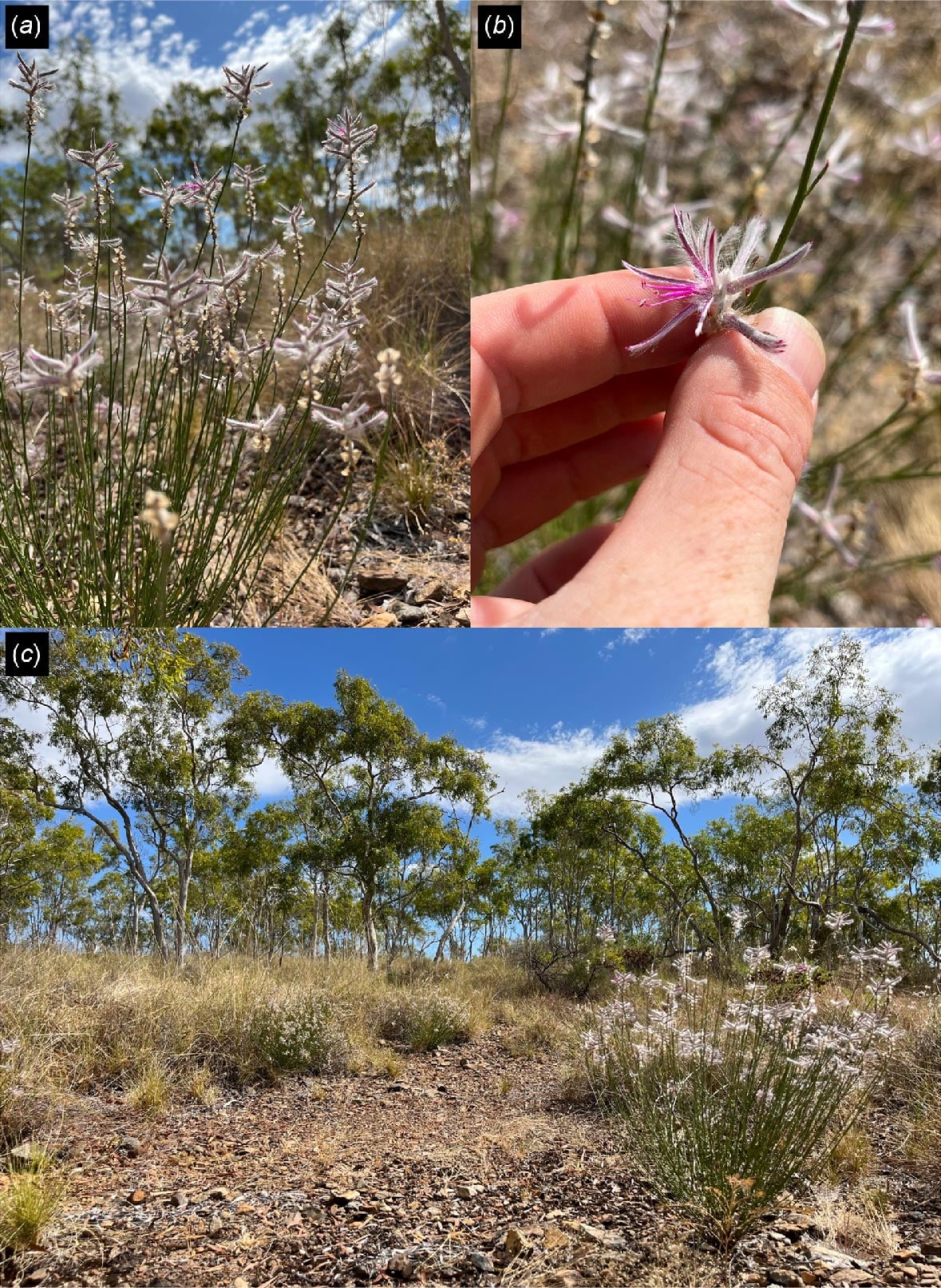
Thanks to the sharp observation skills of both Aaron and Anthony Bean, along with the cooperation of a landowner who collected a specimen, the species has now been confirmed to survive. It has since been placed on the critically endangered list, opening the door for conservation efforts.
“It’s one of these situations where everything had to fall into place and there was a bit of good fortune involved,” says Mesaglio.
This case reflects a growing pattern: members of the public documenting plants and animals they encounter, uploading images to platforms such as iNaturalist, and unexpectedly contributing to rediscoveries or entirely new scientific records.
For researchers like Thomas Mesaglio, these contributions are increasingly valuable. In a country as vast and ecologically varied as Australia, it is impossible for scientists to survey every region themselves.
Access also presents a challenge. Around one-third of Australia is privately owned, which can limit where scientists are able to conduct fieldwork.
“If you are the property owner or you’re someone who has permission from the owner to be there then suddenly it opens up this whole new world,” Mesaglio says.
Farmer wants a scientific discovery
To build on this momentum, scientists are encouraging greater public participation, particularly from landowners, and emphasizing the importance of collecting detailed, high-quality observations.
In New South Wales, the Land Libraries project, run by the Biodiversity Conservation Trust, equips landowners with tools and training to document biodiversity on their land and share it through citizen science platforms.
Mesaglio supports initiatives like this, not only because they expand access to otherwise unreachable areas, but also because they foster a deeper connection between people and their local environments.
“Engaging landholders themselves with science and the natural world and getting them more passionate about diversity makes them far more likely to be interested and invested in protecting that diversity,” Mesaglio says.
For newcomers to iNaturalist, Mesaglio advises capturing as much detail as possible. A single close-up image of a flower may not be enough, especially when many species share similar features. Broader context, such as images of the full plant, bark, and leaves, can make identification far more reliable.
Improving the dataset
He also highlights the importance of recording details that may not be visible in photographs, including soil conditions, nearby plant species, and whether pollinators were present.
Even characteristics such as scent can provide important clues for identification.
“The more information you can provide and the more context you can provide, the more potential uses that record will have in the future.”
In separate research, Mesaglio found that iNaturalist data has been cited in scientific studies across 128 countries and thousands of species, illustrating its growing importance in research.
As more observations are added and data quality continues to improve, Mesaglio expects that many more discoveries are still waiting to be uncovered.
Reference: “Rediscovery of a presumed extinct plant species, Ptilotus senarius (Amaranthaceae), through iNaturalist” by Thomas Mesaglio, Anthony R. Bean and Aaron Bean, 19 January 2026, Australian Journal of Botany. DOI: 10.1071/BT25063
Never miss a breakthrough: Join the SciTechDaily newsletter.
Follow us on Google and Google News.
1 Comment
My alarm bells go off.
I can see millions of plant collectors rushing out to gather the last remaining plant for their albums and museums. Then it will TRULY be extinct.
But I hope someone finds some Silphium. It was essentially harvested to extinction.