

Pawpaw trees suppress plant diversity through dense, shady growth, creating unpredictable ecosystems, but fostering diverse patches can enhance fruit production.
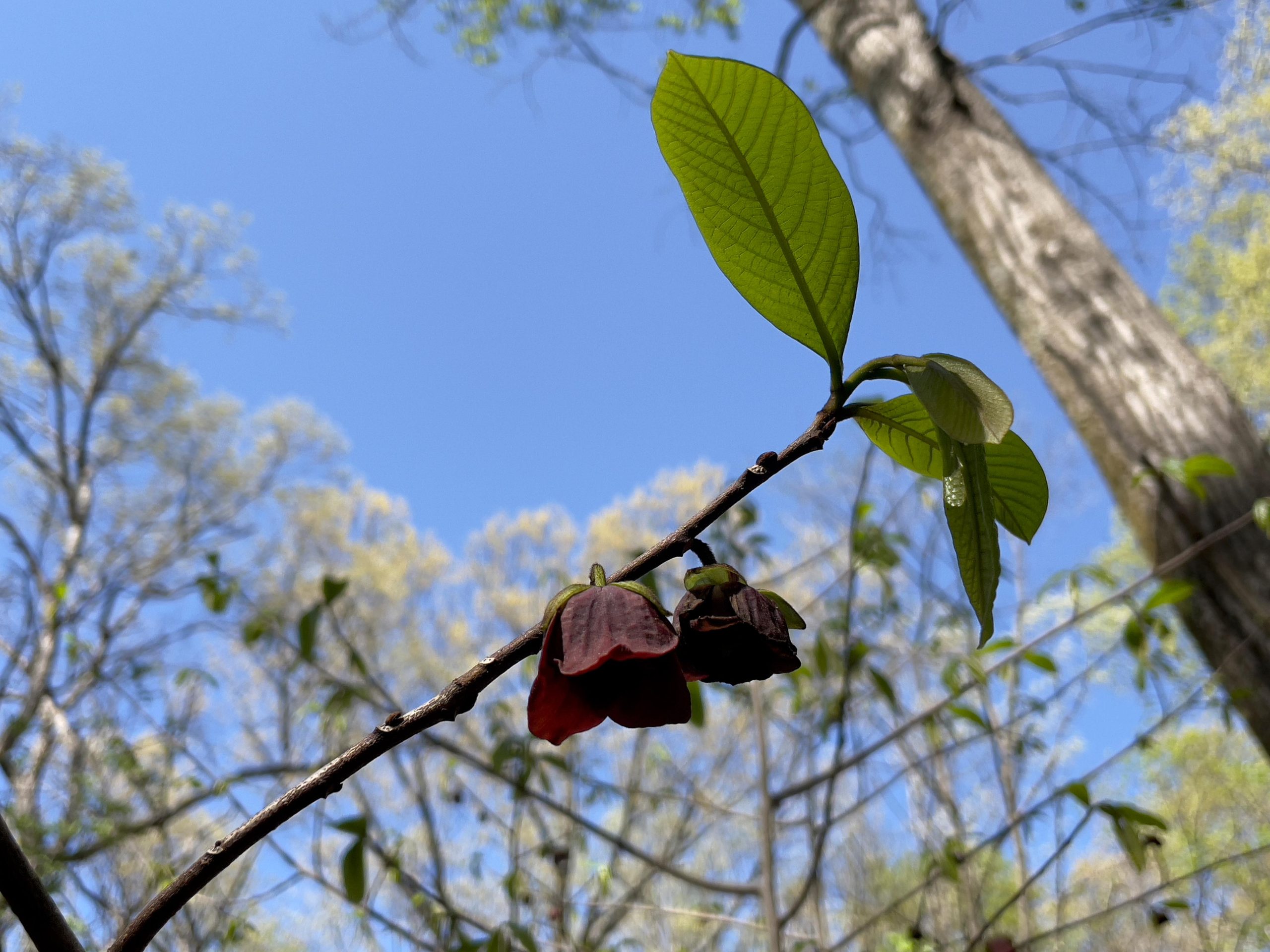
Pawpaw fruits, the largest native fruits in North America, have gained popularity among foragers and food enthusiasts for their creamy, custard-like texture and sweet flavor, often compared to a blend of mango and banana.
Pawpaws are the state fruit tree of Missouri, and they tend to grow in dense clumps. They can reproduce clonally, meaning pawpaws can spread through their roots, much like aspen trees. Once one adult pawpaw gets established, it is likely to spread underground and send up lots of stems nearby. This trick of producing copies of itself is what ends up making a pawpaw “patch,” as memorialized in American folk song.
The patch is a good place for pawpaws but nothing much else, according to new research from Washington University in St. Louis. Pawpaw trees tend to choke out woody bushes and flowering plants nearby, exerting a haphazard kind of pressure on would-be neighbors.
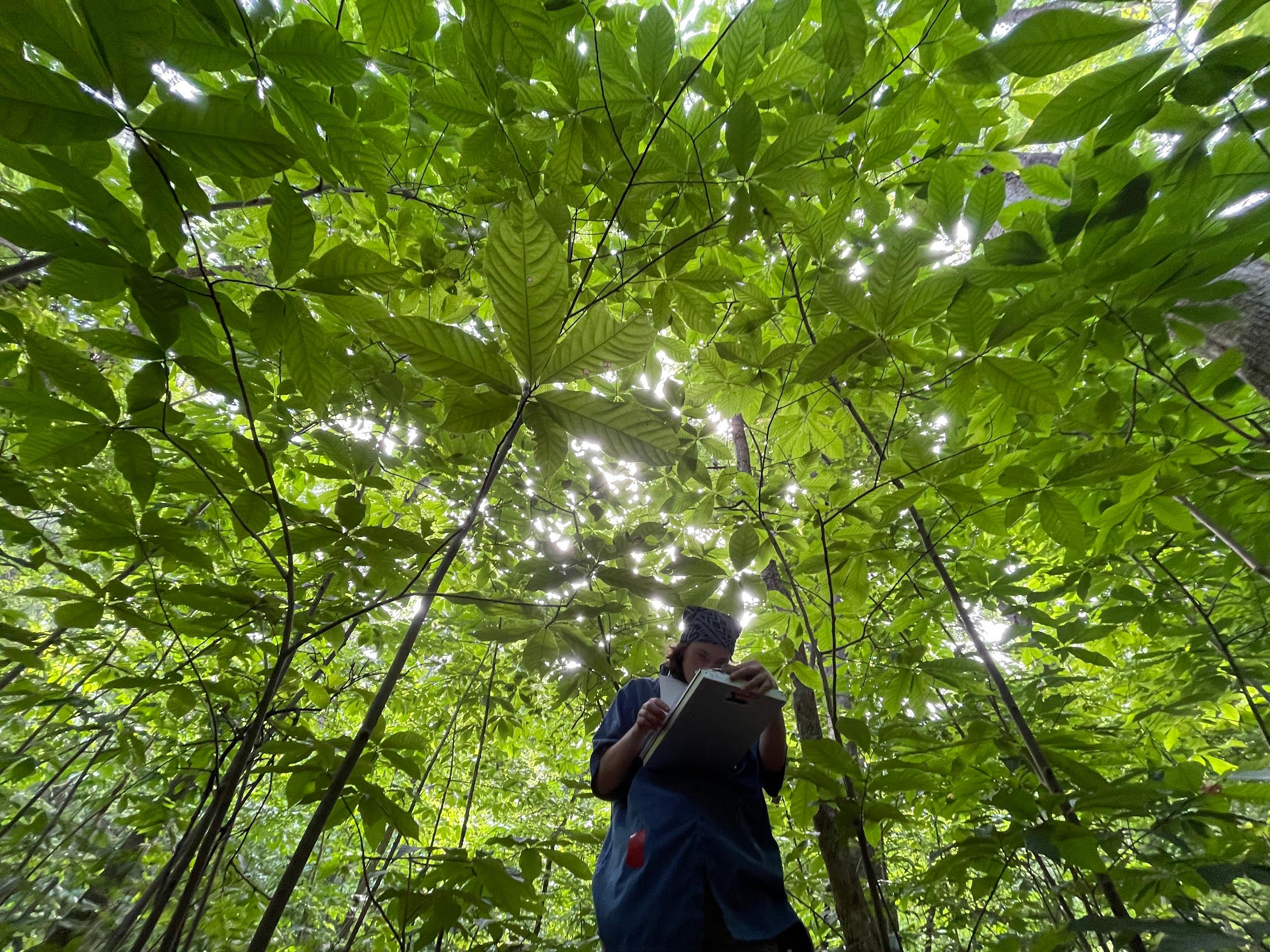
“Pawpaws are leafy agents of chaos,” said Anna Wassel, a graduate student in biology in Arts & Sciences at WashU and first author of a new study on pawpaws in the journal Ecosphere. “Basically, we discovered that pawpaws create a habitat where the rules of which species can win in competition and persist are more random than when pawpaws aren’t there.”
Wassel’s team — dubbed the Pawpaw Patrol — investigated the effect of pawpaw on herbaceous community composition at Tyson Research Center, WashU’s environmental field station, located near Eureka, Mo.
Pawpaw’s Impact on Biodiversity
“Previous studies have focused on how dominant tree species affect the number of plant species in the forest understory at smaller spatial scales, leaving open the question of how and why they affect variation in species composition at larger spatial scales,” said Jonathan Myers, a professor of biology in Arts & Sciences and co-author of the new study. “This study is among the first to explore how the presence of a locally dominant tree affects spatial variation in understory plant composition through non-selective or selective processes of community assembly.”
Wassel measured the abundance of all plant species in 50 1×1 meter plots both inside and outside pawpaw patches at Tyson. Then she and Myers ran a number of statistical tests to determine whether the presence of pawpaws influenced which woody and herbaceous plants species grew inside the patch, out of the overall pool of all local plants that possibly could grow there.
At larger spatial scales, the scientists found that the composition of herbaceous plant species was not only more variable inside than outside of pawpaw patches, but also more random inside pawpaw patches. At smaller spatial scales, local plant species diversity and total stem densities (community size) were significantly lower inside than outside of pawpaw patches.
For herbaceous species, median local diversity was 49% lower inside than outside pawpaw patches. Similar patterns were observed for the total understory community (woody and herbaceous species combined, 29% lower inside the patches).
Why Pawpaws Reduce Biodiversity
Several factors could help explain the biodiversity patterns that Wassel and Myers observed.
First, pawpaws are strong competitors for light. “It’s hard not to love their big, floppy, tropical-looking leaves,” Wassel said. But all those loveable leaves mean shady conditions for shorter understory plants.
Another possible factor is high pawpaw stem densities and clonal growth in pawpaw patches, which may increase belowground competition for soil nutrients and water.
Or maybe it’s just that white-tailed deer at Tyson don’t like to eat pawpaws. If deer avoid pawpaws, then they may be selectively browsing through and munching all the other little green plants that try to get started in the patch.
Land managers can draw their own individual lessons from these findings, Wassel said.
“If you are monitoring a plot of land with the aim to encourage the growth of understory species, unfortunately, pawpaws are not your friends,” she said. “They will choke out diversity and whatever diversity persists is at the unpredictable whim of pawpaws’ shade.”
But others may just want to enjoy the largest edible tree fruit in the United States. “Then you want to encourage as many genetically distinct patches as possible so that cross-pollination can occur,” Wassel said.
“The presence of pawpaws is never inherently good or bad, it’s just natural,” she said. “Nature’s goals are never as linear as ours.”
Reference: “Pawpaws prevent predictability: A locally dominant tree alters understory beta-diversity and community assembly” by Anna C. Wassel and Jonathan A. Myers, 8 January 2025, Ecosphere.
DOI: 10.1002/ecs2.70115
Never miss a breakthrough: Join the SciTechDaily newsletter.
Follow us on Google and Google News.
27 Comments
Pretty sure Osage oranges are a lot bigger than Paw Paw
So are pumpkins
This is probably the most ridiculous article I’ve ever seen. A complete waste of space and time. “Paw paw tree make too much shade…choke out other plant..”.are you f##king kidding me? Who paid for these studies? I want my money back NOW!!
Mike, you must not read many articles.
Just another example of diversity that mankind does not fully understand. Healthy ecosystems change and adjust due to many influences. Keeps the soil alive and contributes to overall health of all plants in the ecosystem. Man is the one who damages the balances due to lack of understanding.
Agreed.
I’m so tired of bull crap studies.
If the pawpaw is going to be an agricultural product this sounds like a great place to grow ginseng. Instead of erecting all those thousands of yards of shade fabric.
I agree! You’re lucky if you can even FIND a grove. Complete idiots.
Oranges are believed to have originated in the foothills of the Himalayas in Southeast Asia.
It takes less than a minute to verify your beliefs.
The article said the tree influenced its ecosystem and described how. I’m glad your spending YOUR MONEY elsewhere you need to.
OSAGE oranges, not citrus. “Careful” verification may take a few seconds longer.
I have never heard of this fruit or tree, but now I want to try it. Tastes like mango and banana? Yes, please. 😋
Yep, they’re great. Have a patch of them on my property, eat them every year!
so it behaves like every other species in the world. what a surprise. I’m shocked.
Unpredictable ecosystems? This author must not be familiar with ecosystem science. In fact, the language used here sounds strangely familiar to the propaganda coming from GE companies. Also, the fruit pictured is not paw paw. They are bigger than a grown person’s hands and have large seeds that are vertically placed from one end of the fruit to the other and are pinkish colored. Indigenous people love and cared for paw paw which had always been seen as a garbage fruit by colonizers since it doesn’t ship well. Bulldozed by white people despite being an important native species to their ecosystems and Indigenous people. Now GE wants to change paw paws to be more transportable for profit. A tree that feeds ecosystems for free.
So glad to see a large amount of backlash against this crappy article.
Which colonizers are you referring to? The white ones, or the red ones who colonized first?
I believe they’re particularly valuable because they act as a great lower canopy, and very fast growing, which can help prevent soil erosion. They can be that small, sometimes the ones on our property are about that size, of course there are also XXL mango sized ones. Spot on with the transportation issue. They don’t remain edible for very long before they start rotting. They also are only ripe for a short period of time during the year, normally only one month around August to September. I’d love to see pawpaw and persimmon trees become popular across the US.
Outside of Kalamazoo Michigan is a village named Pawpaw
It is amazing how many people need to “get a life”. I like the persimmon comment. On to Osage orange. And sassafras. (Re-discover gumbo again.) Go nuts with “May apples” which also spread by roots (I think) into a lovely patch. The fact that they are slightly toxic can be much fun for someone with too much time on their hands. But my lovely aunt made May apple preserves every year. Makes your lips feel numb but never harmed anyone I ever heard about. The native Americans used them as well. Let this stuff ALONE and just appreciate.
Of course one might argue North America’s largest native fruit is the Avocado.
Pumpkins are bigger then those too.
Since when can you eat or have you eaten the Osage Orange ? Certainly not what I want on my plate. I’ll be happy to take the Paw Paw fruit anytime, over Your Osage Orange.
Doesn’t have to be edible to humans to be considered a fruit.
Pawpaw is NOT North America’s largest fruit… Pumpkins are a lot bigger. It’s North America’s largest tree berry .. when you mess up facts at the start of an article it derails the entire thing.
There are invasives like Autumn Olive, Multi- floral rose, Buckthorn, Garlic Mustard Honeysuckle, Purple Loosestrife and Japanese Stiltgrass that need to be suppressed. I would to see a study on the effectiveness of Paw Paws on suppressing Actually I have all the above plants on my farm including Paw Paws which does form a canopy. Stiltgrass came in two years ago and is spreading over my farm of 34 acres which I have not had livestock on it in a long time or cultivated row crops and I have a number of native plants and being overtaken by the Stiltgrass. Mowing and burning spreads it. Chemically sprays which I don’t like to use is the only way to control it. It puts out up to a thousand seeds per plant that will remain viable for a number of years. This means spraying for a number of years . It grows is shaded wetlands below my Cypress canopies and in the open in the bottoms and upland open and wooded areas. I will observe one of my Paw Paw canopy next summer to see if the Stiltgrass is growing under it. My farm is in deep southern Illinois just across the Mississippi River
Burn stilt grass before it seeds. The war may take a commitment from you.
When i moved into my house 12 years ago the front and back yards were so green… with goatheads. It was a long war but i havnt had a single goat head for two years now. I had to pull each plant by the root from April to September before it went to seed. I have now won the goathead war without using herbicide.
Good luck.
Ps, if you dont know which grass before it seeds then burn all grass.
Paw paw jelly would probably be better than the wild Texas mustang grape jelly I made 40+ years ago. Can someone please get on that. Also make mulberry jelly & sell it for a pretty penny! Both would be the caviar of fruit no doubt.