
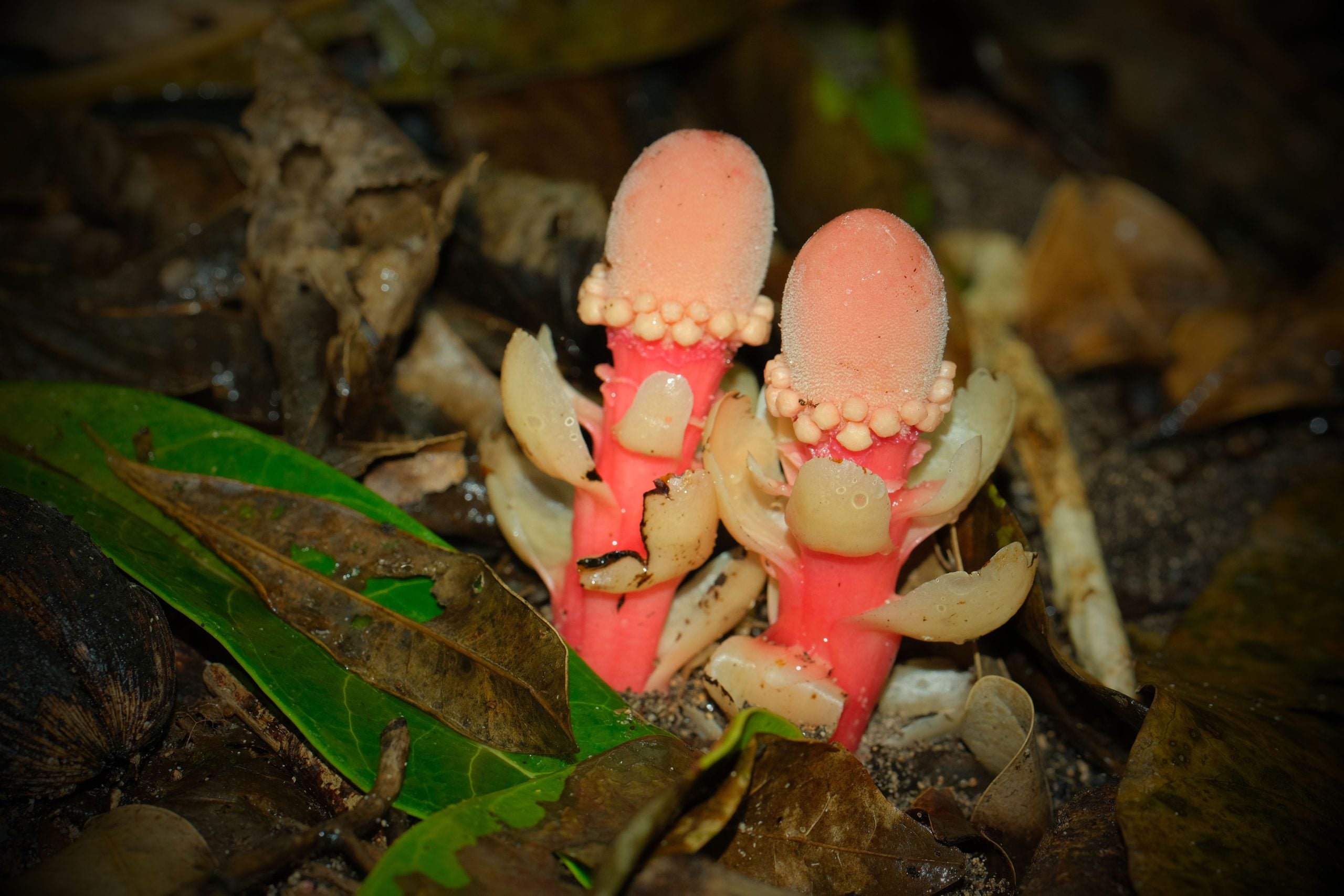
A plant that looks like a fungus, lives like a parasite, and clones itself in the dark—Balanophora may be one of evolution’s strangest experiments.
At the foot of moss-covered trees in the mountains of Taiwan and mainland Japan, as well as within the subtropical forests of Okinawa, an unusual organism emerges from the forest floor. It is often mistaken for a mushroom, yet it is actually a rare flowering plant that produces some of the smallest flowers and seeds known to science.
This plant, Balanophora, lacks chlorophyll and cannot carry out photosynthesis. It also has no true roots to draw water or nutrients from the soil. Instead, it survives by attaching itself to the roots of particular tree species and living entirely as a parasite. In some species and populations, seed production occurs without fertilization, a reproductive strategy that is exceptionally uncommon among plants.
The genus Balanophora, named for its acorn-like appearance (Greek: balanos, acorn; phoros, bearing), has intrigued scientists for decades. Its scarcity and dependence on very specific habitats, many of which are increasingly affected by human activity, have made it difficult to study in depth. Recently, however, researchers from the Okinawa Institute of Science and Technology (OIST), Kobe University, and the University of Taipei collaborated to examine Balanophora across its limited and hard-to-reach environments.
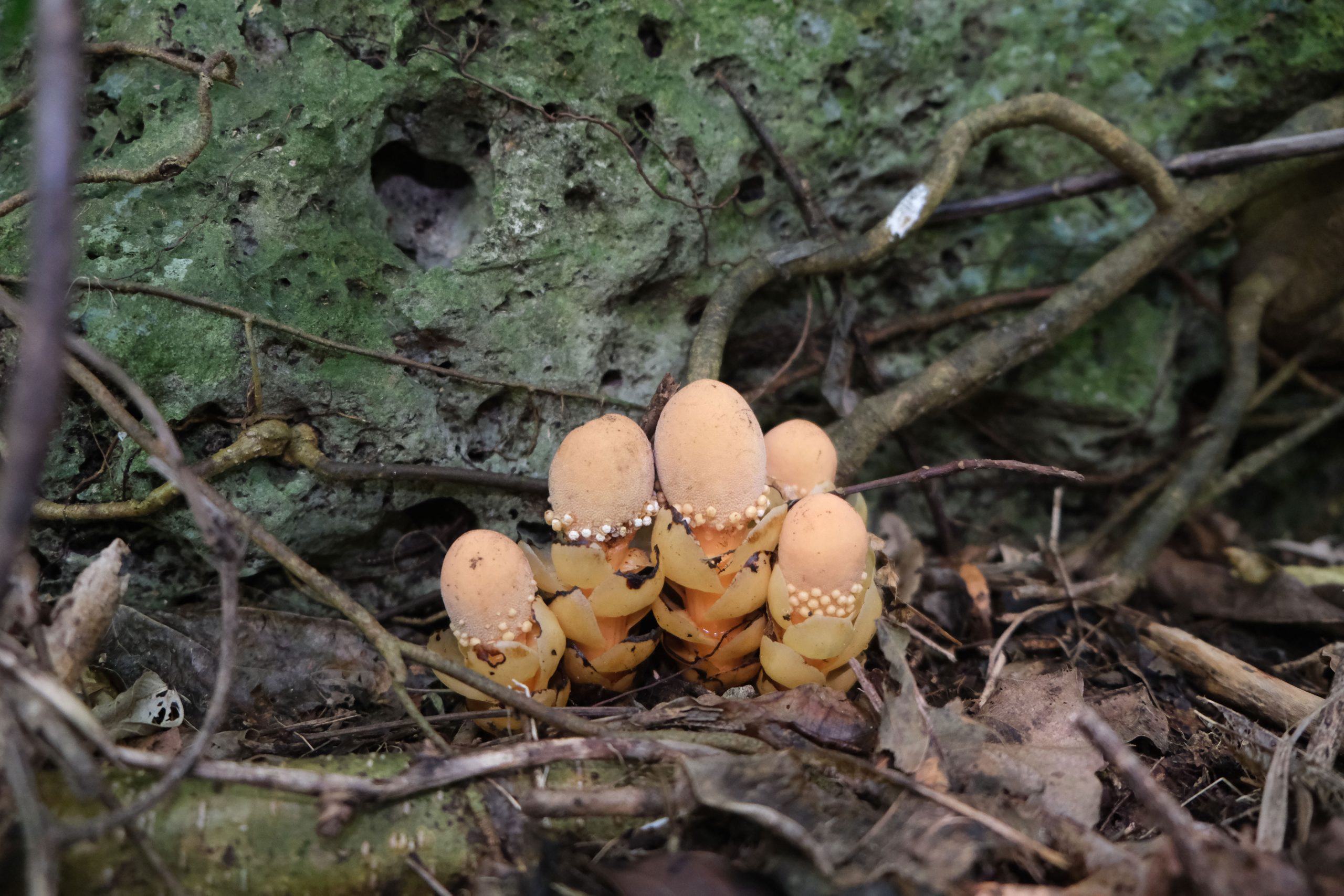
A macro photograph of a cluster of mushroom-like plants on the forest floor against a mossy backdrop. These are Balanophora fungosa ssp. fungosa from southern Okinawa Island. Credit: Filip HusnikThe findings, recently reported in New Phytologist, trace the plant’s evolutionary past, reveal surprising roles played by its cellular organelles that support its parasitic way of life, and establish a foundation for future studies of this unusually ancient species.
As study lead author Dr. Petra Svetlikova, Science and Technology Associate at OIST, puts it: “Balanophora has lost much of what defines it as a plant, but retained enough to function as a parasite. It’s a fascinating example of how something so strange can evolve from an ancestor that looked like a normal plant with leaves and a normal root system.”
Shrinking plastids, genomes, and island habitats
A common trait across parasitic plants is that as they increase their reliance on their host plant, their plastids – a broad term for plant organelles including chloroplasts in photosynthetic plants – tend to lose genes, or even disappear altogether. But despite being entirely dependent on their host trees for all their nutritional needs, Balanophora has retained its plastids, albeit drastically reduced.
In non-parasitic plants, as many as 200 separate genes may encode for the structure of plastids, whereas in Balanophora, just 20 genes remain. At the same time, the researchers found that over 700 proteins are imported to the plastids from the cytoplasm, suggesting that even in this reduced form, Balanophora plastids still play a vital role.
“That Balanophora plastids are still involved in the biosynthesis of many compounds unrelated to photosynthesis was surprising. It implies that the order and timing of plastid reduction in non-photosynthetic plants is similar to other eukaryotes, such as the malaria-causing parasite, Plasmodium, which originated from a photosynthetic ancestor,” says Professor Filip Husnik, head of the Evolution, Cell Biology, and Symbiosis Unit at OIST.
Ancient Origins Across Island Landscapes
By sampling across multiple populations of Balanophora, the team was able to construct the tree of life for the plant genus and how it diversified across the subtropics of East Asian islands. Balanophoraceae, the family to which the Balanophora genus belongs, is one of the oldest families of entirely parasitic plants, having diversified in the mid-Cretaceous period around 100 million years ago – and as such, it is one of the first land plants to have lost photosynthesis.
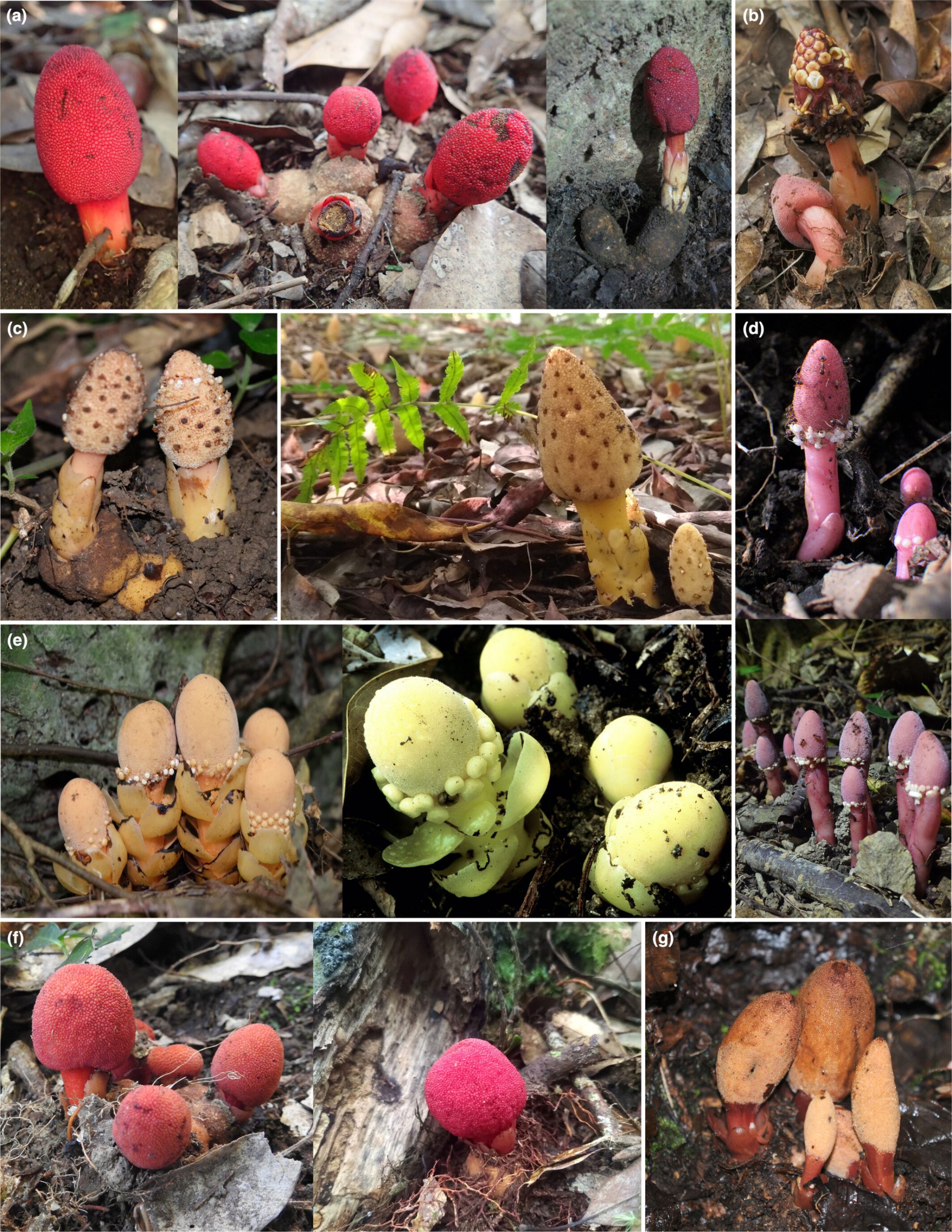
Another fascinating question left open by the plants is their reproduction, which varies wildly from population to population. Some species require fertilization to set seeds; others have the additional ability to produce seeds without fertilization, so-called facultative agamospermy, and some are obligately agamospermous, meaning they never reproduce sexually.
“Obligate agamospermy is exceedingly rare in the plant kingdom, because it typically carries a lot of negative downsides – lack of genetic diversity, accumulation of bad mutations, dependence on specific conditions, higher extinction risk, and so on,” explains Dr. Svetlikova. “Fascinatingly, we found that the obligately agamospermous Balanophora species were all island species – and we speculate that more Balanophora species may be facultative, or even obligate, agamosperms.”
One upside to this reproductive strategy is that it allows single female plants to propagate across new islands, rapidly colonizing the highly specific niche in which they thrive: the dark, moist undergrowth, where not many other plants can survive.
Despite the ability to clone itself, Balanophora is very picky in its choice of host: individual populations of the plant parasitize just a few tree species. This, unfortunately, also makes these rare and unique flowers vulnerable.
“We’re very thankful to our collaborators Dr. Huei-Jiun Su and Dr. Kenji Suetsugu, experts on parasitic plants, for their help in sampling the studied Balanophora species, and to local authorities in Okinawa that allowed us to study these extraordinary plants,” says Dr. Svetlikova. “Most known habitats of Balanophora are protected in Okinawa, but the populations face extinction by logging and unauthorized collection. We hope to learn as much as we can about this fantastic, ancient plant before it’s too late. It serves as a reminder of how evolution continues to surprise us.”
Reference: “Phylogenomics clarifies Balanophora evolution, metabolic retention in reduced plastids, and the origins of obligate agamospermy” by Petra Svetlikova, Huei-Jiun Su, Kenji Suetsugu and Filip Husnik, 26 November 2025, New Phytologist.
DOI: 10.1111/nph.70761
Never miss a breakthrough: Join the SciTechDaily newsletter.
Follow us on Google and Google News.
7 Comments
Acorn? These are the most phallic flora I’ve ever seen 😵💫
Reminds me of “Snow Plant”, the areas I hike are remote and ive been lucky enough to find it, a big red spike!
I pressed and dried the last one I found, although I could go to jail for doing it, just had to
(also found blue bees in same area)
“just had to”
So say a l o t of people who went to jail for things.
It always concerns me when photos of rare flora and fauna are posted. A million amateur collectors suddenly pack their bags and go into the woods to collect specimens.
And some benighted natural remedy store somewhere is going to be adding this to their collection of weird viagra substitutes, along with spanish fly, ambergris, and dried shark fin.
Great idea Eric, where is my backpack?!
Great idea Eric, where is my backpack?!