
Less pigmentation keeps them cool, but could make it difficult to find a mate.
A study in the Proceedings of the National Academy of Sciences led by Michael Moore at Washington University in St. Louis finds that dragonfly males have consistently evolved less breeding coloration in regions with hotter climates.
“Our study shows that the wing pigmentation of dragonfly males evolves so consistently in response to the climate that it’s among the most predictable evolutionary responses ever observed for a mating-related trait,” said Moore, who is a postdoctoral fellow with the Living Earth Collaborative.
“This work reveals that mating-related traits can be just as important to how organisms adapt to their climates as survival-related traits,” he said.
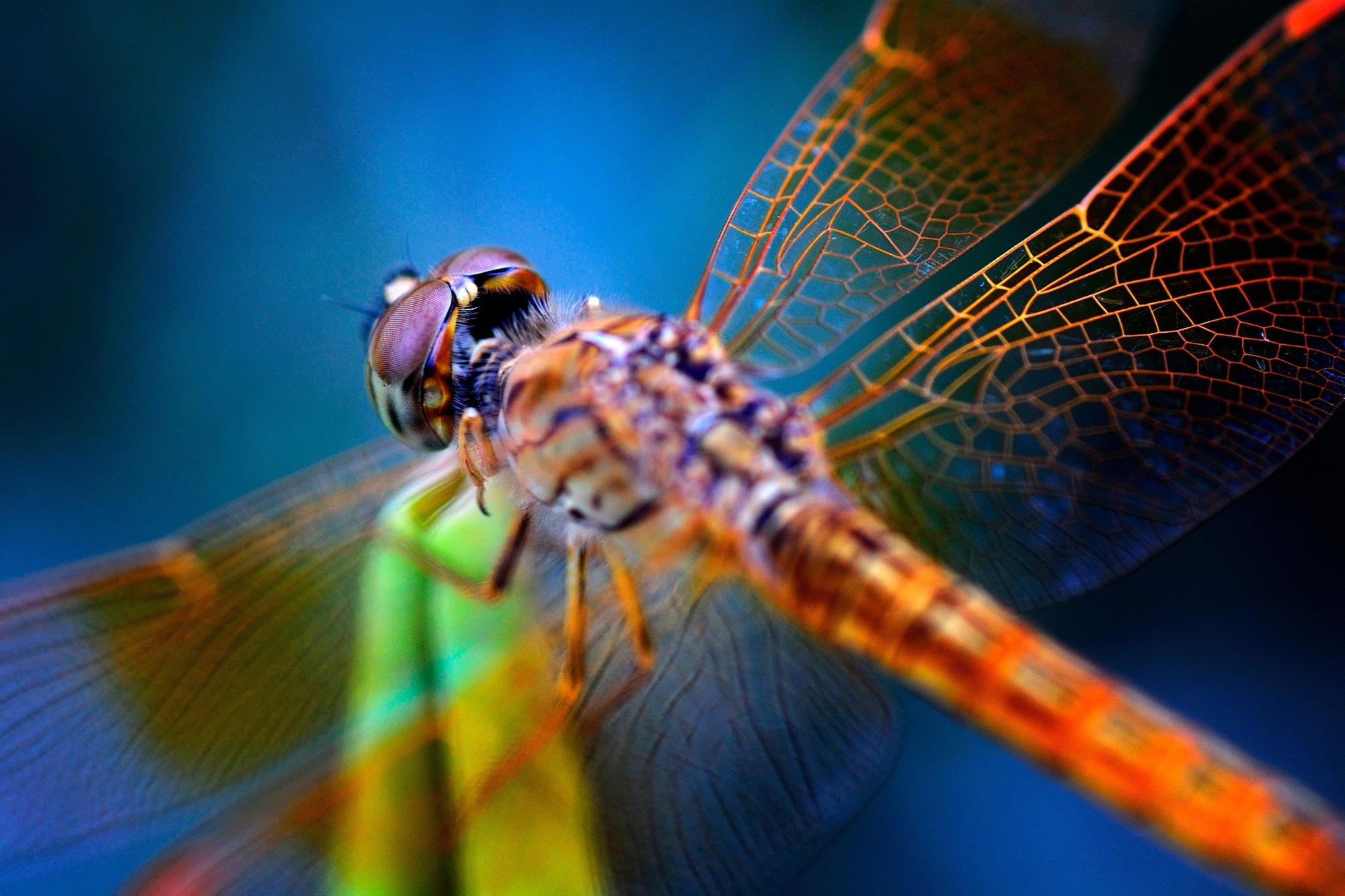
Many dragonflies have patches of dark black pigmentation on their wings that they use to court potential mates and intimidate rivals.
“Beyond its function in reproduction, having a lot of dark pigmentation on the wings can heat dragonflies up by as much as 2 degrees Celsius, quite a big shift!” Moore said, noting that would roughly equal a 3.5 degrees Fahrenheit change. “While this pigmentation can help dragonflies find mates, extra heating could also cause them to overheat in places that are already hot.”
Warmer Climates Select for Less Pigment in Males
The researchers were interested in whether this additional heating might force dragonflies to evolve different amounts of wing pigmentation in different climates.
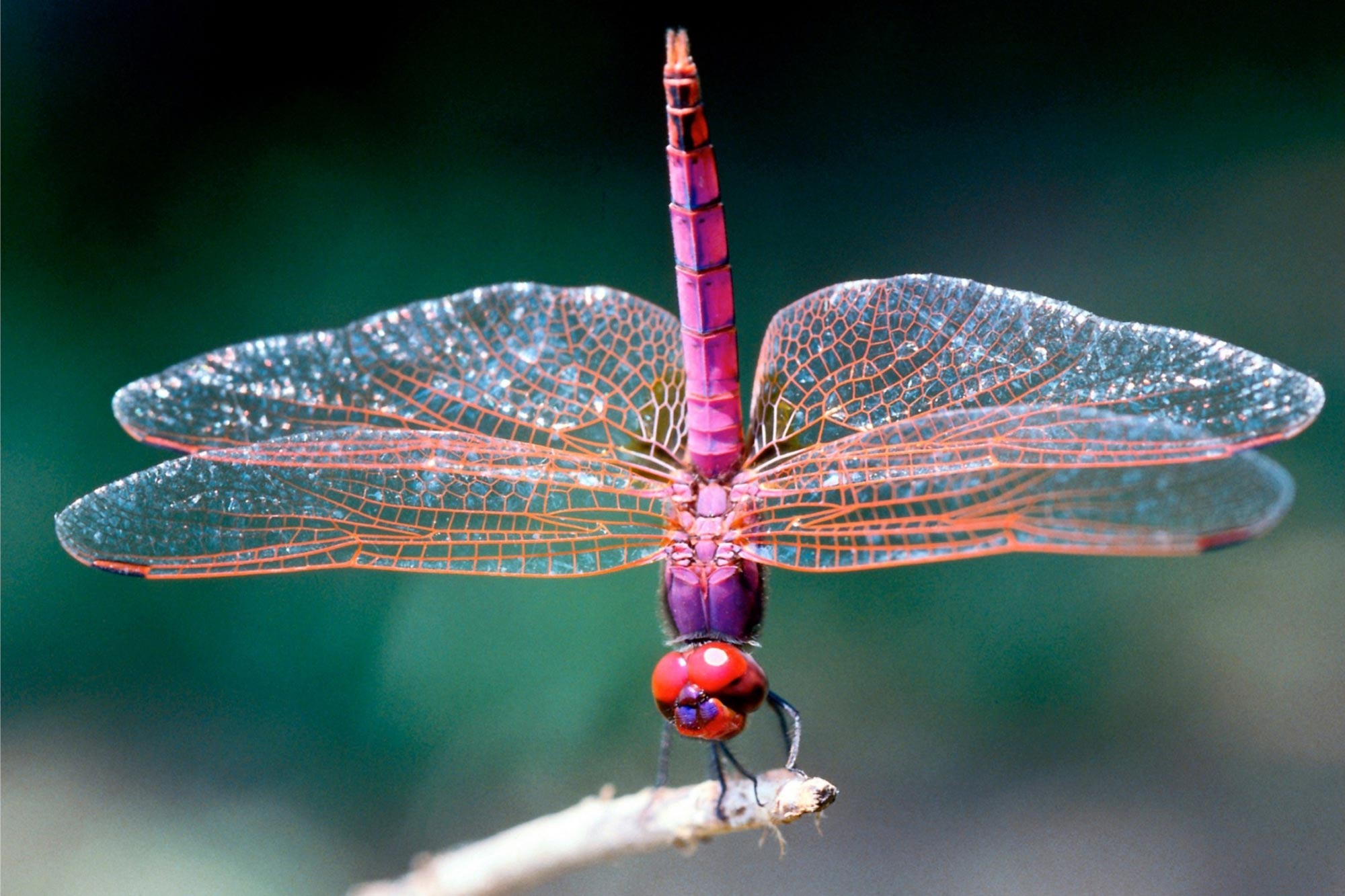
For this study, the scientists created a database of 319 dragonfly species using field guides and citizen-scientist observations. They examined the wing ornamentation shown in photographs submitted to iNaturalist and gathered information about climate variables in the locations where the dragonflies were observed. The researchers also directly measured the amount of wing pigmentation on individual dragonflies from almost 3,000 iNaturalist observations in a focused group of 10 selected species. For dragonflies in each of these 10 species, the scientists evaluated how populations differed in the warm and cool parts of their geographic ranges.
Consistent Evolutionary Pattern Across Regions and Years
Whether they compared species with hotter versus cooler geographic ranges, or compared populations of the same species that live in warmer areas versus cooler areas, the researchers saw the same thing: male dragonflies nearly always responded to warmer temperatures by evolving less wing pigmentation.
Sorting the observations another way, the researchers determined that male dragonflies spotted in warmer years tended to have less wing pigmentation than male dragonflies of the same species in cooler years (the database included observations recorded during the time period from 2005-19).
“Given that our planet is expected to continue warming, our results suggest that dragonfly males may eventually need to adapt to global climate change by evolving less wing coloration,” Moore said.
The study includes projections, based on climate warming scenarios, that indicate it will be beneficial for male wing pigmentation to shrink further as the Earth warms over the next 50 years.
But the changes are not happening the same way for both sexes.
“Unlike the males, dragonfly females are not showing any major shifts in how their wing coloration is changing with the current climate. We don’t yet know why males and females are so different, but this does show that we shouldn’t assume that the sexes will adapt to climate change in the same way,” Moore said.
Evolutionary Mismatches May Threaten Reproductive Success
Dragonflies have different amounts of pigment on their wings that help males and females of the same species identify each other. One of the interesting implications of this research is that if the male wing pigmentation evolves in response to rapid changes in climate and the female pigmentation evolves in response to something else, females may no longer recognize males of their own species.
This could cause them to mate with males of the wrong species.
“Rapid changes in mating-related traits might hinder a species’ ability to identify the correct mate,” Moore said. “Even though our research suggests these changes in pigmentation seem likely to happen as the world warms, the consequences are something we still really don’t know all that much about yet.”
Reference: “Sex-specific ornament evolution is a consistent feature of climatic adaptation across space and time in dragonflies” by Michael P. Moore, Kaitlyn Hersch, Chanont Sricharoen, Sarah Lee, Caitlin Reice, Paul Rice, Sophie Kronick, Kim A. Medley and Kasey D. Fowler-Finn, 6 July 2021, Proceedings of the National Academy of Sciences.
DOI: 10.1073/pnas.2101458118
This work was completed in collaboration with: Kim Medley, director of Washington University’s environmental field station, Tyson Research Center; Kasey Fowler-Finn, an associate professor of biology at Saint Louis University; and Washington University undergraduates Kaitlyn Hersch, Chanont Sricharoen, Sarah Lee, Caitlin Reice, Paul Rice and Sophie Kronick.
Never miss a breakthrough: Join the SciTechDaily newsletter.
Follow us on Google and Google News.