

New research uncovers reversal of evolution in island plants.
On the younger, volcanic islands of the Galápagos, wild tomato plants are exhibiting an unusual behavior. They appear to be discarding millions of years of evolutionary changes and reverting to a more ancestral genetic form, one that reactivates long-dormant chemical defenses.
These tomatoes, descended from South American species likely dispersed by birds, have begun producing a toxic blend of molecules not observed in the species for millions of years. This chemical mix is more similar to compounds found in eggplant than in today’s cultivated tomatoes.
In a recent Nature Communications study, researchers from the University of California, Riverside reported this surprising phenomenon, describing it as a potential instance of “reverse evolution”—a term that often stirs debate among evolutionary scientists.
The idea challenges the conventional view that evolution moves only in one direction: toward increasingly adapted forms. While traits resembling those of distant ancestors sometimes reappear, it is exceptionally rare for them to do so via identical genetic mechanisms.
Yet, the evidence suggests that this is exactly what is happening in these tomatoes.
“It’s not something we usually expect,” said Adam Jozwiak, a molecular biochemist at UC Riverside and the study’s lead author. “But here it is, happening in real time, on a volcanic island.”
Alkaloids and their evolutionary significance
Alkaloids are the central compounds involved in this chemical shift. These bitter-tasting molecules, found in tomatoes, potatoes, eggplants, and other members of the nightshade family, serve as natural defenses against insects, fungi, and herbivores by acting as internal pesticides.
Although the Galápagos Islands are often noted for having few animal predators, this protection does not extend to plant life. As a result, plants still require chemical defenses like alkaloids.
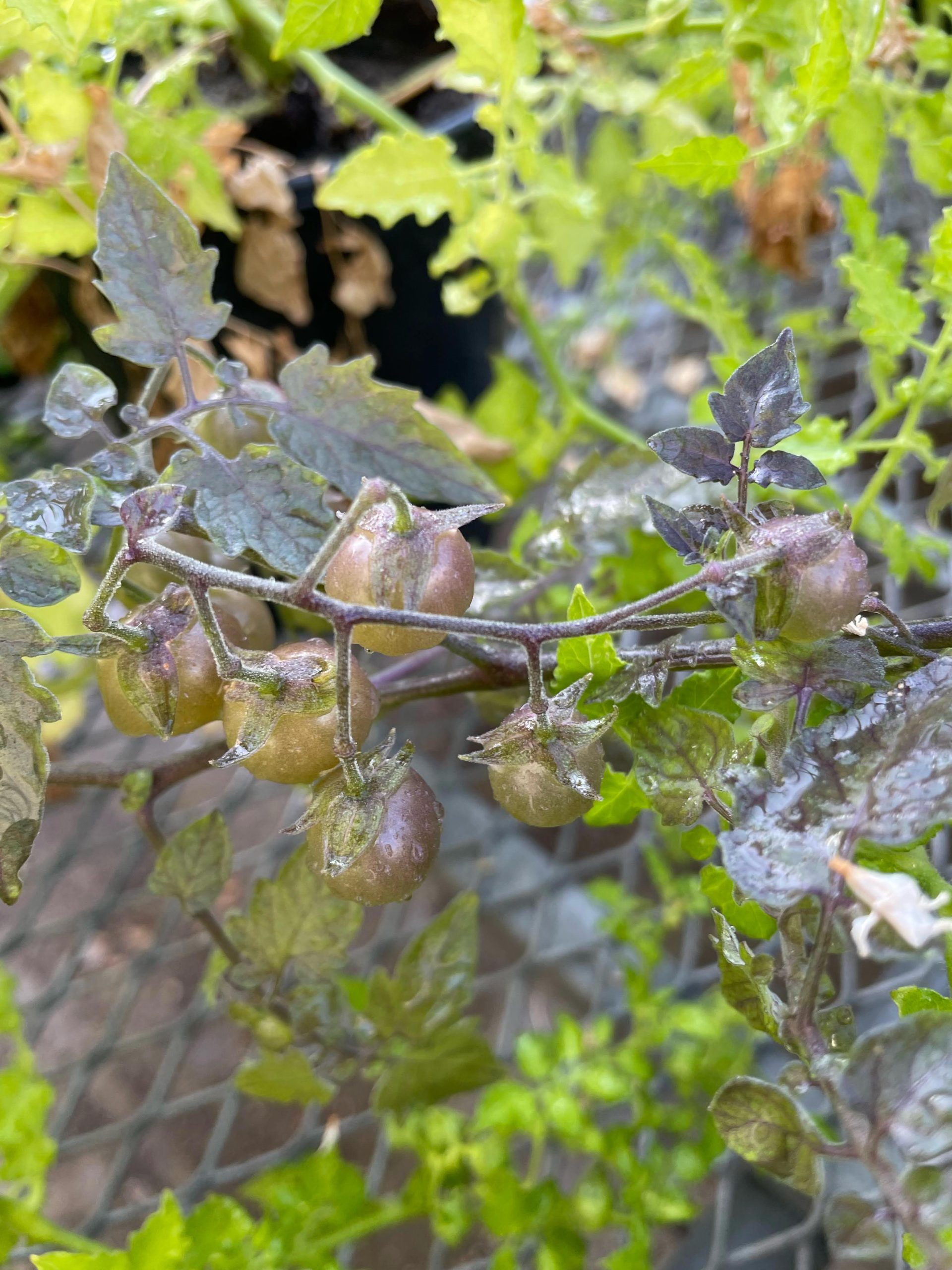
The research team launched this study because alkaloids, while useful for plants, can pose health risks to humans. In large amounts, these compounds are toxic, which is why scientists are interested in understanding how they are made and how to minimize them in the parts of crops we consume.
“Our group has been working hard to characterize the steps involved in alkaloid synthesis, so that we can try and control it,” said Jozwiak.
What makes the Galápagos tomatoes particularly notable is not just that they produce alkaloids, but that they are generating types not seen in modern tomatoes—variants that harken back to their ancient evolutionary past.
The team examined more than 30 tomato specimens collected from various locations across the islands. They discovered that tomatoes growing on the eastern islands produced alkaloids similar to those found in today’s cultivated varieties. However, tomatoes from the western islands were synthesizing a different form of the molecule—one that matched the chemical profile of ancient eggplant relatives.
This distinction is due to stereochemistry, which refers to the spatial arrangement of atoms within a molecule. Two compounds can be composed of the same atoms yet function in entirely different ways depending on how those atoms are positioned in three-dimensional space.
A few mutations trigger a major shift
To figure out how the tomatoes made the switch, the researchers examined the enzymes that assemble these alkaloid molecules. They discovered that changing just four amino acids in a single enzyme was enough to flip the molecule’s structure from modern to ancestral.
They proved it by synthesizing the genes coding for these enzymes in the lab and inserting them into tobacco plants, which promptly began producing the old compounds.
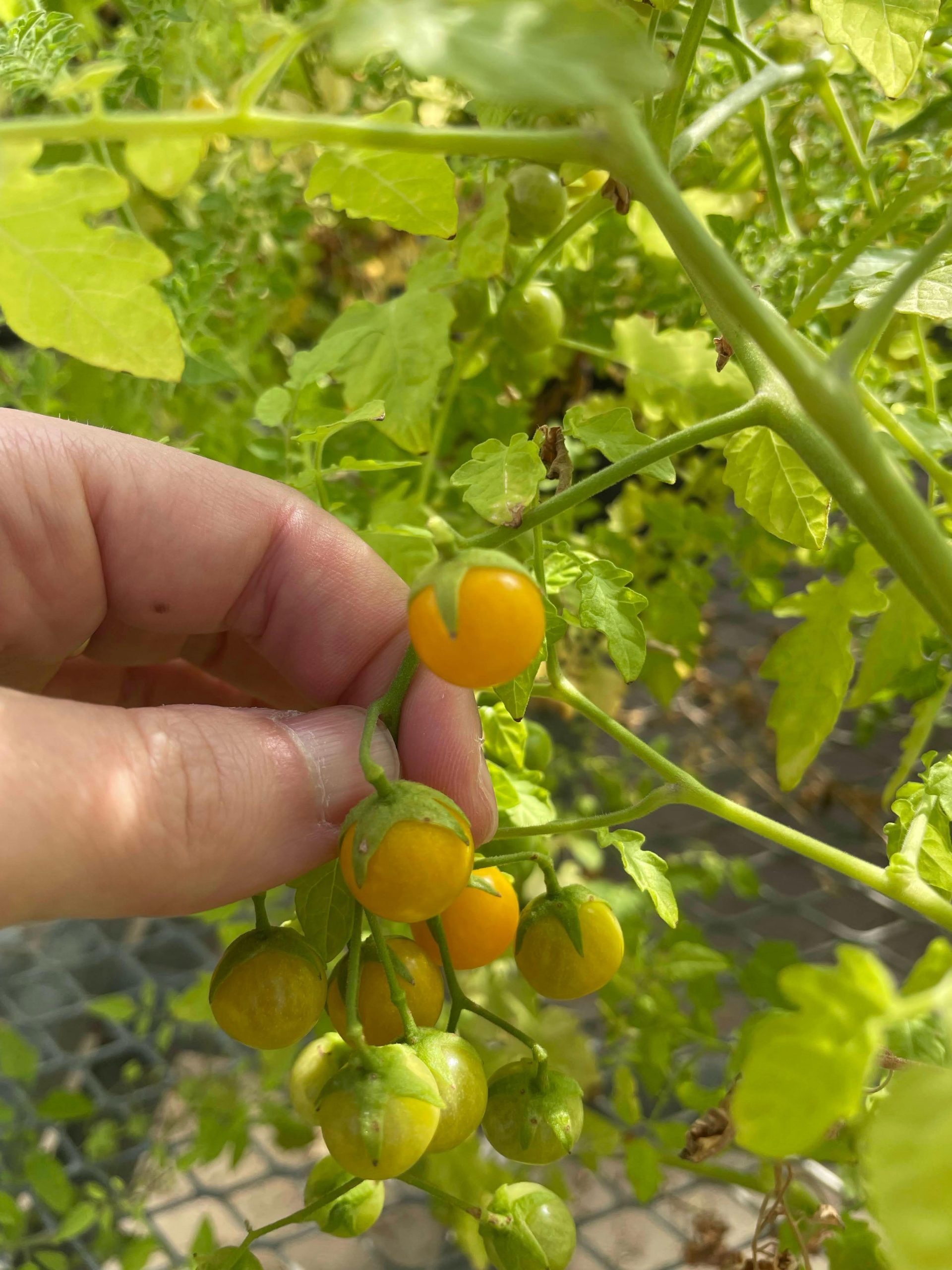
The pattern wasn’t random. It aligned with geography. Tomatoes on the eastern, older islands, which are more stable and biologically diverse, made modern alkaloids. Those on the younger, western islands where the landscape is more barren and the soil is less developed, had adopted the older chemistry.
The researchers suspect the environment on the newer islands may be driving the reversal. “It could be that the ancestral molecule provides better defense in the harsher western conditions,” Jozwiak said.
Modeling the path of evolution in real time
To verify the direction of the change, the team did a kind of evolutionary modeling that uses modern DNA to infer the traits of long-extinct ancestors. The tomatoes on the younger islands matched what those early ancestors likely produced.
Still, calling this “reverse evolution” is bold. While the reappearance of old traits has been documented in snakes, fish, and even bacteria, it’s rarely this clear, or this chemically precise.
“Some people don’t believe in this,” Jozwiak said. “But the genetic and chemical evidence points to a return to an ancestral state. The mechanism is there. It happened.”
And this kind of change might not be limited to plants. If it can happen in tomatoes, it could theoretically happen in other species, too. “I think it could happen to humans,” he said. “It wouldn’t happen in a year or two, but over time, maybe, if environmental conditions change enough.”
Jozwiak doesn’t study humans, but the premise that evolution is more flexible than we think is serious. Traits long lost can re-emerge. Ancient genes can reawaken. And as this study suggests, life can sometimes find a way to move forward by reaching into the past.
“If you change just a few amino acids, you can get a completely different molecule,” Jozwiak said. “That knowledge could help us engineer new medicines, design better pest resistance, or even make less toxic produce. But first, we have to understand how nature does it. This study is one step toward that.”
Reference: “Enzymatic twists evolved stereo-divergent alkaloids in the Solanaceae family” by Adam Jozwiak, Michaela Almaria, Jianghua Cai, Sayantan Panda, Hadas Price, Ron Vunsh, Margarita Pliner, Sagit Meir, Ilana Rogachev and Asaph Aharoni, 18 June 2025, Nature Communications.
DOI: 10.1038/s41467-025-59290-4
Never miss a breakthrough: Join the SciTechDaily newsletter.
Follow us on Google and Google News.
5 Comments
Come on! DE-evolution isn’t a thing. It’s evolution in a different fitness environment. Please don’t encourage willful ignorance with misleading headlines!
I agree that this tomato thing is not an instance of de-evolution, but de-evolution does exist. Look at flightless birds in Australia and New Zealand. Both of those countries have implemented programs to kill predators of the flightless birds so that they won’t go extinct. (very unfair to the predators who have not de-evolved) Look at humans’ dependence on medical technology for survival. Whenever the evolutionary process leaves the species less able to survive, I call that de-evolution. I could argue that medical technology has eliminated human evolution entirely. Unfit individuals who would have died are now able to live and reproduce and pass on their unfit genes to the next generation. We have eliminated survival of the fittest from modern society. The only places where human evolution (forward evolution) still exists would be in tribal areas where people live free from modern technology and medicine.
Evolution does not act to ensure the persistence of species. The “fittest” by definition are those individuals that contribute more offspring to future generations. It’s logically impossible for natural selection to favor individuals that are less successful at reproducing. (Of course producing fewer offspring and providing for them better can yield the most fitness.)
I think you’re right that medicine has altered natural selection in humans. Probably even more important are sanitation, clean drinking water, hand washing — we don’t die of the things that killed most of us 150-200 years ago. Most mortality occurs long after people have already reproduced, and in much of the world communicable diseases aren’t the major factors.
This means that selection pressures are vastly different, not that there is no selection. My guess is that because of the recent changes we’re probably in a period of rapid human evolutionary change, perhaps the most rapid in the history of our species.
Removing survival of the fittest (which i agree we’ve done) is not the same as de-evolution. As noted in this article, usually when some ancient trait re-emerges, it’s thru a different mechanism or seet of genes, but this seems to be using exactly the old genes to do exactly the old thing. Its not so much de-evolution as evolving back into way it had been, but that’s as close to a definition as you’re likely to get.
When I drive home from work at the end of the day I don’t go in reverse. I go always forward in the direction that takes me where I need to be.
Natural selection tends toward adaptation to a set of conditions. It’s not perfect, it produces the “good enough” compromise adaptations contingent on available genetic diversity, mutation rates, variable conditions, and contrary selection pressures.
Evolution has no goal, it’s not progressive, and so the concepts of “forward” or “reverse” don’t apply, except that time itself doesn’t go backward, so all evolution is “forward.”