
With intensifying human activity, many species are threatened with extinction. However, many other species have expanded their range. Is there a general rule to identify which species are “losers” or “winners”? And what is the effect of range changes on the biodiversity of Chinese flora?
A research team led by Prof. MA Keping from the Institute of Botany of the Chinese Academy of Sciences, in collaboration with scientists from the Center for Biodiversity Dynamics in a Changing World (BIOCHANGE) at Aarhus University (Denmark), revealed that narrow-ranged plants in China are more likely to be “losers”, whereas widespread species tend to be “winners” under the condition of intensive human activity. This study was published in the journal Proceedings of the National Academy of Sciences on December 16, 2019.
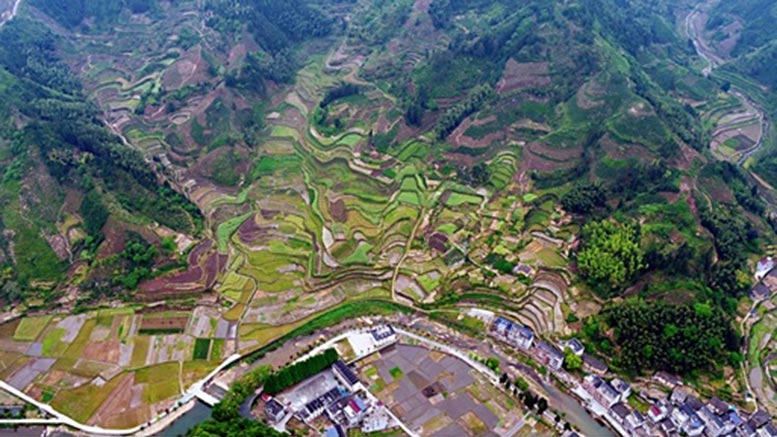
China is one of the world’s most species-rich countries, but it has suffered from long-term, intense human pressure exacerbated by uneven human population distribution across the country. For example, most people in China live southeast of an imaginary diagonal line, known as the “Hu Huanyong Line” for the demographer who created it, which stretches from Heihe City in Heilongjiang Province to Tengchong City in Yunnan Province.
Due to the lack of extensive, dynamic species distribution data, relatively few studies have comprehensively evaluated the impact of humans on the large-scale distribution of species in high-diversity organism groups. Furthermore, such assessments are complicated by the confounding effects of natural drivers such as climate.
In order to overcome this knowledge gap, the researchers quantified the impact of humans on the distribution of 9,701 vascular plant species across China. The study factored out the effect of climate by assessing how human activity affects the degree to which each species fills its potential climatic range (i.e., its potential distribution given its statistically estimated climatic niche).
This study found that narrow-ranged species in the human-dominated southeast (i.e., the area below the Hu Huanyong Line) have lower range filling, whereas widespread species have higher range filling relative to their counterparts in the northwest. Furthermore, variation in range filling is strongly associated with human impact factors, with narrow-ranged species having a negative correlation with those factors while widespread species have a positive correlation.
These results suggest that human activity has reduced the range of narrow-ranged species, but expanded the range of widespread species, relative to their climatic potential.
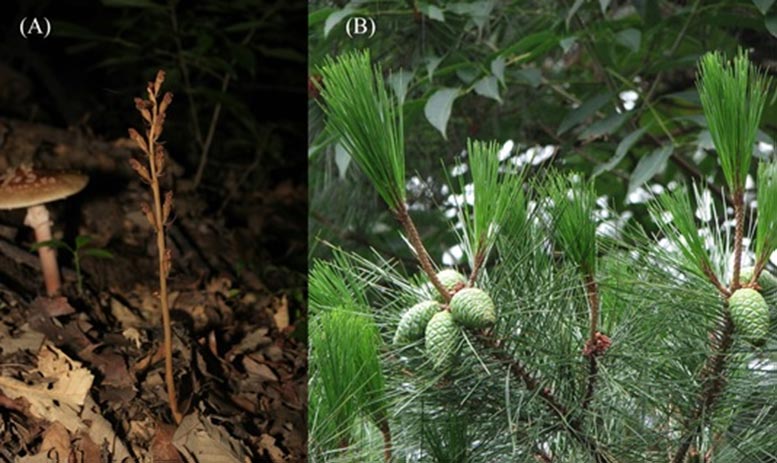
Narrow-ranged species may be more sensitive to human pressure since they are environmentally relatively specialized or poorly dispersed. Conversely, widespread species, as pioneer species, maybe more generalistic and/or better dispersed, making them better equipped to exploit human-disturbed habitats.
“With narrow-ranged species becoming replaced by widespread species due to human activities, the Chinese flora risks biotic homogenization,” said Dr. XU Wubing, the first author of the study.
Because narrow-ranged species are more numerous than widespread species, negative human impact on species distribution is likely very prevalent. “This highlights the importance of establishing more protected areas as well as widespread, biodiversity-oriented ecosystem restoration to safeguard China’s unique, rich flora,” said Professor Jens-Christian Svenning, coauthor of the study and director of BIOCHANGE, Aarhus University.
Reference: “Human activities have opposing effects on distributions of narrow-ranged and widespread plant species in China” by Wu-Bing Xu, Jens-Christian Svenning, Guo-Ke Chen, Ming-Gang Zhang, Ji-Hong Huang, Bin Chen, Alejandro Ordonez and Ke-Ping Ma, 16 December 2019, PNAS.
DOI: 10.1073/pnas.1911851116
Never miss a breakthrough: Join the SciTechDaily newsletter.
Follow us on Google and Google News.