
Close Menu
    Facebook X (Twitter) Instagram
    SciTechDaily
    • Biology
    • Chemistry
    • Earth
    • Health
    • Physics
    • Science
    • Space
    • Technology
    Facebook X (Twitter) Pinterest YouTube RSS
    SciTechDaily
    Home»Space»Comparing the Hubble and James Webb Space Telescopes: From Ultraviolet to Infrared
    Space

    Comparing the Hubble and James Webb Space Telescopes: From Ultraviolet to Infrared

    By SciTechDailyDecember 17, 20196 Comments3 Mins Read
    Facebook Twitter Pinterest Telegram LinkedIn WhatsApp Email Reddit
    Share
    Facebook Twitter LinkedIn Pinterest Telegram Email Reddit
    Hubble and James Webb Space Telescope Comparison
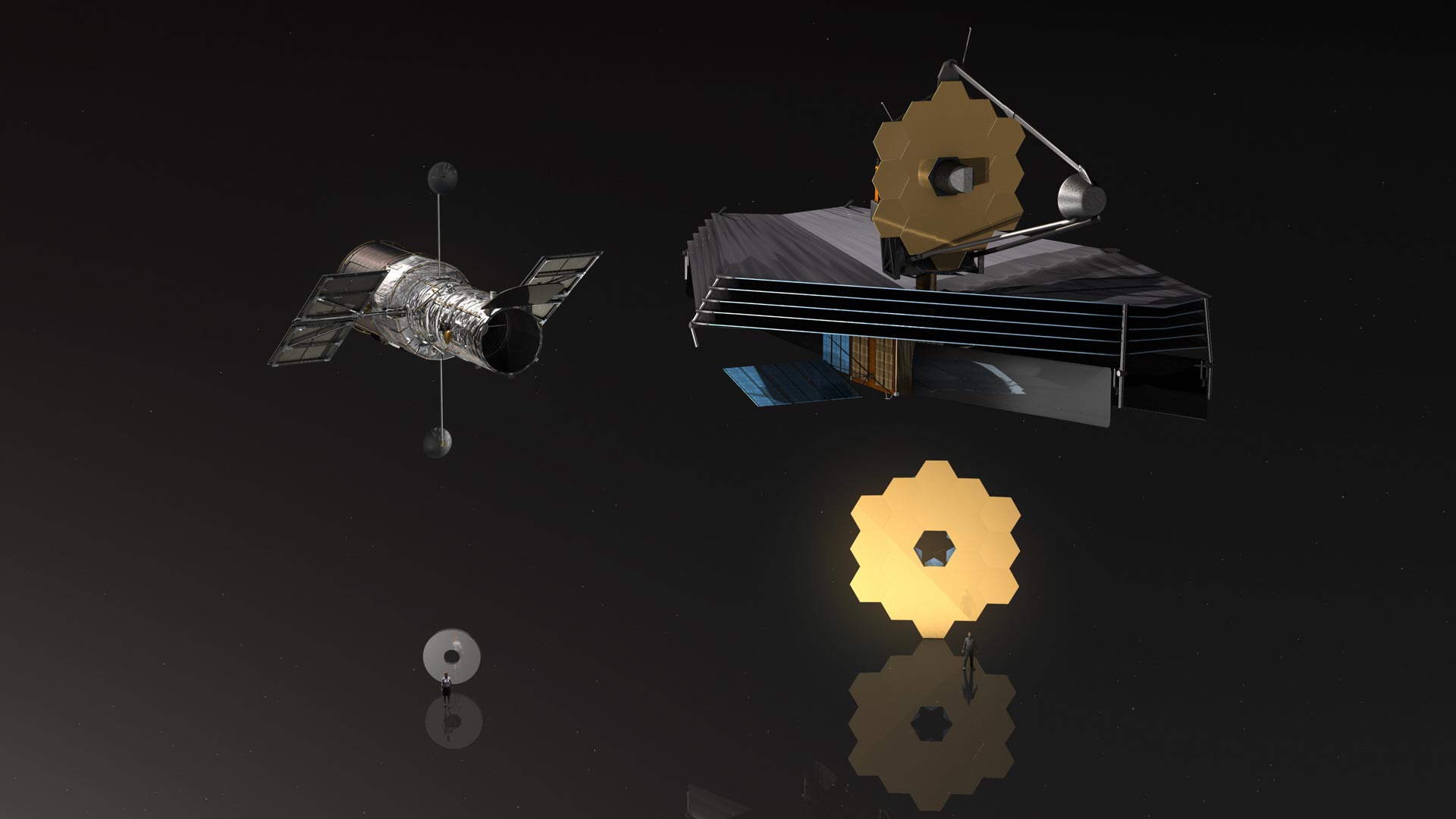
    This illustration shows both the NASA/ESA Hubble Space Telescope and the NASA/ESA/CSA James Webb Space Telescope and compares their respective mirrors. The main mirror of Hubble has a diameter of 2.4 meters, the foldable main mirror of James Webb is even 6.5 meters in diameter. Credit: ESA/M. Kornmesser

    This Hubblecast explores how the NASA/ESA Hubble Space Telescope’s observations differ across different wavelengths of the electromagnetic spectrum, and how these observations will be complemented by those of the upcoming NASA/ESA/CSA James Webb Space Telescope.

    The Hubble Space Telescope orbits approximately 570 kilometers (354 miles) above the Earth
    where it observes the Universe free from the obstruction of our atmosphere.

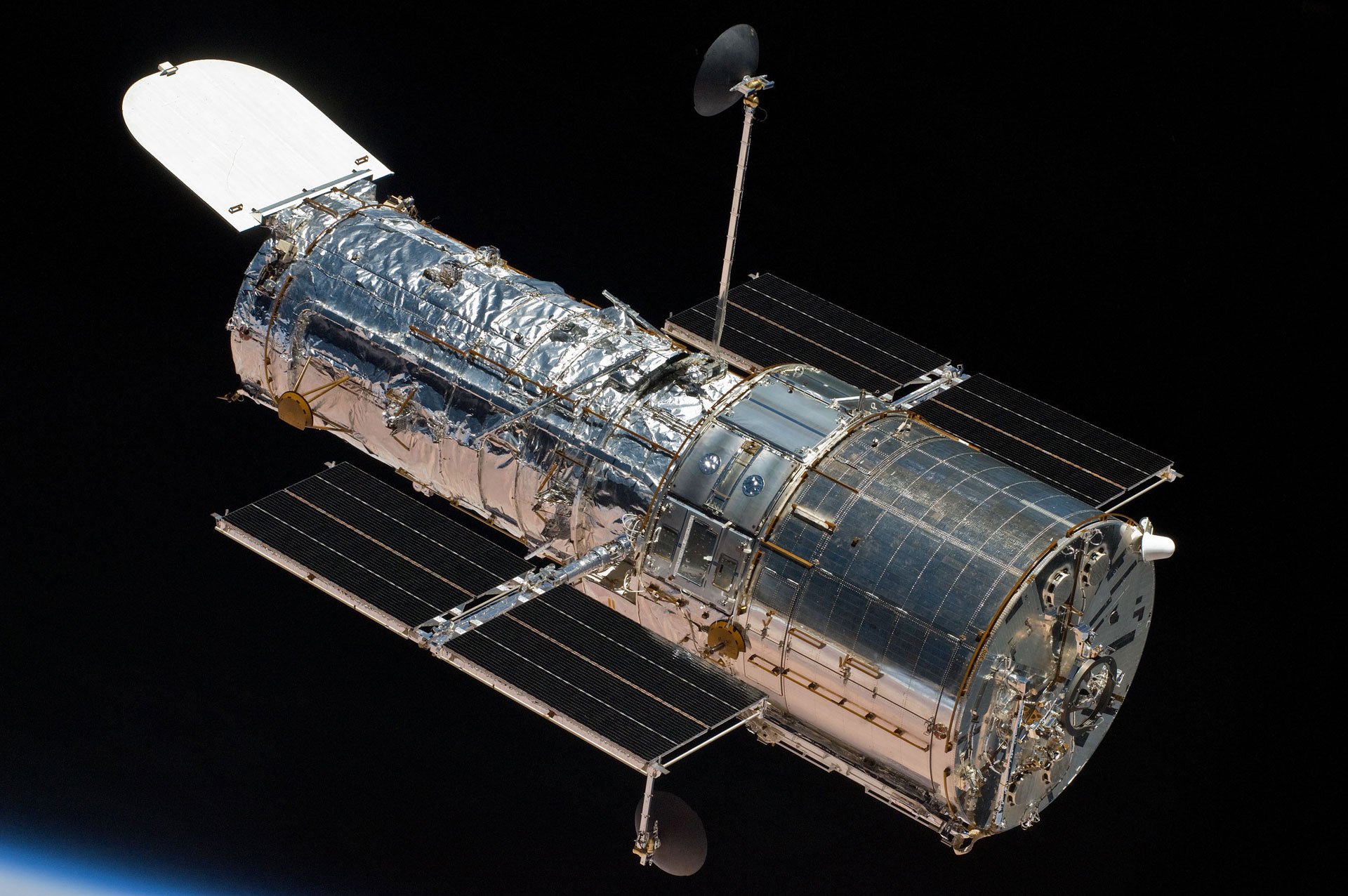
    For nearly three decades, Hubble has studied the Universe using its 2.4-meter (7.9-foot) primary mirror and its five science instruments. They observe primarily in the ultraviolet and visible parts of the spectrum, but also have some infrared capabilities.

    The electromagnetic waves in each of these bands have different characteristics such as how they are produced, and how they interact with matter and astronomical objects.

    Hubble observes in different wavelength bands, one band at a time, each providing different information on the object under study. Each of these wavelengths is reproduced in a different color and these are combined to form a composite image, so that the contribution from all wavelengths can be compared and analyzed.
    Hubble in Safe Mode
    NASA’s Hubble Space Telescope. Credit: NASA

    For example, Hubble’s images taken in the infrared typically reveal more stars than images taken in visible light, as infrared radiation passes more freely through cosmic dust, which scatters the bluer visible light.

    This allows astronomers to see regions of space that are normally obscured by cosmic dust and gas.

    By combining observations in different wavelengths we can develop a more complete picture of the structure, composition and behavior of an object than the visible wavelengths alone could ever show.

    While Hubble currently observes the Universe primarily at visible and ultraviolet wavelengths its scientific successor — the James Webb Space Telescope — will be sensitive to a range of wavelengths from 0.6 micrometers (orange light) to 28 micrometers, deep infrared radiation emitted from objects at temperatures of about -150 degrees C (-238 degrees F).
    James Webb Space Telescope Artist Conception
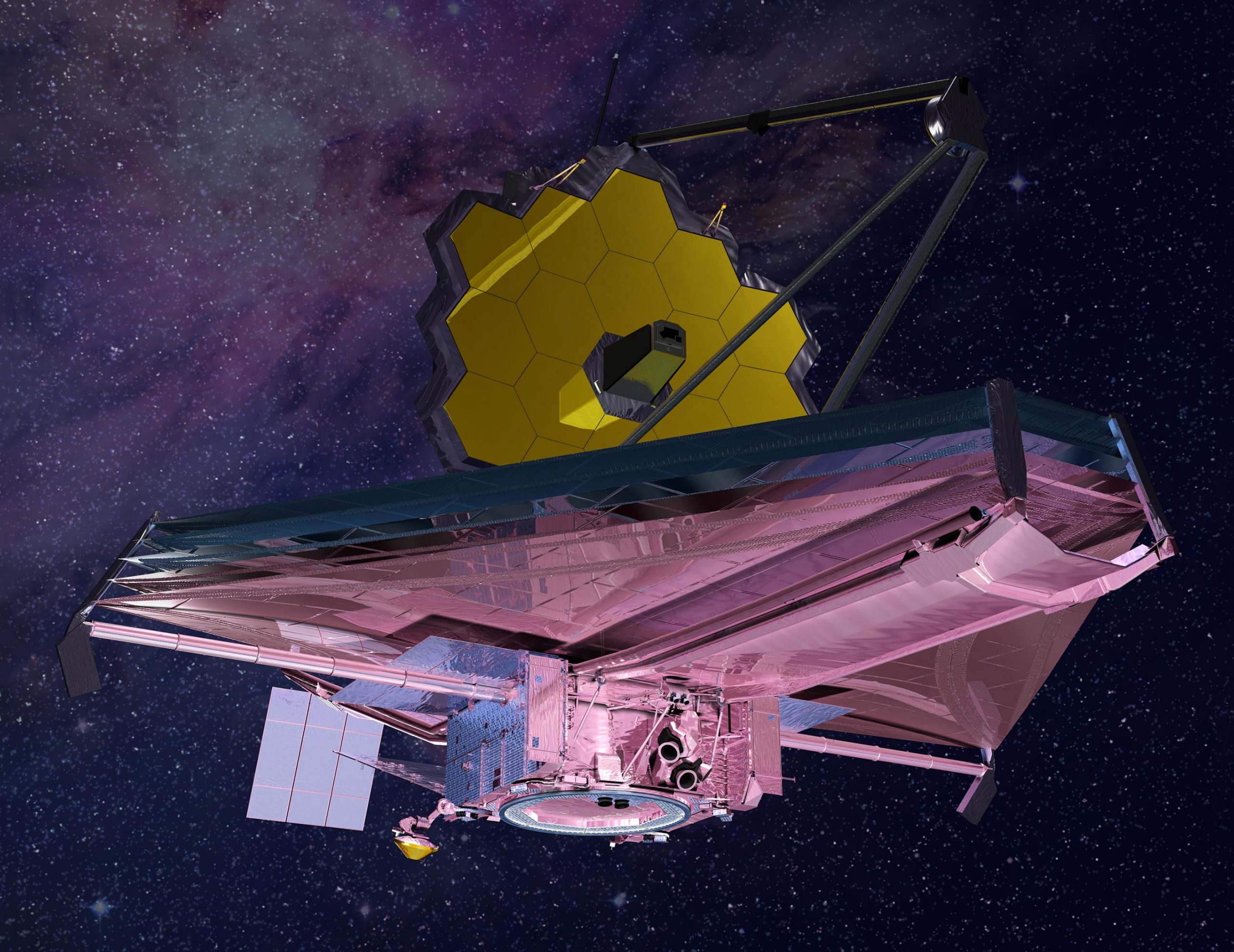
    Artist’s rendering of the James Webb Space Telescope. Credit: Northrop Grumman

    More distant objects in the cosmos are more highly redshifted and, as a result, their light is pushed from ultraviolet and visible wavelengths into the near-infrared.

    This means that observations of these distant objects (for example, the first galaxies that formed in the Universe) require a telescope specialized for infrared observing like James Webb in order to be observed.

    The James Webb Space Telescope also has a much bigger mirror than Hubble. It measures 6.5 meters (21 feet) in diameter. Bigger mirrors collect more light from fainter and more distant objects in space, meaning that James Webb will be able to peer further back in time than Hubble, allowing us to develop our understanding of the early Universe.

    Also, bigger mirrors provide higher resolution, resulting in images with finer details.

    By observing the cosmos in visible, ultraviolet, and infrared wavelengths, Hubble has contributed greatly to the field of astronomy. It has delved deeper into the early years of the Universe than was ever thought possible, played a critical part in the discovery that the expansion of the Universe is accelerating and probed the atmospheres of planets around distant stars.

    We eagerly await the contributions and discoveries that James Webb will make in the future.

    Never miss a breakthrough: Join the SciTechDaily newsletter.
    Follow us on Google and Google News.

    Astronomy European Space Agency Hubble Space Telescope James Webb Space Telescope NASA Popular Telescope
    Share. Facebook Twitter Pinterest LinkedIn Email Reddit

    Related Articles

    Spectacular Image of Heart of Phantom Galaxy Showcases Webb’s Power

    This Stunning Spiral Galaxy Is Mesmerizing – Image Took 9 Hours Observation Time on Hubble Space Telescope

    Dark Matter Surplus Captured by Hubble

    Magnificent Eye of the Serpent Captured by Hubble

    A Tilted Wonder 50,000 Light-Years Across

    Hubble Captures Edge of the Cygnus Supernova Blast Wave

    Spectacular Cosmic Fireworks Captured by Hubble

    Gorgeous Ring of Stellar Wildfire Captured by Hubble Space Telescope

    Hubble Uses Moon As “Mirror” to Study Earth’s Atmosphere – Proxy in Search of Potentially Habitable Planets Around Other Stars

    6 Comments

    1. james carter on December 18, 2019 1:42 pm

      I will learn how the James Webb differs when NASA decide to launch it.

      Reply
    2. Henry Payne on October 6, 2022 2:04 pm

      I learned a lot this has a lot of detail

      Reply
    3. werty on October 6, 2022 2:34 pm

      Home

      Reply
      • werty on October 6, 2022 2:35 pm

        nonono

        Reply
    4. werty on October 6, 2022 2:37 pm

      https://scitechdaily.com/comparing-the-hubble-and-james-webb-space-telescopes-from-ultraviolet-to-infrared/#comment-715550

      Reply
    5. werty on October 6, 2022 2:39 pm

      what happened to me!

      Reply
    Leave A Reply Cancel Reply

    • Facebook
    • Twitter
    • Pinterest
    • YouTube

    Don't Miss a Discovery

    Subscribe for the Latest in Science & Tech!

    Trending News

    Breakthrough Bowel Cancer Trial Leaves Patients Cancer-Free for Nearly 3 Years

    Natural Compound Shows Powerful Potential Against Rheumatoid Arthritis

    100,000-Year-Old Neanderthal Fossils in Poland Reveal Unexpected Genetic Connections

    Simple “Gut Reset” May Prevent Weight Gain After Ozempic or Wegovy

    2.8 Days to Disaster: Scientists Warn Low Earth Orbit Could Suddenly Collapse

    Common Food Compound Shows Surprising Power Against Superbugs

    5 Simple Ways To Remember More and Forget Less

    The Atomic Gap That Could Cost the Semiconductor Industry Billions

    Follow SciTechDaily
    • Facebook
    • Twitter
    • YouTube
    • Pinterest
    • Newsletter
    • RSS
    SciTech News
    • Biology News
    • Chemistry News
    • Earth News
    • Health News
    • Physics News
    • Science News
    • Space News
    • Technology News
    Recent Posts
    • Powerful Antioxidant Found To Play a Key Role in Proper Protein Folding
    • MIT Laser Breakthrough Lets Scientists Watch Drugs Enter the Brain in Real Time
    • Study Reveals Malaria’s Hidden Role in Human Evolution
    • Scientists Print Artificial Neurons That Can Talk to the Brain
    • Bowel and Ovarian Cancers Are Dramatically Rising in Young Adults and Scientists Aren’t Sure Why
    Copyright © 1998 - 2026 SciTechDaily. All Rights Reserved.
    • Science News
    • About
    • Contact
    • Editorial Board
    • Privacy Policy
    • Terms of Use

    Type above and press Enter to search. Press Esc to cancel.