
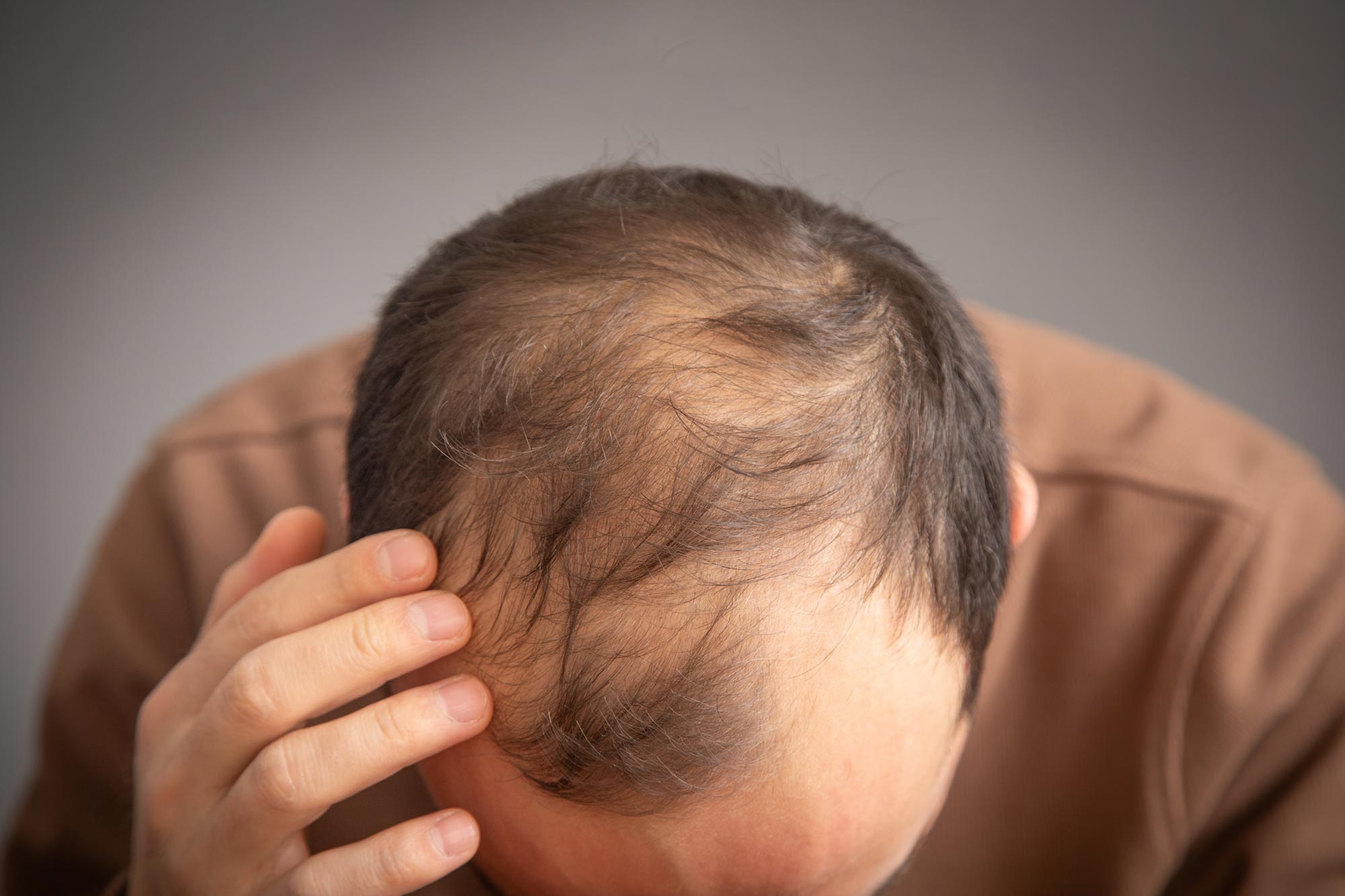
New research suggests hair loss may hinge on a fragile cellular balance during regeneration, where stem cells must survive a surge of stress to rebuild hair.
Hair loss in conditions like alopecia may come down to a single molecular tipping point: whether stressed stem cells survive long enough to rebuild hair.
A new international study has identified that tipping point. At the center is MCL-1, a protein that acts like a cellular safeguard for hair follicle stem cells. When this protection fails, the cells self-destruct, shutting down hair regrowth entirely.
Alopecia, an autoimmune disorder affecting nearly 2% of people worldwide, causes non-scarring hair loss across the scalp and body. While treatments exist, they often target symptoms rather than the root cause. The new research, published in Nature Communications, offers a clearer picture of what goes wrong at the cellular level.
A hidden vulnerability during hair regrowth
Hair follicles constantly cycle through growth, regression, and rest. Stem cells inside these follicles drive the process by waking up, dividing, and forming new hair. But this activation phase turns out to be risky.
When researchers removed MCL-1 from mouse skin cells, hair follicles still formed normally early in life. The problem appeared later. As stem cells tried to activate and regenerate hair, they became overwhelmed by stress and died off. Over time, this led to progressive hair loss and eventual destruction of the follicles themselves.
In adult mice, the effect was even more apparent. When hair was deliberately removed to trigger regrowth, follicles lacking MCL-1 failed to recover at all. The stem cells needed to restart the cycle were rapidly eliminated.
Why “waking up” can kill a stem cell
Dormant, or inactive, stem cells were largely unaffected without MCL-1. But once they switched on and began dividing, they became highly vulnerable.
This is because activation puts intense pressure on the cell’s DNA and energy systems. The researchers found clear signs of DNA damage during early hair regrowth. In response, the body activates P53, a well-known protein that acts as a quality control checkpoint. If damage is too severe, P53 pushes the cell toward self-destruction.
MCL-1 appears to counterbalance this effect. It helps cells survive long enough to repair damage and continue growing. Without it, P53-driven cell death dominates.
When scientists removed the P53 gene in addition to MCL-1, hair growth resumed. This suggests that hair regeneration depends on a delicate balance between survival signals and built-in cell death programs.
A broader survival network inside hair follicles
The research also uncovered a larger system controlling this balance. A signaling pathway known as ERBB, which helps regulate many cellular processes, was shown to boost MCL-1 production. Blocking this pathway reduced MCL-1 levels and prevented hair regrowth, mimicking the effects of deleting the gene itself.
At the same time, proteins that promote cell death play an equally important role. One of them, called BAK, acts as a key executioner. Surprisingly, removing just one copy of the Bak gene was enough to restore normal hair growth even without MCL-1.
What this means for hair loss treatments
Most current approaches to hair loss focus on hormones, immune responses, or blood flow. This study points to something different: the survival of stem cells during regeneration.
By targeting pathways that stabilize MCL-1 or reduce stress-related cell death, future therapies might protect these cells at their most vulnerable moment. The findings may also explain why some treatments fail. If stem cells cannot survive activation, hair simply cannot regrow.
Beyond hair loss, the work has broader implications. Similar survival mechanisms operate in other tissues that rely on stem cells for repair, and even in cancer, where controlling cell survival is a major goal.
Reference: “MCL‑1 safeguards activated hair follicle stem cells to enable adult hair regeneration” by Hui San Chin, Jinming Cheng, Shih Han Hsu, Guo Guang Lum, Maria TK Zaldivia, Sarmilla Nelameham, Fusheng Guo, Keerthana Mallavarapu, Felicity C. Jackling, Jicheng Yang, Jonathan S. L. Tan, Prabha Sampath, Nick Barker, Gordon K. Smyth, Geoffrey J. Lindeman, Andreas Strasser, Jane E. Visvader, Yunshun Chen, Ting Chen and Nai Yang Fu, 22 March 2025, Nature Communications.
DOI: 10.1038/s41467-025-58150-5
Never miss a breakthrough: Join the SciTechDaily newsletter.
Follow us on Google and Google News.
1 Comment
“Alopecia” means hair loss of any kind. “Alopecia areata” is the autoimmune disease. Good grief. What a simple thing to get straight BEFORE writing an article all about alopecia that they did not get straight. No pun intended. (straight hair…heh heh)