
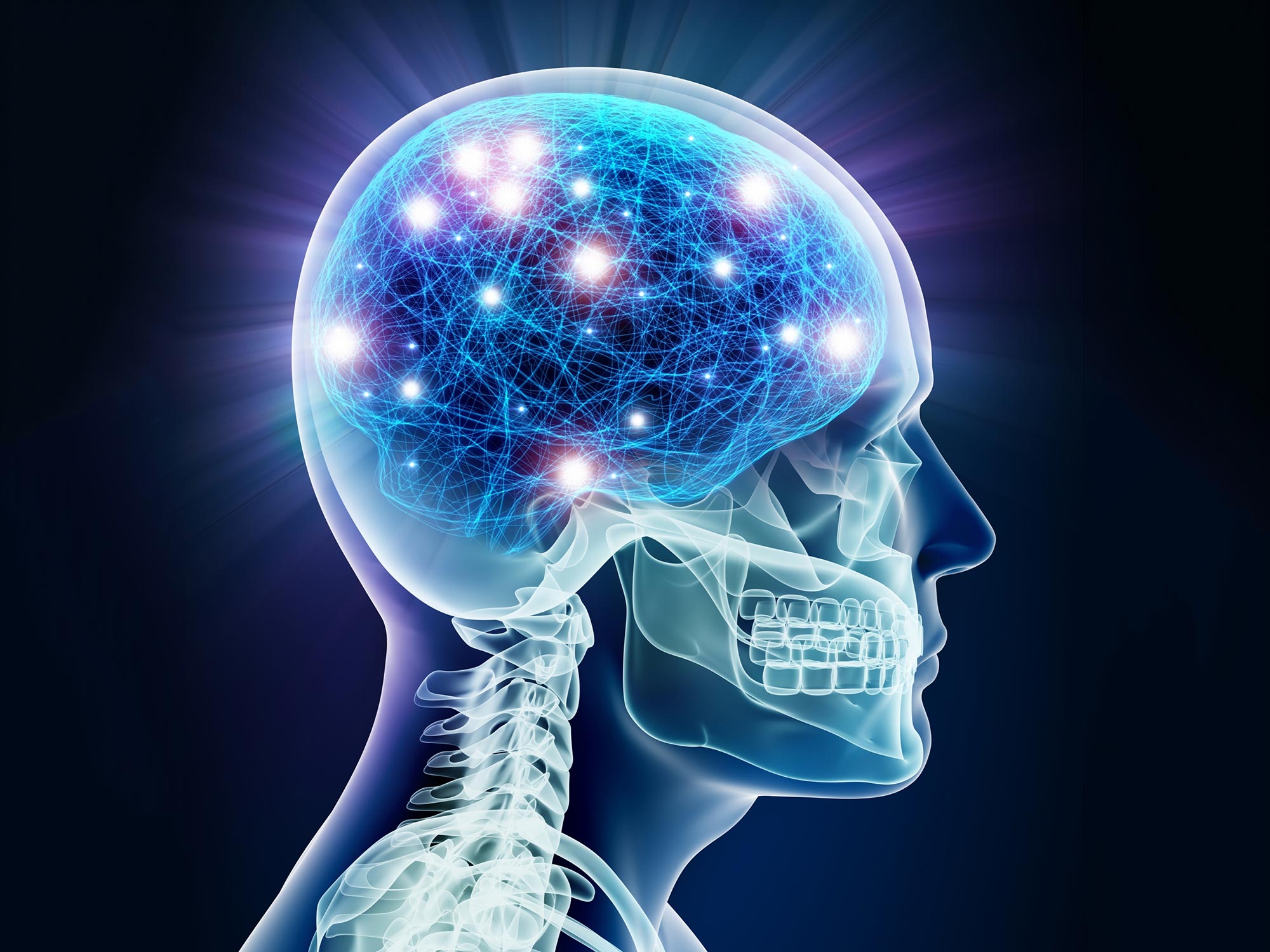
A newly identified protein helps aging brains regenerate neural stem cells.
Scientists at the Yong Loo Lin School of Medicine, National University of Singapore (NUS Medicine), have identified a molecular switch that helps aging brains maintain their ability to generate new nerve cells. The discovery centers on a protein that appears to revive the regenerative potential of neural stem cells, a capacity that typically fades with age and contributes to declining brain function. The findings were published in Science Advances.
The study focuses on a transcription factor known as cyclin D-binding myb-like transcription factor 1 (DMTF1). Transcription factors act as gene regulators, directing when specific genes are activated and ensuring that cells behave as they should. The researchers found that DMTF1 plays a pivotal role in sustaining neural stem cell activity as the brain ages, positioning it as a key player in the biology of brain aging.
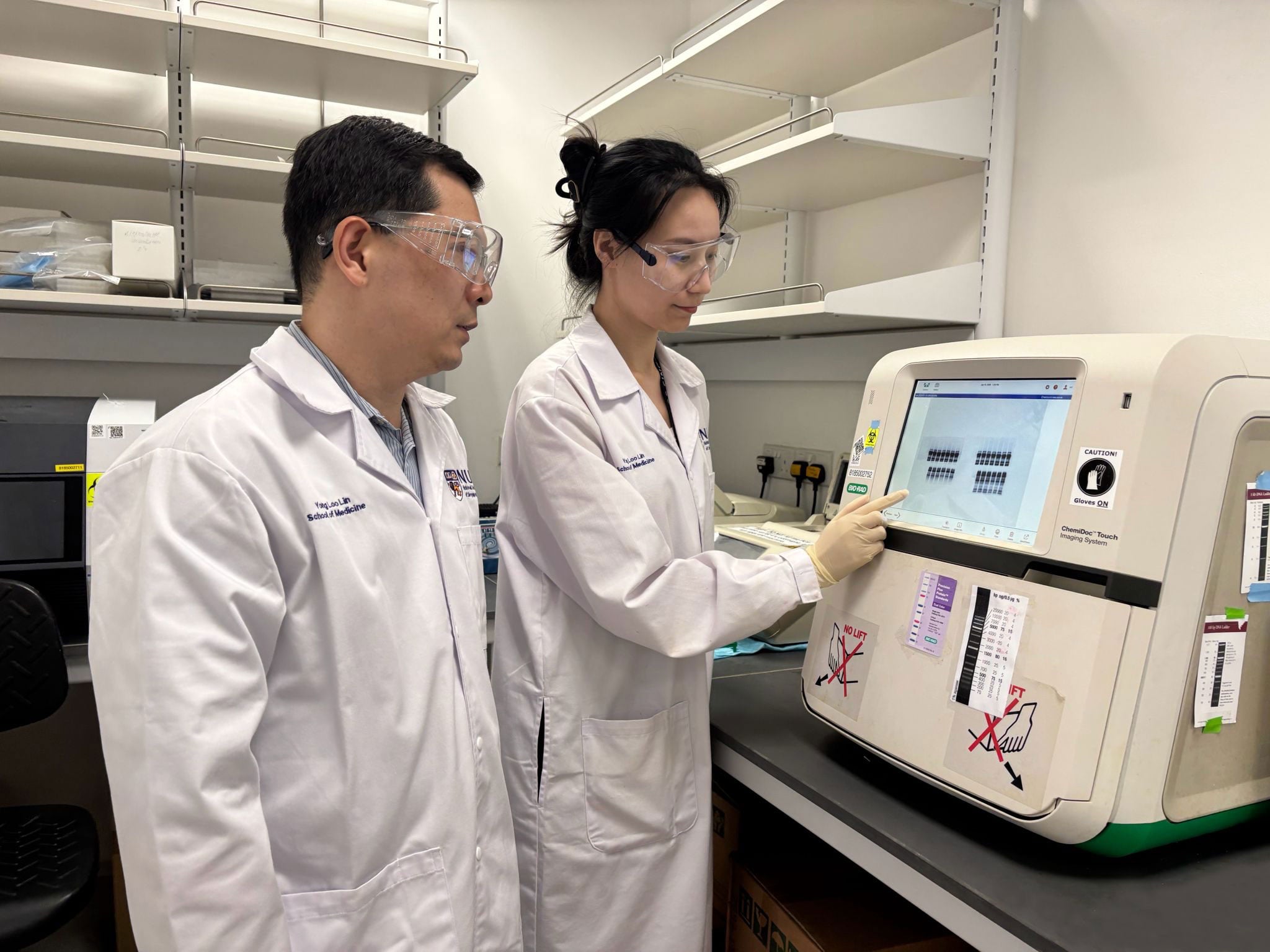
The research was led by Assistant Professor Ong Sek Tong Derrick, with Dr Liang Yajing as first author, from the Department of Physiology and the Healthy Longevity Translational Research Programme at NUS Medicine. The team set out to understand why neural stem cells lose their ability to regenerate over time, and how this decline might be reversed to protect cognitive function during aging.
How DMTF1 Supports Neural Stem Cells
To investigate DMTF1’s role, the team studied neural stem cells from human sources and from laboratory models engineered to mimic premature aging. They then used genome binding and transcriptome analyses to map where DMTF1 acts across the genome and to measure how it reshapes gene activity, helping clarify the chain of events that links this factor to stem cell maintenance.
The team focused on how DMTF1 behaves in neural stem cells with damaged telomeres and how this might relate to regeneration strategies. Telomeres are the protective ends of chromosomes that shorten each time a cell divides, and their progressive shortening is widely recognized as a sign of aging.
The researchers observed that DMTF1 levels were reduced in “aged” neural stem cells. Importantly, reactivating DMTF1 alone was enough to restore the cells’ ability to regenerate, pointing to its potential as a therapeutic target for maintaining neural stem cell function in the aging brain.
In addition, the study revealed a previously unknown role for DMTF1 in regulating helper genes (Arid2 and Ss18) that allow DNA to become more accessible and activate other genes involved in cell growth. When these helper genes are not properly regulated, neural stem cells lose their capacity to renew themselves.
Implications for Cognitive Health
“Impaired neural stem cell regeneration has long been associated with neurological aging. Inadequate neural stem cell regeneration inhibits the formation of new cells needed to support learning and memory functions. While studies have found that defective neural stem cell regeneration can be partially restored, its underlying mechanisms remain poorly understood,” said Asst Prof Ong. “Understanding the mechanisms for neural stem cell regeneration provides a stronger foundation for studying age-related cognitive decline.”
The study findings also suggest approaches that enhance expression or activity of DMTF1 may have therapeutic potential in reversing or delaying aging-associated decline of neural stem cell function.
While the preliminary findings stemmed mainly from in vitro experiments, the researchers hope to explore if elevating DMTF1 expression can regenerate neural stem cell numbers as well as improve learning and memory under the conditions of telomere shortening and natural aging, without increasing the risk of brain tumors. The long-term objective is to discover small molecules that can enhance DMTF1 expression and activity to improve the function of aged neural stem cells.
“Our findings suggest that DMTF1 can contribute to neural stem cell multiplication in neurological aging,” Dr Liang said. “While our study is in its infancy, the findings provide a framework for understanding how aging-associated molecular changes affect neural stem cell behavior, and may ultimately guide the development of successful therapeutics.”
Reference: “DMTF1 up-regulation rescues proliferation defect of telomere dysfunctional neural stem cells via the SWI/SNF-E2F axis” by Yajing Liang, Oleg V. Grinchuk, Nadia Omega Cipta, Yingying Zeng, You Heng Chuah, Jeehyun Yoon, Zi Jian Khong, Hui Ying Chow, Winanto Ng, Chin Tong Ong, Shuo-Chien Ling, Shi-Yan Ng, Yuin-Han Loh and Derrick Sek Tong Ong, 2 January 2026, Science Advances.
DOI: 10.1126/sciadv.ady5905
Never miss a breakthrough: Join the SciTechDaily newsletter.
Follow us on Google and Google News.
6 Comments
I would be happy to partake in any clinicals
Let me gamble the possible destruction of my brain for infinite knowledge 😈
Would these increditable new mental and physical health
We could use that. Stuff asap
They can’t even find a cure for Alzheimer’s, Parkinson’s.. Or cancer…. So much B. S. .
Lip service and no solutions.
Any applicability to peripheral neutopathy?
Not clear here, the mechanism of neuropathy is different from aging but who knows?