
Close Menu
    Facebook X (Twitter) Instagram
    SciTechDaily
    • Biology
    • Chemistry
    • Earth
    • Health
    • Physics
    • Science
    • Space
    • Technology
    Facebook X (Twitter) Pinterest YouTube RSS
    SciTechDaily
    Home»Health»Beyond Plaques and Tangles: Scientists Discover Key to Halting Brain Damage in Alzheimer’s
    Health

    Beyond Plaques and Tangles: Scientists Discover Key to Halting Brain Damage in Alzheimer’s

    By Flemish Institute for BiotechnologyNovember 16, 20241 Comment3 Mins Read
    Facebook Twitter Pinterest Telegram LinkedIn WhatsApp Email Reddit
    Share
    Facebook Twitter LinkedIn Pinterest Telegram Email Reddit
    Alzheimers Dementia Brain Disease Concept
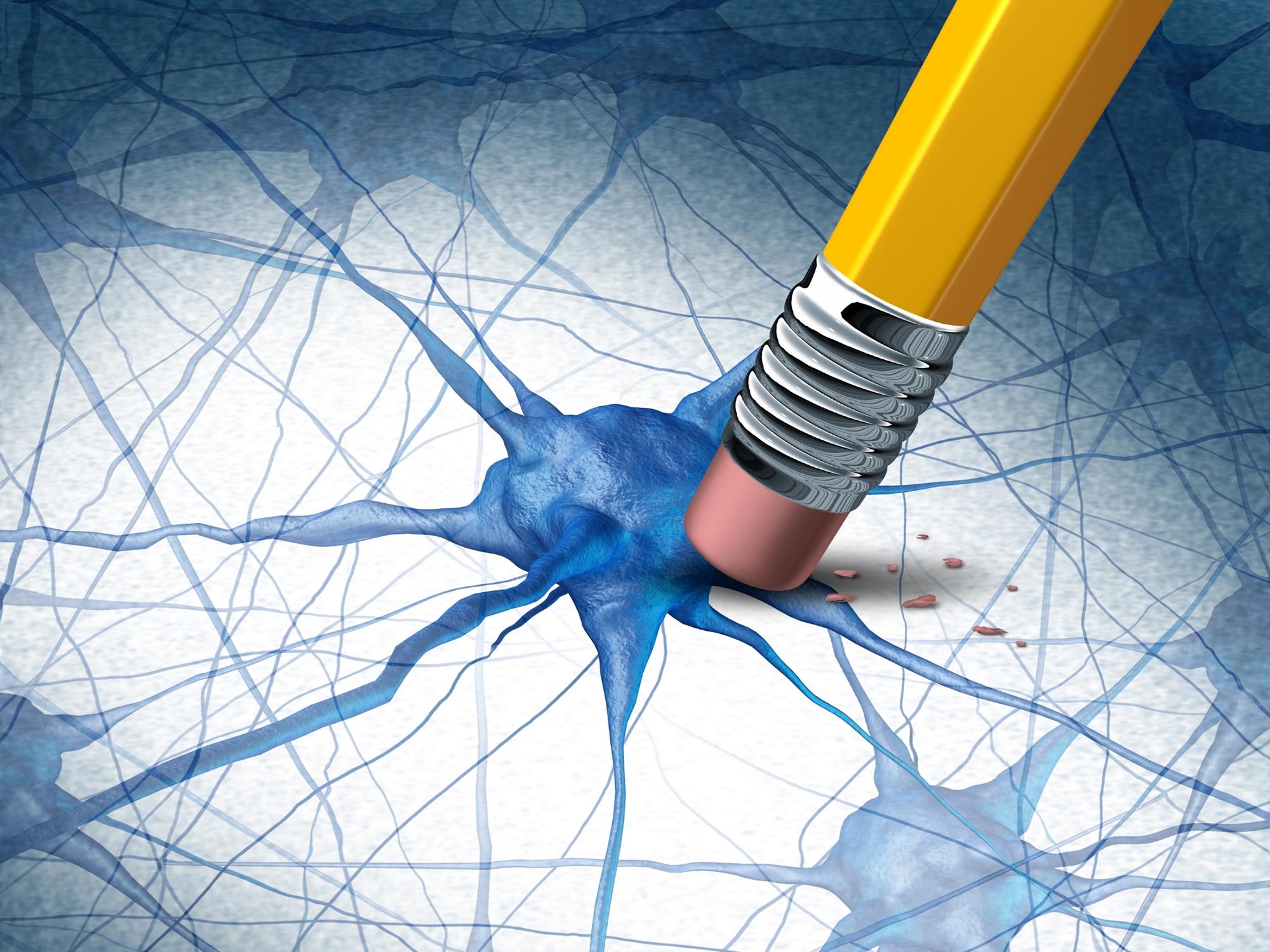
    Researchers at KU Leuven and VIB have uncovered a biochemical process, necroptosis, responsible for nerve cell death in Alzheimer’s disease, particularly related to tau protein. By using specific inhibitors, they prevented nerve cell loss and improved memory in mouse models, suggesting a new path for Alzheimer’s therapies beyond amyloid plaque removal.

    Researchers discover protective pathway against Alzheimer’s in mice

    Alzheimer’s disease is marked by the gradual degeneration of nerve cells, resulting in memory and cognitive decline. A research team at KU Leuven and VIB investigated the molecular sequence driving this cellular breakdown, discovering specific inhibitors that can prevent nerve cell loss in various mouse models of the disease.

    The findings open up new research avenues in the search for therapies that could halt or prevent the accumulation of brain damage occurring in Alzheimer’s.

    Alzheimer’s disease, the leading cause of dementia, affects over 55 million people worldwide. The disease is characterized by the buildup of amyloid-beta plaques and tau protein tangles in the brain, which disrupt cell communication and lead to the widespread death of nerve cells. The consequences of this massive cell loss are the heartbreaking cognitive decline and memory loss for which the condition is well known.

    Current Treatments and Their Limitations

    Despite extensive research, for decades the only treatments available for Alzheimer’s offered temporary symptom management at best. Recently, however, the first drugs designed to target amyloid plaques have received (controversial) approval. While these new treatments successfully remove amyloid plaques, their clinical benefit in terms of improving cognition and memory has yet to be convincingly demonstrated. A conundrum underscoring once more the need to prevent nerve cell death to stop the cognitive impairment that affects Alzheimer’s patients.

    In a new study published in Science Translational Medicine, a team of researchers led by Prof. Dietmar Thal, Prof. Bart De Strooper, and Dr. Sriram Balusu demonstrates they can indeed prevent loss of nerve cells in a mouse model of Alzheimer’s using specific inhibitors.

    Understanding Necroptosis

    “Nerve cells die in the context of Alzheimer’s disease as a consequence of a well-defined sequence of biochemical reactions, called ‘necroptosis’,” explains Balusu, a postdoctoral researcher in the lab of De Strooper at the VIB-KU Leuven Center for Brain & Disease Research.

    Last year, Balusu and his colleagues already announced they had mapped triggers for such necroptosis in human nerve cells transplanted into Alzheimer’s affected mouse brains.

    To better understand the neurodegenerative process, and how it could be halted, the team now further explored the role of necroptosis in different mouse models for Alzheimer’s. They found that necroptosis was activated in mouse models with tau tangles but not in those that only exhibit amyloid plaques.

    “Our results suggest that there exists a disease-related, delayed form of necroptosis, that is activated by a specific form of tau,” explains Thal, professor Neuropathology at KU Leuven.

    Importantly, specific inhibitors intercepting activation of necroptosis not only prevent nerve cell loss, but also improve the social recognition memory of the mice.

    De Strooper (VIB, KU Leuven, UK DRI): “Our findings indicate that necroptosis inhibition should be investigated further as a potential therapeutic strategy that could complement current amyloid and tau-directed therapies for treating Alzheimer’s disease.”

    Reference: “Inhibition of an Alzheimer’s disease–associated form of necroptosis rescues neuronal death in mouse models” by Marta J. Koper, Sebastiaan Moonen, Alicja Ronisz, Simona Ospitalieri, Zsuzsanna Callaerts-Vegh, Dries T’Syen, Sabine Rabe, Matthias Staufenbiel, Bart De Strooper, Sriram Balusu and Dietmar Rudolf Thal, 30 October 2024, Science Translational Medicine.
    DOI: 10.1126/scitranslmed.adf5128

    Never miss a breakthrough: Join the SciTechDaily newsletter.
    Follow us on Google and Google News.

    Alzheimer's Disease Brain Dementia Molecular Biology Neurology Popular
    Share. Facebook Twitter Pinterest LinkedIn Email Reddit

    Related Articles

    Alzheimer’s Breakthrough: Scientists Discover Key Protein May Prevent Toxic Protein Clumps in the Brain

    New Study Challenges Alzheimer’s Theories: It’s Not Just About Plaques

    Breakthrough Alzheimer’s Drug Rewires the Brain Instead of Just Clearing Plaques

    This Simple Habit Could Cut Your Risk of Dementia by 30%

    New Study Challenges Decades of Alzheimer’s Understanding With Microtubule Discovery

    Brain Blood Flow May Predict Alzheimer’s Risk Before Memory Loss

    Scientists Uncover the Hidden Mechanism Behind FDA-Approved Alzheimer’s Drug

    Alzheimer’s Breakthrough: New Therapeutic Target Found

    A Diabetes Drug Could Protect Against Alzheimer’s

    1 Comment

    1. Marvin Wulff on November 16, 2024 8:11 pm

      Don’t just talk the talk, walk the walk

      Reply
    Leave A Reply Cancel Reply

    • Facebook
    • Twitter
    • Pinterest
    • YouTube

    Don't Miss a Discovery

    Subscribe for the Latest in Science & Tech!

    Trending News

    The Universe Is Expanding Too Fast and Scientists Can’t Explain Why

    “Like Liquid Metal”: Scientists Create Strange Shape-Shifting Material

    Early Warning Signals of Esophageal Cancer May Be Hiding in Plain Sight

    Common Blood Pressure Drug Shows Surprising Power Against Deadly Antibiotic-Resistant Superbug

    Scientists Uncover Dangerous Connection Between Serotonin and Heart Valve Disease

    Scientists Discover a “Protector” Protein That Could Help Reverse Hair Loss

    Bone-Strengthening Discovery Could Reverse Osteoporosis

    Scientists Uncover Hidden Trigger Behind Stem Cell Aging

    Follow SciTechDaily
    • Facebook
    • Twitter
    • YouTube
    • Pinterest
    • Newsletter
    • RSS
    SciTech News
    • Biology News
    • Chemistry News
    • Earth News
    • Health News
    • Physics News
    • Science News
    • Space News
    • Technology News
    Recent Posts
    • Scientists Overcome Major Quantum Bottleneck, Potentially Transforming Teleportation and Computing
    • Quantum Physics’ Strangest Problem May Hold the Key to Time Itself
    • Scientists Create “Liquid Gears” That Spin Without Touching
    • The Simple Habit That Could Help Prevent Cancer
    • Forgotten Medicinal Plant Shows Promise in Fighting Dangerous Superbugs
    Copyright © 1998 - 2026 SciTechDaily. All Rights Reserved.
    • Science News
    • About
    • Contact
    • Editorial Board
    • Privacy Policy
    • Terms of Use

    Type above and press Enter to search. Press Esc to cancel.