
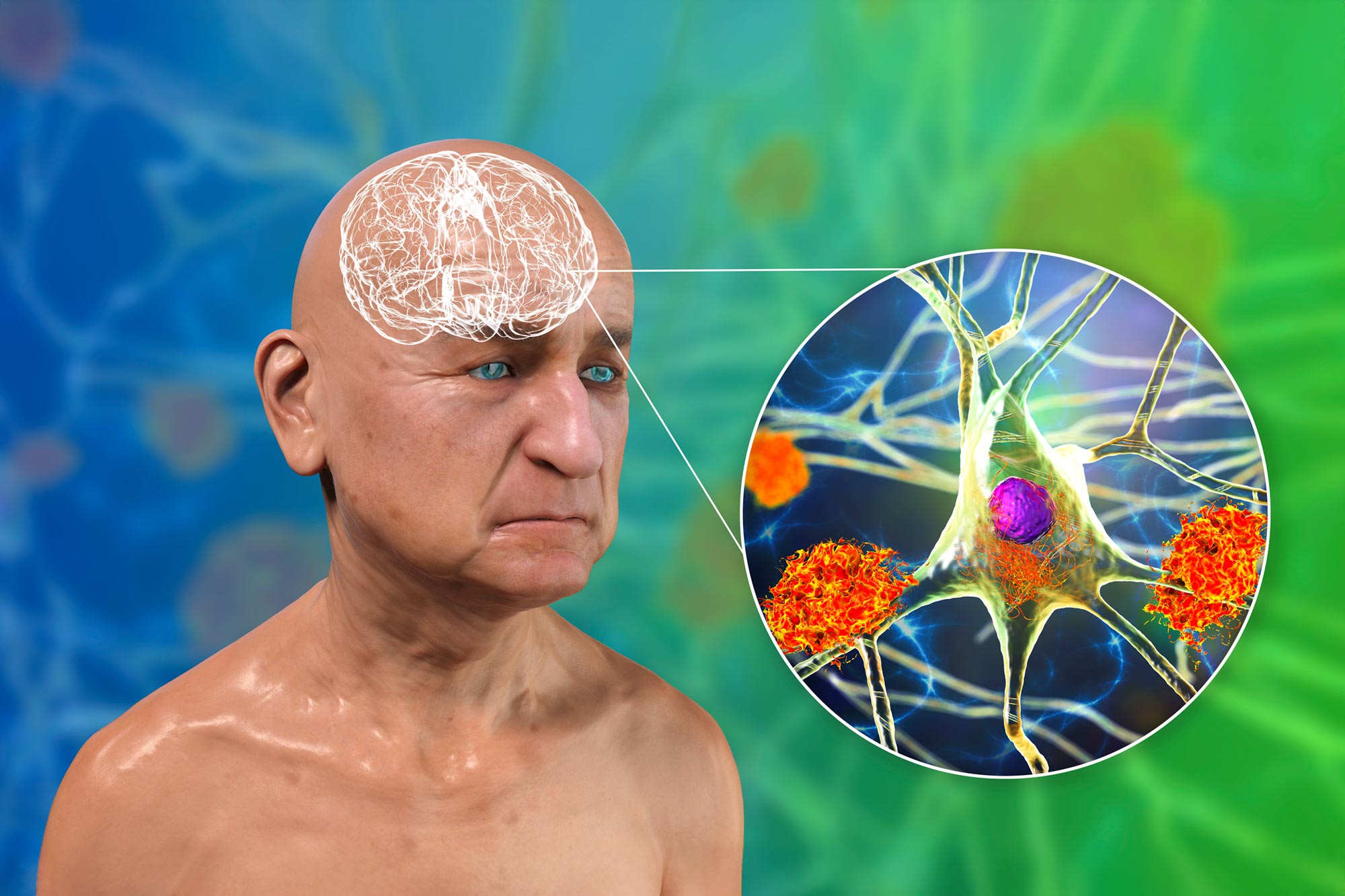
A new study suggests that two of Alzheimer’s disease’s most debated players may be more closely connected than they first appear.
Alzheimer’s disease is the most common cause of dementia, but scientists still do not fully agree on what starts the damage. For years, the debate has centered on two major suspects: amyloid beta, which builds up in plaques, and tau, a protein that can form tangles inside neurons. A new study argues that both may be part of the same problem, and that the connection may lie in one of the cell’s most important support systems.
Inside neurons, microtubules act like tiny internal tracks. They help maintain the cell’s structure and move vital cargo through long, delicate extensions such as axons. Tau normally helps those tracks function properly. The new research suggests amyloid beta may interfere with that job by competing with tau for the same binding sites on microtubules.
Evidence From Binding and Competition Experiments
To test that idea, Ryan R. Julian and colleagues used fluorescence polarization to measure how strongly fluorescently labeled amyloid beta 1-40 and 1-42 bind to both individual tubulin proteins and intact microtubules. They found that amyloid beta binds microtubules with affinity in the same general range reported for tau. The team also used three sequence alignment methods and found structural similarities between amyloid beta and the microtubule-binding regions of tau, which helps explain why both proteins may target the same cellular surface.
The strongest evidence came from competition experiments. When the researchers added recombinant human tau, amyloid beta binding to microtubules dropped, but it did not disappear. That pattern fits with shared or overlapping binding sites rather than completely separate ones.
This offers a possible answer to a long-running puzzle in Alzheimer’s research. Amyloid beta has dominated the field for decades, in part because certain inherited mutations that affect amyloid processing can cause early-onset Alzheimer’s. But tau changes often track more closely with cognitive decline, and tau-based biomarkers are among the best indicators of disease. Those two observations have been difficult to reconcile.
The new study proposes that amyloid beta may help trigger tau-related damage by displacing tau from microtubules. In that model, amyloid beta buildup is still important, but not mainly because it forms clumps. Instead, its more immediate danger may be that it disrupts the machinery neurons rely on to stay healthy. Once tau is pushed off microtubules, it may become more likely to undergo harmful changes such as phosphorylation and aggregation, while the microtubules themselves become less stable and less functional.
A Possible Explanation for Past Contradictions
That idea could also help explain why amyloid plaques alone often do not match the severity of symptoms. If the earliest toxic event happens before large deposits form, then visible plaques may tell only part of the story. It may also help explain why so many amyloid-focused therapies have struggled to deliver strong long-term clinical results.
The paper also fits with earlier studies that hinted amyloid beta could interact with tubulin or microtubules, affect microtubule assembly, or appear in the same parts of cells as these structures. What this work adds is a more direct framework for understanding those scattered findings as part of one mechanism.
According to the authors, this microtubule nexus hypothesis reconciles longstanding contradictions between amyloid-centric and tau-centric models of Alzheimer’s disease and suggests new therapeutic strategies targeting the competitive displacement of tau from microtubules.
Reference: “The microtubule nexus linking amyloid beta and tau: A simple and unifying theory for the underlying cause of Alzheimer’s disease” by Thomas A Shoff, Maxence Derbez-Morin, Peishan Cai and Ryan R Julian, 17 March 2026, PNAS Nexus.
DOI: 10.1093/pnasnexus/pgag034
Never miss a breakthrough: Join the SciTechDaily newsletter.
Follow us on Google and Google News.