
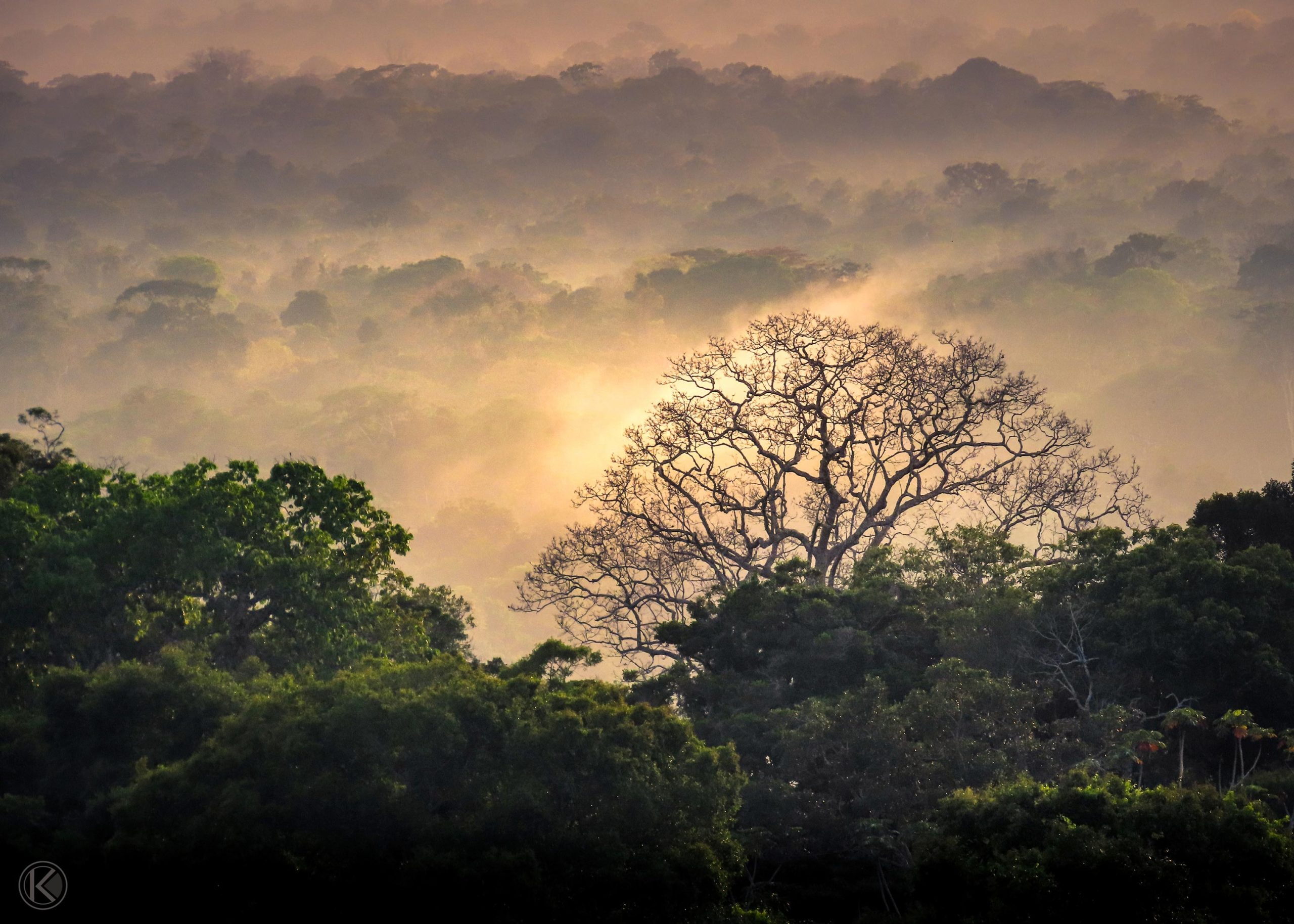
A sweeping study of tropical insects found that many species may struggle to survive rising global temperatures.
Scientists warn that heat stress could threaten vast numbers of insects in regions like the Amazon, potentially disrupting entire ecosystems.
Tropical Insects Face Growing Heat Threat From Climate Change
“Current evaluations of the heat tolerance of insects such as moths, flies, and beetles paint a differentiated – and at the same time alarming – picture,” says study author Dr. Kim Holzmann, a researcher at the Chair of Animal Ecology and Tropical Biology at Julius-Maximilians-Universität Würzburg (JMU).
The new research found that insects do not automatically adjust to hotter environments as temperatures rise. “While species at higher altitudes can increase their heat tolerance, at least in the short term, many lowland species largely lack this ability,” Holzmann explains.
Limited Ability To Adapt to Rising Temperatures
The study, published in Nature, shows that many tropical insects may have only a small capacity to adapt to climate change. Researchers warn that increasing temperatures could seriously affect insect populations, especially in tropical regions that contain some of the world’s richest biodiversity.
“Rising temperatures could have a massive impact on insect populations, especially in regions with the world’s highest biodiversity,” says Dr. Marcell Peters, an animal ecologist at the University of Bremen and coauthor of the study. “Since insects fulfill central functions in ecosystems as pollinators, decomposers, and predators, there is a threat of far-reaching consequences for entire ecosystems.”

Protein Stability May Limit Heat Tolerance
The scientists also found major differences in heat tolerance among insect groups. According to the team, these differences are connected to the structure and thermal stability of proteins.
“These properties are relatively conserved in the evolutionary family tree of insects and can only be changed to a limited extent,” Peters says. “The results suggest that fundamental characteristics of heat tolerance are deeply rooted in biology and cannot be quickly adapted to new climatic conditions.”
Researchers say the outlook for the Amazon is especially concerning. “If global ecosystems continue to warm unabated, expected future temperatures will lead to critical heat stress for up to half of the insect species there,” Holzmann says.
Scientists Studied More Than 2,000 Insect Species
Insects make up roughly 70 percent of all known animal species, and most of them live in tropical regions. Despite their importance, scientists still have limited information about how tropical insects respond to increasing heat.
One reason is the lack of experimental data on temperature tolerance, along with the limited amount of research available for many insect groups. The international research project was supported by funding from the German Research Foundation.
To carry out the study, scientists examined the heat tolerance limits of more than 2,000 insect species. Data was collected in 2022 and 2023 across different elevations in East Africa and South America, including cool mountain forests, tropical rainforests, and lowland savannas.
The researchers also analyzed the genomes of many species to investigate protein stability and better understand why some insects can withstand heat more effectively than others.
Reference: “Limited thermal tolerance in tropical insects and its genomic signature” by Kim L. Holzmann, Thomas Schmitzer, Antonia Abels, Marko Čorkalo, Oliver Mitesser, Mareike Kortmann, Pedro Alonso-Alonso, Yenny Correa-Carmona, Andrea Pinos, Felipe Yon, Mabel Alvarado, Adrian Forsyth, Alejandro Lopera-Toro, Gunnar Brehm, Alexander Keller, Mark Otieno, Ingolf Steffan-Dewenter and Marcell K. Peters, 4 March 2026, Nature.
DOI: 10.1038/s41586-026-10155-w
Never miss a breakthrough: Join the SciTechDaily newsletter.
Follow us on Google and Google News.
3 Comments
How did insects survive in the time of the dinosaurs then? It was much hotter then.
“While species at higher altitudes can increase their heat tolerance, at least in the short term, many lowland species largely lack this ability,”
Why might that be the case? Might it have something to do with evolution? Might the fact that of the various climate zones, the equatorial tropics appear to be the most stable? It is generally accepted that the atmosphere over the terrestrial Earth is warming currently at a rate of less than 0.2 degrees C per decade, on average, with most of the warming in the polar regions, at night, and in the Winter at mid- and high-latitudes. There seems to be a limit for tropical waters of about 30 degrees C for open, deep waters because above that temperature rain clouds develop, cooling the ocean surfaces and the winds that blow over the nearby lands.
“IF global ecosystems continue to warm unabated, expected future temperatures will lead to critical heat stress for up to half of the insect species there,”
The unstated assumption is that the temperatures in the tropics will be similar to the global average, with the same trend and no negative feedback loops (such as cloudiness) to limit the temperature increase. That is probably ‘an assumption too far.’
Just because something ‘could’ happen doesn’t mean it will. “Could” has become a catch-all word, used all too frequently in climatology, to describe events of indeterminable but low probability, which however, is considered generally to not be impossible. It is not unlike the claim that our sun ‘could’ become a supernova overnight and not rise the next morning as is expected. Do we worry about such a thing? Not mentally well-balanced people.
Mark Twain famously said, “There is something fascinating about science. One gets such wholesale returns of conjecture out of such a trifling investment of fact.” That is exactly what happens when a biologist states a fact about protein instability related to heat, and fails to consider whether such temperatures have a reasonable probability of ever occurring in the tropics. To create credibility, one has to first logically or empirically demonstrate that for a functional relationship where X drives or causes Y, that X is probable to occur in the functional range. The authors haven’t done that! They are simply making an assumption and then coming to a scary but unwarranted prediction.
Are there natural limits on temperatures? Certainly! The world record <57 deg C temperature recorded in Darth (purposely misspelled to circumvent the AI censor) Valley more than 100-years ago demonstrates the skewed temperature graph is approximately bell-shaped with the high (and low) temperatures being on the tails of the curve. While the average global temperature is increasing, I would appreciate it if anyone reading this can provide a study indicating that either extreme is increasing. The long-standing record (~3X the commonly accepted definition for a climate baseline) suggests it is not. At first blush, it appears that the upper limit on Earth is about 57 deg C even if the average is increasing because the probability curve is increasing on the low end and thus decreasing on the high end. It takes more energy to heat humid air, so even the upper-limit may be [feel free to replace "may be" with "could"] lowering as Earth warms.
From the DOI link to the original paper: “In total, 15% (SSP1-2.6), 37% (SSP3-7.0) and 47% (SSP5-8.5) of all future air temperatures will be critical for the group of more heat-sensitive insects …”
The IPCC has recently acknowledged that the SSP5-8.5 future CO2 emissions scenario (and similar 8.5 scenarios) are improbable long-term: https://principia-scientific.com/climate-sciences-biggest-shift-in-decades-ipccs-rcp8-5-is-officially-dead/
Even so, there is no agreement on the Climate Sensitivity for a doubling of CO2, so the claims about the warming for all emissions scenarios have to be taken with a large grain of salt. Furthermore, the unstated assumption is again that the tropics will experience the global average increase, which is obviously a false assumption based on the claim that the Arctic is warming 2-4X faster than the rest of the world.
The authors have done a lot of what appears to be otherwise good work. It is unfortunate that their claims are degraded by their unstated assumptions that are poorly supported.