
Close Menu
    Facebook X (Twitter) Instagram
    SciTechDaily
    • Biology
    • Chemistry
    • Earth
    • Health
    • Physics
    • Science
    • Space
    • Technology
    Facebook X (Twitter) Pinterest YouTube RSS
    SciTechDaily
    Home»Earth»Europe’s Forgotten Forests – Scientists Uncover Potential “Biodiversity Hot Spots”
    Earth

    Europe’s Forgotten Forests – Scientists Uncover Potential “Biodiversity Hot Spots”

    By Utah State UniversityMay 7, 2024No Comments4 Mins Read
    Facebook Twitter Pinterest Telegram LinkedIn WhatsApp Email Reddit
    Share
    Facebook Twitter LinkedIn Pinterest Telegram Email Reddit
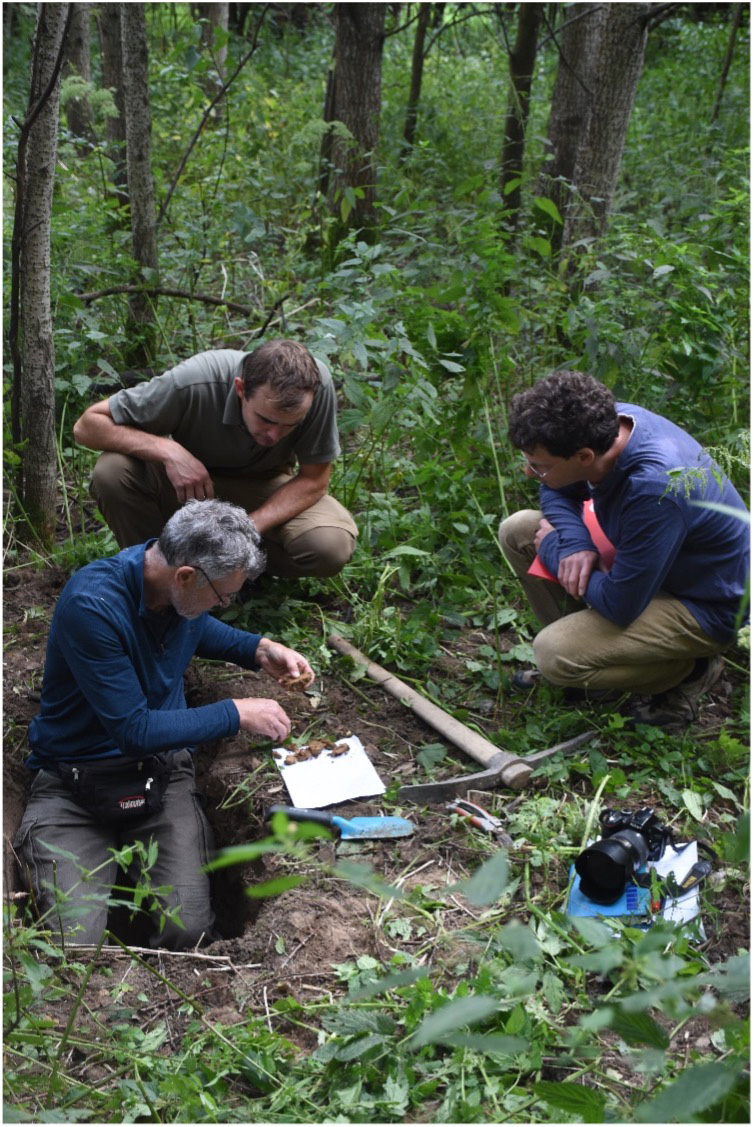
    Research Team Examines Aspen Forest Soils
    The research team examines aspen forest soils to gain a picture of past disturbance patterns left in ancient small charcoal pieces. Credit: P.C. Rogers, Western Aspen Alliance/Utah State University.

    According to an international team of forest scientists, a type of forest that has been largely ignored and neglected shows significant potential for recovery, improving species diversity, and its ability to withstand climate change.

    According to new research, published in the peer-reviewed science journal PLOS ONE, there is ample habitat for the Eurasian aspen, and these environments will continue to be suitable for this “keystone species” as the global climate warms.

    “The Eurasian aspen, and aspen species globally, are home to vast populations of other dependent plants and animals,” said the study’s lead author, Antonin Kusbach, an applied ecologist at Mendel University in Brno, Czechia, also known as the Czech Republic, where the team’s research was conducted. “Additionally, aspen systems regenerate and colonize new areas quickly, so these types of forests are ideally adaptive to increased forest disturbances like fire, diseases, insect infestations, and windstorms, that are widely anticipated under climate warming scenarios.”
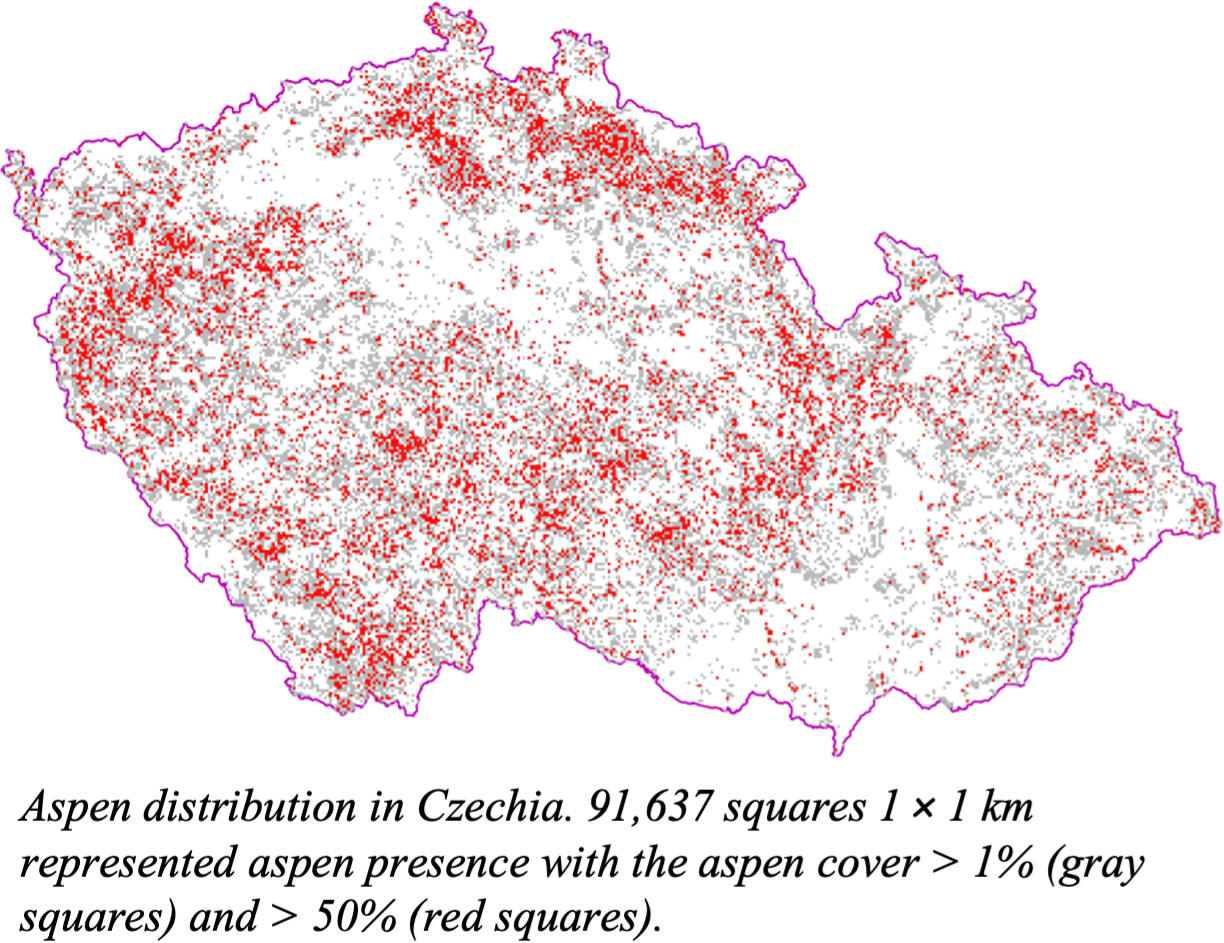
    Aspen Distribution in Czechia
    Aspen distribution in Czechia. 91,637 squares 1 × 1 km represented aspen presence with the aspen cover > 1% (gray squares) and > 50% (red squares). Credit: Paul Rogers

    The scientists conducted a survey of more than four million forest locations using field measurements, remote sensing technology, and sophisticated analytical techniques to better understand historic and potential aspen habitat, termed the “realized niche,” across all of Czechia’s forest terrain, which are similar in make-up to forests throughout central Europe. Aspen forests were once far more widespread across these regions, but commercial forestry, usually favoring monotypic stands of desired conifer species, has altered these habitats.

    It doesn’t have to remain that way.

    “A course correction in European forest management could help reestablish these amazing forests,” said co-author Paul Rogers, of the Western Aspen Alliance, Ecology Center, and Department of Environment and Society at Utah State University. “Within every acre of aspen forest that returns, plant and animal diversity will flourish.”
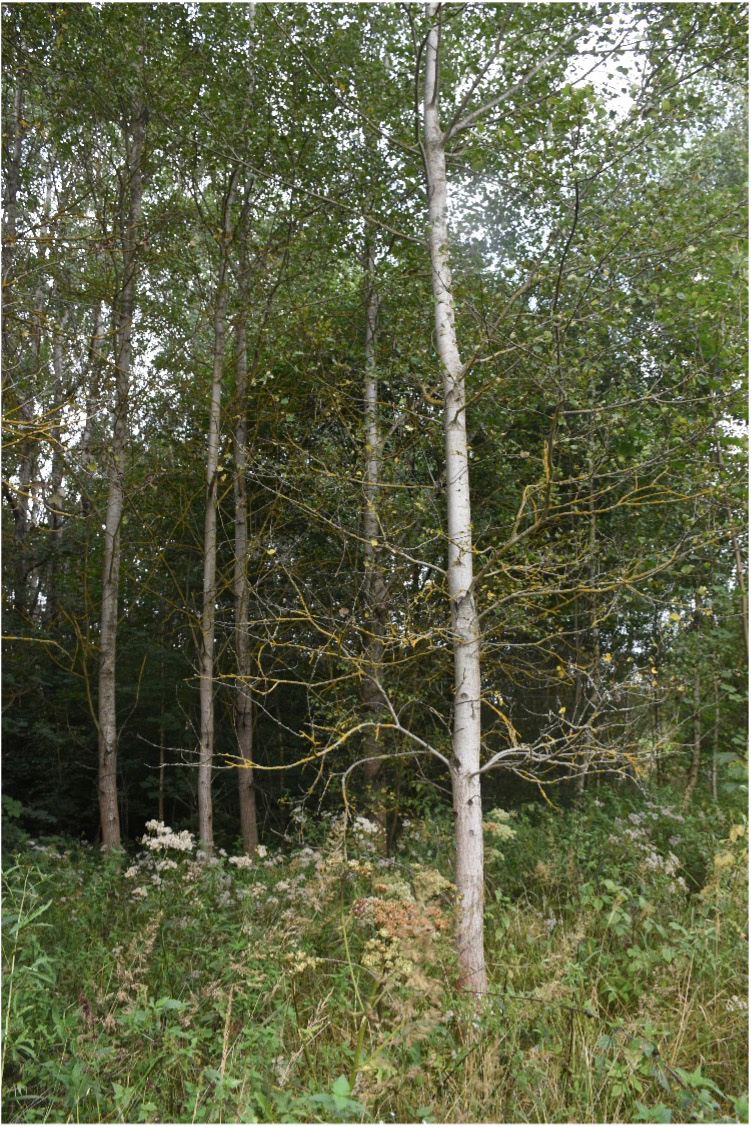
    A Eurasian Aspen in Southern Czechia
    A Eurasian aspen in southern Czechia displays diverse plant community in contrast to conifer-dominated forests. Credit: P.C. Rogers, Western Aspen Alliance/Utah State University.

    The Eurasian aspen, Populus tremula, is one of six species of aspen in the Populus genus, which collectively stretch across much of the Northern hemisphere. Jointly, these species harbor outsized biodiversity relative to surrounding forests. Eurasian aspen spans the breadth of Europe and Asia. The quaking aspen, Populus tremuloides, is the most widely distributed tree in North America, where it is also known as a keystone species, facilitating elevated biodiversity even as climates change.

    “It’s sometimes said that you could walk from coast to coast in North America and never leave the shade of an aspen tree,” Rogers said. “That might not be literally true, but it speaks to the flexibility and adaptability of these forests. Now, we are coming to better understand the great potential aspen have to thrive across Europe, as well.”

    While re-establishing aspen within the tens of millions of hectares of potential habitat across Europe would be a patently difficult endeavor, it may take little more than a “nudge” to get the process started.

    “My personal field observations indicate that after large Norway spruce removal following bark beetle outbreaks, aspen have naturally found their way into the central European forests,” Kusbach said. “So, this might be thought of as a solution that has been hiding in plain sight.”

    Reference: “Eurasian aspen (Populus tremula L.): Central Europe’s keystone species ‘hiding in plain sight’” by Antonín Kusbach, Jan Šebesta, Robert Hruban, Pavel Peška and Paul C. Rogers, 27 March 2024, PLOS ONE.
    DOI: 10.1371/journal.pone.0301109

    Never miss a breakthrough: Join the SciTechDaily newsletter.
    Follow us on Google and Google News.

    Biodiversity Climate Change Ecology Forests Utah State University
    Share. Facebook Twitter Pinterest LinkedIn Email Reddit

    Related Articles

    Let Them Burn? How Wildfire Restored a Lost Forest Ecosystem in Yosemite

    California Biodiversity “Hotspots” Threatened – Provide Habitat for Rare and Endangered Species

    Using Gene Reserves to Protect Rare Species From Climate Change

    Species Come and Go – Their Ecosystems Persist Over Millions of Years

    Four Steps for Earth: A Holistic Approach to Transform Humanity’s Relationship With Nature and Save the Planet

    Scientists Unravel How and Why Amazon Trees Die & Why Tree Mortality Is Increasing

    “Zombie Fires” in Peatlands, Which Release Devastating Amounts of Carbon, Could Be Dampened by New Findings

    Ecologist Warns: Planting Trees Is No Panacea for Climate Change

    How Much Carbon Can Tropical Forests Absorb?

    Leave A Reply Cancel Reply

    • Facebook
    • Twitter
    • Pinterest
    • YouTube

    Don't Miss a Discovery

    Subscribe for the Latest in Science & Tech!

    Trending News

    Scientists May Have Found the Key to Jupiter and Saturn’s Moon Mystery

    Scientists Uncover Brain Changes That Link Pain to Depression

    Saunas May Do More Than Raise Body Temperature – They Activate Your Immune System

    Exercise in a Pill? Metformin Shows Surprising Effects in Cancer Patients

    Hidden Oceans of Magma Could Be Protecting Alien Life

    New Study Challenges Alzheimer’s Theories: It’s Not Just About Plaques

    Artificial Sweeteners May Harm Future Generations, Study Suggests

    Splashdown! NASA Artemis II Returns From Record-Breaking Moon Mission

    Follow SciTechDaily
    • Facebook
    • Twitter
    • YouTube
    • Pinterest
    • Newsletter
    • RSS
    SciTech News
    • Biology News
    • Chemistry News
    • Earth News
    • Health News
    • Physics News
    • Science News
    • Space News
    • Technology News
    Recent Posts
    • This Small Change to Your Exercise Routine Could Be the Secret to Living Longer
    • Physicists Discover a Strange New Kind of One-Dimensional Particle
    • Scientists Discover Unexpected Climate Benefit Hidden in Forest Soils
    • The Grand Canyon’s “Swiss Cheese” Rocks Hold a Critical Secret
    • Scientists Discover 430,000-Year-Old Wooden Tools, Rewriting Human History
    Copyright © 1998 - 2026 SciTechDaily. All Rights Reserved.
    • Science News
    • About
    • Contact
    • Editorial Board
    • Privacy Policy
    • Terms of Use

    Type above and press Enter to search. Press Esc to cancel.