
Do you ever wonder how many stars are in the sky? How many are in our Galaxy, the Milky Way? What about in the entire Universe?
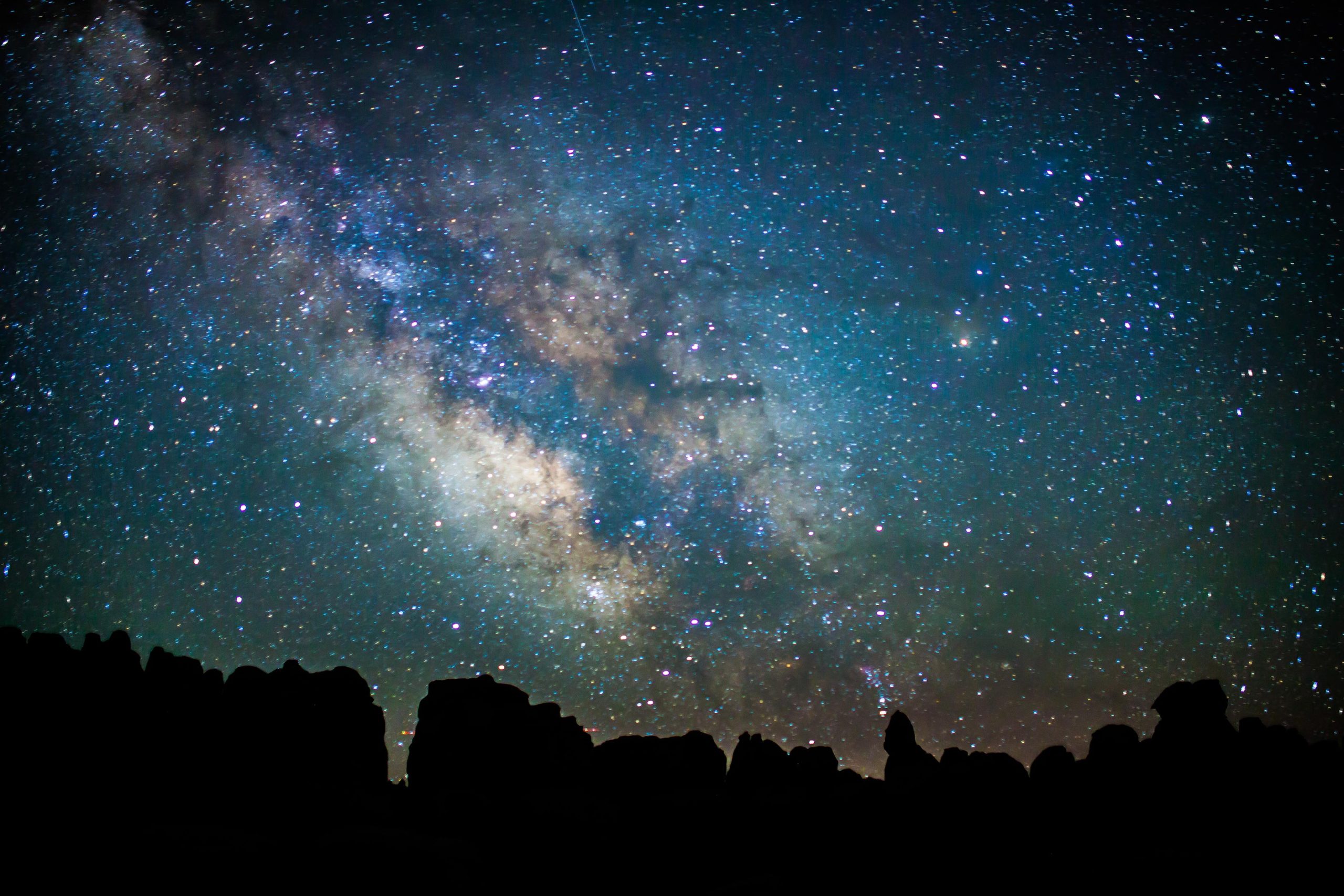
Look up at the sky on a clear night, and you’ll see thousands of stars – about 6,000 or so.
But that’s only a tiny fraction of all the stars out there. The rest are too far away for us to see them.

The Universe, Galaxies, Stars
Yet astronomers like me have figured out how to estimate the total number of stars in the universe, which is everything that exists.
Scattered throughout the universe are galaxies – clusters of stars, planets, gas, and dust bunched together.
Like people, galaxies are diverse. They come in different sizes and shapes.
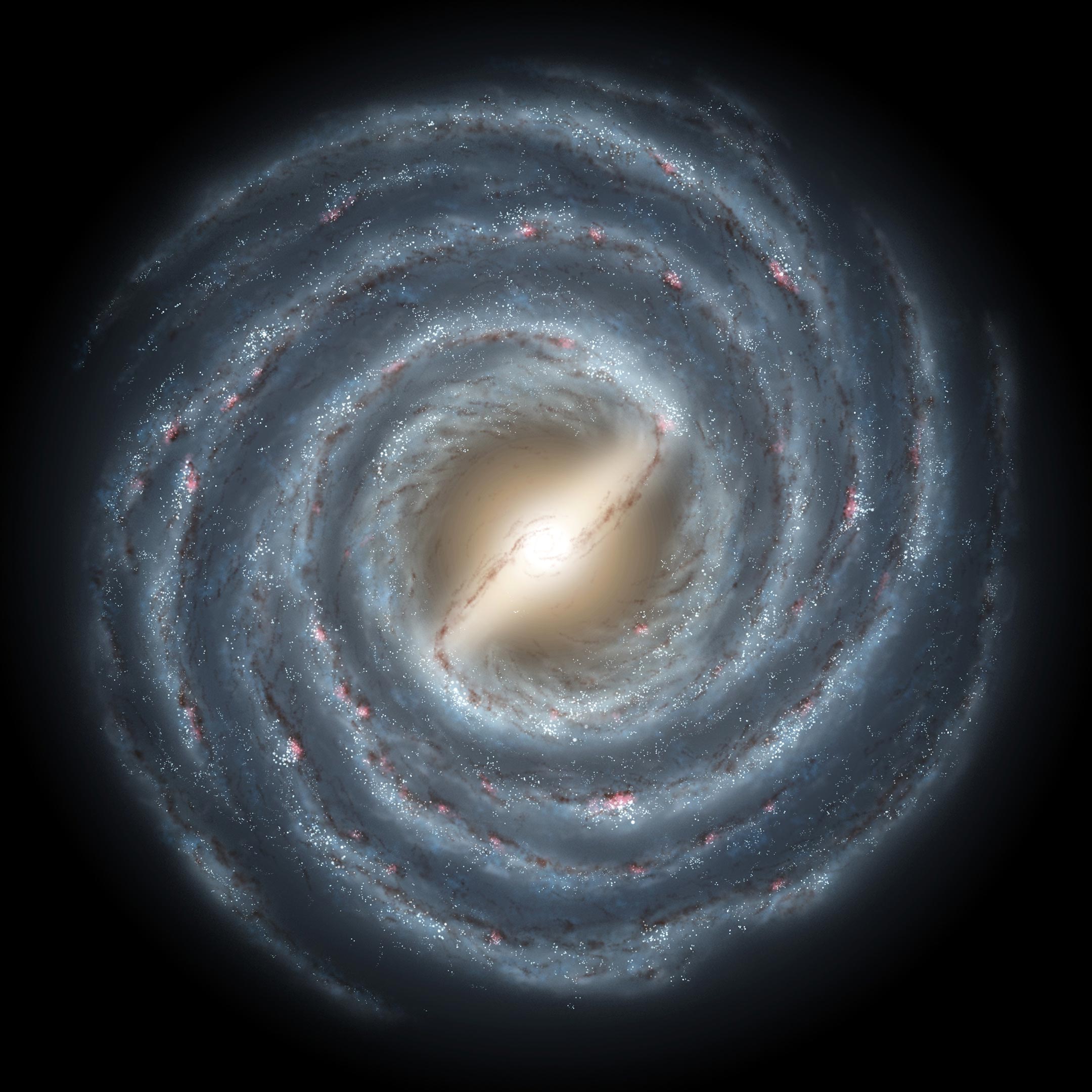
Earth is in the Milky Way, a spiral galaxy; its stars cluster in spiral arms that swirl around the galaxy’s center.
Other galaxies are elliptical – kind of egg-shaped – and some are irregular, with a variety of shapes.
Counting the Galaxies
Before calculating the number of stars in the universe, astronomers first have to estimate the number of galaxies.
To do that, they take very detailed pictures of small parts of the sky and count all the galaxies they see in those pictures.
That number is then multiplied by the number of pictures needed to photograph the whole sky.
The answer: There are approximately 2,000,000,000,000 galaxies in the universe – that’s 2 trillion.

Counting the Stars
Astronomers don’t know exactly how many stars are in each of those 2 trillion galaxies. Most are so distant, there’s no way to tell precisely.
But we can make a good guess at the number of stars in our own Milky Way. Those stars are diverse, too, and come in a wide variety of sizes and colors.
Our Sun, a white star, is medium-sized, medium-weight, and medium-hot: 27 million degrees Fahrenheit at its center (15 million degrees Celsius).
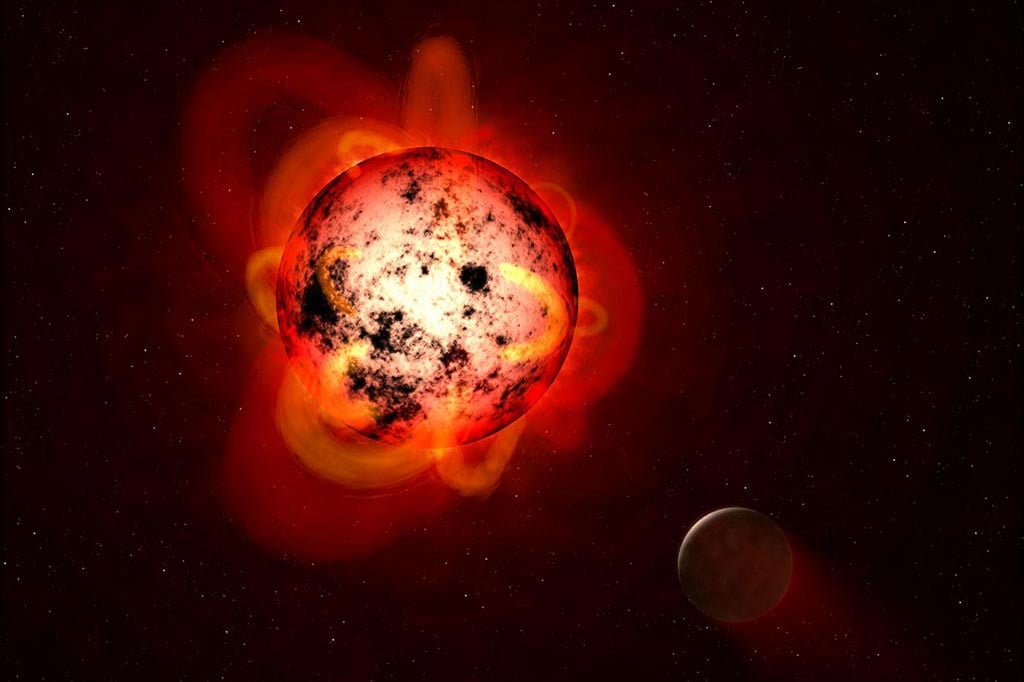
Bigger, heavier, and hotter stars tend to be blue, like Vega in the constellation Lyra. Smaller, lighter, and dimmer stars are usually red, like Proxima Centauri. Except for the Sun, it’s the closest star to us.
An Incredible Number
Red, white, and blue stars give off different amounts of light. By measuring that starlight – specifically, its color and brightness – astronomers can estimate how many stars our Galaxy holds.
With that method, they discovered the Milky Way has about 100 billion stars – 100,000,000,000.
Now the next step. Using the Milky Way as our model, we can multiply the number of stars in a typical galaxy (100 billion) by the number of galaxies in the Universe (2 trillion).
The answer is an absolutely astounding number. There are approximately 200 billion trillion stars in the universe. Or, to put it another way, 200 sextillion.
That’s 200,000,000,000,000,000,000,000!
The number is so big, it’s hard to imagine. But try this: It’s about 10 times the number of cups of water in all the oceans of Earth.
Think about that the next time you’re looking at the night sky – and then wonder about what might be happening on the trillions of worlds orbiting all those stars.
NASA video. Our Milky Way Galaxy: How big is space?
Written by Brian Jackson, Associate Professor of Astronomy, Boise State University.
This article was first published in The Conversation.
Never miss a breakthrough: Join the SciTechDaily newsletter.
Follow us on Google and Google News.
19 Comments
We’re just about to the point of running out of numbers to use to count them!!
Indeed Chuck, that’s where we’ve always been and shall always be! Articles like this are just column fillers that have absolutely nothing verifiable to offer us in terms of accurate information. I could assert the number of electrons in a fart with more accuracy than this wild guesswork.
You could determine the number of electrons in one of your farts very accurately. This estimate is more like getting an idea of number of electrons in all the farts in last 1000 years. It’s not a “guess” — the article explained the method of estimating the number. The number might be off by by a factor of a million times, but it’s worth more than a claim that if you can’t count it using your finger you know nothing.
You could determine the number of electrons in one of your farts very accurately. This estimate is more like getting an idea of number of electrons in all the farts in last 1000 years. It’s not a “guess” — the article explained the method of estimating the number. The number might be off by by a factor of a million times, but it’s worth more than a claim that if you can’t count it using your finger you know nothing.
And I’ll bet they *all* have crappy TV shows.
I agree with John Campbell, Column fillers, and no accurate info, IF…The sun, itself, actually emits a wide range of frequencies of light. … Light that was trying to get to your eyes gets scattered away. So the remaining light has a lot less blue and slightly more red compared with white light, which is why the sun and sky directly around it appear yellowish during the day.
THEN All Star are white and WE only see though a blue filter…
200,000,000,000,000,000,000,000 stara in the sky over 13.8 billion years. That’s an average of 14,492,753,623,188 forming per year for the entire 13.8 billion years of existence. Thats over 39,706,174,310 per day. 1,654,423,929 per hour. For billions of years, 27,573,732 stars had to form per MINUTE! 459,562 per SECOND!!!
Wonder why were not seeing new ones now?
Hello what is going on here
in short, 200 sextillion star in the observable universe.
Well, I have written an incredible children’s book, and it’s an E-book now. This means there is an increased probability that some sentient creature somewhere, sometime in the vast Universe will read it. This is very nice to know.
If you are curious, it’s called: Triggy and the Gift
As someone with very little knowledge of science, I am fascinated by this article. It makes my head swim, though.
Assuming the 200-Sextillion figure is accurate, and the estimate for star-to-planet ratio is 1/3, there could be 600-Sextillion planets in the observable universe. Approximately 20% of those planets are estimated to orbit their stars in the habitable zones.
Thus, there could be at least 40-Sextillion planets orbiting within the habitable zones of their stars.
Scientists estimate that approximately 30% of all planets orbiting within the habitable zones of their stars are rocky—in this case, approximately 12-Sextillion.
That is mindblowing!
Supposing there are 2 Sextillion stars and 20% have habitable planets with reproducing life forms on them. Then how much sex is that? And why when things get close to infinity is it still all about sex?
Astronomy seems to be out of control raftly estimating the number of stars and galaxies far far away in the tune of billions of light years away
What’s the benefit of all of this to the human kind? To be fascinated with illusions of inhabiting those unreachable stars ? Anyway thank you folks for your research or peeping to the stars for my believed in GOD the creator truly been enhanced
He offers the human kind a paradise
The modern telescopes founds exoplanets and earth like in pristine conditions but man can not reach them only GOD can send a human to live there in its purified form .
Why do you not see the power of God the Creator? He is worthy to worshiped.
Amen! He is worthy indeed. Jesus Christ is the Creator. Colossians 1:14-17/Hebrews 1:2
Great stuff!!
Looks like we still have a few superstitious types commenting here, attempting to explain the exquisite beauty of Nature in terms of their primitive Bronze Age fairy tales. Religion was created to explain Nature before science existed, and to control the population through fear. Let’s not continue to deny reality in such a primitive way. Humans need to be smarter than that, evolve beyond superstitions and fear…or we are doomed as a species.
Religion is so stupid.
As much as love information on and about the universe..plus other science stuff…the article confused me with all these damn numbers!! 🙂