
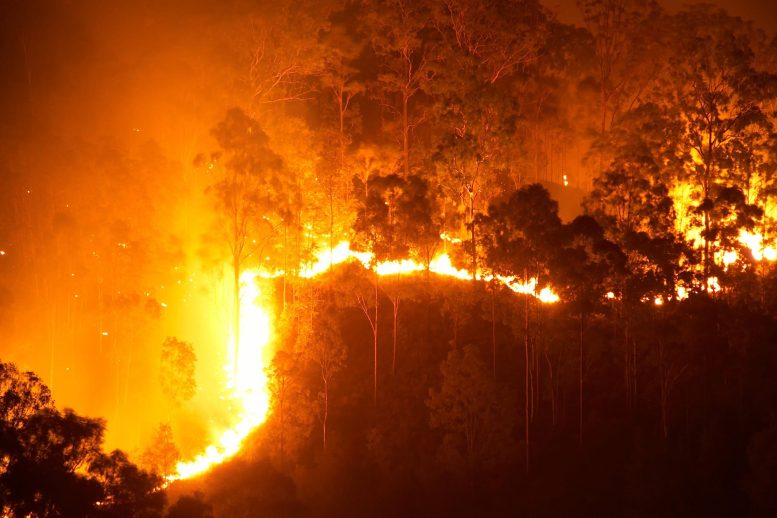
TFires surged in Madagascar’s protected areas during the pandemic lockdowns due to the absence of on-site management.
he number of fires inside protected conservation areas across the island of Madagascar shot up dramatically when COVID-19 lockdowns led to the suspension of any on-site management for five months during 2020.
According to the study’s authors, the findings suggest that governments should consider keeping some staff in protected areas at all times as an “essential service,” even during periods of health crisis and travel restrictions.
The scientists say that more attention must be paid to the management of protected areas, not just expanding their coverage, at the long-delayed convention to set international biodiversity goals later this year.
Madagascar’s Biodiversity and Conservation Challenges
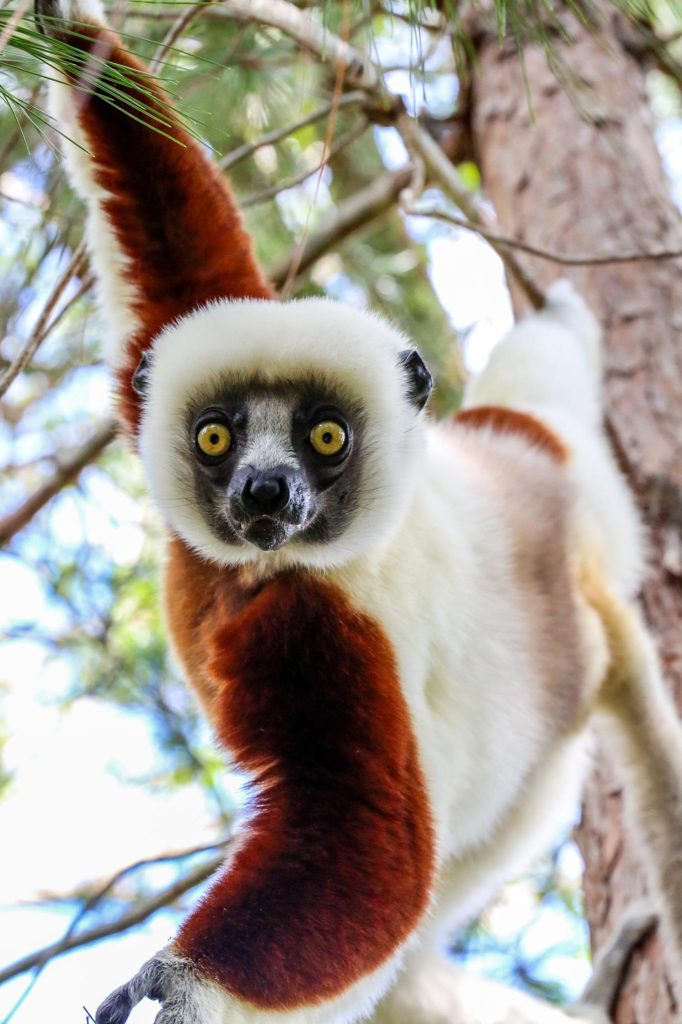
Madagascar is a renowned biodiversity “hotspot,” home to species such as its famous lemur populations that don’t exist anywhere else. The island is also a frontline in the fight between wildlife protection and habitat loss.
The study, published today (May 5, 2022) in the journal Nature Sustainability, is the first to gauge the effects of the pandemic on protected conservation areas.
An international team of scientists led by Helsinki and Cambridge universities used historical and contemporary fire and weather data to predict rates of burning in Madagascar’s protected areas for every month during 2012-2020.
They compared this data modeling to counts of actual blazes collected by satellites to detect periods when fires raged far beyond what might be expected from the climate and previous patterns of burning.
Unprecedented Fire Increases During COVID Lockdowns
When the first lockdowns of 2020 halted the on-site management of protected areas, the number of fires – much of it in threatened forest habitat – soared by 209% in March, 223% in April, 78% in May, 248% in June, and 76% in July.
However, burning quickly returned to normal levels as predicted by the modeling once management operations resumed – despite continued border closures and economic hardships as a result of the ongoing pandemic.
Researchers describe this scale of burning inside protected areas as “unprecedented” in recent Malagasy history. The only comparable periods were during two spells of civil unrest in 2013 and 2018 in the run-up to elections, but even then the fieriest month was just a 134% increase in burning.
“The disruption caused by COVID-19 clearly demonstrates the dramatic impact that interruptions to the management of protected areas can have on habitats,” said senior author Prof Andrew Balmford from the University of Cambridge.
“Over the last twenty years, excess fires in Malagasy protected areas have been limited to occasional blocks of one or two months.
“When all staff were pulled out of protected areas in March 2020 the fires spiked dramatically and continued at a ferocious level for an unprecedented five months, falling away exactly as staff started to return,” he said.
Local Economic Pressures During Lockdowns
While the team says they cannot know for sure what caused all the fires during the early months of COVID-19, lead author Dr. Johanna Eklund from the University of Helsinki said that local communities already struggling economically would have come under further pressure from lockdowns.
“Madagascar has very high rates of poverty, and has a history of conflict between the livelihoods of vulnerable people and saving unique biodiversity,” said Eklund, currently a visiting researcher at Cambridge.
“The pandemic increased economic insecurity for many, so it would not be surprising if this led some to encroach on protected lands while on-site management activities were on hold.”
Eklund suggests that a lack of on-site patrolling to prevent any fires from spreading combined with communities resorting to “swidden” – or slash-and-burn – agriculture may be behind much of the spike in lockdown fires. These techniques clear vegetation for crops and cattle-grazing but are illegal inside protected areas.
“Importantly, the study did not measure fires outside conservation sites, so we cannot measure how much protected areas actually mitigated burning compared to areas without protection,” Eklund said.
Using Satellite Data to Monitor Fires in Protected Areas
The team used imaging data from NASA satellite systems capable of detecting “thermal anomalies” and noted for near real-time fire management alerts.
Eklund, who has conducted research in Madagascar for close to a decade, realized she could still remotely assist those protecting the forests. “Satellites pick up fires really well and show where protected areas are under pressure.”
Co-author Domoina Rakotobe, former coordinator for the Malagasy organization Forum Lafa, the network of terrestrial protected area managers, added: “The high levels of burning during the lockdowns clearly shows the value of on-the-ground management, with protected area teams working with communities to support local livelihoods and safeguard natural resources.”
Reference: “Elevated fires during COVID-19 lockdown and the vulnerability of protected areas” by Johanna Eklund, Julia P. G. Jones, Matti Räsänen, Jonas Geldmann, Ari-Pekka Jokinen, Adam Pellegrini, Domoina Rakotobe, O. Sarobidy Rakotonarivo, Tuuli Toivonen and Andrew Balmford, 5 May 2022, Nature Sustainability.
DOI: 10.1038/s41893-022-00884-x
Never miss a breakthrough: Join the SciTechDaily newsletter.
Follow us on Google and Google News.
1 Comment
Yes, I notice that in my country