
Close Menu
    Facebook X (Twitter) Instagram
    SciTechDaily
    • Biology
    • Chemistry
    • Earth
    • Health
    • Physics
    • Science
    • Space
    • Technology
    Facebook X (Twitter) Pinterest YouTube RSS
    SciTechDaily
    Home»Earth»Stunning Phytoplankton Bloom Stretches for Hundreds of Miles Across the North Atlantic
    Earth

    Stunning Phytoplankton Bloom Stretches for Hundreds of Miles Across the North Atlantic

    By Kathryn Hansen, NASA Earth ObservatoryJune 21, 2024No Comments2 Mins Read
    Facebook Twitter Pinterest Telegram LinkedIn WhatsApp Email Reddit
    Share
    Facebook Twitter LinkedIn Pinterest Telegram Email Reddit
    North Atlantic Phytoplankton Bloom June 2024 Annotated
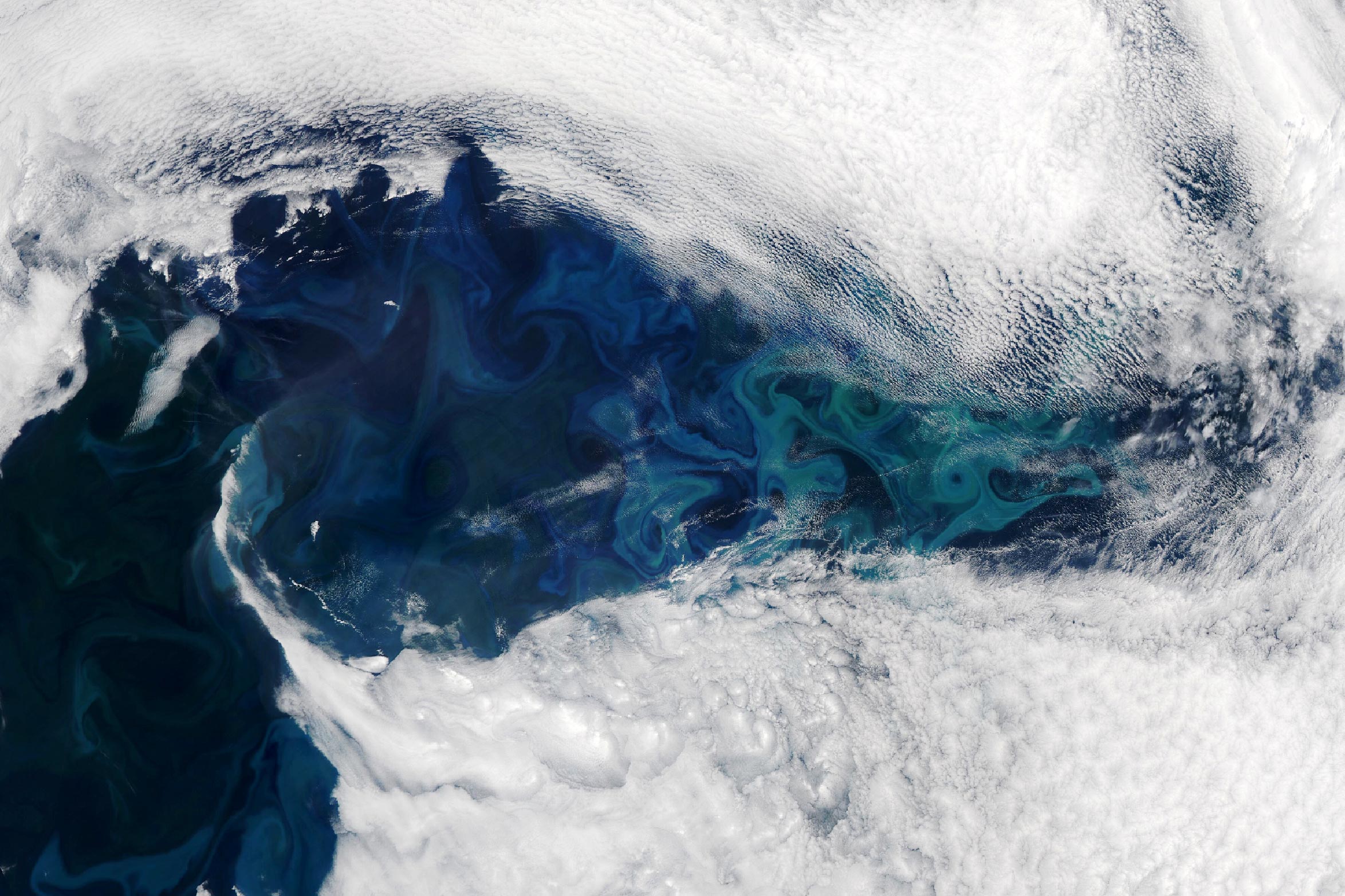
    Satellite image of a striking phytoplankton bloom in the North Atlantic captured on June 16, 2024, by the Moderate Resolution Imaging Spectroradiometer on NASA’s Aqua satellite.

    A short-lived gap in the clouds let satellites observe a stunning phytoplankton bloom east of Greenland.

    Satellite observations revealed a vast phytoplankton bloom off Greenland’s coast, possibly composed of coccolithophores or diatoms, key players in marine ecology and atmospheric carbon regulation.

    Since May 2024, satellite images have hinted at a phytoplankton bloom developing off the coast of southeast Greenland. But a near-constant stream of clouds prevented optical sensors from getting a clear look. That changed in mid-June, when a short-lived gap in the clouds over the North Atlantic Ocean exposed the bloom’s colorful swirls.

    The bloom is visible in this image, acquired on June 16, 2024, with the MODIS (Moderate Resolution Imaging Spectroradiometer) on NASA’s Aqua satellite. The image shows an approximately 800-kilometer-wide (500-mile-wide) patch of the North Atlantic Ocean centered east of Greenland and south of Iceland. The bloom stretches many more hundreds of kilometers beyond the edges of this image.
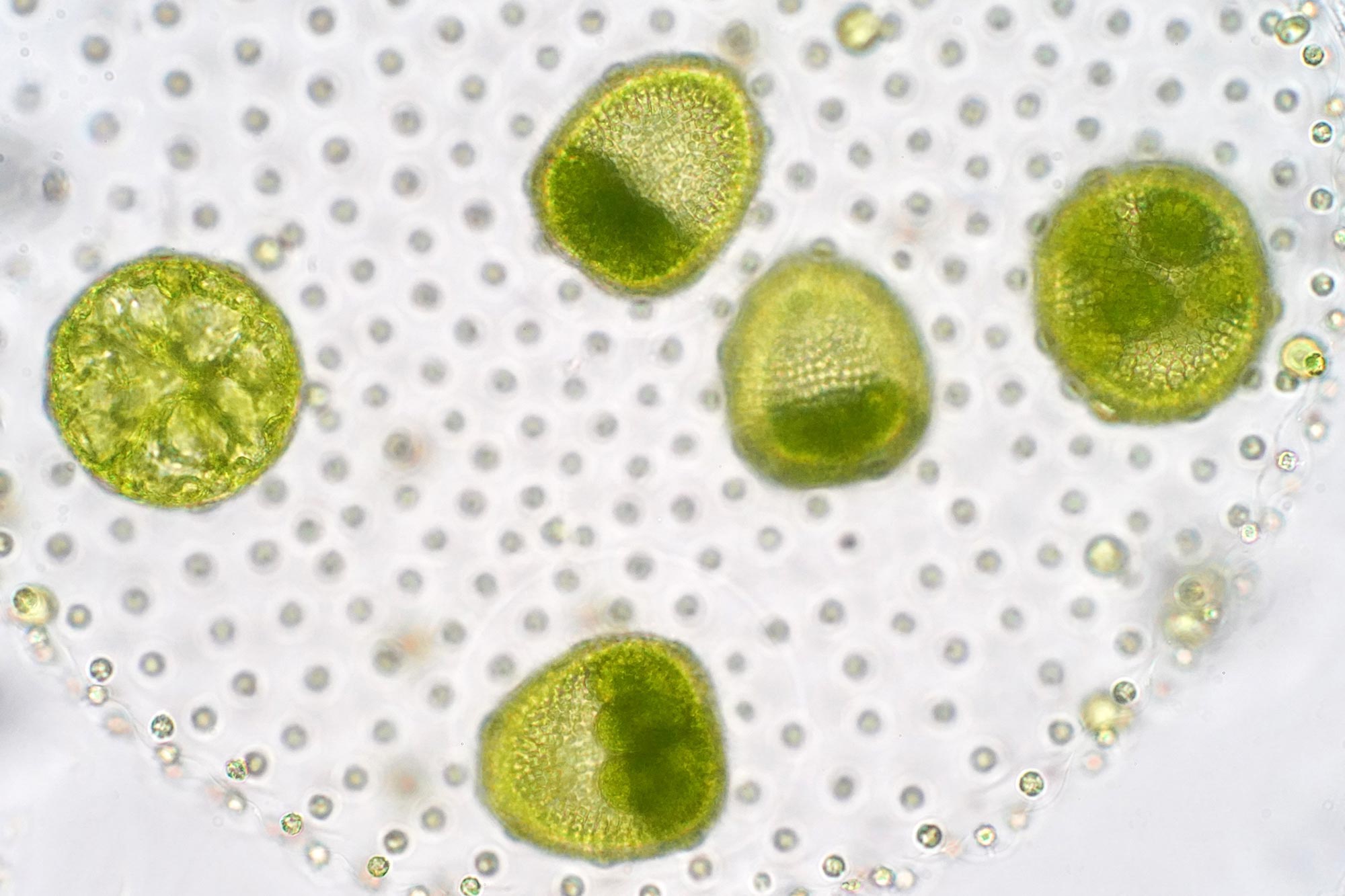
    Volvox Chlorophyte Green Algae Phytoplankton
    Phytoplankton, the tiny plant-like organisms that float in aquatic environments, are more than just food for marine life. They are essential players in the Earth’s biosphere, engaging in photosynthesis to produce oxygen and consume carbon dioxide, thus influencing both local and global climates.

    A bloom is essentially an abundance of phytoplankton—tiny, plant-like organisms that often float near the ocean surface. Phytoplankton fuel the ocean by feeding other plankton, fish, and ultimately bigger creatures. They are also important carbon cyclers and oxygen producers.

    The type of phytoplankton present in this bloom cannot be identified based on this natural-color image alone. The bloom might contain coccolithophores, which are plated with white calcium carbonate that can give the ocean a milky hue. It could also contain diatoms, a microscopic form of algae with silica shells and plenty of chlorophyll, which has a green pigment.

    Whichever species composed the bloom that peeked from between the clouds that day, their presence was timely. Blooms often show up first at lower latitudes and then appear at high latitudes in the North Atlantic by spring and mid-summer.

    NASA Earth Observatory image by Lauren Dauphin, using MODIS data from NASA EOSDIS LANCE and GIBS/Worldview. Story by Kathryn Hansen.

    Never miss a breakthrough: Join the SciTechDaily newsletter.
    Follow us on Google and Google News.

    NASA NASA Earth Observatory Oceanography Phytoplankton Popular
    Share. Facebook Twitter Pinterest LinkedIn Email Reddit

    Related Articles

    The Ocean’s Green Glow Is a Warning Sign

    NASA Unveils the Stunning Turquoise Phenomenon Transforming Patagonia’s Oceans

    Blown Away: How Desert Dust Fuels Ocean Life

    Study Confirms Southern Ocean Is Absorbing Carbon – Important Buffer for Greenhouse Gas Emissions

    Tracking Carbon From the Ocean Surface to the Dark “Twilight Zone”

    Spied by Satellite: Phytoplankton Factory in the Argentine Sea

    2015 El Niño Appears Likely to Equal the Event of 1997-98

    NASA Makes Earth’s Oceans Look like Van Gogh’s Starry Night

    Plankton-Fueled Agulhas Current Ocean Eddy Is 93 Miles Wide

    Leave A Reply Cancel Reply

    • Facebook
    • Twitter
    • Pinterest
    • YouTube

    Don't Miss a Discovery

    Subscribe for the Latest in Science & Tech!

    Trending News

    Collapsing Plasma May Hold the Key to Cosmic Magnetism

    This Breakthrough Solar Panel Generates Power From Both Sunlight and Raindrops

    Scientists Uncover New Metabolic Effects Beyond Weight Loss of Mounjaro

    Scientists Discover Cancer Tumors Are “Addicted” to This Common Antioxidant

    1,800 Miles Down: Scientists Uncover Mysterious Movements at the Edge of Earth’s Core

    Scientists Discover Hidden “Good Fats” in Green Rice That Could Transform Nutrition

    Your Child’s Clothes Could Contain Toxic Lead, Study Finds

    Researchers Break a 150-Year-Old Math Law With a Surprising Donut Discovery

    Follow SciTechDaily
    • Facebook
    • Twitter
    • YouTube
    • Pinterest
    • Newsletter
    • RSS
    SciTech News
    • Biology News
    • Chemistry News
    • Earth News
    • Health News
    • Physics News
    • Science News
    • Space News
    • Technology News
    Recent Posts
    • Scientists Uncover the Secret Ingredient Behind the Spark That May Have Started Life on Earth
    • Natural Oils vs. Antibiotics: The Swine Study That Could Change Farming
    • The Biggest Volcanic Event in Earth’s History Transformed an Entire Oceanic Plate
    • Scientists Warn: Humanity Has Pushed the Planet Past Its Limits
    • Stronger Flu Shot Linked to Nearly 55% Lower Alzheimer’s Risk, Study Finds
    Copyright © 1998 - 2026 SciTechDaily. All Rights Reserved.
    • Science News
    • About
    • Contact
    • Editorial Board
    • Privacy Policy
    • Terms of Use

    Type above and press Enter to search. Press Esc to cancel.