

Close Menu
    Facebook X (Twitter) Instagram
    SciTechDaily
    • Biology
    • Chemistry
    • Earth
    • Health
    • Physics
    • Science
    • Space
    • Technology
    Facebook X (Twitter) Pinterest YouTube RSS
    SciTechDaily
    Home»Earth»Plankton-Fueled Agulhas Current Ocean Eddy Is 93 Miles Wide
    Earth

    Plankton-Fueled Agulhas Current Ocean Eddy Is 93 Miles Wide

    By SciTechDailyFebruary 27, 20125 Comments2 Mins Read
    Facebook Twitter Pinterest Telegram LinkedIn WhatsApp Email Reddit
    Share
    Facebook Twitter LinkedIn Pinterest Telegram Email Reddit
    plankton-eddy
    Plankton-fueled eddy.

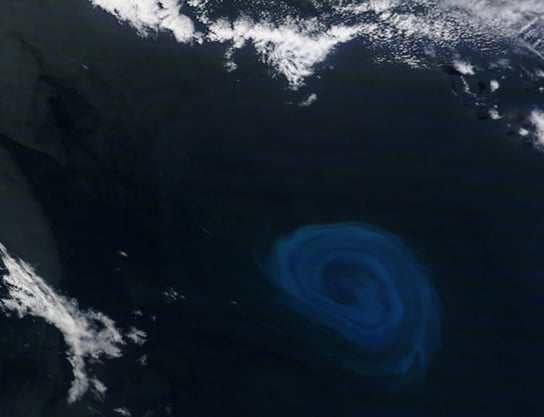
    Deep below the ocean’s surface, huge eddies are often formed. The depths have their own kinds of weather systems. NASA’s Terra satellite captured this photo of a gigantic plankton-fueled eddy that was released. The eddy is completely submerged under water.
    safrica-ocean-eddy

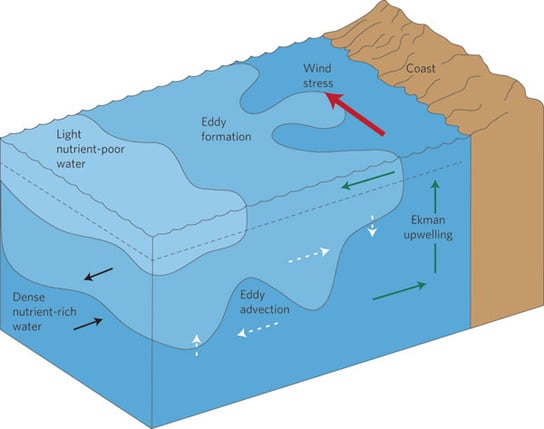
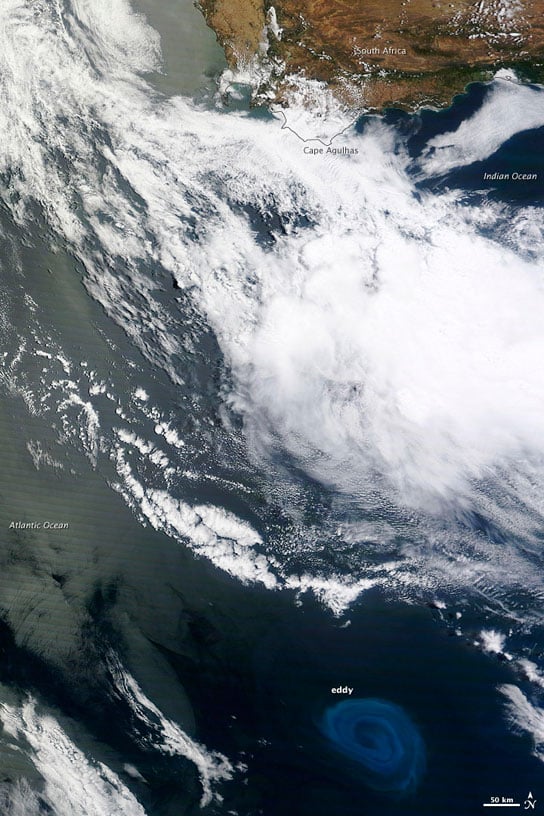
    Unlike terrestrial storms, ocean whirlwinds draw nutrients from the deep, nourishing blooms of microscopic marine life in the otherwise somewhat barren open ocean, fertilizing the surface waters. Eddies spin off from major ocean current system and can last for months. Researchers think that this 93-mile (150-kilometer) wide anti-cyclonic eddy peeled off the Agulhas current, which flows along the south-eastern coast of Africa to the tip of South Africa. Agulhas eddies or current rings tend to be the largest in the world.
    infographic-formation-eddy

    This eddy is visible from space, and because of its life-giving properties, it’s slightly bluer than the surrounding water, thanks to the blooming plankton it contains. The swirls have been measured up to 150 kilometers (93 miles).

    The natural-color images of the deep-ocean eddy were captured by the Moderate Resolution Imaging Spectroradiometer (MODIS) on NASA’s Terra satellite, 800 km (500 mi) south of South Africa.

    The huge masses of spinning water in whirlpool patterns can rotate either clockwise or counterclockwise, and can stretch for hundreds of miles, lasting months.
    in-context-eddy

    Never miss a breakthrough: Join the SciTechDaily newsletter.
    Follow us on Google and Google News.

    Fluid Dynamics MODIS NASA NASA Earth Observatory Oceanography Plankton
    Share. Facebook Twitter Pinterest LinkedIn Email Reddit

    Related Articles

    Coral Crisis: Massive Accumulation of Heat Stress in Summer 2023

    A Sea of Change: Climate Change Is Shifting Our Oceans From Blue to Green

    The Ocean’s Rising Fever: Global Sea Surface Temperatures Hit Record Levels

    Blown Away: How Desert Dust Fuels Ocean Life

    New Global Atlas: Bathed in a Sea of Artificial Light

    Monster Waves of Nazaré: Some of the Largest Waves Ever Surfed

    Study Confirms Southern Ocean Is Absorbing Carbon – Important Buffer for Greenhouse Gas Emissions

    Sounding the Seafloor With Light: Mapping the Shallows With Freely Available Satellite Data

    Sea Ice in Denmark Strait – Drifted More Than 1,000 Km (600 Miles) From the Arctic Ocean

    5 Comments

    1. Kim 'Sharklady' MacLean on February 28, 2012 3:40 am

      Thanks for the information about our coastline – this is amazing to see!

      Reply
    2. kellianne on October 18, 2013 8:20 am

      When was this photo taken? Has science observed an increase or decrease in these formations?

      Reply
      • Staff on October 18, 2013 8:32 am

        The photo is from December 2011…We haven’t heard any follow-up on whether these formations have increased or decreased since this article was published in February 2012.

        Reply
    3. Wayne Larkins on January 9, 2025 10:04 am

      Greetings from the fffuuuuurttuuurreee!!!! Peace among Worlds

      Reply
    4. Wayne Larkins on January 9, 2025 10:05 am

      Greetings from the fffuuuuurttuuurreee!!!! Peace Among Worlds Welcome to the twilight zone lmao

      Reply
    Leave A Reply Cancel Reply

    • Facebook
    • Twitter
    • Pinterest
    • YouTube

    Don't Miss a Discovery

    Subscribe for the Latest in Science & Tech!

    Trending News

    Could Low Vitamin D Be Making Your Pain Worse?

    Scientists Discover Once-Weekly Workout That Melts Belly Fat Surprisingly Effectively

    Scientists Just Tested a Thruster Powerful Enough for Human Missions to Mars

    Doctors Say Your Ice Pack Might Be Making Injuries Worse

    Scientists Discover 43-Foot Sea Reptile Twice the Size of a Great White Shark

    Bees and Birds Are Drinking Alcohol From Flowers

    Scientists Discover How Obesity May Trigger Alzheimer’s Disease

    Scientists Confirm Alcohol Causes Widespread Health Damage

    Follow SciTechDaily
    • Facebook
    • Twitter
    • YouTube
    • Pinterest
    • Newsletter
    • RSS
    SciTech News
    • Biology News
    • Chemistry News
    • Earth News
    • Health News
    • Physics News
    • Science News
    • Space News
    • Technology News
    Recent Posts
    • Just Minutes of Intense Exercise Could Slash Disease Risk by 50%
    • People Who Stop Ozempic Often Don’t Gain the Weight Back
    • Why More People in Their 30s Are Suddenly Getting Colon Cancer
    • Scientists Discover Sperm Seem To Bypass a Fundamental Law of Physics
    • The Secret Behind Indigenous Andeans’ “Digestive Superpower” May Be Potatoes
    Copyright © 1998 - 2026 SciTechDaily. All Rights Reserved.
    • Science News
    • About
    • Contact
    • Editorial Board
    • Privacy Policy
    • Terms of Use

    Type above and press Enter to search. Press Esc to cancel.