
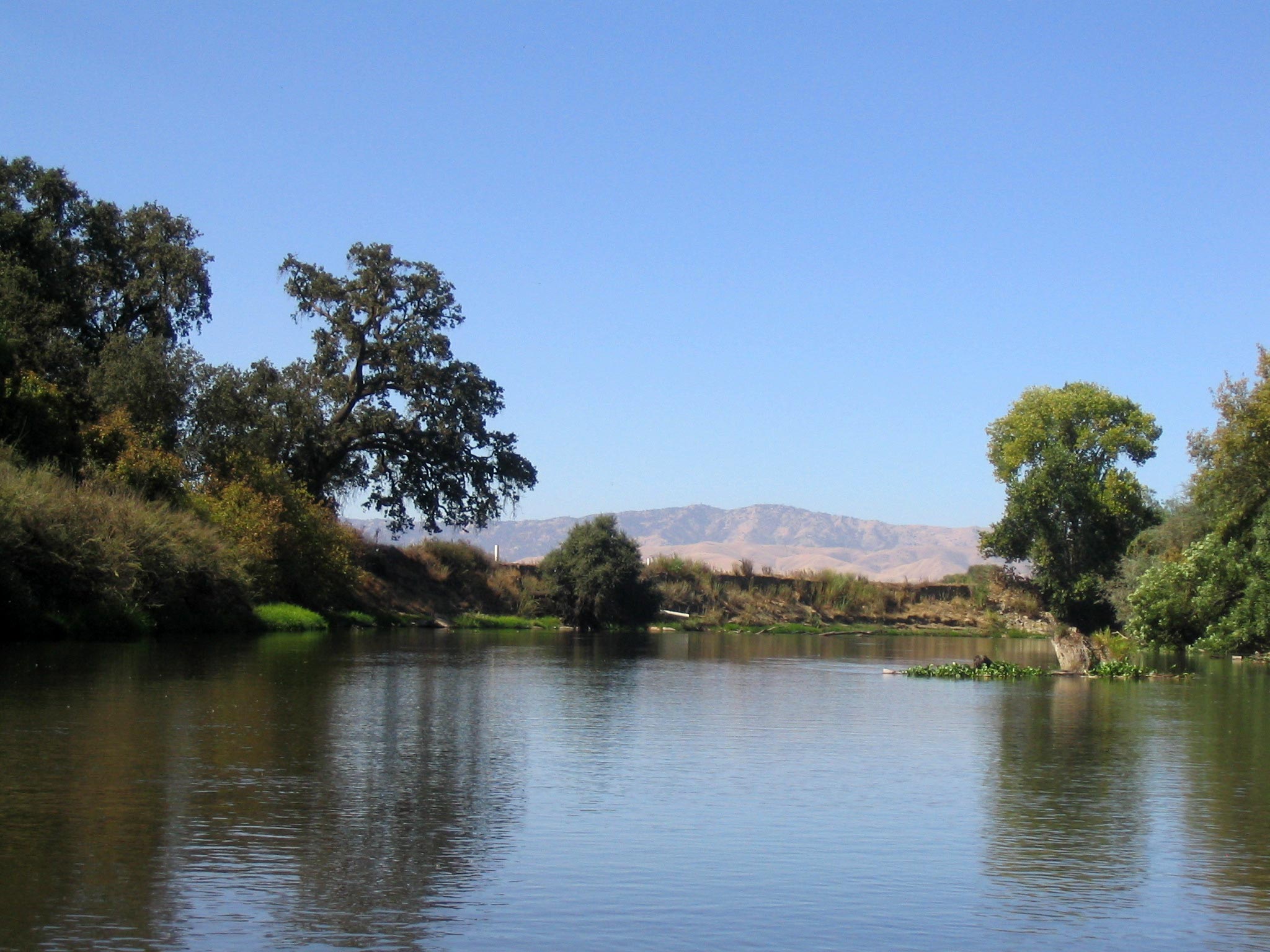
Human-altered water flow keeps some California woodlands green but prevents forest renewal, risking long-term biodiversity and ecosystem collapse.
A study of woodland ecosystems that provide habitat for rare and endangered species along streams and rivers throughout California reveals that some of these ecologically important areas are inadvertently benefiting from water that humans are diverting for their own needs. Though it seems a short-term boon to these ecosystems, the artificial supply creates an unintended dependence on its bounty, threatens the long-term survival of natural communities, and spotlights the need for changes in the way water is managed across the state.
“We need to be more intentional in incorporating ecosystem water needs when we manage water — both for aquatic organisms and species on land,” said Melissa Rohde, the lead author of a study published June 14, 2021 in the Proceedings of the National Academy of Sciences (PNAS). “These forest ecosystems are in a precarious state because we have disrupted the natural hydrologic processes that these plant species rely upon to support and sustain key life processes.”
California’s Unique Climate and Hydrology
In California’s seasonally dry Mediterranean climate, plants and animals are adapted to rely on precipitation and soil moisture recharge during the rainy winter and spring seasons for reproduction and growth during the typically dry summers. Once soil moisture is exhausted, tree species often found in stream corridors such as willows, cottonwoods, and oaks, typically use groundwater from deeper depths. However, as Rohde, who led the study as a Ph.D. candidate at the State University of New York College of Environmental Science and Forestry (ESF) and scientist with The Nature Conservancy of California, and her colleagues discovered, the story was more complicated.
By analyzing five years of vegetation greenness data from satellite imagery, the researchers found that in some cases, these ecosystems were affected by “subsidies of water” delivered via human regulation of rivers, agricultural canals, and discharges from wastewater treatment plants. That discovery, Rohde said, was a “mind bender.” Altered streamside woodlands in the most arid regions of the state stayed greener longer into the dry season and were less responsive to changes in groundwater levels than natural ecosystems.
Many of the most altered stream ecosystems are in California’s Central Valley, the state’s agricultural hub, which produces a third of the produce for the United States. Since the Gold Rush in the 1850s, the massive human settlement that followed led to clearing of 95 percent of the natural floodplain woodlands across the region. These isolated and restricted riparian — or streamside — forests, now provide important habitats for threatened and endangered species.
As water is rerouted from rivers into canals to accommodate urbanization and the multibillion-dollar agricultural industry, it creates an artificially stable environment for riparian woodland ecosystems and a “live fast, die young” phenomenon, favoring fast-growing trees that peak and then decline within a few decades. But other key ecosystem functions, such as the regeneration of new forest stands and their development over time, are being compromised by the extensive alterations to streamflow and to river channels, which are fixed in place and no longer create new floodplain areas where young trees can establish.
“Living Dead” Forests Lack Young Trees
“We call these forests the ‘living dead’ because the forest floor is devoid of saplings and younger trees that can replace the mature trees when they die,” Rohde said. This has repercussions related to habitat for endangered species, biodiversity, carbon sequestration, and climate change.
Rohde said, “California is one of the most biodiverse regions in the world, containing more species than the rest of the United States and Canada combined. In the midst of the sixth mass extinction, the long-term sustainability of California’s river ecosystems and the preservation of the rare and endemic species that live within them now rely on the deliberate, coordinated management of resource and government agencies.” She and TNC will use the insights from the study to provide scientific guidance to California natural resource agencies for sustainably managing groundwater-dependent ecosystems throughout the state.
A New Era in Ecosystem Monitoring
The research team conducted the PNAS study using publicly available online data and Google Earth Engine, an open-source tool for analyzing data from satellites and other global spatial datasets. “Our methods and findings open up a whole new world of interdisciplinary research possibilities and ways that water practitioners can consider ecosystem water needs to achieve sustainable water management,” Rohde said.
John Stella, an ESF professor and Rohde’s Ph.D. advisor, is the principal investigator on the National Science Foundation grant that funded the study. He said, “This work is groundbreaking because Melissa was able to combine several big datasets in an innovative way to understand how climate and water management interact to put these sensitive ecosystems at risk. Her findings are important for sustainably managing groundwater, not only throughout California, but in water-limited regions worldwide. By creatively harnessing and integrating these large environmental datasets, we can now answer resource management questions at a scale that was previously impossible.”
Reference: “Groundwater dependence of riparian woodlands and the disrupting effect of anthropogenically altered streamflow” by Melissa M. Rohde, John C. Stella, Dar A. Roberts and Michael Bliss Singer, 14 June 2021, Proceedings of the National Academy of Sciences.
DOI: 10.1073/pnas.2026453118
Other collaborators and authors on the paper are Dar Roberts of the University of California at Santa Barbara (UCSB) and Michael Singer, who has an affiliation at UCSB and at Cardiff University in the United Kingdom. Stella noted that this study is part of a $2.5 million suite of projects that he and these collaborators at UCSB and Cardiff have currently funded throughout the U.S. Southwest and France to develop water stress indicators for dryland riparian forest ecosystems threatened by climate change and increasing human water demand.
Never miss a breakthrough: Join the SciTechDaily newsletter.
Follow us on Google and Google News.
2 Comments
“The dry grassland in the background indicates the semi-arid conditions and drought environment.”
I had lived in California from 1954 through 2004. One could depend on the grass-covered mountains of the Coast Range and the Foothills of the Sierra Nevada to turn brown EVERY year by May 1st.
“Since the Gold Rush in the 1850s, the massive human settlement that followed led to clearing of 95 percent of the natural floodplain woodlands across the region.”
And, massive engineering projects led to the demise of the vast inland lake that once filled the interior for many months of the year, and occasionally all year. That certainly changed the ecosystem, inhibiting sprouting of young trees that are now more abundant.
You can’t have 40 million people living in California without impacting the environment!