

Tropical fruit trees can improve health, reduce hunger, boost incomes and fight climate change; so why don’t we grow and eat more?
Two of humanity’s biggest problems — the climate crisis and abysmal eating habits — can partly be solved by one healthy solution: eating more food from trees, specifically tropical ones. While global trends in agriculture and diets are not easily reversed, scientists say that creating incentives to grow and eat more mangos, avocados, and Brazil nuts — and dozens of tree-sourced foods most people have never heard of — can be both attainable and sustainable.
Writing in People and Nature, researchers outline the myriad nutritional, economic, and environmental-health potential of increasing the production and consumption of tropical fruits. They present an overview of the benefits from tree-sourced foods in terms of nutrition and discuss the barriers and risks of scaling up supply to a global level.
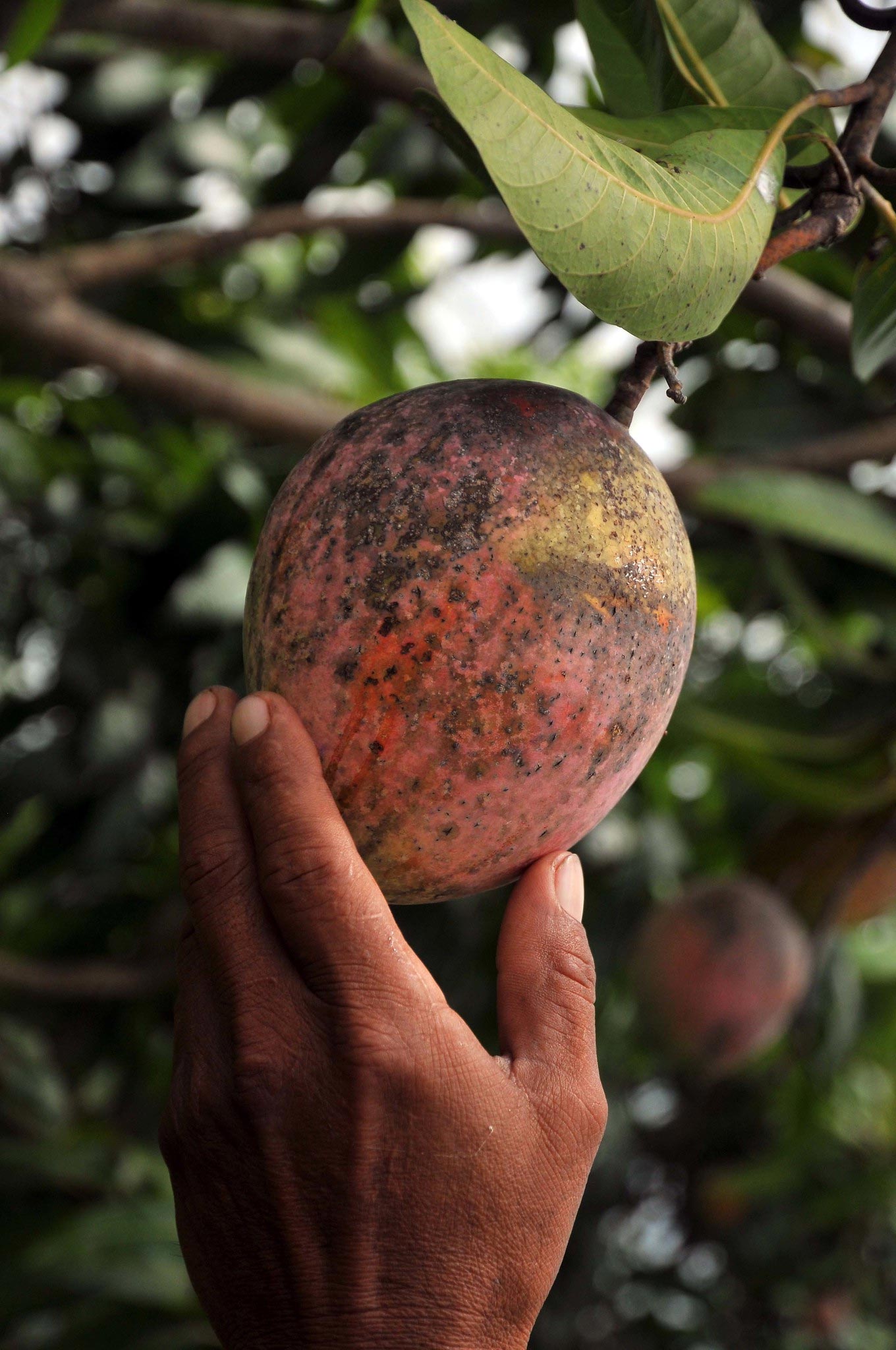
“Planting the right type of trees in the right place can provide nutritious foods to improve diets sustainably while providing other valuable ecosystem services such as carbon sequestration,” said Merel Jansen, the lead author from ETH Zurich and the Center of International Forestry Research. “It also can contribute to development issues related to poverty reduction, biodiversity conservation, and food security.”
In spite of the diversity of edible plants — there are more than 7,000 — the global food system is founded on extraordinarily low diversity. Almost half the calories consumed by humans come from only four crops: wheat, rice, sugarcane, and maize. The overconsumption of these energy-rich but nutrient-poor foods — in combination with underconsumption of more nutritious foods — has contributed significantly to malnutrition, which afflicts some two billion people. Moreover, their cultivation has caused widespread losses of biodiversity and contributed to climate change.
For these reasons, experts are calling for a transformation of global food systems characterized by the cultivation and consumption of foods that simultaneously deliver nutritional, environmental and health benefits. Because tropical tree species, which may exceed 50,000, have this potential they can be a critical part of the solution, say the authors.
“Leveraging the diversity and local knowledge of tree species in tropical landscapes offers an excellent nature-based solution to match the rising global demand for diversified, healthy, and sustainable diets, and to re-valuate native tree species and local farming practices,” said Chris Kettle, the principal investigator of this work, from the ETH Zurich and Alliance of Bioversity International and CIAT.
The world’s hundreds of millions of smallholder farmers, who have been often pushed aside by the industrialization of food systems, have the potential to be key players in food system transformation. With the right incentives, investments, and involvement, smallholder farms could scale up agroforestry systems to produce more, healthy food, while simultaneously diversifying their income sources.
Marginalized groups and women also stand to gain from tree-sourced food sources, especially when the foods are harvested from trees that are not planted but grow spontaneously or have the potential for natural regeneration that can be managed. This is because, in part, women farmers tend to have limited access to land, credit, and other assets.
There are many clear opportunities to incorporate food-producing trees into landscapes. The majority of global cropland does not incorporate trees but has a high potential for doing so. Further, vast tracts of land in the tropics have been cleared for agriculture and then abandoned, and coordinated restoration efforts could include the establishment of sustainably managed agroforestry systems.
Avoiding pitfalls
Increased demand for tree-sourced products has potential downsides. The establishment of industrial cacao plantations in West Africa and oil palm plantations in south-east Asia have deforested landscapes, degraded soils, harmed biodiversity, and increased carbon emissions. Avocado farms in Mexico, made profitable by increased demand north of the border, have been recently targeted by organized crime. Dependency on single products can lead to widespread shocks when prices crash, as has happened to cacao farmers in Côte d’Ivoire.
“A combination of interventions by states, markets, and civil society across the supply chain — from producers to consumers — is necessary to guarantee that increases in demand are supplied from sustainable production systems that are diverse, and that will not lead to large-scale deforestation or other unwanted side effects,” said Jansen.
To make increased tree-sourced food production an integral part of the global food system transformation, the authors propose the following:
Consumer demand: More information needs to reach consumers about tree-source food. “To radically change diets, extensive behavioral change campaigns will likely be necessary, especially to increase the consumption of underutilized nutritious and healthy foods,” the authors say.
Land tenure: One barrier to the implementation of tree-based food production systems is insecure land tenure rights. These are particularly important since tree-crops can require substantial up-front expenses and return on investment can take years. Secure land rights are considered key to overcoming these barriers.
Investment costs and pay-back time: Intercropping with annual crops, payment for ecosystem services, redirecting annual crop subsidies, and provision of micro-credits to establish agroforestry systems can create funding opportunities. These can help alleviate high investment costs and long pay-back times.
Supply chain development: Developing supply chains for potentially popular products is essential for rural communities to access markets. NGOs, private investors, and the public sector can all contribute.
Genetic resource conservation: Investment in the conservation of genetic resources that underpin diversity is necessary for crop tree systems to flourish. Additionally, reliable seed sources and seedlings need to be available for the establishment of tree crop farms.
Technological development: Development of propagation methods, planting techniques, and post-harvest technologies for currently undomesticated trees can help to better use the enormous diversity of trees in our food systems.
Diversification: To avoid the pitfalls of monoculture systems including price shocks and environmental degradation, sustainable crop tree systems must include a variety of plants and crops.
Reference: “Food for thought: The underutilized potential of tropical tree‐sourced foods for 21st century sustainable food systems” by Merel Jansen, Manuel R. Guariguata, Jessica E. Raneri, Amy Ickowitz, Fidel Chiriboga‐Arroyo, Julia Quaedvlieg and Chris J. Kettle, 4 November 2020, People and Nature.
DOI: 10.1002/pan3.10159
Funding: The COOP program of the ETH Zurich World Food System Center, the CGIAR Program on Forests, Trees and Agroforestry (FTA), the United States Agency for International Development (USAID), the CGIAR’s Agriculture for nutrition and Health (A4NH)
Never miss a breakthrough: Join the SciTechDaily newsletter.
Follow us on Google and Google News.
1 Comment
Tropical fruits are fun to grow but subsistence style agriculture won’t feed the world. Only monocultures can provide the scale of production needed, and “research” like this is nothing more than feel-good politically correct nonsense.
Pat the researchers on the head, tell them they’ve done well and indigenous populations everywhere will benefit from their efforts, put it on a shelf somewhere to be forgotten, and go on with business as usual. Don’t worry that useful research has been sidelined, because some politically correct feel-gooder will repeat it in a few years, just as usefully.
There are good reasons successful farming systems are successful farming systems and boutique and subsistence agriculture are boutique and subsistence agriculture.