
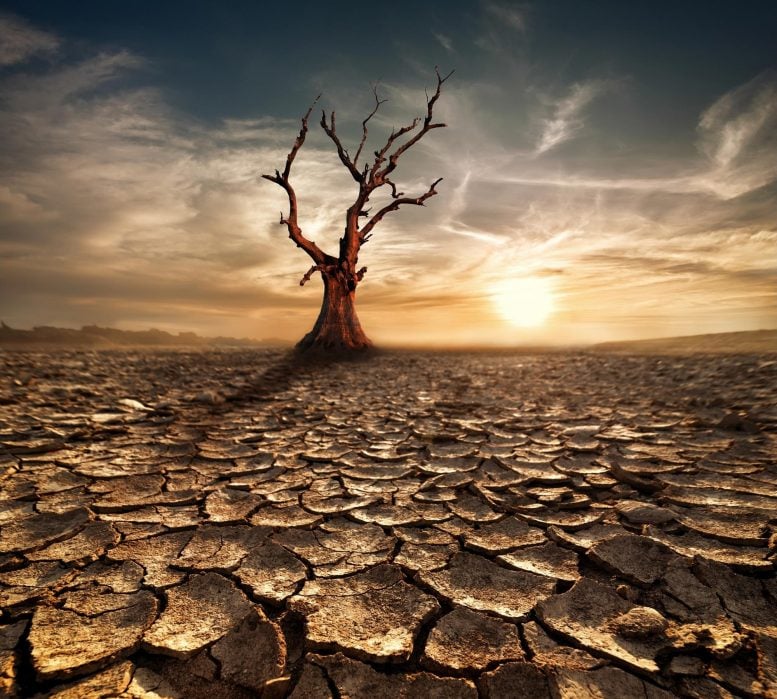
According to new research, climate change may have caused rainforest trees to die more quickly starting in the 1980s.
The results of a long-term international study published in the journal Nature on May 18th, 2022 show that tropical trees in Australia’s rainforests have been dying at a rate twice as high as before since the 1980s, presumably due to climate impacts. According to this study, as the drying effect of the environment has increased due to global warming, the mortality rates of tropical trees have doubled over the last 35 years.
Deterioration of such forests decreases biomass and carbon storage, making it harder to adhere to the Paris Agreement’s requirement to keep global peak temperatures well below the goal of 2 °C (3.6 °F). The current study, headed by experts from the Smithsonian Environmental Research Center and Oxford University, as well as the French National Research Institute for Sustainable Development (IRD), has analyzed very extensive data records from Australia’s rainforests.
It finds that average tree death rates in these woods have more than doubled over the last four decades. Researchers discovered that trees are living around half as long, which is consistent across species and sites across the region. According to the researchers, the effects may be observed as far back as the 1980s.
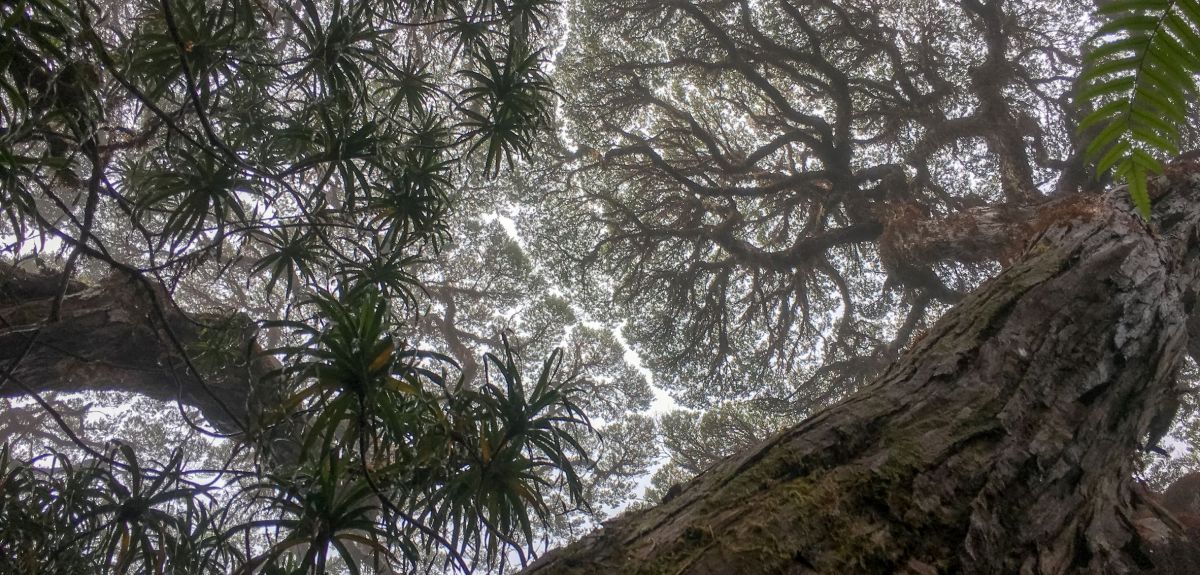
Historical Evidence of Climate Impact Since the 1980s
Dr. David Bauman, a tropical forest ecologist at Smithsonian, Oxford, and IRD, and lead author of the study maintains, “It was a shock to detect such a marked increase in tree mortality, let alone a trend consistent across the diversity of species and sites we studied. A sustained doubling of mortality risk would imply the carbon stored in trees returns twice as fast to the atmosphere.”
Dr. Sean McMahon, Senior Research Scientist at Smithsonian and senior author of the study points out, “Many decades of data are needed to detect long-term changes in long-lived organisms, and the signal of a change can be overwhelmed by the noise of many processes.”
Drs. Bauman and McMahon emphasize, “One remarkable result from this study is that, not only do we detect an increase in mortality, but this increase seems to have started in the 1980s, indicating the Earth’s natural systems may have been responding to changing climate for decades.”
Widespread Effects on Tropical Forests and Carbon Sink
Oxford Professor Yadvinder Malhi, a study co-author, points out, ‘In recent years the effects of climate change on the corals of the Great Barrier Reef have become well known.
“Our work shows if you look shoreward from the Reef, Australia’s famous rainforests are also changing rapidly. Moreover, the likely driving factor we identify, the increasing drying power of the atmosphere caused by global warming, suggests similar increases in tree death rates may be occurring across the world’s tropical forests. If that is the case, tropical forests may soon become carbon sources, and the challenge of limiting global warming well below 2 °C becomes both more urgent and more difficult.”
Susan Laurance, Professor of Tropical Ecology at James Cook University, adds, “Long-term datasets like this one are very rare and very important for studying forest changes in response to climate change. This is because rainforest trees can have such long lives and also that tree death is not always immediate.”
Recent studies in Amazonia have also suggested tropical tree death rates are increasing, thus weakening the carbon sink. But the reason is unclear.
Intact tropical rainforests are major stores of carbon and until now have been ‘carbon sinks’, acting as moderate brakes on the rate of climate change by absorbing around 12% of human-caused carbon dioxide emissions.
The Drying Atmosphere: A Major Driver of Mortality
Examining the climate ranges of the tree species showing the highest death rates, the research team suggests the main climate driver is the increased drying power of the atmosphere. As the atmosphere warms, it draws more moisture from plants, resulting in increased water stress in trees. This ultimately increases the risk of death.
When the researchers crunched the numbers, it further showed the loss of biomass from this mortality increase over the past decades has not been offset by biomass gains from tree growth and recruitment of new trees. This implies the mortality increase has translated into a net decrease in the potential of these forests to offset carbon emissions.
The research group included colleagues from Oxford University, James Cook University (Australia), and other institutions (UK, France, USA, Peru).
Reference: “Tropical tree mortality has increased with rising atmospheric water stress” by David Bauman, Claire Fortunel, Guillaume Delhaye, Yadvinder Malhi, Lucas A. Cernusak, Lisa Patrick Bentley, Sami W. Rifai, Jesús Aguirre-Gutiérrez, Imma Oliveras Menor, Oliver L. Phillips, Brandon E. McNellis, Matt Bradford, Susan G. W. Laurance, Michael F. Hutchinson, Raymond Dempsey, Paul E. Santos-Andrade, Hugo R. Ninantay-Rivera, Jimmy R. Chambi Paucar, and Sean M. McMahon, 18 May 2022, Nature.
DOI: 10.1038/s41586-022-04737-7
Never miss a breakthrough: Join the SciTechDaily newsletter.
Follow us on Google and Google News.
1 Comment
“One remarkable result from this study is that, not only do we detect an increase in mortality, but this increase seems to have started in the 1980s, indicating the Earth’s natural systems may have been responding to changing climate for decades.”
I would say not just “remarkable,” but incredulous. There was essentially no change between about 1940 and 1980. The recent rise in global temperatures didn’t really start until about 1980, with Australian rain forests showing an increase of less than 0.5 deg C between the two-decadal periods of 1901-1920, and 1990-2010. Most of the average change is in Winter and night. It is difficult to believe that a change of about 0.2 deg C during the 1980s would be noticeable.
https://climatedataguide.ucar.edu/climate-data/global-surface-temperatures-best-berkeley-earth-surface-temperatures