
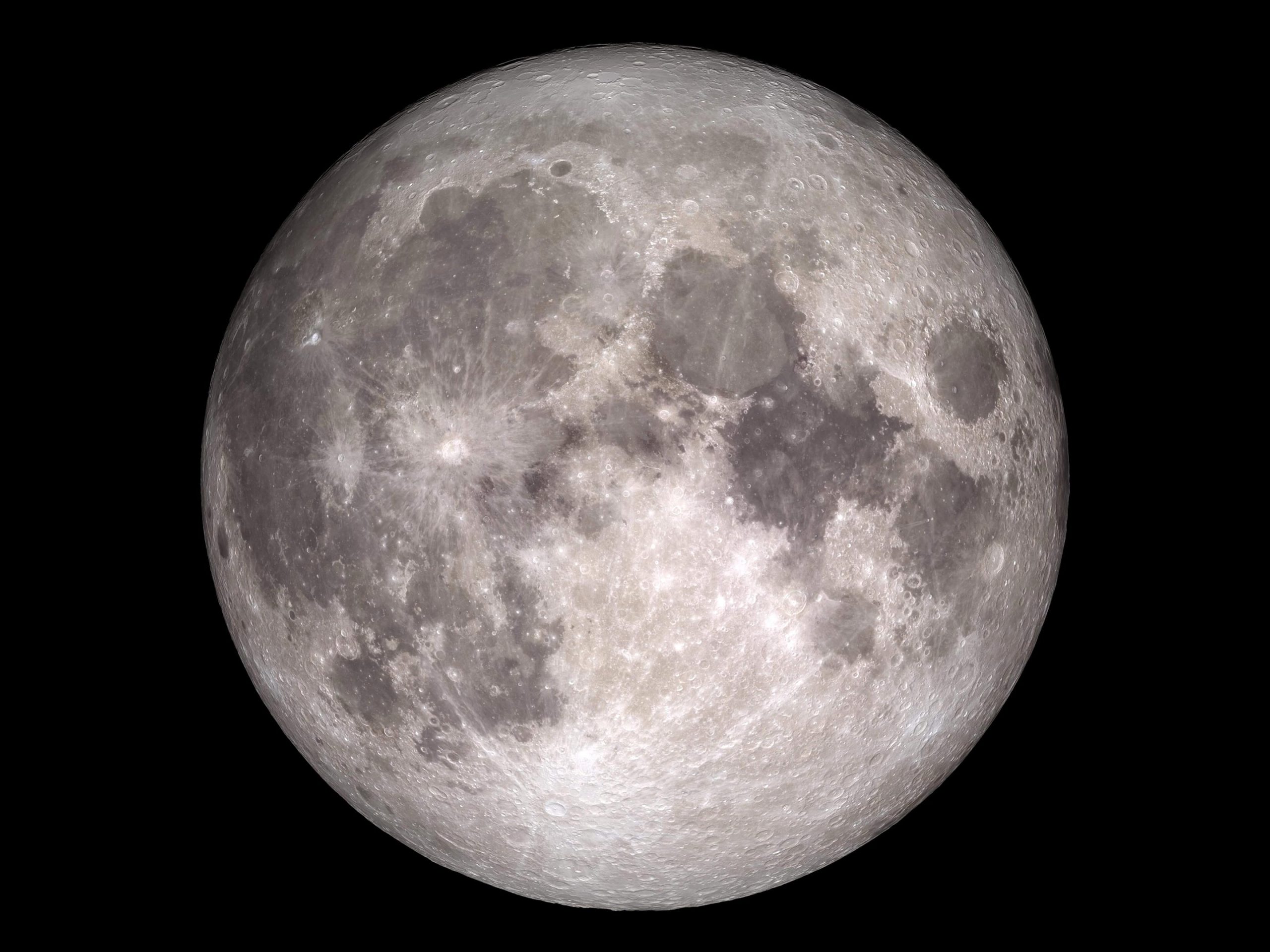
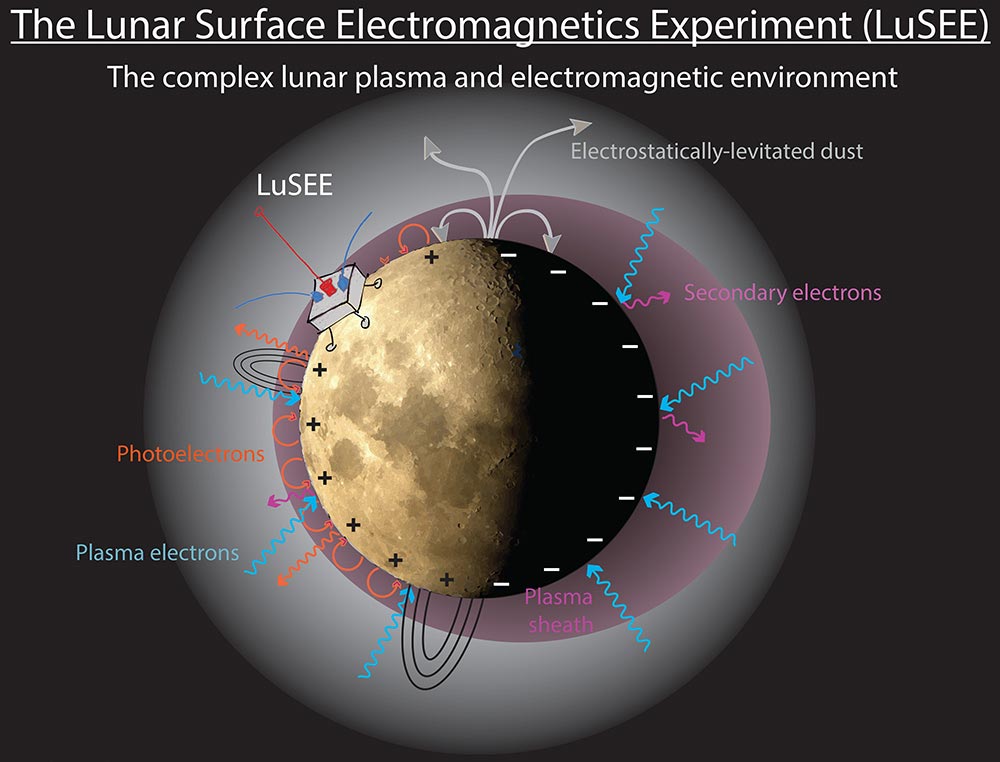
NASA and the DOE are collaborating on LuSEE-Night, a pioneering instrument designed to study the Dark Ages of the Universe from the Moon’s far side.
NASA and the Department of Energy (DOE) are working together to develop a science instrument that will survive the harsh and unforgiving environment of the lunar surface at night on the far side of the Moon to attempt first-of-its-kind measurements of the Dark Ages of the Universe. The instrument, named the Lunar Surface Electromagnetics Experiment – Night (LuSEE-Night), is a collaboration between DOE’s Brookhaven National Laboratory, the DOE Office of Science, UC Berkeley’s Space Sciences Laboratory, and NASA’s Science Mission Directorate.
LuSEE-Night is a pathfinder to understand the Moon’s radio environment and to potentially take a first look at a previously unobserved era in our cosmic history. This collaboration further strengthens the longstanding partnership between NASA and the DOE to enable space innovation and exploration.
The Dark Ages is an important epoch in cosmological studies as it can provide new insights into the formation and evolution of our Universe. The Dark Ages occurred between approximately 380 thousand – 400 million years after the origin of the universe, known as the Big Bang, and are a time before the first luminous stars and galaxies appeared. Since radio waves present the only signal we can measure from the Dark Ages, LuSEE provides an opportunity to learn how the first non-luminous matter evolved into the stars and galaxies that we see dominating the observable Universe today.
The Unique Opportunity of the Lunar Far Side
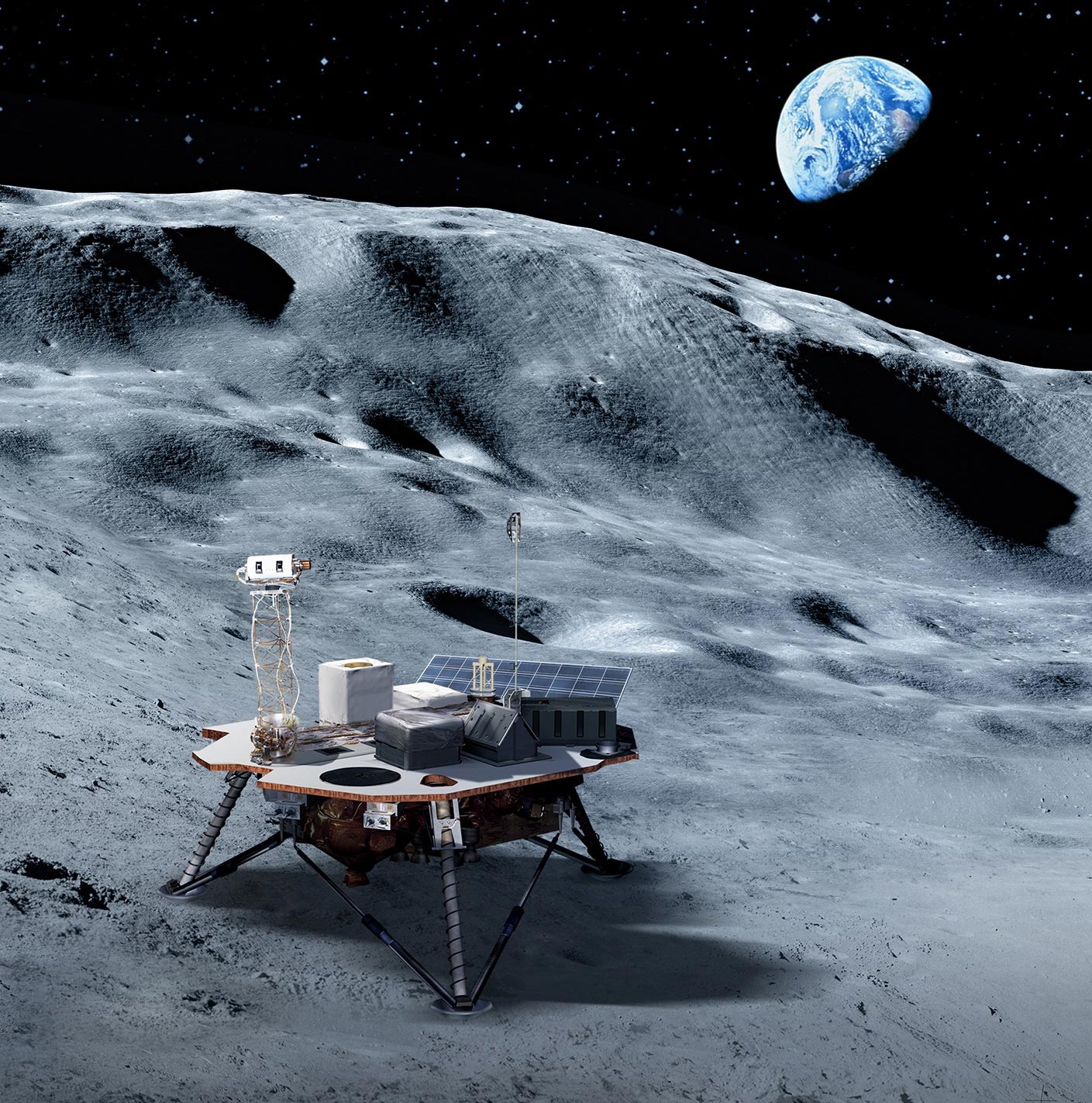
Unfortunately, these important radio wave signals from the Dark Ages are impossible to measure from Earth’s surface due to our planet’s opaque ionosphere and the noise from Earth’s constant “pollution” of the inner solar system with radio waves. However, due to the Moon’s lack of an interfering ionosphere – and due to the far side of the Moon being constantly shielded from harmful radio emissions from Earth, as well as the Sun during the lunar night – the far side of the Moon offers a unique environment that allows for observations of sensitive radio astronomy signals that cannot be obtained anywhere else in the near-Earth space environment. LuSEE-Night, which will be delivered to the far side of the Moon on a future Commercial Lunar Payload Services (CLPS) flight, will utilize deployable antennas and radio receivers to potentially observe these sensitive radio waves from the Dark Ages for the first time. By physically being on the lunar surface and taking measurements at the right time, several external sources of radio interference will be removed, including radio noise from the Sun, Earth, Jupiter, and Saturn. ;
“LuSEE-Night is a fascinating experiment that will get us closer to observing something we’ve never been able to before – the Dark Ages signal,” said Asmeret Asefaw Berhe, DOE’s Director of the Office of Science. “With this collaboration, DOE and NASA are setting conditions for successful exploration of the Dark Ages cosmology in the decades to come.”
Technological Challenges of Lunar Night Survival
However, a significant challenge will be for the instrument to survive the harsh, cold, and dark environment of the lunar night on the far side of the Moon long enough to collect and return data to Earth. Throughout the day and night cycle on the Moon, temperatures swing between around 250°F (120°C) during the day and -280°F (-173°C) at night. This temperature range presents a significant challenge to not only taking and transmitting the data, but also in keeping the instrument from freezing and ending the mission prematurely. Thus, technology to survive the lunar night is critical for not only robotic activities, but for creating a sustained human presence on the lunar surface.
“LuSEE-Night will operate during the cold temperatures of the 14-day lunar night, when no sunlight is available to generate power or heat,” said Joel Kearns, deputy associate administrator for exploration in NASA’s Science Mission Directorate. “In addition to the significant potential science return, demonstration of the LuSEE-Night lunar night survival technology is critical to performing long-term, high-priority science investigations from the lunar surface.”
If successful, LuSEE-Night will act as a pathfinder to help inform larger future instruments to further measure these otherwise undetectable radio frequencies, and help scientists better understand the earliest period of the Universe’s formation and evolution.
“This measurement is very challenging, radio emission from the galaxy is very bright and our Dark Ages signal is hiding behind it,” said LuSEE-Night PI Stuart D. Bale. Anže Slosar, the LuSEE-Night science collaboration spokesperson, added “Every time we have opened a new frequency window in cosmology, we have unlocked new discoveries about the history of the Universe and our place within it.”
LuSEE-Night is planned to be delivered to the Moon on a future CLPS flight. Through CLPS flights, NASA is buying a complete commercial robotic lunar delivery service and does not provide launch services, own the lander, or lead landing operations. Prof. Stuart D. Bale of University of California, Berkeley is the NASA Principal Investigator for LuSEE-Night with Anže Slosar and Sven Herrmann from Brookhaven National Laboratory as the DOE lead and project manager, respectively.
Never miss a breakthrough: Join the SciTechDaily newsletter.
Follow us on Google and Google News.
1 Comment
“LuSEE-Night, which will be delivered to the far side of the Moon on a future Commercial Lunar Payload Services (CLPS) flight”, a whole system of commercial flights to the moon. Also today on scitechdaily “NASA Space Mission Reveals Carbon Dioxide Emissions for Countries Around the World”, and on Friday “NASA Scientist: Wildfires are Getting Worse…(from) a lot of changes in our climate”. They’ve scheduled 8 CLPS flights already, costing $749.7 million. How much CO2 and pollution are they causing by spending three quarters of a billion taxpayer dollars? What is your carbon footprint, NASA?