
Close Menu
    Facebook X (Twitter) Instagram
    SciTechDaily
    • Biology
    • Chemistry
    • Earth
    • Health
    • Physics
    • Science
    • Space
    • Technology
    Facebook X (Twitter) Pinterest YouTube RSS
    SciTechDaily
    Home»Science»Complete Brain of One of the Oldest Dinosaurs Reconstructed for the First Time
    Science

    Complete Brain of One of the Oldest Dinosaurs Reconstructed for the First Time

    By Universidade Federal de Santa MariaNovember 4, 2020No Comments3 Mins Read
    Facebook Twitter Pinterest Telegram LinkedIn WhatsApp Email Reddit
    Share
    Facebook Twitter LinkedIn Pinterest Telegram Email Reddit
    Buriolestes schultzi
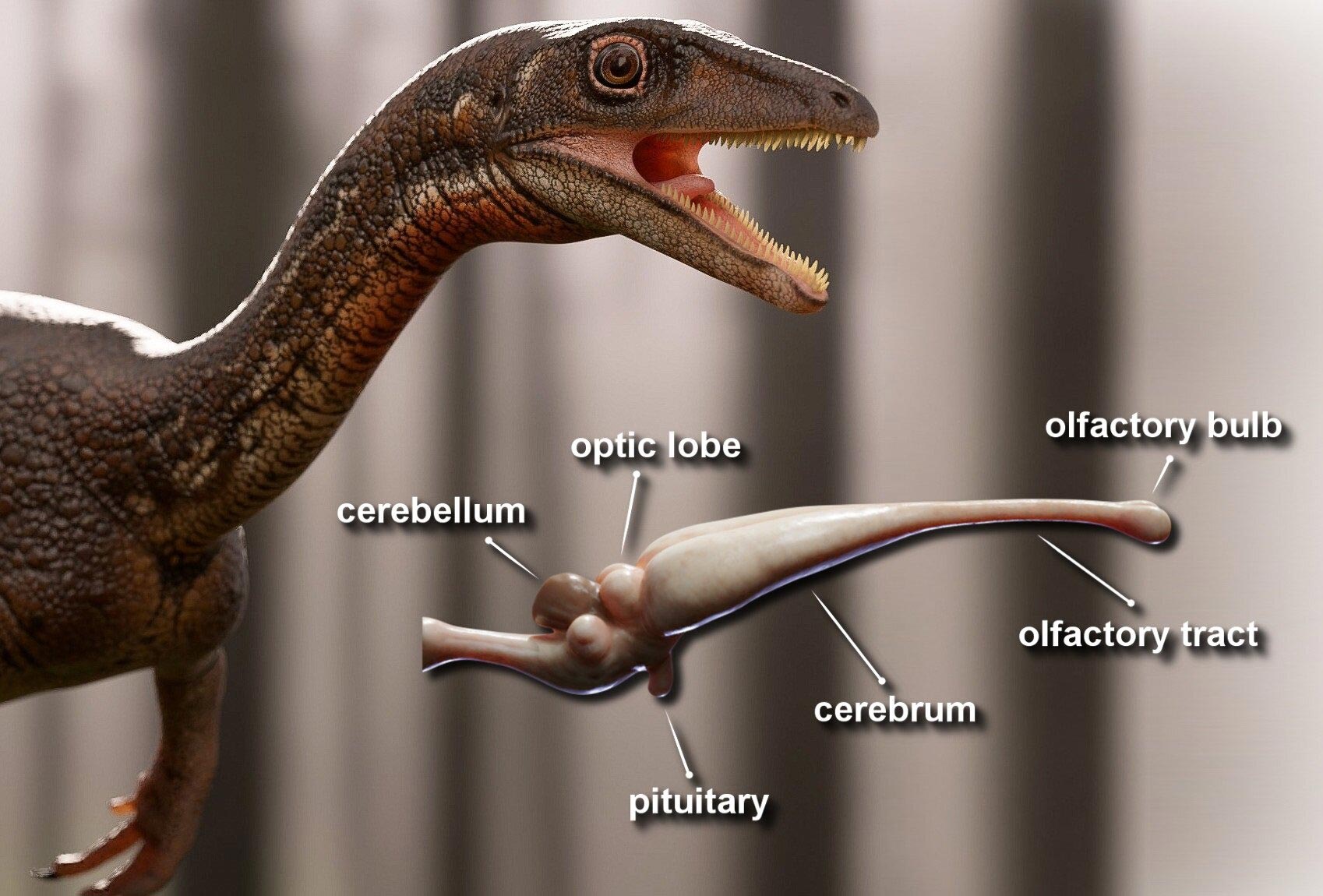
    Buriolestes schultzi brain. Credit: Márcio L. Castro

    The study of the brains of extinct organisms sheds lights on their behaviors. However, soft tissues, like the brain, are not usually preserved for long periods. Hence, researchers reconstruct the brains of dinosaurs by analyzing the cranial cavities under computed tomography. It demands well-preserved braincases, which is the region that envelops the brain tissues. To date, complete and well-preserved neurocrania from the oldest dinosaurs worldwide have not been found.

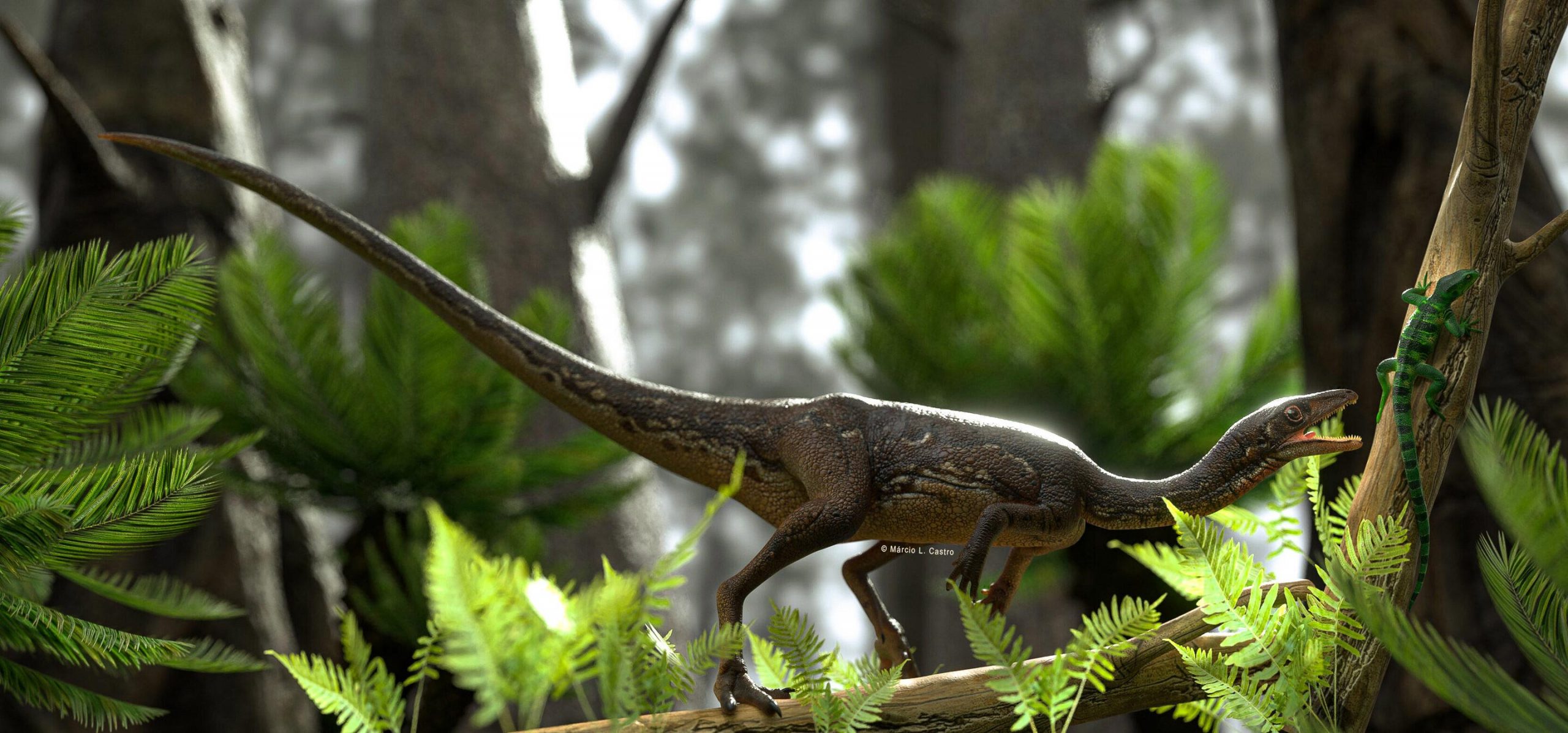
    In 2015, a Brazilian paleontologist from the Universidade Federal de Santa Maria, Dr. Rodrigo Temp Müller, unearthed an exceptionally well-preserved skeleton from a fossiliferous locality in southern Brazil. The skeleton, approximately 233 million years old (Triassic period), belongs to a small carnivorous dinosaur named Buriolestes schultzi, and the entire braincase was preserved. Now, Brazilian researchers have reconstructed the first complete brain of one of the oldest dinosaurs worldwide.
    Buriolestes Preying on Lepidosauromorph
    Buriolestes preying on a small lepidosauromorph in a Triassic landscape from Brazil. Credit: Márcio L. Castro

    The study was published in Journal of Anatomy and performed by Rodrigo T. Müller, José D. Ferreira, Flávio A. Pretto, and Leonardo Kerber from the Universidade Federal de Santa Maria and Mario Bronzati from the Universidade de São Paulo.

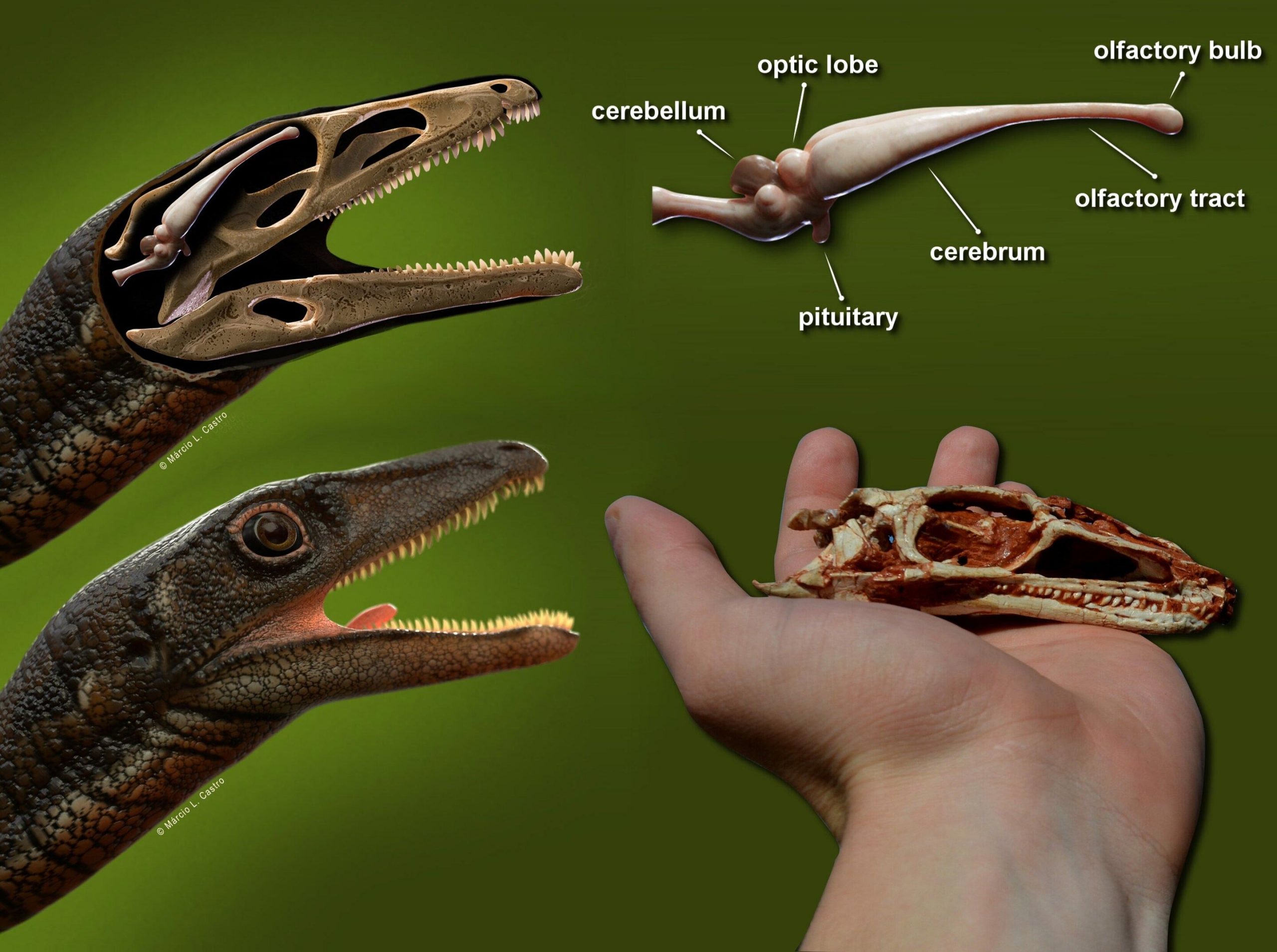
    The brain of Buriolestes schultzi is relatively small and weighs approximately 1.5 grams, which is slightly lighter than a pea. The shape was primitive, resembling the general morphology of a crocodile brain. In addition, the presence of well-developed structures in the cerebellum indicates the capability to track moving prey. Conversely, the olfactory sense was not high; therefore, it is more likely that Buriolestes schultzi hunted and tracked prey based on optical capability rather than its olfactory sense.
    Buriolestes schultzi Brain and Skull
    Buriolestes schultzi brain and skull. Credit: Márcio L. Castro and Rodrigo Temp Müller

    Despite the carnivorous feeding behavior of this dinosaur, it belongs to the lineage of giant, long-necked, herbivorous sauropods, the largest land animals that ever lived. However, Buriolestes schultzi is considered the earliest member of this lineage. So, the new brain reconstruction allows researchers to analyze the brain evolution of this impressive lineage.

    One of the most conspicuous trends is the increase of the olfactory bulbs. Whereas these structures responsible for the sense of smell are relatively small in Buriolestes schultzi, they become very large in later sauropods and closely related forms. The development of a strong sense of smell could be related to the acquisition of a more complex social behavior, which relies on the olfactory sense in several vertebrate groups. Alternatively, it has also been observed that high olfactory capabilities played an important role in foraging, helping animals to better discriminate between digestible and indigestible plants. Finally, another putative explanation for the increase in the olfactory sense of sauropods relies on the capability to detect predator chemical cues.

    Buriolestes schultzi Brain
    Buriolestes schultzi brain. Credit: Márcio L. Castro

    The scientists also calculated the cognitive capability, or intelligence, of Buriolestes schultzi based on the brain volume and body weight. The values obtained are higher than those of the giant sauropods, like Diplodocus and Brachiosaurus, suggesting a decrease in encephalization in the lineage. This is interesting because several other lineages present an increase in the encephalization through time. Nevertheless, the cognitive capability of Buriolestes schultzi is lower than that of theropod dinosaurs, the lineage that includes Tyrannosaurus, Velociraptor, and birds.

    Reference: “Development and evolution of the notarium in Pterosauria” by Alex Schiller Aires, Leici Machado Reichert, Rodrigo Temp Müller, Felipe Lima Pinheiro and Marco Brandalise Andrade, 7 October 2020, Journal of Anatomy.
    DOI: 10.1111/joa.13319

    Never miss a breakthrough: Join the SciTechDaily newsletter.
    Follow us on Google and Google News.

    Archaeology Brain Dinosaurs Paleontology Popular
    Share. Facebook Twitter Pinterest LinkedIn Email Reddit

    Related Articles

    The “One Who Causes Fear” – Extremely Powerful New Meat-Eating Predator Discovered

    World’s First: Dinosaur Discovered Sitting on Nest of Eggs With Fossilized Babies

    The Original Story of Flight: Pterosaur Precursors Discovered That Fill Gap in Early Evolutionary History

    Paleontologists Surprising Discovery: Fossil Shark Turns Into Mystery Pterosaur

    Dinosaur Feather Study Debunked: Overwhelming Evidence Supports Jurassic Fossil Belongs to Archaeopteryx

    Researchers Stunned to Discover Ancient Crocodiles That Walked on Two Legs

    Evidence T. Rex’s Long Legs Evolved for Distance, Not Speed Like Previously Thought

    The ‘Firewalkers’ of Karoo: Dinosaurs Left Tracks in a ‘Land of Fire’ 183 Million Years Ago

    Growing Up Tyrannosaurus Rex: Researchers Learn More About Teen-Age T.Rex

    Leave A Reply Cancel Reply

    • Facebook
    • Twitter
    • Pinterest
    • YouTube

    Don't Miss a Discovery

    Subscribe for the Latest in Science & Tech!

    Trending News

    Scientists May Have Found the Key to Jupiter and Saturn’s Moon Mystery

    Scientists Uncover Brain Changes That Link Pain to Depression

    Saunas May Do More Than Raise Body Temperature – They Activate Your Immune System

    Exercise in a Pill? Metformin Shows Surprising Effects in Cancer Patients

    Hidden Oceans of Magma Could Be Protecting Alien Life

    New Study Challenges Alzheimer’s Theories: It’s Not Just About Plaques

    Artificial Sweeteners May Harm Future Generations, Study Suggests

    Splashdown! NASA Artemis II Returns From Record-Breaking Moon Mission

    Follow SciTechDaily
    • Facebook
    • Twitter
    • YouTube
    • Pinterest
    • Newsletter
    • RSS
    SciTech News
    • Biology News
    • Chemistry News
    • Earth News
    • Health News
    • Physics News
    • Science News
    • Space News
    • Technology News
    Recent Posts
    • Ancient DNA Reveals Irish Goats Have a 3,000-Year-Old Lineage Still Alive Today
    • Historians Reveal Secrets of the Strange Hat Wars That Shook Early Modern England
    • “A Plague Is Upon Us”: The Mass Death That Changed an Ancient City Forever
    • This Strange Material Can Turn Superconductivity on and off Like a Switch
    • Scientists Discover Game-Changing New Way To Treat High Cholesterol
    Copyright © 1998 - 2026 SciTechDaily. All Rights Reserved.
    • Science News
    • About
    • Contact
    • Editorial Board
    • Privacy Policy
    • Terms of Use

    Type above and press Enter to search. Press Esc to cancel.