
Close Menu
    Facebook X (Twitter) Instagram
    SciTechDaily
    • Biology
    • Chemistry
    • Earth
    • Health
    • Physics
    • Science
    • Space
    • Technology
    Facebook X (Twitter) Pinterest YouTube RSS
    SciTechDaily
    Home»Biology»Larger Trees More Likely to Die From Drought in the Amazon – Small Trees Offer Hope for Rainforests
    Biology

    Larger Trees More Likely to Die From Drought in the Amazon – Small Trees Offer Hope for Rainforests

    By University of ExeterAugust 4, 20201 Comment4 Mins Read
    Facebook Twitter Pinterest Telegram LinkedIn WhatsApp Email Reddit
    Share
    Facebook Twitter LinkedIn Pinterest Telegram Email Reddit
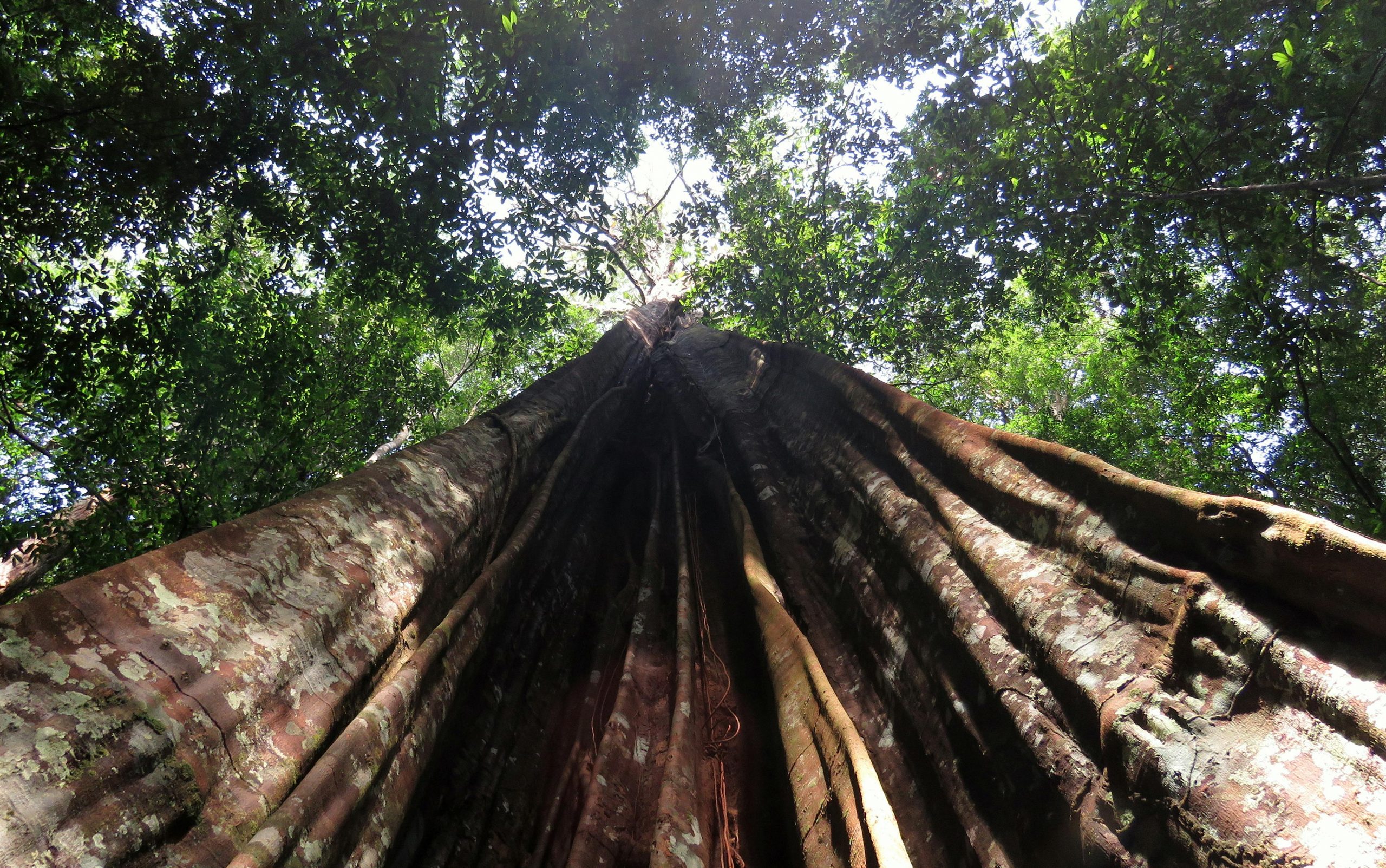
    Amazon Drought Affects Larger Trees More Severely
    Drought in the Amazon affects larger trees more severely as they are more likely to die from hydraulic failure. Credit: David Bartholomew

    Small trees that grow up in drought conditions could form the basis of more drought-resistant rainforests, new research suggests.

    Severe and long-lasting droughts are becoming more common in the Amazon, often killing large trees that form the forest canopy. But a new study, led by the University of Exeter, suggests small trees adapt better to droughts and could grow into a new generation to help the rainforest survive.

    Using data from a long-running drought experiment in Brazil, the scientists discovered small trees respond positively to the extra light they get when larger trees die, managing to increase their capacity for photosynthesis and their growth despite the lack of water.

    “Conditions in the Amazon are shifting due to climate change, and trees will have to adapt if they are to survive,” said lead author David Bartholomew, of Exeter’s Global Systems Institute.
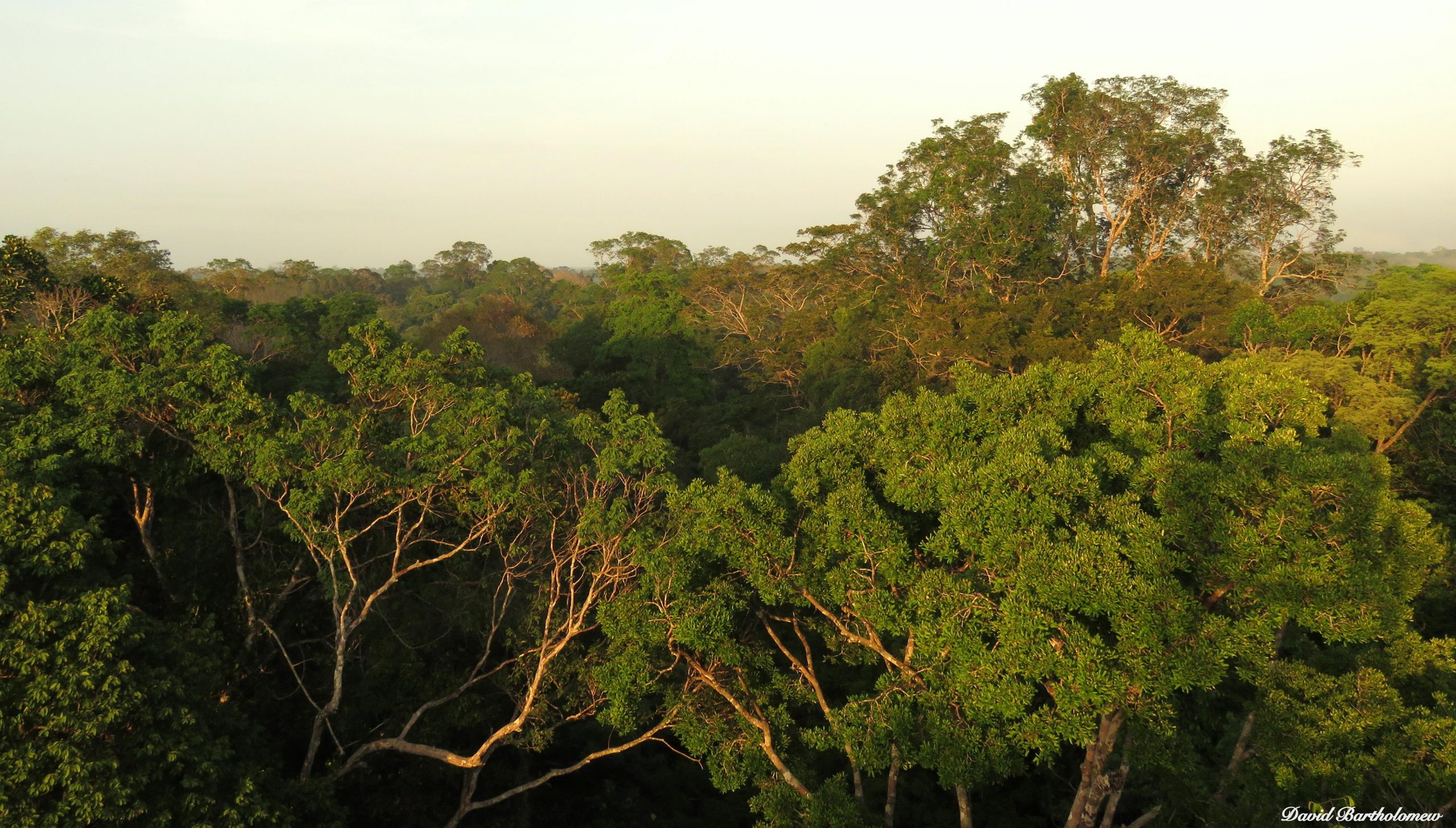
    Droughts Kill Larger Trees
    Under long-term drought conditions, the dense canopy becomes more open and more light reaches the lower layers of the forest. Credit: David Bartholomew

    “Our findings show that small trees are more capable of changing their physiology in response to environmental changes than their larger neighbors. Having grown up in drought conditions, these trees might develop traits that will help them cope with future droughts — even once they are fully grown. Ultimately, this may allow them to form the next generation of canopy trees, leading to greater overall resilience in the forest.”

    The study examined trees in a 15-year Amazonian drought experiment, in which clear plastic panels catch 50% of rainfall.
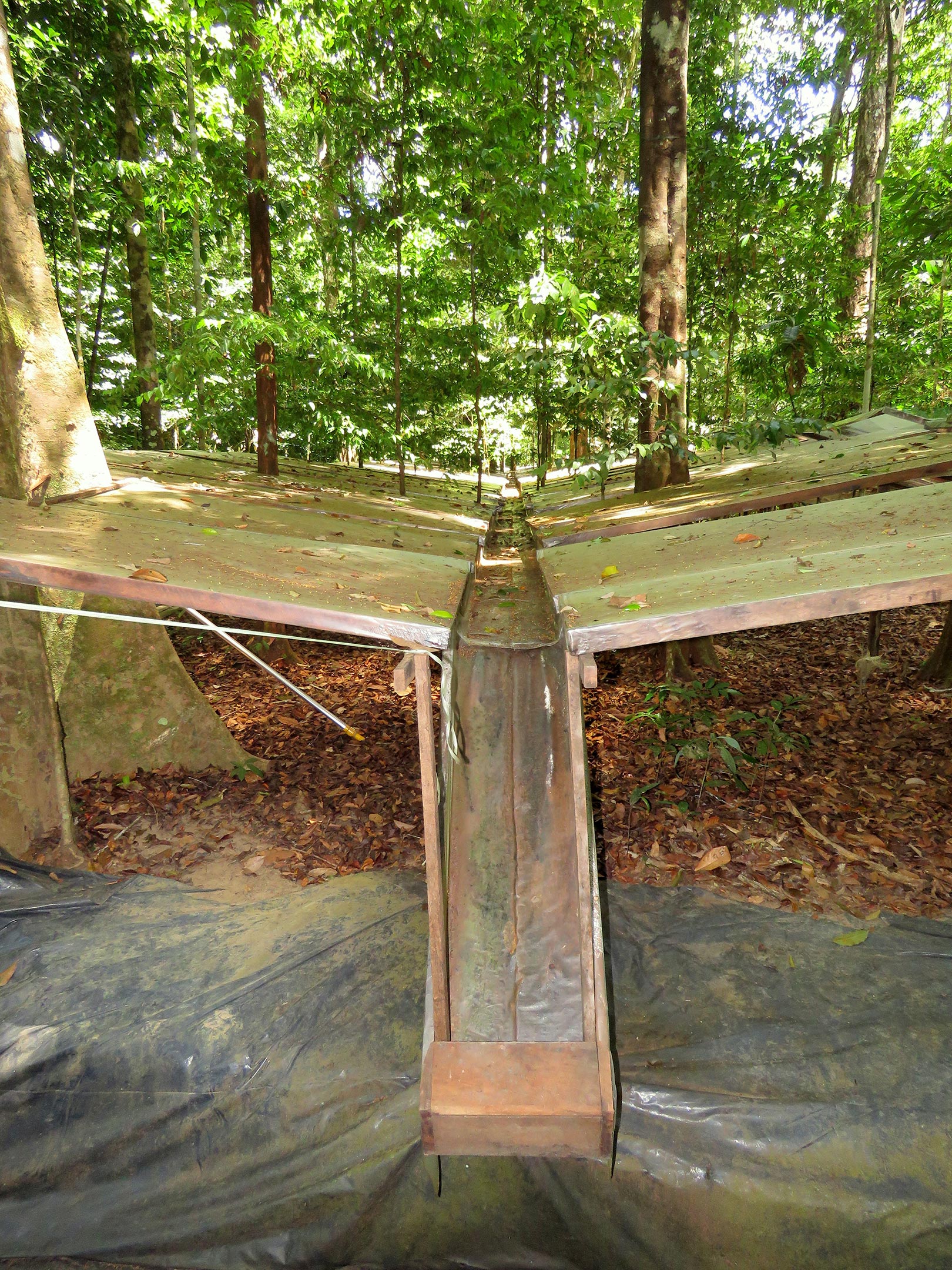
    Drought Experiment
    The drought experiment stops 50% of water reaching the ground. Credit: David Bartholomew

    Researchers sampled 66 small trees (1-10cm /0.4-4in diameter at a height of 1.3m/4ft from the ground) and 61 large trees (more than 20cm/8in in diameter) in the drought experiment area and a nearby control area with no rainfall exclusion.

    Small trees in the drought area showed increased capacity for photosynthesis (Jmax 71%, Vcmax 29%), 32% more leaf respiration and 15% more leaf mass per area compared to small trees in the control area.

    “This long-running experiment has shown that large trees are quite vulnerable to drought, and probably won’t survive if droughts continue to become more common and severe,” said Bartholomew, a Ph.D. student on the NERC GW4+ Doctoral Training Partnership.

    “However, relatively little is known about the response of small understorey trees which could be vital in determining the future of tropical forests.

    “The understory of an intact rainforest is usually a dark and humid environment. Trees found in low-light conditions will typically downregulate their photosynthetic capacity to conserve resources.

    “However, if droughts cause larger trees to die, these trees will have to adapt to both decreasing water availability and increased light. Our study suggests they have a remarkable ability to do this.”

    The responses of tree species in the study varied, with some showing a strong ability to adapt and some showing very little.

    More research is needed to understand how this might change the makeup of the famously diverse Amazon rainforest in the future.

    Reference: “Small tropical forest trees have a greater capacity to adjust carbon metabolism to long‐term drought than large canopy trees” by David Clive Bartholomew, Paulo Roberto Lima Bittencourt, Antonio Carlos Lôla da Costa, Lindsay F. Banin, Patrícia Brito Costa, Sarah Iingrid Coughlin, Tomas Ferreira Domingues, Leandro V. Ferreira, André Giles, Maurizio Mencuccini, Lina Mercado, Raquel Carolina Miatto, Alex Oliveira, Rafael Oliveira, Patrick Meir and Lucy Rowland, 8 July 2020, Plant, Cell and Environment.
    DOI: 10.1111/pce.13838

    Most of the study’s funding came from the Natural Environment Research Council (NERC).

    Never miss a breakthrough: Join the SciTechDaily newsletter.
    Follow us on Google and Google News.

    Biodiversity Climate Change Forests Plant Science Rainforest Trees University of Exeter
    Share. Facebook Twitter Pinterest LinkedIn Email Reddit

    Related Articles

    Scientists Unravel How and Why Amazon Trees Die & Why Tree Mortality Is Increasing

    Temperature Tipping Point for Tropical Forests Identified – Scientists Recommend Immediate Steps

    Climate Could Cause Abrupt British Vegetation Changes According to High Resolution Study

    Long-Living Tropical Trees Play Much Larger Role in Carbon Storage Than Previously Thought

    How Much Carbon Can Tropical Forests Absorb?

    Climate May Affect Biodiversity in Rainforests Even More Than Deforestation

    Plant Life Expanding Around Mount Everest and Across the Himalayan Region

    Amazon Forest Regrowth Much Slower Than Thought – May Take Well Over a Century to Fully Recover

    Nearly 40% of Global Species Are Very Rare, at Risk for Extinction From Climate Change

    1 Comment

    1. Paul on August 10, 2020 8:38 am

      That’s strange, actually
      https://www.google.com/

      Reply
    Leave A Reply Cancel Reply

    • Facebook
    • Twitter
    • Pinterest
    • YouTube

    Don't Miss a Discovery

    Subscribe for the Latest in Science & Tech!

    Trending News

    Mezcal “Worm” in a Bottle Mystery: DNA Testing Reveals a Surprise

    New Research Reveals That Your Morning Coffee Activates an Ancient Longevity Switch

    This Is What Makes You Irresistible to Mosquitoes

    Shockingly Powerful Giant Octopuses Ruled the Seas 100 Million Years Ago

    Scientists Stunned by New Organic Molecules Found on Mars

    Rewriting Dinosaur Evolution: Scientists Unearth Remarkable 150-Million-Year-Old Stegosaur Skull

    Omega-3 Supplements Linked to Cognitive Decline in Surprising New Study

    First-of-Its-Kind Discovery: Homer’s Iliad Found Embedded in a 1,600-Year-Old Egyptian Mummy

    Follow SciTechDaily
    • Facebook
    • Twitter
    • YouTube
    • Pinterest
    • Newsletter
    • RSS
    SciTech News
    • Biology News
    • Chemistry News
    • Earth News
    • Health News
    • Physics News
    • Science News
    • Space News
    • Technology News
    Recent Posts
    • This Gene Tweak Turns Strawberries Into Healthier, Tastier Superfruit
    • This New Chip Could Make GPUs Far More Efficient
    • This Tiny World in the Outer Solar System Should Be Airless, but It Has an Atmosphere
    • NASA’s Webb Space Telescope Reveals a Dark Airless Super-Earth That Looks Like Mercury
    • These Simple Daily Habits Can Quickly Improve Blood Pressure and Heart Risk Factors
    Copyright © 1998 - 2026 SciTechDaily. All Rights Reserved.
    • Science News
    • About
    • Contact
    • Editorial Board
    • Privacy Policy
    • Terms of Use

    Type above and press Enter to search. Press Esc to cancel.