
Close Menu
    Facebook X (Twitter) Instagram
    SciTechDaily
    • Biology
    • Chemistry
    • Earth
    • Health
    • Physics
    • Science
    • Space
    • Technology
    Facebook X (Twitter) Pinterest YouTube RSS
    SciTechDaily
    Home»Biology»The Amazon in Crisis: New Study Reveals Alarming Extent of Human Impact
    Biology

    The Amazon in Crisis: New Study Reveals Alarming Extent of Human Impact

    By Future EarthMarch 19, 2023No Comments6 Mins Read
    Facebook Twitter Pinterest Telegram LinkedIn WhatsApp Email Reddit
    Share
    Facebook Twitter LinkedIn Pinterest Telegram Email Reddit
    Burning Trees Amazon
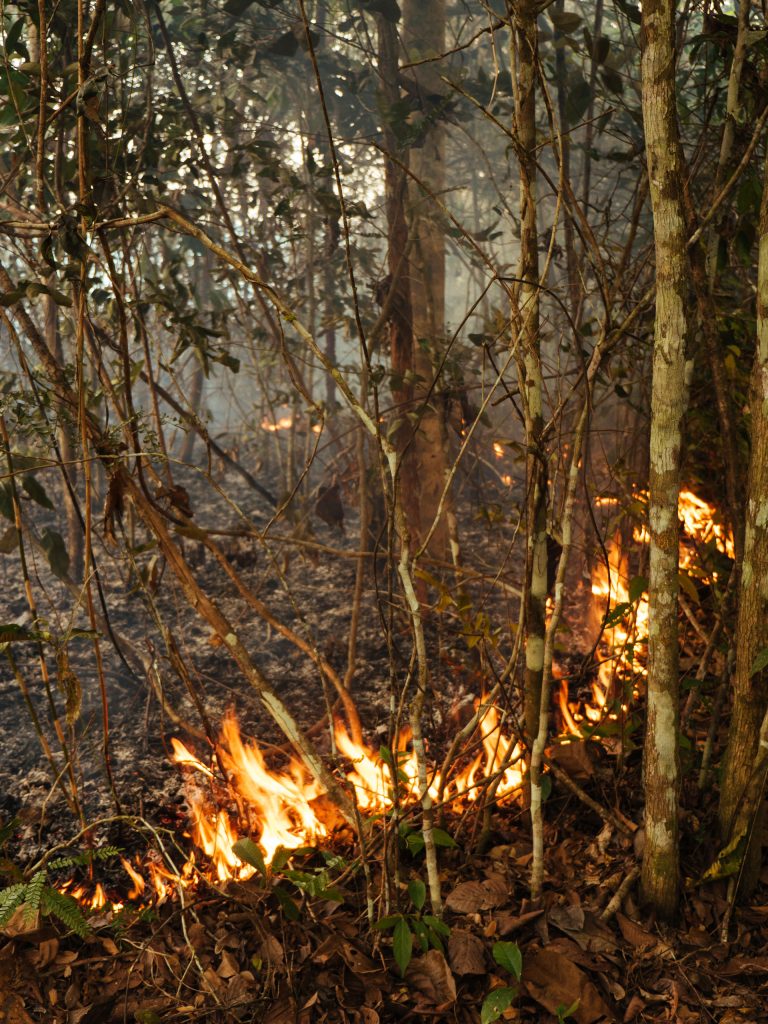
    Photo taken in 2015 of a burning forest in Belterra, in the Brazilian Amazon. In this photo, the flames are about 30cm high. The continuous fire line can be seen at the back of the photo, together with a lot of smoke. Credit: Adam Ronan/Rede Amazônia Sustentável

    Amazon degradation from logging, fires, and drought drives major carbon emissions and biodiversity loss. Mitigation must go beyond deforestation, incorporating smart forest monitoring systems to curb impacts.

    A new study recently published in Science reveals that the Amazon rainforest has been damaged to a much greater extent than previously thought, with over a third of the remaining forest impacted by human activity.

    A study led by a team of 35 international scientists from institutions such as Brazil’s University of Campinas, the Amazon Environmental Research Institute, the National Institute for Space Research, and the UK’s Lancaster University reveals that up to 38% of the remaining Amazon forest – equivalent to ten times the size of the UK – has been impacted by human disturbance. This results in carbon emissions comparable to or greater than those from deforestation.
    Smoke Aamzon Forest
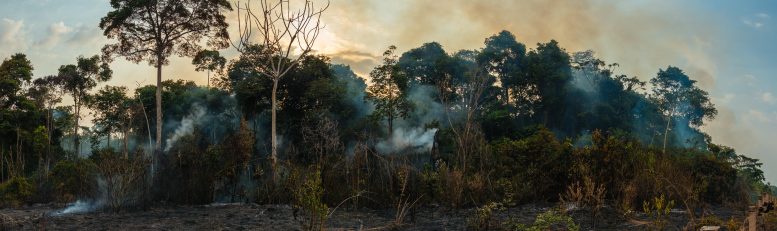
    Photo taken in 2015 of a burning forest in Belterra, in the Brazilian Amazon. While the flames cannot be seen, the smoke coming out of the forest is clear. Credit: Adam Ronan/Rede Amazônia Sustentável

    The work is the result of the AIMES (Analysis, Integration, and Modelling of the Earth System) project, linked to the Future Earth international initiative, which brings together scientists and researchers who study sustainability.

    The findings are the result of an analytical review of previously published scientific data, based on satellite imagery and a synthesis of published data outlining changes in the Amazon region between 2001 and 2018. The authors define the concept of degradation as transient or long-term changes in forest conditions caused by humans.
    Amazon Forest Fragment
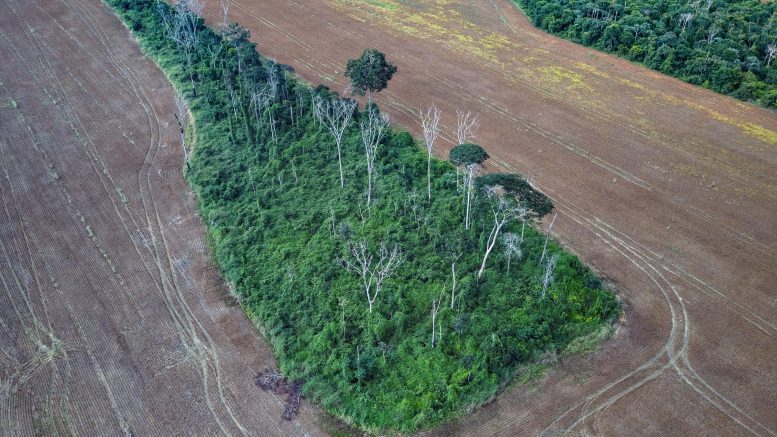
    Photo taken in 2019, four years after a fire affected this forest fragment, which has been previously also affected by multiple anthropogenic disturbances, including selective logging, edge effects, and fires. Photo taken in Belterra, in the Brazilian Amazon. Credit: Marizilda Cruppe/Rede Amazônia Sustentável

    Degradation is different from deforestation, where the forest is removed altogether and a new land use, such as agriculture, is established in its place. Although highly degraded forests can lose almost all of the trees, the land use itself does not change.

    The authors evaluate four key disturbances driving forest degradation: forest fire, edge effects (changes that occur in forests adjacent to deforested areas), selective logging (such as illegal logging), and extreme drought. Different forest areas can be affected by one or more of these disturbances.
    Amazon Forest Four Years After
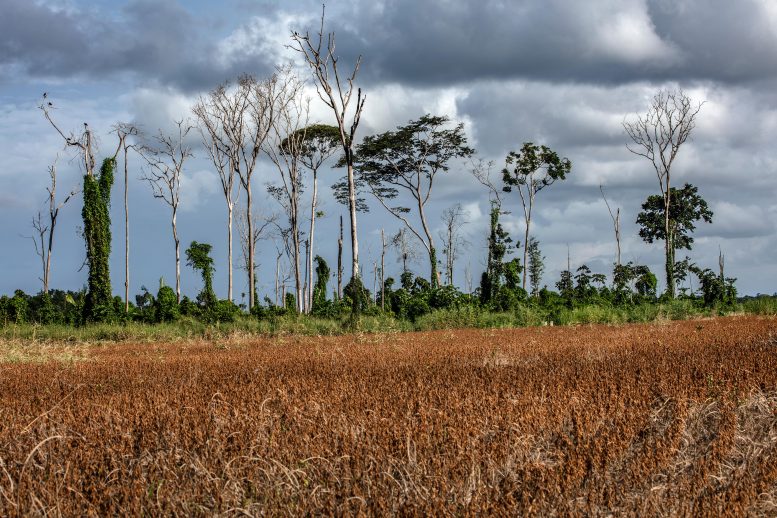
    Photo taken in 2019, four years after a fire affected this forest fragment, which has been previously also affected by multiple anthropogenic disturbances, including selective logging, edge effects, and fires. Photo taken in Belterra, in the Brazilian Amazon. Credit: Marizilda Cruppe/Rede Amazônia Sustentável

    “Despite uncertainty about the total effect of these disturbances, it is clear that their cumulative effect can be as important as deforestation for carbon emissions and biodiversity loss,” said Jos Barlow, a Professor of conservation science at Lancaster University in the UK and co-author of the paper.

    The scientists assess that the degradation of the Amazon also has significant socioeconomic impacts, which should be further investigated in the future.
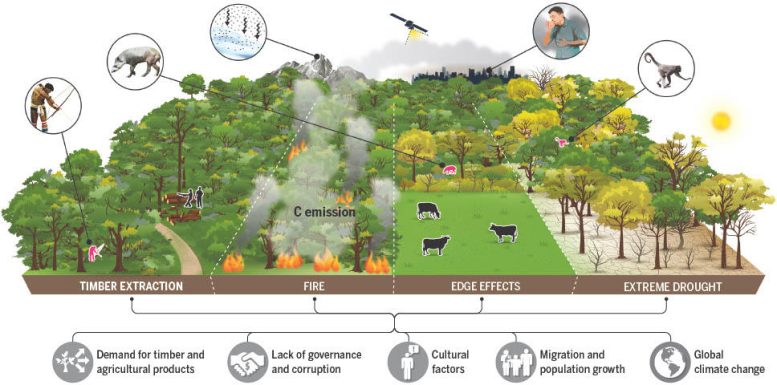
    Amazon Forest Graphic Summary
    Extended summary figure of the article. Credit: Alex Argozino/Studio Argozino/Science magazine

    “Degradation benefits the few, but places important burdens on many,” says Dr. Rachel Carmenta, a co-author based at the University of East Anglia, in the UK. “Few people profit from the degradation processes, yet many lose out across all dimensions of human well-being – including health, nutrition, and the place attachments held for the forest landscapes where they live. Furthermore, many of these burdens are hidden at present; recognizing them will help enable better governance with social justice at the center.”
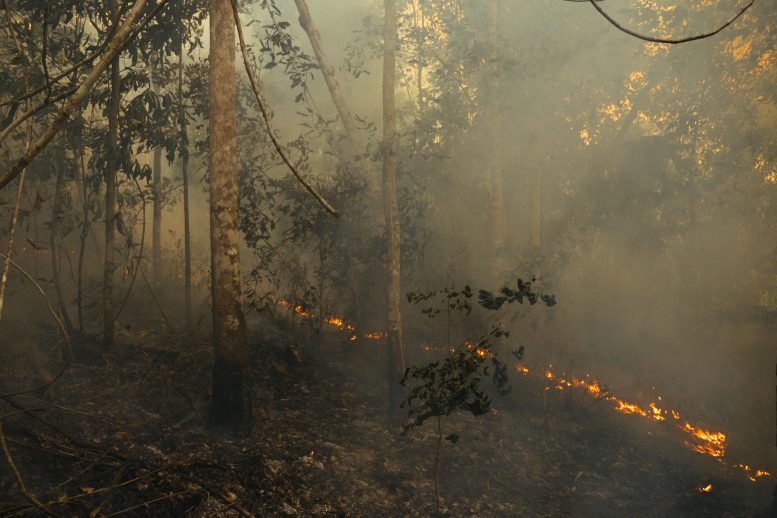
    Burning Amazon
    Photo taken in 2015 of a burning forest in Belterra, in the Brazilian Amazon. In this photo, the fire line is clear, as well as the smoke of the burning forest. Credit: Adam Ronan/Rede Amazônia Sustentável

    In a projection made by the team for 2050, the four degradation factors will continue to be major sources of carbon emissions into the atmosphere, regardless of the growth or suppression of deforestation of the forest.

    “Even in an optimistic scenario, when there is no more deforestation, the effects of climate change will see degradation of the forest continue, leading to further carbon emissions,” says Dr. David Lapola, leader of the study and researcher at the Centre for Meteorological and Climatic Research Applied to Agriculture at Unicamp. However, “preventing the advance of deforestation remains vital, and could also allow more attention to be directed to other drivers of forest degradation.”
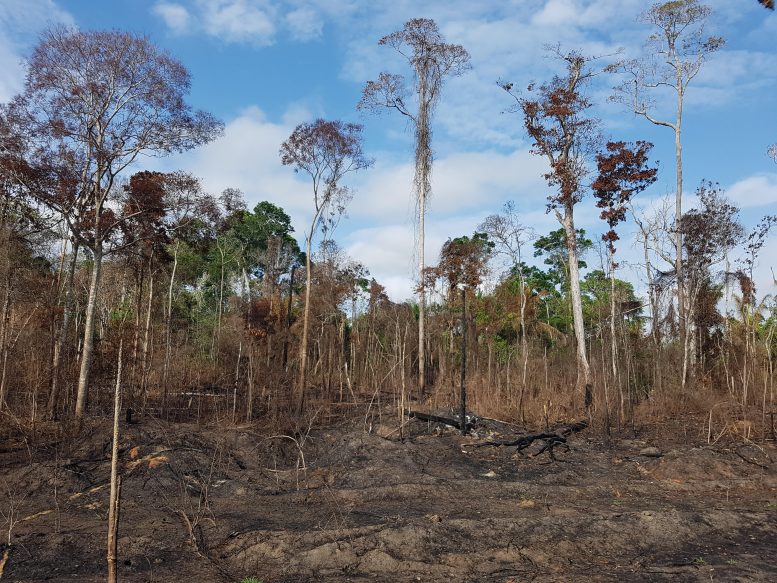
    Belterra Brazillian Amazon
    Photo taken in 2018, three years after a fire affected this logged forest that was also affected by edge effects. Photo taken in Belterra, in the Brazilian Amazon. Credit: Erika Berenguer

    The authors propose creating a monitoring system for forest degradation, as well as prevention and curbing of illegal logging and controlling the use of fire. One suggestion is the concept of “smart forests” which, like the idea of “smart cities”, would use different types of technologies and sensors to collect useful data in order to improve the quality of the environment.

    “Public and private actions and policies to curb deforestation will not necessarily address degradation as well,” says Dr. Lapola. “It is necessary to invest in innovative strategies.”

    Reference: “The drivers and impacts of Amazon forest degradation” by David M. Lapola, Patricia Pinho, Jos Barlow, Luiz E. O. C. Aragão, Erika Berenguer, Rachel Carmenta, Hannah M. Liddy, Hugo Seixas, Camila V. J. Silva, Celso H. L. Silva-Junior, Ane A. C. Alencar, Liana O. Anderson, Dolors Armenteras, Victor Brovkin, Kim Calders, Jeffrey Chambers, Louise Chini, Marcos H. Costa, Bruno L. Faria, Philip M. Fearnside, Joice Ferreira, Luciana Gatti, Victor Hugo Gutierrez-Velez, Zhangang Han, Kathleen Hibbard, Charles Koven, Peter Lawrence, Julia Pongratz, Bruno T. T. Portela, Mark Rounsevell, Alex C. Ruane, Rüdiger Schaldach, Sonaira S. da Silva, Celso von Randow and Wayne S. Walker, 27 January 2023, Science.

    DOI: 10.1126/science.abp8622
     

    Never miss a breakthrough: Join the SciTechDaily newsletter.
    Follow us on Google and Google News.

    Amazon Carbon Emissions Deforestation Ecosystems Forests Trees
    Share. Facebook Twitter Pinterest LinkedIn Email Reddit

    Related Articles

    Scientists Warn: Forests Are Losing Their Most Important Trees

    New Study: Half of Replanted Tropical Trees Don’t Survive

    Tree Rings Reveal Europe’s Beech Forests Under Considerable Threat From Climate Change

    Trees Are Biggest Methane “Vents” in Wetland Areas – Significant Emissions Even When They’re Dry

    Big Differences Exposed Among Amazonian Countries in Their Rates of Forest Recovery As Well as Deforestation

    DNA Hoarders: Genetic Duplication Linked to the Origin and Evolution of Pine Trees and Their Relatives

    Scientists Unravel How and Why Amazon Trees Die & Why Tree Mortality Is Increasing

    Larger Trees More Likely to Die From Drought in the Amazon – Small Trees Offer Hope for Rainforests

    Scientists Find Genes to Save Ash Trees From Deadly Beetle That Is Expected to Kill Billions of Trees Worldwide

    Leave A Reply Cancel Reply

    • Facebook
    • Twitter
    • Pinterest
    • YouTube

    Don't Miss a Discovery

    Subscribe for the Latest in Science & Tech!

    Trending News

    Bone-Strengthening Discovery Could Reverse Osteoporosis

    Scientists Uncover Hidden Trigger Behind Stem Cell Aging

    Scientists Find Way to Reverse Fatty Liver Disease Without Changing Diet

    Could Humans Regrow Limbs? New Study Reveals Promising Genetic Pathway

    Scientists Reveal Eating Fruits and Vegetables May Increase Your Risk of Lung Cancer

    Scientists Reverse Brain Aging With Simple Nasal Spray

    Scientists Uncover Potential Brain Risks of Popular Fish Oil Supplements

    Scientists Discover a Surprising Way To Make Bread Healthier and More Nutritious

    Follow SciTechDaily
    • Facebook
    • Twitter
    • YouTube
    • Pinterest
    • Newsletter
    • RSS
    SciTech News
    • Biology News
    • Chemistry News
    • Earth News
    • Health News
    • Physics News
    • Science News
    • Space News
    • Technology News
    Recent Posts
    • Europe’s Most Active Volcano Just Got Stranger – Here’s Why Scientists Are Rethinking It
    • Why Are Giant Ants Letting Tiny Ants Crawl All Over Them?
    • Revolutionary Technique Sends Healthy Mitochondria Exactly Where They’re Needed
    • This Student Recreated the Universe in a Bottle. What She Discovered Could Help Reveal How Life Started on Earth
    • Alzheimer’s Symptoms May Start Outside the Brain, Study Finds
    Copyright © 1998 - 2026 SciTechDaily. All Rights Reserved.
    • Science News
    • About
    • Contact
    • Editorial Board
    • Privacy Policy
    • Terms of Use

    Type above and press Enter to search. Press Esc to cancel.