
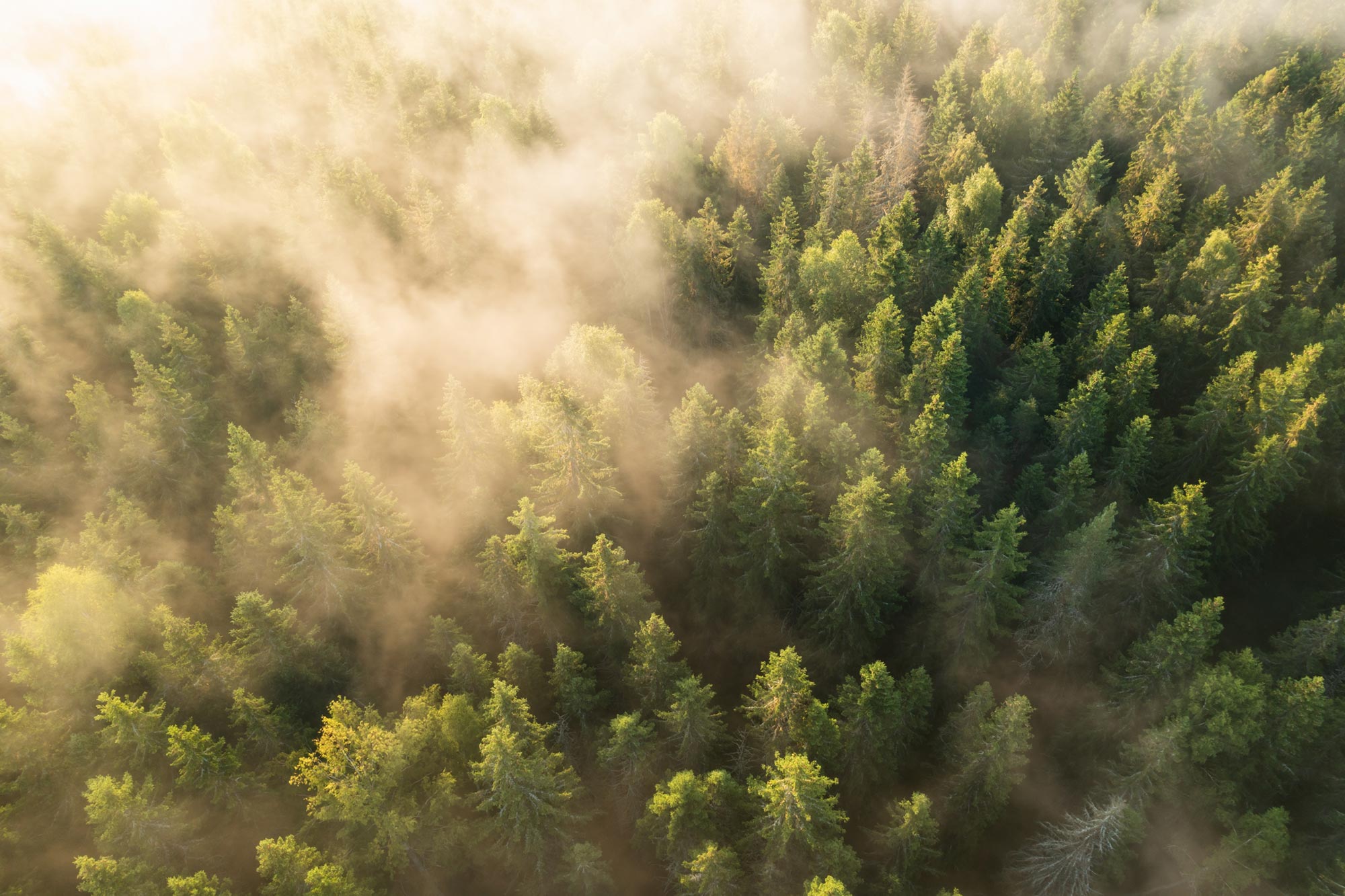
Climate change, deforestation, and habitat loss are making forests more uniform, with fast-growing species increasingly dominating the landscape. As native trees are displaced, biodiversity declines, resistance to disease weakens, and forests lose much of their ability to store CO₂.
Trees are essential to life on Earth. They absorb and store CO₂, support animals, fungi, and insects, hold soil in place, help regulate water systems, and provide materials people depend on, including timber, food, recreation, and shade during hot weather.
However, forests worldwide are undergoing a major shift. A growing body of evidence shows that they are becoming more uniform, losing biological diversity, and growing less resilient. These changes are documented in a large international study recently published in the journal Nature Plants.
The research examined more than 31,000 tree species from around the world to build a global view of how forests may change in the future. The analysis focused on shifts in species composition, ecosystem stability, and the ability of forests to continue performing critical ecological functions.
The findings suggest that fast-growing tree species are likely to become increasingly dominant. At the same time, slower-growing and more specialized trees face a higher risk of decline or extinction, particularly as environmental pressures intensify.
This trend is deeply concerning, according to Jens Christian Svenning, Professor and Director of the Danish National Research Foundation’s Center for Ecological Dynamics in a Novel Biosphere (ECONOVO) at the Department of Biology, Aarhus University, and a lead author of the Nature Plants study.
He emphasizes that species with very limited geographic ranges are especially vulnerable. Once these trees are lost, the unique ecological roles they play may be impossible to replace, further weakening forest ecosystems worldwide.
“We are talking about highly unique species, especially concentrated in tropical and subtropical regions, where biodiversity is high, and ecosystems are tightly interconnected. When specialized, native species disappear, they leave gaps in ecosystems that alien species rarely fill, even if those species are fast-growing and highly dispersive,” says Jens-Christian Svenning.
The backbone of forests is under threat
The most threatened species are often slow-growing specialists, as Jens-Christian Svenning describes them. These are trees with thick leaves, dense wood, and long lifespans, often associated with stable environments—particularly moist tropical and subtropical forests.
“They form the backbone of forest ecosystems and contribute to stability, carbon storage, and resilience to change,” says Jens-Christian Svenning.
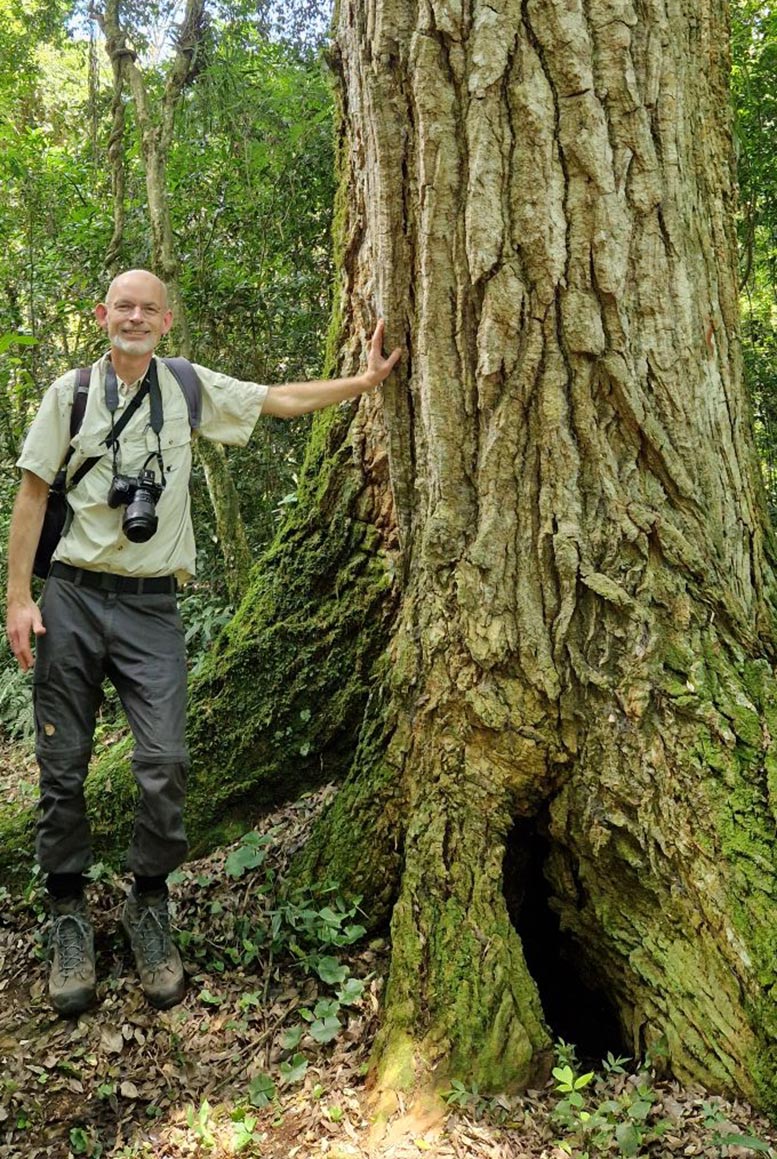
If current trends in climate change and forest exploitation continue, forests will increasingly be dominated by nature’s “sprinters”: trees with light leaves and low wood density that allow rapid growth in the short term. Examples include various species of acacia, eucalyptus, poplar, and pine.
“Although these species establish and grow well, they are more vulnerable to drought, storms, pests, and climatic shocks. This makes forests less stable and less effective at storing carbon over the long term,” says Jens-Christian Svenning.
The study also shows that nearly 41 percent of so-called naturalized tree species—species that do not naturally occur in a given area but now grow wild there—possess traits such as fast growth and small leaves. This makes them well-suited to disturbed environments, but they rarely perform the same ecological roles as native species, says Jens-Christian Svenning.
“Moreover, in landscapes affected by today’s and tomorrow’s disturbances, naturalized species can make it even harder for native trees to survive, because competition for light, water, and nutrients intensifies,” he adds.
Tropical species are particularly vulnerable
Forest homogenization hits the tropics and subtropics particularly hard, with future rises in tree species endangerment concentrated in these regions.
“This is where many slow-growing tree species with naturally small ranges occur. Because they are confined to very limited areas, these species are especially vulnerable and risk disappearing entirely if their habitats are destroyed or taken over by fast-growing species,” explains the study’s first author, young professor Wen-Yong Guo from the School of Ecological and Environmental Sciences, East China Normal University, Shanghai.
“At the same time, we forecast rising number of naturalized and fast-growing tree species adapted to increasing disturbance throughout the world. Hence, in the colder parts of the Northern Hemisphere, the likely dominant dynamic is the invasion of such species,” says Wen-Yong Guo.
According to the researchers, human activities are the primary drivers of changes in forest composition.
“Human-driven climate change, deforestation for infrastructure, intensive forestry, logging, and global trade in tree species all play a role. Fast-growing trees are often actively promoted because they produce timber or biomass quickly. But ecologically, they are often fragile and more prone to disease,” explains Wen-Yong Guo.
Active ecosystem management is essential
In the study, the researchers modeled how tree species are likely to spread or disappear under future scenarios. The results clearly indicate that already naturalized species are expected to become even more dominant in forests in the coming decades.
This makes it urgent to halt the loss of slow-growing tree species, says Jens-Christian Svenning. This can be achieved by giving them greater priority in forest management and through more active ecosystem restoration.
“When establishing new forests, far more emphasis should be placed on slow-growing and rare tree species. This would make forests more diverse and resilient. These species should also be actively promoted in conservation and restoration efforts, where they often interact positively with the recovery of richer communities of large animals, which themselves are also important for future ecosystem functioning,” concludes Jens-Christian Svenning.
Reference: “Global functional shifts in trees driven by alien naturalization and native extinction” by Wen-Yong Guo, Josep M. Serra-Diaz, Kun Guo, Coline C. F. Boonman, Franziska Schrodt, Brian S. Maitner, Cory Merow, Cyrille Violle, Madhur Anand, Hans Henrik K. Bruun, Chaeho Byun, Jane A. Catford, Bruno E. L. Cerabolini, Eduardo Chacón-Madrigal, Daniela Ciccarelli, Anh Tuan Dang-Le, Arildo S. Dias, Aelton B. Giroldo, Alvaro G. Gutiérrez, Steven Jansen, Jens Kattge, Roeland Kindt, Tamir Klein, Koen Kramer, Christopher H. Lusk, Adam R. Martin, Sean T. Michaletz, Vanessa Minden, Akira S. Mori, Ülo Niinemets, Yusuke Onoda, Josep Peñuelas, Jan Pisek, Bjorn J. M. Robroek, Brandon Schamp, Nadejda A. Soudzilovskaia, Nelson Thiffault, Fons van der Plas, Brian J. Enquist and Jens-Christian Svenning, 28 January 2026, Nature Plants.
DOI: 10.1038/s41477-025-02207-2
Funding: Danish National Research Foundation and Danish Council for Independent Research
Never miss a breakthrough: Join the SciTechDaily newsletter.
Follow us on Google and Google News.
1 Comment
great